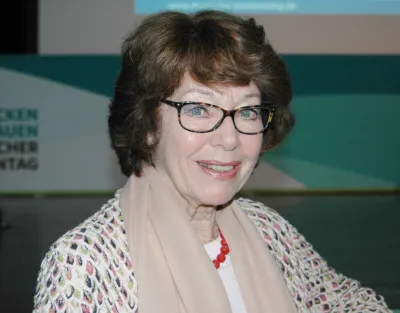
Marianne Koch
Human Design Chart
Biography
Marianne Koch — Manifestor with Profile 2/4
Manifestor 2/4 — Design at a Glance
Marianne Koch's design established a foundational stance as a pioneer and visionary. She was destined to guide the world into new directions, much like an emperor in ancient Rome who carried the grand vision of an empire but did not fight every battle himself; instead, he inspired others to act. This role brought with it a specific dynamic: Manifestors often think further ahead than their surroundings, leading them to be frequently misunderstood and polarizing. Some people loved and followed Marianne Koch because of her great dreams, while others rejected or even hated her due to these visions.
To find the right 'followers' and minimize friction, it was crucial for her design to inform others about her intentions in a timely and precise manner. This formed the ideal strategy. If Marianne Koch followed this strategy and trusted her inner authority, she was rewarded with a sense of inner peace. Living against this design, such as by failing to provide information or ignoring her own authority, resulted in persistent deep anger within her. Her path was thus marked by the tension between the urge for leadership and the necessity to clearly communicate these intentions to experience peace rather than resistance.
Ego Authority
Marianne Koch's design set a tendency towards a very specific decision-making structure: Her inner truth lay in the will as shown through the defined Ego Center. This is known as authority in the ego, a rare configuration that only Projectors or Manifestors can carry. A prerequisite for this is open Emotional, Sacral, and Spleen Centers, which brings great openness but also susceptibility to influence.
Her truth was revealed not through thinking but through spontaneity. What came uncensored from her throat was in line with her true self; the mind served instead the open centers and the interests of others. Marianne Koch had to learn to listen to herself while speaking, to distinguish ego from thought.
When she did something that truly mattered to her, she possessed the willpower to achieve goals and keep promises. This could appear egotistical outwardly, yet for her it was essential that her efforts paid off – whether through material success or the desire to transcend limits and be first. She had the potential to lead others into new directions. Crucial, however, was a pause after goal achievement; constant work did not yield the desired result but led to exhaustion.
The 2/4 Profile — Hermit / Opportunist
Marianne Koch showed herself as someone who oscillated between two seemingly contradictory needs: the urge for deep withdrawal and the desire for close connection with chosen people. This Profile 2/4 set up an underlying tension that made her gain clarity in isolation before rejoining her community. Line 2 grants a selective nature; Marianne Koch often had to wait until she was invited or called rather than moving forward independently. During this hermit phase, she immersed herself in internal processes, gathered experiences and through persistence – even if this strength was not always consciously recognized by her – developed profound wisdom.
Only when this inner need for peace was satisfied did Line 4 awaken: the networker. Now she actively sought exchange with her 'favorite people' to reflect on what had been learned in silence and develop brilliant ideas. Crucial for Marianne Koch was clear communication of her boundaries; she needed to be able to make it clear when she needed company and when she wanted solitude. Through this balance between respect for the network and preservation of individuality, she could contribute uniquely. Line 4 also recognized the gifts of others and promoted them, making Marianne Koch not only a recipient but also a shaper of her social environment.
Single Definition — Defined & Open Centers
Marianne Koch's design indicated a tendency towards constant, trustworthy mental functioning. Her defined Ajna Center created a stable form of conceptual thinking; she was difficult to influence from the outside and processed data as well as creativity in her own reliable way. This mental clarity flowed into her defined Throat Center, which served as a pivot point for communication. She could express what her mind conceptualized – a direct connection between thinking and speaking that tended towards impulsiveness or losing energy through excessive talking if she did not trust her inner authority.
Her defined G Center gave her a firm sense of self-identity and direction. She knew where she belonged, and could show others new perspectives without being dependent on their approval. At the same time, she possessed permanent willpower through her defined Heart Center. She enjoyed controlling her resources and keeping promises, which strengthened her self-esteem. However, this strength brought the risk of setting unrealistic expectations for others or trying to push them – behavior that could meet resistance if not balanced by strategy and authority.
In contrast, her open centers revealed specific vulnerabilities. Her open Head Center made her susceptible to mental pressure and the temptation to answer other people's questions or get entangled in their confusion. She tended to seek inspiration to escape this pressure rather than observing from a distance. Her open Sacral Center received foreign vital energy, which could lead to exhaustion if she did not recognize when enough was enough and rest. Her open Solar Plexus Center absorbed the emotions of her environment; she had to learn to identify these as non-her own to avoid emotional decision-making. Additionally, her open Spleen and Root Centers were sensitive to fear and stress: She tended to cling to false security or intensify external pressure rather than letting it go.
Channels for acceptance, inspiration, leadership and material security.
Marianne Koch's design indicated a tendency towards a dual leadership dimension that combined both individual inspiration and collective logic. Channel of Inspiration 1-8 connected her G Center with the Throat Center, shaping her to attract attention through her mere presence and authentic life approach. She was designed to act as a living example inspiring others to live out their unique qualities without words being necessary. Parallel to this, Channel of Alpha Animal 7-31 promoted logical, collective leadership. This was not about sole rule but gaining trust and being invited by the community to lead. This combination created tension between wanting to impact through individual charisma and needing to fit into existing social patterns.
On a mental level, Channel of Acceptance 17-62 organized her perception. She translated visual patterns and details into language to create understanding. Anything she could not logically integrate into her worldview remained incomprehensible; therefore, it was crucial to pay attention to the timing of her expressions to avoid resistance. In the material realm, Channel of Money Line 21-45 determined her stance on will and control. She sought independence and the possibility to set her own pace since she worked best when self-responsible. The challenge lay in asserting her will in a way that protected her interests while serving others without getting entangled in control battles.
Additionally, gates like 29 (Persistence) and 14 (Gathering Power with Grace) helped her meet challenges with a life-affirming attitude. Gate 51 gave her strong willpower to react to shocks, while Gate 47 helped draw collective meaning from past experiences. Overall, Marianne Koch appeared as someone who wanted to influence through authentic example but also needed the logical structure and trust of the community for lasting impact.
Collective Circuitry — Circuit Signature
Marianne Koch's design indicated a tendency towards structured, strategic communication aimed at making complex connections understandable and acceptable to others. Her energetic architecture connected Ajna Center (Analysis/Strategy), Throat Center (Expression), and Identity Center (Essence/Self-image) in a continuous line. This allowed her to directly translate logical insights into words without emotional waves disrupting the process – an 'emotionless ratio' focused on clarity and future orientation.
Parallel to this, there was a separate impulse from the Knowledge Circuit: The Channel of Inspiration connected her Throat with her Identity Center. This promoted spontaneous, acoustic creativity and the urge to express her unique individuality often driven by inner mutations or new ideas.
A third aspect concerned resource management. Through the 'Money Line', she linked her Heart Center (Will/Decision) with her Throat Center. This emphasized the will to create material security and prosperity through decisive action and communication. Since all these centers – Ajna, Throat, Identity, Heart – were connected in a single group, analysis, creative expression, and will-driven resource acquisition worked as a cohesive, focused stream for Marianne Koch. She could strategically plan, inspiredly formulate, and willingly secure resources, with these areas reinforcing each other rather than operating separately.
Right Angle Cross of Contagion 3
Marianne Koch's design carried the right cross of infection 3, a configuration that describes a specific kind of energetic penetration and transformation. This aspect of her chart indicated that she was not just passively reacting to her environment but actively initiating profound changes in it – often by 'infecting' others with her own intensity or vision.
In Human Design mechanics, this cross represents a process where external influences are not rejected but absorbed and transformed into new qualities. It is less about superficial adaptation than about a fundamental recreation of structures or relationships. Marianne Koch showed through this configuration as someone who took in impulses and passed them on in such a way that they triggered similar transformative processes in others. This did not happen through coercion, but rather through the sheer presence and authenticity of her own experiential world.
The energy of this cross acts like a catalyst: it accelerates changes by breaking existing patterns and establishing new, often unexpected connections. For Marianne Koch, this meant that her influence was directed towards overcoming stagnation and promoting dynamic development – whether in interpersonal relationships or larger societal contexts. Her role was to carry this transformative energy and use it purposefully to enable growth and renewal.
Saturn Return · Uranus Opposition · Chiron Return · 2nd Saturn Return — Life Cycles
Marianne Koch's design indicated a tendency for deep inner upheavals often accompanied by the feeling that old structures must be radically questioned. This configuration describes the Uranus Return cycle: A period in which awareness of individual freedom and innovation sharpens, often leading to sudden life changes. In 1971, at age 40, Marianne Koch resumed her medical studies – a clear expression of this dynamic force. At this age, the Uranus Return often appears as a catalytic moment when previous life plans are questioned and new, more authentic paths are taken. For Marianne Koch, this meant not only a professional realignment but also a deepening of personal development through access to medical knowledge. This step is seen as a typical example of how the Uranus influence can help people discover and pursue their true interests and abilities. The decision to continue her studies underscores the design's ability to transform energetic forces into concrete actions without being guided by external expectations. Instead, an inner authority becomes visible that enables self-determined decisions in harmony with one's nature.
Manifestor · Ego Authority — Synthesis
A central red thread in this Human Design chart is the dynamic interaction between internal clarity and the urge to carry it outward. The defined mental center (Ajna) generates consistent concepts and opinions, while the channel of inspiration (1-8) promotes the creative expression of these ideas – a constant need to create new things and share them with others. This potential is strengthened by the manifestor authority in the ego: authentic expressions arise spontaneously from within and are thus the key to one's own truth. The profile as natural talent/networker emphasizes this aspect, highlighting both phases of withdrawal for internal processes (line 2) and a need for connection and exchange with selected individuals (line 4).
The central paradox lies in the tension between the desire for autonomy and the natural role as a pioneer. As a manifestor, she is destined to lead and initiate changes, which can however lead to misunderstandings and rejection. At the same time, she needs space and independence to develop her visions – a need that is further emphasized by line 2 in the profile. This inner conflict between the desire for influence and the necessity of withdrawal shapes her life path, as exemplified by the resumption of medical studies (Uranus opposition), a step that included both personal development and social participation.
4 Defined Channels
Incarnation Cross - Right Angle Cross of Contagion 3
Solar Return
The Solar Return shows the moment when the sun returns to its exact birth position - your personal solar year.
Life Cycles
Discover the life cycles with a detailed triple view (birth chart, cycle chart, composite).
Human Design Profile
- Type
- Manifestor
- Strategy
- To inform others before acting
- Authority
- Ego Authority
- Profile
- 2/4 - Hermit / Opportunist
- Definition
- Single Definition
- Incarnation Cross
- Right Angle Cross of Contagion 3
- Date of Birth
- 19.08.1931 16:00
- Place of Birth
- Munich, Germany
Frequently Asked Questions
What is Marianne Koch's Human Design type?
Which Profile does Marianne Koch have in Human Design?
What authority determines Marianne Koch's decisions?
What incarnation cross does Marianne Koch have?
When was Marianne Koch born?
Discover your own Human Design
Are you also a Manifestor? Find out in a personal reading how to use your initiation power peacefully and dissolve resistance.
More Personalities
Back to overviewSissy Spacek

Anémone

Ann-Margret

Arletty

Arno

Artus