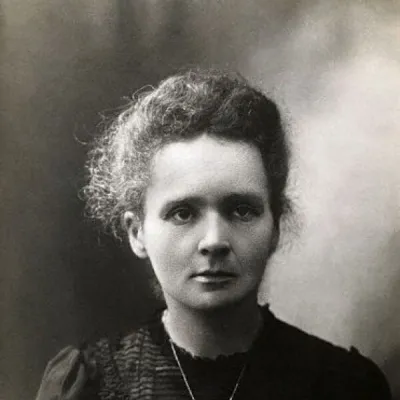
Marie Curie
Human Design Chart
Biography
When Curie was born, Poland was divided between Austria, Germany and Russia. The daughter and fifth child of two teachers, intellectuals and patriots, she learned young to resist the repression of Polish culture by small rebellions. When she was eight, a younger sister died of tuberculosis; two years later her mother died of the same disease. Her father lost his job at the state school, and turned the home into a boarding school.
She needed to make a living so began to work as a governess. She fell in love at 18 with the son of the family for whom she worked but the parents objected to a marriage. After her initial anguish, Marie picked herself up and went on.
With her wages, she sent her sister Bronia to Paris to put her through the Sorbonne. They planned that once Bronia was established, Marie would join her in Paris for her turn. After four years, in 1891 she joined her sister in Paris to study math, physics and chemistry at the Sorbonne. She proved a brilliant student with an early interest in the magnetic properties of steel. Within two years she received her license in science with the highest marks of her class.
She was drawn to fellow scientist, Pierre Curie by their mutual interest in magnetism and devotion to science. They met at the home of a Polish physicist who was staying in Paris, and married on 26 July 1895 at a simple civic ceremony. Their early years were very hard. In 1898, after they discovered radium, Marie had a struggle of four years of toil which finally resulted in the extraction of one-tenth of a gram of radium from one ton of uranium mine waste, one of the epic stories of science.
They had two daughters, the first, Irene, in 1897 and the second, Eva, in 1904. Irene became a chemist and Eva, a writer.
Human Design Analysis: Marie Curie as Manifesting Generator 2/4
Manifesting Generator 2/4 — Design at a Glance
Marie Curie was revealed as an individual with hybrid energy: she combined the speed of a Manifestor with the groundedness of a Generator. Her design offered constant sacral energy, yet required the strategy of Reacting rather than Initiating. She could skip steps and act swiftly, enabling her to pull things into her life rapidly. However, this speed carried risks: sometimes she was too quick, overlooking important intermediate steps, leading to backtracking and frustration. Additionally, she tended to juggle multiple projects by reacting to numerous impulses. Without the confirmation of her inner authority, this multitasking ability easily tipped over into overload.
To experience deep satisfaction rather than frustration, it was crucial for Marie Curie to wait for a “Yes” from her sacral center before acting or continuing projects. Regularly checking whether the work still brought joy secured her endurance. When these conditions were met, she drew fulfillment from her creations. Parallelism then became not an issue but a source of her strength. Her optimal functioning occurred when variety and fun prevailed and she entered a “play mode.” In this state, her creative power was at its peak as she did not work against her natural rhythm but flowed with it.
Emotional Authority
Marie Curie exhibited an internal decision-making structure that required patience as a strategic tool. Her inner authority was Emotional Authority, carried by the defined Solar Plexus Center. This mechanism meant that every decision needed to pass through emotional waves – a constant up and down of feelings. The world appeared colored by her current mood; enthusiasm could quickly turn into negative evaluation. However, her feeling in the moment was only a snapshot, not a secured truth value. Quick, spontaneous decisions from this emotional heat had negative effects.
The mechanics of her authority dictated that it took precedence over all other defined centers regardless of further configurations in the design. This required conscious delay: Marie Curie gave herself time for decisions to mature. She slept on important questions multiple times and let herself be swayed. This process served to gain emotional distance. Over time, intense feelings subsided, clarity and calmness emerged. Only then had she gone through the decision-making process. This strategy was essential for long-term, life-changing steps as only this way deeper insights became accessible beyond the initial emotional impression.
The 2/4 Profile — Hermit / Opportunist
Marie Curie lived in a constant oscillation between deep withdrawal and the need for social validation. Her design as Profile 2/4, the Natural Talent Networker profile, created fundamental tension: Line 2 demanded isolated work “behind the scenes,” while Line 4 sought recognition through her own network to gain influence.
This configuration required clear boundaries. Marie Curie had to explicitly communicate her needs – when she needed company and when she wanted solitude. During the withdrawal phase, she immersed herself in internal processes, created clarity, and waited for an inner “call” for creative mutations. These creative impulses did not occur daily but punctually, when she remained within her individual scale. External interference during this sensitive period would disrupt natural processes; therefore, it was crucial to follow only the right inner signal.
Once the need for solitude was satisfied and internal clarity achieved, she returned from her “cave.” Then, she actively sought contact with her trusted network (Line 4) to share insights developed in isolation and validate them through the resonance of the network. This cycle – withdrawal for reflection on network knowledge followed by targeted re-emergence – was her operational strategy. Only through this sovereign control between isolation for creativity and social interaction could she fully realize her potential without falling into conflicts or inefficiency. The beauty of her work lay in respecting this rhythm and not fighting against the natural flow of mutations.
Split Definition — Defined & Open Centers
Marie Curie revealed herself as someone with a clear inner direction and a steady energy base guided by emotional clarity. Her defined G Center gave her a firm sense of self-understanding and purpose, while the also defined Sacral Center provided a constant source of vital energy. This combination allowed her to act from deep inner security and engage in tasks that resonated with her energy. Her communication, carried by a defined Throat Center, was a reliable expression of this internal structure; she did not speak impulsively but conveyed messages derived from her identity and emotional state.
This stable foundation contrasted with her open centers: Head (mental processes), Ajna (willpower), Heart (spontaneous intuition), and Spleen. Since these areas were undefined, she lacked a constant inner source for mental inspiration or willful assertiveness. Instead, she was prone to absorbing external mental pressure or orienting herself in the environment for security. She tended to question whether her ideas were relevant enough and might have sought confirmation due to her open Heart Center's need to prove personal worth. Spontaneous decisions were risky for her as her open Spleen did not offer a reliable intuitive authority but rather responded to conditioned fears.
The mechanics of her design emphasized reaction over initiation. Important decisions required waiting for the emotional wave of her Solar Plexus Center to gain clarity, rather than being led by transient mental impulses. Her strength lay in using her defined energy and direction while learning to use the uncertainties of her open centers as a mirror of the environment rather than accepting them as personal truth. This created a structure where deep emotional intelligence and steady endurance were prominent, while mental concepts and willful efforts remained situational and influenced from outside.
Channels for resources, leadership and emotional release.
Marie Curie was characterized by a powerful, generative life force that propelled innovative directions in the material realm. This tendency resulted from Channel Beat 14-2, connecting her Sacral Center with her G Center. Gate 14 focused on the availability of material resources for evolutionary mutation, while Gate 2 served as a driver for higher knowledge and movement through space and time. As a keyholder, she transformed this mutative impulse into concrete reality by reacting openly to life rather than chasing fate. Her honest self-alignment and trust in her inner Sacral reaction freed new perspectives without the need to plan ahead. This served as creative power for herself and mechanically encouraged others to find their own direction.
Additionally, Channel Alpha 7-31 described logical, collective leadership with a view towards the future. Through Gate 7 (Role of Self) and Gate 31 (Leading), she sought her influential domain to focus attention on essential qualities. She led more from an influential position than through absolute authority by showing the way without taking it away from others. Success came when invited by the majority to take charge, as collective leadership was reinforced by the principle of majority rule.
Channel Emotion Release 39-55 connected her Root Center with her Solar Plexus Center. Gate 39 (Provocation) and Gate 55 (Mind) set the pulsating on/off wave of moods in motion. She lived in the alchemy of this emotional wave, between ecstatic joy and melancholic uncertainty. Through authentic living and acceptance of her moods, she explored the depths of her mind. Her provocation opened others to mutative qualities, with her impact depending on her current mood. She recognized that there was a right time for everything and used times of solitude to connect with her inner creativity.
Individual Gates like Gate 13 (Purpose, Continuity), Gate 1 (Uniqueness, Creative Mutation), and Gate 9 (Detail Work, Perfection) complemented this picture. Gate 30 (Recognizing Feelings, Longing) as well as Gate 5 (Rhythm, Habits) and Gate 46 (Engagement, Devotion) rounded out her energetic landscape by promoting reflection, creative timing, detail-oriented focus, and full engagement in the process.
Individual Circuitry — Circuit Signature
Marie Curie exhibited a fundamental disposition consisting of two separate, non-converging energy poles. One was pulsing and emotional; the other focused and rational. This tension shaped her inner self as parallel forces since her split definition did not allow for direct connection between these systems.
The Knowledge Circuit connected Marie Curie's Identity Center with her Sacral Center and her Solar Plexus Center with her Root Center, creating an acoustic, rhythmic energy. Channel The Beat (Gates 2 and 14) promoted creative insights and deviations from the known, strengthening her unique identity. Simultaneously, Channel Emotions Release (Gates 55 and 39) allowed filtering new knowledge through emotional waves from her Solar Plexus Center and expressing it through her Throat Center. This process served for transformation and expression of personal individuality driven by a melancholic but creative pulse energy.
Independently, the Understanding Circuit operated. It exclusively connected her Throat Center with her Identity Center via Channel The Alpha (Gates 31 and 7). Here visual, focused energy dominated. The aim was to share logical and rational insights free from emotional influence or conditioning. This part of her design aimed at guiding society towards a better future through structure and strategy.
Marie Curie thus lived with the internal tension between the drive for individual, emotional transformation through new knowledge on one hand and cold, logical improvement of the world on the other. These two circuits remained energetically separate, leading to emotional innovation and rational planning as distinct, coexisting forces within her without merging into a single flow.
Right Angle Cross of the Sphinx 4
Marie Curie carried the Right Cross of the Sphinx 4 in her Human Design. This configuration set a specific inner tension that was characterized by a deep desire for mental clarity and a certain distance from everyday hustle and bustle. It was a structure that focused on what is essential, often fostering a melancholic or contemplative basic attitude.
The Right Cross of the Sphinx 4 is a rare constellation consisting of four Gates in human design. It connects aspects of intuition, intellectual analysis, and a certain isolation. People with this pattern tended to invest their energy into deep, often solitary reflections. They sought answers that went beyond the visible and did so frequently away from public view.
For Marie Curie, this meant that her path was marked by intense inner work. She withdrew to organize thoughts and recognize patterns hidden from others. This distance created the necessary space for her focused attention. It was not a flight from the world but a strategic retreat tactic to gain clarity. The energy of this cross acted like a filter, sorting out the unnecessary and allowing only what is essential through. Thus, an attitude of calm observation emerged, paired with a strong drive to understand the underlying structures of things. This inner orientation shaped her way of dealing with complex issues without being guided by external expectations.
Saturn Return · Uranus Opposition · Chiron Return · 2nd Saturn Return — Life Cycles
Marie Curie's life followed a clear cyclical structure marked by four distinct astrological phases. These cycles organized her existence into areas of binding, sudden upheaval, therapeutic application, and institutional recognition. The first Saturn Return phase around the age of 28 often signaled the beginning of long-term commitments. This was concretely seen in 1895 when Marie Skłodowska married Pierre Curie – a step that strengthened her personal bond and laid the foundation for their joint work.
The Uranus Opposition around the age of 39 often brought unexpected breaks or crises. For Marie Curie, this turning point occurred in 1906 when Pierre Curie died under the wheels of a heavy wagon. This event marked a painful rupture that dissolved her previous structures and presented new challenges to be faced alone.
The Chiron Return around the age of 47 to 51 is a fulfillment cycle where individual life purpose unfolds. In 1914, at the age of 47, this process found its expression through the first deployment of their X-ray vehicles on the front lines of World War I. Here her work became practically effective and saved lives, underscoring the meaningfulness of her path.
The second Saturn Return phase around the age of 55 often stands for institutional anchorage and recognition. In 1922, Marie Curie was elected to the International Commission for Intellectual Cooperation. This step confirmed her role on an international level and anchored her contribution permanently in the global community, marking the completion of her personal development line.
Manifesting Generator · Emotional Authority — Synthesis
A central red thread in this design is the dynamic interaction between inner maturity and external drive. Emotional authority (from Chapter Authority) required thorough processing of emotions while the Manifesting Generator type (Design View) tended towards quick action – a combination that was reinforced by the connection of the Sacral Center with the Throat Center. This combination led to decisions being deeply reflected upon, but once clarity prevailed, they were implemented swiftly (Channel 14-2). The profile as a natural talent and networker (Profile Role) also points towards cyclical movement: phases of introspective work alternated with the need to share insights and forge connections.
The central paradox lies in the tension between the desire for isolation and the necessity of community. Profile Line 2 (Profile Role) demanded withdrawal and inner reflection to gain clarity, while Profile Line 4 emphasized the need for exchange and connection. This was reflected in cycles: moments of intense concentration were followed by phases of engagement in public space (documented event 1914). The energy of the Knowledge Circuit (Circuit) reinforced this dynamic, driving both the search for individual understanding as well as the desire to transform and share this knowledge.
3 Defined Channels
Incarnation Cross - Right Angle Cross of the Sphinx 4
Solar Return
The Solar Return shows the moment when the sun returns to its exact birth position - your personal solar year.
Life Cycles
Discover the life cycles with a detailed triple view (birth chart, cycle chart, composite).
Human Design Profile
- Strategy
- To respond - wait for something to respond to
- Authority
- Emotional Authority
- Profile
- 2/4 - Hermit / Opportunist
- Definition
- Split Definition
- Incarnation Cross
- Right Angle Cross of the Sphinx 4
- Date of Birth
- 07.11.1867 12:00
- Place of Birth
- Warsaw, Poland
Frequently Asked Questions
What was Marie Curie's Human Design type?
What profile did Marie Curie have in her Human Design?
What authority guided Marie Curie's decisions?
What incarnation cross did Marie Curie have?
When was Marie Curie born?
Discover your own Human Design
Are you also a Manifesting Generator? Find out in a personal reading how to unfold your multi-talents and direct your energy wisely.
More Personalities
Back to overviewAldair

Alizée

Angeli
Arletty
Artus
Balthus