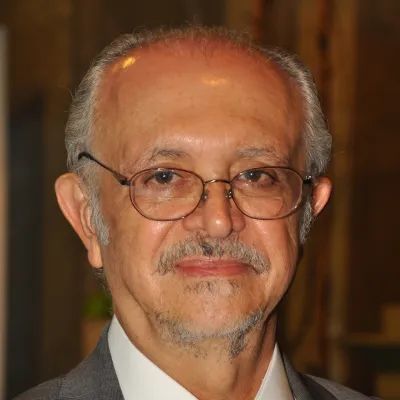
Mario Jose Molina-Pasquel Henriquez
Human Design Chart
Biography
Human Design Analysis: Mario Jose Molina-Pasquel Henriquez as Manifesting Generator 6/3
Manifesting Generator 6/3 — Design at a Glance
Mario Jose Molina-Pasquel Henriquez revealed himself as someone who possessed a hybrid energy combining the speed of a Manifestor and the power of a Generator. His design indicated a tendency to skip steps and engage in parallel multitasking. He had constant sacral energy, which allowed him to quickly pull things into his life by omitting intermediate steps while acting. However, this speed carried risks: sometimes he was too quick and skipped important stages, leading to the need to backtrack later and make up for missed steps. Such situations could rapidly lead to frustration, a typical non-self theme for this type. Additionally, he tended to do multiple things at once by reacting to many different impulses and starting various projects simultaneously. Without paying attention to his strategy and authority, this creative drive often turned into frustration. To address this dynamic, it was advisable not to initiate things himself but rather to respond to external impulses. Only when his sacral center gave a clear "yes" – signaling inner consent – should he proceed. Regular checks to ensure that ongoing projects still had this approval were crucial. If he followed this strategy, Mario Jose Molina-Pasquel Henriquez found deep satisfaction in his work. Under these conditions, parallel working was no obstacle but rather fostered a "play mode" that gave him the necessary variety and enjoyment of the process without becoming overwhelmed.
Emotional Authority
Mario Jose Molina-Pasquel Henriquez revealed himself as someone whose decision-making was inextricably linked to a rhythmic emotional wave cycle. His defined Solar Plexus Center served as his inner authority, a mechanism that always took precedence over other defined centers. This did not mean arbitrariness but rather a specific way of perceiving the world: the world appeared to him colored by his current mood state. At one moment he could be enthusiastic about something, and in the next, he might completely negate the same situation. These fluctuations were not mistakes but the nature of his emotional wave, a constant up-and-down of feelings.
An immediate impulse was for him merely a snapshot, not a clear truth. Quick decisions made from his current emotion had the potential to be misleading or disadvantageous. His design strategy required patience and the conscious application of time as a filter. By not making decisions immediately but letting them "sleep on," he created the necessary distance from the initial emotional high or low. Over time, intense feelings subsided, allowing him to gain clarity and calmness. This process of waiting was essential for reaching his true inner truth, especially with long-term questions that could significantly shape his life course. Only by going through this emotional cycle phase could he ensure that his actions were based on deeper insight rather than fleeting mood.
The 6/3 Profile — Role Model / Martyr
Mario Jose Molina-Pasquel Henriquez lived the first three decades of his life marked by intense self-experiments and a pronounced sense of adventure. This phase was characterized by the energy of Line 3, which encouraged numerous attempts and a certain fondness for risk-taking. Internally, he often felt uneasy about ordinary perfection; his search did not aim at standard solutions but rather sought an extraordinary existence far from everyday norms.
Around age thirty, this dynamic shifted. The energy of Line 6 became active in his life, bringing wisdom and responsibility. While early experimentation did not entirely cease—since Line 3 remained present—it slowed down to allow for deeper reflection. Mario Jose Molina-Pasquel Henriquez developed into a humorous role model who used his unusual experiences to share insightful perspectives.
This transition was shaped by the sense of justice in Line 6, which saw crises as corrective mechanisms and reduced expectations. In contrast, Line 3 sought attention and sometimes had to adapt without abandoning its essence. The tension between the youthful urge for risk-taking and the later, expectation-free stance marked his development. He learned to value experiences for their own sake, not merely as means to an end. This configuration fostered a way of living that went beyond mere purpose-finding and aimed at a kind of innocence and clarity sharpened by crisis experience.
Single Definition — Defined & Open Centers
Mario Jose Molina-Pasquel Henriquez revealed a stable foundation of defined identity and vital power. His defined G Center gave him a consistent inner direction and the deep knowledge that he was lovable without being dependent on others. This security formed the core of his personality. At the same time, he had a defined Sacral Center, which marked him as a Generator: His energy was released not through initiation but by reacting to external stimuli. The immediate yes or no response of his body determined whether he had the strength for a task.
These processes were filtered through his defined Solar Plexus Center, which acted as an emotional authority. Mario Jose Molina-Pasquel Henriquez had to wait out waves of emotion until clarity set in; spontaneous decisions on emotional highs or lows were counterproductive for him. His defined Throat Center allowed him to communicate these mature processes reliably and bring them into the world. His voice came from this inner truth, not from impulsive drive.
In contrast, Head and Ajna Centers were open. This meant mental flexibility without constant concepts. He tended to be guided by a search for answers or inspiration rather than holding onto his own firm theories. His open Heart Center made him vulnerable to the pressure of proving his worth through promises or competition – a trap he had to avoid due to lacking consistent willpower.
Likewise, Spleen and Root Centers were open. This led to absorption of external stress and uncertainty. Mario Jose Molina-Pasquel Henriquez was sensitive to the well-being of his surroundings and tended to cling to things that gave him a false sense of security or was driven into cycles of overactivity by foreign adrenaline rushes. His wisdom lay in observing these absorbed energies without accepting them as his own truth, instead trusting in his sacral response and emotional clarity.
Channels for intimacy, authentic action and persistent discovery.
Mario Jose Molina-Pasquel Henriquez showed himself to be someone who not only sought intimacy but generated it through a powerful connection of sexuality and emotional wave. The Pairing Channel 59-6 connected his Sacral Center with the Solar Plexus; this meant that his ability to merge depended on an inner authority based on patience. He learned to wait until clarity in his emotional wave set in, to avoid confusion and nurture deep, fruitful relationships.
His design also promoted a profound awakening through self-love. The Awakening Channel 10-20 connected the G Center with the Throat Center. Here he expressed that his survival and flourishing depended on living as himself in every moment. This stance of acceptance and trust in oneself was the foundation for his individual leadership; by simply being authentic, he often unconsciously inspired others to be themselves too.
This self-love was strengthened through the Exploration Channel 34-10, which linked Sacral and G Centers. Mario Jose Molina-Pasquel Henriquez followed his own convictions independently of external expectations. His sacral response gave him the strength to live this individual truth without being disturbed by resistance. This created an aura of encouragement that inspired others to honor their unique qualities and build self-confidence.
At the same time, he possessed a charismatic, manifesting power. The Charisma Channel 34-20 channeled his generative energy directly into the Throat Center. This allowed him to act quickly and effectively in the moment if he responded to his inner guidance. His vitality was contagious but required focus on satisfying activities to avoid slipping into chaotic engagement.
Additionally, the Discovery Channel 29-46 shaped his life path through persistence. He let go of expectations and trusted that the significance of his experiences would reveal itself later. Through positive reaction and unwavering commitment to his process, he could make discoveries that expanded collective understanding.
Prioritized Gates like Gate 36 (Crisis as Movement) and Gate 15 (Collective Rhythm) underscored his ability to move through cyclical changes and adapt to natural orders while Gate 3 (Mutation) and Gate 62 (Logical Details) enhanced his adaptability and analytical precision in creating new structures.
Individual Circuitry — Circuit Signature
Mario Jose Molina-Pasquel Henriquez revealed himself as someone whose inner identity and life force were inseparably linked. His design was marked by four circuits. The Centering Circuit (Channel 10-34) connected his Sacral with the Identity Center. This generated a pulsating, acoustic energy deep within him. He had a firm sense of self-worth and bold convictions ('I am who I am'). However, lacking a connection to the Throat Center, there was no direct articulation pathway; his strong inner certainty often found no immediate external expression.
The Integration Circuit (Channels 20-10, 20-34) connected Throat, Sacral and Identity Centers into one flow. Here high individuality in 'now' manifested. He could draw power from reacting to life and direct it through intuitive knowledge and proper behavior to make it effective in the present moment.
The Protector Circuit (Channel 59-6) linked Sacral with the Solar Plexus Center. This brought ancient energies of survival and genetics into play. It was about protection, defense, and instinctive care for family continuity – themes of 'Mother and Father'.
The Purpose Circuit (Channel 46-29) also connected Identity with the Sacral Center. It directed attention to the past to reflect on its emotional waves and find meaning behind past events. These felt insights served to learn from history.
As a simple definition, these forces worked coherently. The group structure shows that all defined centers (Solar Plexus, Sacral, G Center, Throat) were energetically connected, creating an integrated experiential world where emotions, identity and expression intertwined.
Left Angle Cross of the Plane 1
Mario Jose Molina-Pasquel Henriquez was structurally defined by the Left Cross of Level 1. This configuration formed the fundamental framework of his character, even though the specific effects on his personality and behavior are not elaborated further in the available data. The Left Cross of Level 1 served as an architectural foundation for his Human Design chart. It determined the underlying energy and potential life patterns without providing a detailed description of the resulting individual traits or behavioral patterns. Thus, the mechanical impact of this configuration remained confined to its existence as a defining element. Mario Jose Molina-Pasquel Henriquez carried this structure as an unchangeable part of his design, which formed the basis for all further interpretations of his energy. Without additional information about specific channels or centers within this cross, it can only be noted that this aspect provided the overarching context of his internal makeup. It represented a fixed point in his design that influenced the general direction and quality of his presence, even though the concrete manifestations thereof are not specified. The Cross stood as a symbolic and mechanical anchor point for his entire Human Design constellation.
Saturn Return · Uranus Opposition · Chiron Return · 2nd Saturn Return — Life Cycles
Mario Jose Molina-Pasquel Henriquez's life followed a clear structure of existential turning points marked by planetary returns. These cycles did not function as random events but condensed years of inner work into visible, durable results. His design was evident in the ability to develop long-term stances and carry them outward at critical junctures.
The first Saturn return occurred around age 29. This cycle often demands confrontation with one's own limits and the necessity to take responsibility for what has been accomplished so far. For Mario Jose Molina-Pasquel Henriquez, this phase culminated in his doctoral dissertation at the University of California, Berkeley, in 1972. The academic qualification here was less a mere conclusion than the structural consolidation of his professional identity and the beginning of a serious career path.
Later came the Chiron return, which in Human Design describes the cycle of fulfillment and bloom. At this age, the incarnation cross increasingly unfolds; meaning and purpose become experiential if one has lived according to strategy and authority. It is not about healing injuries but completing one's own purpose. This was evident in 1995 when Mario Jose Molina-Pasquel Henriquez received the Nobel Prize for Chemistry at age 52. This recognition was external proof that his lifelong work had found its full resonance and societal acknowledgment at this point. Both returns thus marked not interruptions but necessary crystallization points of his work.
Manifesting Generator · Emotional Authority — Synthesis
Mario Jose Molina-Pasquel Henriquez lived a life deeply influenced by an inner dynamism. His design as a Manifesting Generator (MG) with defined sacral energy and emotional authority pointed to someone who tended towards quick initiation – a trait amplified by the connection between the Sacral Center and Throat Center – but also felt the need to let decisions mature in the depth of his feelings. This combination of impulsive energy and emotional wave movement shaped his approach to life, pursuing both adventures and a search for inner clarity. The profile as a role model and experimenter underscored this tendency towards constantly trying new things while gathering wisdom, especially after the Saturn return around 1972, which marked a turning point in his career.
A central paradox in his design lay in the interplay of speed and patience. As an MG, he could seize opportunities quickly and draw things into his life, yet emotional authority required slowing down to await emotional clarity. This tension was also evident in the Centering Circuit, which combined inner strength and conviction with a certain individuality – someone both action-oriented and mindful of their inner truth. The success that came to him in 1995 through the Nobel Prize could be seen as an expression of this inner alignment, enabling groundbreaking work while simultaneously walking his own path.
5 Defined Channels
Incarnation Cross - Left Angle Cross of the Plane 1
Solar Return
The Solar Return shows the moment when the sun returns to its exact birth position - your personal solar year.
Life Cycles
Discover the life cycles with a detailed triple view (birth chart, cycle chart, composite).
Human Design Profile
- Strategy
- To respond - wait for something to respond to
- Authority
- Emotional Authority
- Profile
- 6/3 - Role Model / Martyr
- Definition
- Single Definition
- Incarnation Cross
- Left Angle Cross of the Plane 1
- Date of Birth
- 19.03.1943 10:00
- Place of Birth
- Mexico City, Mexico
Frequently Asked Questions
What is Mario Jose Molina-Pasquel Henriquez's Human Design type?
Which Profile did Mario Jose Molina-Pasquel Henriquez have?
What Authority guided Mario Jose Molina-Pasquel Henriquez?
What incarnation cross did Mario Jose Molina-Pasquel Henriquez have?
When was Mario Jose Molina-Pasquel Henriquez born?
Discover your own Human Design
Are you also a Manifesting Generator? Find out in a personal reading how to unfold your multi-talents and direct your energy wisely.
More Personalities
Back to overviewAldair
Alizée

Angeli

Arletty
Artus

Balthus