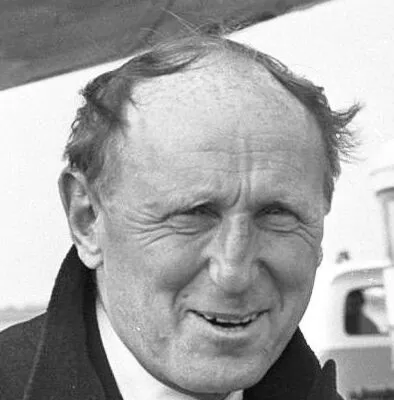
Photo: Wikimedia Commons
Mario Vargas Llosa
Human Design Chart
Biography
Vargas Llosa became one of Latin America's most significant novelists and essayists. He was a prolific writer, a master of dialogue and shifting perspective, whose novels and stories include comedies and tragedies, historical novels, murder mysteries, and political thrillers.
Several of Vargas Llosa's novels have been adapted as motion pictures, mostly in Spanish.
In 1990 Vargas Llosa lost his bid for the presidency.
He was a close acquaintance of fellow Nobel laureate Gabriel Garcia Marquez, but after a famous brawl in 1976 both writers made it clear for decades that they were not on speaking terms.
Mario Vargas Llosa died on 13 April 2025 in Lima at the age of 89.
Mario Vargas Llosa — Projector with Profile 4/6
Projector 4/6 — Design at a Glance
Mario Vargas Llosa appeared as someone with a dense, focused aura that immediately recognized systemic flaws. His design acted like a bright flashlight, illuminating the dark and guiding the way. He could see instantly what wasn't working for others. However, direct corrections often provoked resistance, as if he shone his bright light directly into the face of his counterpart. It was more elegant for him to shine by example through his own harmonious presence. Others were drawn to his radiant presence and sought contact.
The central strategy involved waiting for a respectful invitation. This protected against energy depletion and the typical bitterness of Projectors. Since his Sacral Center was undefined, he lacked a constant intrinsic energy source. Instead, he experienced rhythmic phases of high activity followed by necessary rest periods to avoid burnout. The conventional system often ignored this need. Living according to this design rewarded Mario Vargas Llosa with success. Deviations led sooner or later to frustration and the feeling of non-recognition. His path lay in not pushing himself independently but waiting until others invited him based on his clear vision. This patience was not passive, but an active energy conservation that made his unique abilities effective.
Splenic Authority
Mario Vargas Llosa showed an inner orientation based on a fine, immediate impulse. His design carried the authority of the Spleen Center, meaning his defined Spleen Center functioned as a health and alarm system. With his open Emotional and Sacral Centers – prerequisites for this specific authority in Projectors or Manifestors – he possessed spontaneous survival intelligence. His instinct and physical well-being served as reliable indicators of whether an environment or situation was right for him.
Decisions had to be made in the moment; the first impulse was correct and immediately served his health. This allowed him to rigorously shield against harmful influences. However, since this Spleen impulse was very subtle and only occurred once at a time, his lifestyle required high vigilance not to miss it or have it drowned out by other voices.
Since what was right could only be recognized in the moment, plans often changed short-term. Long-term commitments were therefore difficult; instead, he preferred flexibility and avoided rigid bindings in favor of spontaneous discoveries. Freedom was essential for him to let this spontaneous intelligence work effectively and protect himself.
The 4/6 Profile — Opportunist / Role Model
Mario Vargas Llosa's design established a clear development line: from the experimental search in his youth to the later role as a wise role model. As a 4/6 “Networker/Role Model”, he initially appeared like someone with Line 3 – curious, ready for experimentation, especially in the realm of relationships and friendships. This phase typically ended before Saturn's return, that is, within his first three decades.
Afterwards, the tension between Heart and Head emerged. Line 4 anchored him in the need for community and deep connections, while Line 6 stirred a desire to withdraw to think about the meaning of life – metaphorically sitting on a mountain, distanced from the masses. This conflict shaped his inner stance: The great heart of Line 4 had to learn to be cautious not to get hurt by false bonds. At the same time, he was often confronted in later life with the high demands of being a wise role model.
His profile challenged him to use his deep insights to order and inspire others. The fourth line at Gate 17 gave him the ability to recognize other people's motivations and structure them – which always carried the risk of being perceived as manipulative. The sixth line at Gate 58 complemented this with an experimental spirit: It only released energy if the attempt had social value. Mario Vargas Llosa lived this dynamic by using his practical experience to instill identity and order in his environment, always balancing between the desire for closeness and the necessity of wise distance.
Split Definition — Defined & Open Centers
Mario Vargas Llosa was characterized by a constant, autonomous axis of mental conceptualization and direct manifestation. His defined Ajna Center ensured consistent independent thinking that he directly expressed through his defined Throat Center. This connection allowed him to articulate concepts without hesitation. Simultaneously, his defined Spleen and Root Centers were at work: The Spleen Center provided intuitive momentary judgment for health and well-being, while the Root Center generated a steady survival pressure that propelled him forward. These four defined centers guaranteed a trustworthy independent structure.
In contrast, Head, G, Heart, Sacral, and Solar Plexus Centers remained open. His open Head Center received inspiration from outside but tended to confusion through foreign questions. Mario Vargas Llosa did not independently seek answers to global puzzles but was inspired or confused when the context was missing. His open G Center had no fixed identity; he reflected the direction and love of his environment. He did not actively search for a firm 'I', but found orientation through the right place and people around him.
His open Heart Center meant that he lacked consistent willpower. He tended to question whether he was contributing enough or keeping promises, often ending in frustration when trying to prove his worth through performance. Instead, he had to learn not to compete. His open Sacral Center did not have a constant energy flow; he absorbed the vital energy of others and risked exhaustion if he ignored boundaries. He worked in spurts and needed rest phases as he could not respond generatively. Finally, his open Solar Plexus absorbed emotions from the environment. He mirrored moods and tended to avoid conflicts to prevent emotional waves rather than expressing his own feelings. This openness challenged him to release identity, will, and energy claims and allow reflection of the surroundings.
Channels for acceptance, curious search and critical judgment.
Mario Vargas Llosa was someone whose mind was constantly engaged in ordering details into a mental system. His inclination towards logical structuring and verbal articulation formed the foundation of his expression style. The Acceptance Channel 17-62 connected the Gate of Opinions with the Gate of Details, making information understandable only when it could be integrated into an existing visual pattern. What did not fit remained incomprehensible. This internal pressure to organize resulted in a pressing need to verbally formulate these ordered thoughts as soon as the opportunity arose.
This logical basis was complemented by two additional mechanisms. The Curiosity Channel 11-56 connected the Gate of Ideas with the Gate of Inspiration. Here, finding an ultimate truth was less important than the process of discovery itself. Mario Vargas Llosa used this energy to weave stories from abstract concepts and experiences that stimulated and taught others. It was a way of storytelling based on the magic of connecting ideas rather than dry facts, focusing on how these could work in narrative form.
Parallel to this, the Judgment Channel 58-18 connected the Gate of Vitality with the Gate of Correction. This channel drove an insatiable urge to question and perfect patterns. It was a kind of internal watchman assessing whether something was balanced or needed correction. This perfectionist tendency complemented logical structuring through critical refinement, constantly reviewing existing approaches for their sustainability and efficiency. The combination of systematic classification, narrative curiosity, and corrective judgment shaped his way of processing and conveying information.
Collective Circuitry — Circuit Signature
Mario Vargas Llosa's design presented a pronounced duality between rational future orientation and emotional past resolution. These two streams existed parallel to each other as he had a split definition: the centers were not continuously connected but formed separate energetic blocks.
The Understanding Circuit in him linked Ajna and Throat Centers, as well as Spleen and Root Centers. This created a focus on logic, strategy, and structure to steer society towards a better future. Through the channels 'Acceptance' (17-62) and 'Judgment' (18-58), this energy worked as emotionless ratio. The goal was to communicate rational insights free from conditioning. The visual orientation of this side served to clearly illustrate complex connections.
Simultaneously, the Meaning Circuit also linked Ajna and Throat Centers but through the channel 'Curiosity' (11-56). This area turned towards the past and processed emotions as well as experiences in cyclical wave movements. Unlike the cool logic of the other circuit, this was felt knowledge often inexplicable or illogical. Even this side aimed at sharing with the collective to learn from the past together.
Both circuits shared a foundation of Format Energy and visual orientation, which strengthened the urge to communicate. While the left chart side looked strategically into the future, the right side reflected on past events to grasp their meaning. Mario Vargas Llosa thus lived with two complementary forces: a structured, forward-looking reason and a wave-like, past-oriented emotionality, both united in the impulse to share knowledge.
Right Angle Cross of Service 1
Mario Vargas Llosa revealed himself through a deeply rooted orientation towards service and devotion. His design suggested that he did not primarily see his life as an individual competition, but rather as an opportunity to serve others or a greater cause. This fundamental attitude stemmed from the configuration of the right cross of service 1.
In Human Design mechanics, this pattern describes an inner commitment that goes beyond mere politeness. It is a structural alignment where the well-being of others or a community takes center stage. Mario Vargas Llosa lived this dynamic not as an external duty but as his central life mission. His energy flowed towards where he could offer support and care.
This design element shaped his interactions with the world, creating a natural inclination to take responsibility and contribute without necessarily seeking recognition. The focus was on the act of giving itself. Mario Vargas Llosa thus understood himself as part of something greater whose function it was to instill stability or assistance through his efforts. This orientation significantly determined how he perceived his role in social and professional contexts: always serving a cause larger than his own ego.
Saturn Return · Uranus Opposition · Chiron Return · 2nd Saturn Return — Life Cycles
Mario Vargas Llosa's life followed a clear rhythmic structure, marked by four distinct astrological cycles. These phases served as decisive structuring moments for his development and work. The first Saturn return cycle around the age of 30 often marked the transition from education to established existence. For Mario Vargas Llosa, this phase condensed in 1967 when he received the Press Prize Rómulo Gallegos at the age of 31 – an early sign of his literary recognition and stability.
The Uranus opposition around the age of 40 often brought internal tensions or sudden breaks that dissolved old patterns. This was evident for Mario Vargas Llosa in 1976 when, at the age of 40, he got into a public brawl with Gabriel Garcia Marquez. This event reflected the typical turbulent energy of this cycle, challenging existing bonds and identities.
The Chiron return cycle around the age of 50 marks an achievement phase where personal meaning increasingly unfolds. For Mario Vargas Llosa, this peak was visible in 1985 when he was knighted into the Legion of Honor at the age of 49 – a confirmation of his cultural significance and fulfillment.
The second Saturn return cycle around the age of 60 often solidified an achieved position in a new form. Mario Vargas Llosa received Spanish citizenship in 1993, at the age of 57. This step underscored his changed affiliation and the conclusion of a long journey of integration and recognition on an international level.
Projector · Splenic Authority — Synthesis
He was a projector who through his ability to recognize patterns (defined Ajna Center) and communicate them precisely (Channel of Curiosity), took on a special role in his environment. However, this gift of immediately grasping errors or improvement potentials often came with direct communication that could provoke resistance in others. Over time, he increasingly developed the ability to indirectly influence and inspire others to find their own solutions by sharing insights and stories (Channel of Curiosity) – an evolution that strengthened as a role model in later years (Profile 4/6).
A central paradox shaped his life: the tension between the need for belonging (Line 4 in Profile) and the drive for independent thinking and the search for deeper meaning (Line 6 in Profile). This led to an internal conflict that manifested differently at various stages of life – both in relationships and in dealing with societal issues. The Spleen Authority pointed to a pronounced ability for self-care and setting boundaries, which was always in harmony with the need for connection.
3 Defined Channels
Incarnation Cross - Right Angle Cross of Service 1
Solar Return
The Solar Return shows the moment when the sun returns to its exact birth position - your personal solar year.
Life Cycles
Discover the life cycles with a detailed triple view (birth chart, cycle chart, composite).
Human Design Profile
- Type
- Projector
- Strategy
- Wait for the respectful invitation
- Authority
- Splenic Authority
- Profile
- 4/6 - Opportunist / Role Model
- Definition
- Split Definition
- Incarnation Cross
- Right Angle Cross of Service 1
- Date of Birth
- 28.03.1936 00:45
- Place of Birth
- Arequipa, Peru
Frequently Asked Questions
What is Mario Vargas Llosa's Human Design type?
What Profile did Mario Vargas Llosa have?
What Authority Did Mario Vargas Llosa Have?
What incarnation cross did Mario Vargas Llosa have?
When was Mario Vargas Llosa born?
Discover your own Human Design
Are you also a Projector? Find out in a personal reading how to unfold your leadership qualities and recognize the right invitations.
More Personalities
Back to overviewSissy Spacek
Alain-Fournier
Anémone
Angeli
Ann-Margret
Bourvil