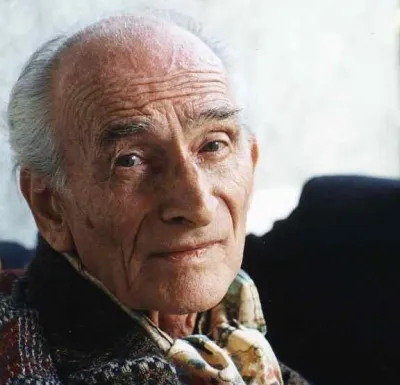
Marisa Berenson
Human Design Chart
Biography
She made her film debut in Visconti's "Death in Venice," but her best roles were in "Cabaret," 1975 and "Barry Lyndon," 1980. She also played in the TV drama series, "Holocaust."
A fashion model discovered as a teenager by Vogue editor Diana Vreeland, Berenson came to prominence in the 1960s ("I once was one of the highest paid models in the world", she told The New York Times). She appeared on the cover of the July 1970 issue of Vogue as well as the cover of Time on 15 December 1975. She appeared in numerous fashion layouts in Vogue in the late 1960s and early 1970s.
She was known as "The Queen of the Scene" for her frequent appearances at nightclubs and other social venues in her youth, and Yves Saint Laurent dubbed her "the girl of the Seventies".
She maintained homes in Beverly Hills and Manhattan, but travelled extensively, intermittently working in Europe. Berenson authored a fashion book, "Dressing Up," with photos by her sister Berry Perkins.
On 11 September 2001, her younger sister and sole sibling Berry, widow of actor Anthony Perkins, was killed in the first flight to hit the World Trade Center.
Berenson lives in a villa on the outskirts of Marrakesh, Morocco. She is fluent in English and Italian.
Marisa Berenson as a Projector 2/5 in Human Design
Projector 2/5 — Design at a Glance
Marisa Berenson's design has a tendency towards a dense, focused aura that immediately recognizes systemic errors. This profile acts like a bright flashlight shining directly on areas in the environment that are still 'in the dark', illuminating paths for others and bringing light to darkness.
The mechanics of this Projector type mean that Marisa Berenson intuitively saw what was wrong with others or where systems were failing. However, direct criticism of these flaws would often provoke resistance, similar to shining a bright light directly into someone's face. Instead, the more effective strategy was to attract through her own harmony. When Marisa Berenson maintained a harmonious presence herself, she automatically became attractive; others then sought contact voluntarily and asked for advice. The core strategy therefore consisted of waiting for an appreciative and sincerely meant invitation rather than being proactive.
Since her design does not have a constant life energy center, her energy fluctuates. Phases of high activity and fast workability alternate with necessary rest phases to prevent burnout. If she could live these rhythms, she was rewarded with success. When her design was ignored or the environment demanded constant availability without invitation, her Non-Self theme bitterness would eventually arise.
Splenic Authority
Marisa Berenson showed a decision-making process based on subtle, immediate inner signals - a kind of survival intelligence that instantly informed her whether a situation or person was healthy for her. This ability came from her defined Spleen Authority, a mechanism that only appears in Projectors and Manifestors because the Emotional and Sacral centers must be open. The spleen functions as an alarm system; its first impulse is always correct and serves to protect well-being directly. This allowed Marisa Berenson to rigorously distance herself from harmful influences by intuitively withdrawing from unsuitable contexts.
Since this Spleen impulse, however, was extremely fine and only occurred once in the moment, its use required high vigilance. It could easily be drowned out by external advice or her own considerations. Therefore, withdrawal was often necessary to clearly hear this silent voice. Because knowledge of what is right always arises in the present, long-term planning was difficult for Marisa Berenson; plans could change at short notice. Her design therefore required a lot of flexibility and space rather than rigid structures. She did not act based on prior analysis but reacted spontaneously to the current health state of her environment. This mechanism shaped her life through the necessity of deciding in the moment and binding herself little, so as not to suffocate her inner intuition.
The 2/5 Profile — Hermit / Heretic
Marisa Berenson revealed a fundamental internal conflict between a deep need for withdrawal and an external expectation to function as a problem solver. Her design tended towards spending time in isolation to gain inner clarity while others simultaneously reached out to her for solutions to their own difficulties. This dynamic arises from her Profile 2/5: Line 2 gives the quality of a recluse, who needs practicality and pragmatism to use his energy productively without wastage. At the same time, others project onto line 5 heroic authority and expect immediate help.
For Marisa Berenson, strict selectivity was crucial. She had to learn to consciously use her 'alone time' to look inward and precisely define what she wanted to commit herself to. Only through this withdrawal could she ignite her inner flame and decide when and how to respond to the projections of others without losing herself or falling into arrogance as a protective mechanism. The balance lay in not immediately following every call for help but first checking her own strength. This allowed her to consciously apply her innate dignity and power, rather than losing it through constant availability. Her path was marked by the necessity to distinguish clearly between the desire for private experience and the public role of savior to act authentically.
Single Definition — Defined & Open Centers
Marisa Berensons design points to a tendency for clear and intuitive expression rooted in a stable inner direction. Her defined Throat functions as a reliable channel for communication and action, drawing from the G Center—the seat of her firm self-identity and sense of love and right life direction. This is complemented by her defined Spleen Center, which provides spontaneous intuition and existential awareness in the present moment. This configuration allows her to articulate truths from her Higher Self, guided by a deep bodily knowledge that makes immediate judgments about health and well-being.
At the same time, she has seven open centers, making her vulnerable to external conditioning. Her open Head and Ajna Centers mean no constant mental inspiration or conceptual stability; instead, she tends to identify with others' questions and doubts or seek answers that are not her own concern. The lack of a stable will in her open Heart Center carries the risk of a cycle of promises and disappointment if she tries to prove her worth through performance. Additionally, her open Solar Plexus absorbs emotions from the environment, while her open Root and Sacral Centers amplify stress and foreign energy without generating or regulating it themselves. The challenge lies in not carrying these absorbed energies as personal burdens but rather clearly delineating them with the reliable voice of her defined centers and learning to use her inner authority instead of mental pressure or external expectations.
Channels for leadership, reflection and intuitive experimentation.
Marisa Berenson showed a tendency towards logical, collective leadership based on proven patterns. This results from the Alpha Animal Channel 31-7, which connects the G Center with the Throat Center. Gate 31 embodies the collective leader, while Gate 7 provides the logical role – often described as "the power behind the throne." This configuration requires that leadership is not imposed but legitimized by invitation from the community; it works through influence and understanding of current trends rather than absolute authority.
Parallel to this, reflection and experience collection shaped her essence. The Lost Son Channel 33-13 also connects G and Throat Centers. Here, Gate 13 as listener gathers information and secrets, while Gate 33 withdraws to digest these experiences. This mechanism promotes patience: wisdom arises only through contemplation of past events before being passed on. It is about learning from history and fostering continuity rather than rushing into the future.
A third aspect involved developing talent through refinement. The Wavelength Channel 48-16 connects the Spleen Center with the Throat Center. Gate 48 seeks intuitive depth and life-critical information, while Gate 16 perfects skillfulness through repeated experimentation. This combination transforms raw ability into mastery but requires recognition and resources to maintain the process of refinement. It is a path from technical proficiency to unique expression.
Additionally, individual gates influenced her: Gate 30 steered emotional awareness and the longing for positive experiences; Gate 29 brought persistence and saying "yes" to challenges. Gate 8 fostered an individual contribution to the group, while Gate 14 guided skillful power accumulation. In the design, Gates 35 (change through interaction), 50 (conservative values and protective reflexes), and 44 (watchful transformation) supported these dynamics. Gate 45 rounded out the picture with tribal energy and hierarchical attraction.
Collective Circuitry — Circuit Signature
Marisa Berenson is characterized by a tension field between rational future orientation and emotional reflection on the past. Her design combines logical strategy with cyclical emotional movements, both aimed at sharing insights with the collective.
The Understanding Circuit activates an "emotionless ratio," focusing on logic and structural improvement in the future through clarity of thought. For Marisa Berenson, this circuit connects the Throat Center (Communication), Identity Center (Who-I-Am), and Spleen Center (Intuition/Survival). This created a direct line to strategically structure intuitive perceptions and express them clearly.
In contrast, the Meaning Circuit works in waves and emotionally, driven by reflection on past experiences. Here she links her Throat Center with her Identity Center via Channel "The Lost Son." This connection allowed her to cycle through emotional patterns from the past, grasp their deeper meaning, and authentically share these lived lessons.
While one energy is cool and analytically future-oriented, the other seeks meaning in past events. Both aspects culminate in the Throat Center: Marisa Berenson's design promotes sharing insights—whether as rational strategy or emotional truth—thus building bridges between individual experience and collective learning.
Right Angle Cross of Contagion 1
Marisa Berenson acted as a catalyst for unconscious dynamics simply by her presence. Her design carried the signature of the Right Hand of Infection Cross, a configuration that does not require an active teaching or conscious belief but rather unfolds a passive yet powerful radiance. Through her own authenticity and inner truth, she triggered waves in others without consciously steering them. Others absorbed these energies and passed them on, a process of infection metaphorically speaking: patterns and beliefs were activated simply because Marisa Berenson was true to herself. This was not manipulation but a natural process of being. Her presence alone was enough to awaken and spread certain states in her environment. This mechanism shows that change often occurs subtly when an individual embodies their own truth, thereby unconsciously carrying others along with them. Marisa Berenson was the starting point for this chain reaction, not through words or actions in a narrow sense but through the quality of her existence itself. She infected others with her inner dynamics, a process independent of her will that defined her unique role in interpersonal fields.
Saturn Return · Uranus Opposition · Chiron Return · 2nd Saturn Return — Life Cycles
Marisa Berensons design points to a tendency towards structural consolidation and identity establishment, particularly during the transition from experimental youth to an established adult role. This phase marks her first Saturn return cycle (around age 28), when years of groundwork often condense into a solid result, making inner structure visible on the outside.
In 1975, at the age of 28, Marisa Berenson appeared in Stanley Kubrick's "Barry Lyndon." This event served as concrete evidence for this mechanism: The performance was not just a career move but an expression of a solidifying role and clearer self-image. The Saturn return acts here as a catalyst that transforms accumulated experiences into stable form. It is about building durability and taking up a position beyond mere experimentation. Through this configuration, it shows how internal maturation processes are confirmed by external milestones. The energy of this cycle helps to shed the uncertainties of youth and develop adult authority based on real substance. Marisa Berenson used this moment to anchor her presence in a demanding artistic context, which is typical of the condensing effect of this astronomical event.
Projector · Splenic Authority — Synthesis
Marisa Berensons chart reveals a central continuity of deep perception and transformative potential. The combination of defined G Center, Spleen Center, and Throat Center indicates a person who possesses authentic self-knowledge and uses this ability to grasp subtle dynamics in their environment – casting an inner "light into the dark" (Projector) while maintaining a clear sense of personal values and direction. This configuration allows her to recognize patterns that remain hidden from others and express these insights through communication when invited. The recurring themes of perception (Gate 48, Gate 13) and logical leadership (Gate 7, Gate 31) underscore her ability to act both intuitively and strategically, always mindful of ensuring the quality of her contributions.
A central paradox lies in the tension between her inner compass and the open energy of certain centers. While the defined G Center sets a firm identity and direction, the Solar Plexus, Sacral, and Root Centers are open, making her vulnerable to external influences. This creates a field of tension between the need for authenticity and the challenge of not getting lost in the emotions or stress of others. The ability to perceive and filter these energies becomes a key competence for maintaining her inner truth while engaging with the world.
3 Defined Channels
Incarnation Cross - Right Angle Cross of Contagion 1
Solar Return
The Solar Return shows the moment when the sun returns to its exact birth position - your personal solar year.
Life Cycles
Discover the life cycles with a detailed triple view (birth chart, cycle chart, composite).
Human Design Profile
- Type
- Projector
- Strategy
- Wait for the respectful invitation
- Authority
- Splenic Authority
- Profile
- 2/5 - Hermit / Heretic
- Definition
- Single Definition
- Incarnation Cross
- Right Angle Cross of Contagion 1
- Date of Birth
- 15.02.1947 13:45
- Place of Birth
- New York, NY, United States
Frequently Asked Questions
What is Marisa Berenson's Human Design type?
What Profiles does Marisa Berenson have?
Which Authority guides Marisa Berenson?
What incarnation cross is assigned to Marisa Berenson?
When was Marisa Berenson born?
Discover your own Human Design
Are you also a Projector? Find out in a personal reading how to unfold your leadership qualities and recognize the right invitations.
More Personalities
Back to overviewSissy Spacek

Alain-Fournier

Anémone

Ann-Margret

Baekhyun

Balthus