
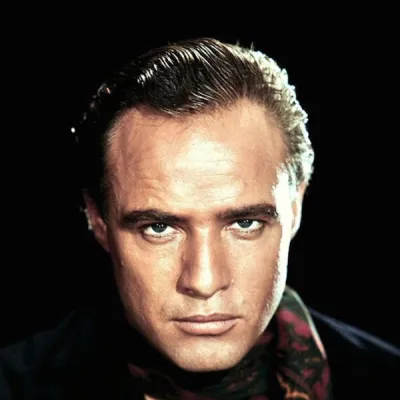
Marlon Brando
Human Design Chart
Biography
Brando came under the influence of Stella Adler and Stanislavski's system in the 1940s. He began his career on stage, where he was lauded for adeptly interpreting his characters. He made his Broadway debut in the play I Remember Mama (1944) and won Theater World Awards for his performances in Candida and Truckline Cafe (1946). He returned to Broadway as Stanley Kowalski in the Tennessee Williams play A Streetcar Named Desire (1947), a role he reprised in the 1951 film adaptation directed by Elia Kazan.
He made his film debut playing a wounded G.I. in The Men (1950) and won two Academy Awards for Best Actor for his performances as a dockworker in On the Waterfront (1954) and Vito Corleone in The Godfather (1972).
Marlon Brando as a Generator 5/2 in Human Design
Generator 5/2 — Design at a Glance
Marlon Brando had immense sacral energy, making him an extremely enduring figure. His design characterized him as someone who appeared to work like a draft horse: strong and resilient, but only when he possessed inner motivation for his tasks. This power did not unfold through self-initiation but exclusively through responding to impulses from his environment.
The central mechanics of his Generator type lay in the fact that the energy of his sacral center became free only when he responded to external signals. The motto was therefore: Do not initiate, but react. When Marlon Brando reacted to a life signal and confirmed it internally with a clear "yes," he could respond with consistent action, leading to deep satisfaction and a sense of comprehensive fulfillment.
However, his design featured two major pitfalls. The first occurred when he persistently carried out tasks that did not interest him. In such cases, he wasted his energy, which quickly led to burnout or prolonged frustration given his high creative potential. The second danger lay in being prevented from working on his heart project while still full of power and wanting to continue working. If he did not live by the principle of reacting from his gut, he encountered a lack of energy. Only in harmony with this strategy could no one stop him.
Emotional Authority
Marlon Brando's design indicated a tendency towards cyclical detachment in decision-making; spontaneous impulses were misleading for him. He was someone who used waiting for emotional clarity as a necessary filter against false judgments. This attitude stemmed from his emotional authority, carried by a defined Emotional Center. In Human-Design, this center is always the inner authority, regardless of other definitions in the chart. Marlon Brando was subject to an emotional wave with constant ups and downs of feelings. The world appeared to him colored by his current mood: totally excited at one moment, negative the next. His immediate feeling was merely a snapshot, a first impression, not necessarily the truth. Quick, spontaneous decisions based on this emotion often had negative consequences. The more time he took to let a decision mature, the deeper and more comprehensive his understanding became. This required patience and repeatedly sleeping on questions. He would hesitate properly, allowing himself to be asked multiple times. Over time, intense feelings subsided, and he gained emotional distance. Then clarity and calmness set in. He had gone through the process. This primarily applied to long-term decisions with significant influence on his life course. Emotional authority therefore did not dictate immediate action but a necessary processing phase for achieving calm before making the final choice.
The 5/2 Profile — Heretic / Hermit
Marlon Brando's design set a tendency towards a fundamental inner tension field: the drive for public recognition and leadership in crisis situations (Line 5) was countered by the need for strict restraint and discretion (Line 2). He showed himself to be someone who initially hid his gifts, using the "Cave" for intensive self-work to prepare for his public role. This configuration described a life task where passive waiting for discovery risked ending in bitterness and frustration. The key lay in taking an active step outward: as soon as he displayed his presence and clear insights, he was valued for this objectivity. At the same time, Line 2 required setting strict boundaries to protect necessary downtime. The dynamics between hiding and wanting to be discovered shaped his essence; ambition fed off of discretion, yet immature energy could weaken loyalty. Brando's design called for impartiality in leadership, coupled with the wisdom to avoid leveraging past interactions for personal gain, thus preserving one’s own strength.
Split Definition — Defined & Open Centers
Marlon Brando's Human Design profile revealed an immense, constant inner energy characterized by five defined centers: Head, Ajna, Sacral, Solar Plexus, and Root. This created a permanent mental pressure – inspiration, questions, and confusion were always present due to the fixed Head and Ajna Centers. However, this mental activity was not a driver for direct action; it could not be initiated. Instead, the defined Sacral Center served as the actual execution motor, its enormous vital energy only being released by external stimuli. The strategy involved waiting for the right impulse to activate the sacral power rather than forcefully pressing mental ideas into the world, which would otherwise have led to frustration.
Decisions were also subject to the emotional authority of the defined Solar Plexus Center. Here, there was no truth in the „now“. Marlon Brando had to wait for the ups and downs of the emotional wave to gain clarity. Impulsive decisions at the peaks or troughs of this wave would have caused chaos; only after completing the cycle did emotional calm set in. The defined Root Center provided an additional constant, adrenaline-fueled pressure to move forward in the world and cope with stress.
At the same time, his design revealed specific vulnerabilities through four open centers. The open G Center meant a lack of stable identity; this was initiated and reflected by the environment. Marlon Brando tended to lose himself in relationships and environments or adopt „borrowed“ identities rather than possessing his own core. The open Throat Center led to fear of invisibility and pressure to force attention through constant speaking or acting, instead of waiting for the natural invitation to speak.
The open Heart Center made him vulnerable to trying to prove his worth through willpower and promises – a cycle of self-doubt since he lacked the constant energy needed for such competitions. Finally, the open Spleen Center was marked by existential fears; spontaneous survival decisions were risky as they often relied on conditioned impulses rather than healthy intuition. The challenge lay in trusting mental and emotional pressures without falling into the traps of identity search or proof pressure.
Channels for change, doubt and emotional release.
Marlon Brando exhibited a pulsating, on-and-off energy of evolutionary change paired with a skeptical mind and a provocative emotional wave. His design set a tendency for melancholic mood swings that he could not rationalize but accepted as a mechanical process.
The Channel of Mutation 60-3 connected the Root Center to the Sacral Center through Gate of Limitation (60) and Gate of Order (3). This configuration generated a powerful frequency of individual circuits, working in unpredictable pulses. Marlon Brando had to learn to accept limitations and move beyond confusion at new beginnings without trying to force change. The inner tension during pauses of this energy was perceived as melancholy; patience was his key until the next mutation unfolded on its own.
Simultaneously, the Channel of Logic 63-4 constantly filtered patterns for their consistency through Gate of Doubt (63) in the Head Center and Gate of Formulation (4) in the Ajna Center. This created a doubting mind that required evidence. For Marlon Brando, skepticism was essential; logic could only function if it was verifiable. This channel served to ask questions and make predictions based on data, not to hold an unfounded belief.
Emotionally, he operated through the Channel of Emotional Release 39-55, connecting the Root Center with the Solar Plexus. Gate of Provocation (39) and Gate of Spirit (55) set a wave between joy and sadness in motion. Marlon Brando provoked others' minds to reveal their true nature. His mood swings were not a weakness but a deep, creative force. By living authentically and embracing his emotional depth – whether ecstatic joy or melancholic uncertainty – he profoundly influenced the perception of his environment. This synthesis of mutative change, logical scrutiny, and emotional provocation defined his unique aura.
Individual Circuitry — Circuit Signature
Marlon Brando's design set a tendency towards pulsating, acoustic energy aimed at following one's true path and forming new identity. This was evident through the connection of Sacral, Root, and Solar Plexus Centers in the Knowledge Circuit. The mutation from Channel 3-60 promoted deviations from the known, while Channel 55-39 released emotions. This configuration contributed to creating entirely new knowledge and expressing it through the Throat Center using emotional waves, initiating transformation for others.
Parallel existed a separate energetic structure: The Understanding Circuit connected Head and Ajna Centers via Channel 63-4 (Logic). As Marlon Brando had a Split Definition, these two circuits did not form a direct connection. Rational, emotionless logic of the future stood isolated beside emotionally driven identity creation. While the Knowledge Circuit emphasized creativity and individuality through emotional authenticity, the Understanding Circuit focused on visual strategies for societal improvement. Both systems worked side by side: one propelled forward through intuitive mutation and emotional expression, the other through logical structuring without their energies overlapping or forming a common flow.
Left Angle Cross of Endeavour 1
Marlon Brandos Design featured the Left Cross of Effort structure. This configuration established a foundational stance where effort and the process of striving were central. It was a profound archetypal energy that shaped his innermost being without being amplified through specific channels. This meant that this dynamic did not manifest as a focused channel or clearly defined expression outwardly, but rather as a diffuse yet persistent undercurrent. The energy of effort was present, remaining in an unrefined and less channeled form compared to other configurations. It formed the foundation of his inner landscape, a constant struggle or striving that did not necessarily lead to visible external success but significantly shaped his experiential world. The Left Cross 1 thus described a quality of life defined by the act of effort itself, independent of its outcome. It was a structure of inner work that prompted Marlon Brando to continually grapple with the process of doing and striving without this process becoming visibly apparent through a clear channel.
Saturn Return · Uranus Opposition · Chiron Return · 2nd Saturn Return — Life Cycles
Marlon Brando's design set a tendency for recurring cyclical patterns in career and public perception, marked by phases of ascent, crisis, and rejection. This structure was evident in his first Saturn return: In 1952 he directed "The Wild One" under Stanley Kramer – a moment when years of groundwork condensed into a solid result.
His Uranus opposition often brought a phase of change or confrontation with established structures. In 1963, "The Ugly American" hit the cinemas and received little public interest, illustrating this crisis-ridden transitional period.
The Chiron return around age 49 is a fulfillment cycle in which one's incarnation cross unfolds and meaning becomes experiential – provided that one lives according to strategy and authority. For Marlon Brando, this point fell in 1973: He was awarded best actor for "The Godfather," but he declined the award. This marked not a healing, but a complex engagement with his own purpose and public recognition at the highest level.
His second Saturn return around age 57 often calls for a redefinition of responsibility and structure. In 1981, Marlon Brando was nominated as worst supporting actor, an event that highlighted the ongoing tension between his inner compass and external evaluation. These cycles shaped his path not as a linear ascent but as an ongoing test of his own authority against the world's expectations.
Generator · Emotional Authority — Synthesis
Marlon Brando lived an inner continuity between creative energy and the urge to express it authentically. As a Generator, he possessed enormous endurance (sacral energy), yet emotional authority required time for decisions to mature. This process was further complicated by his Profile as Hero/Natural Talent: the desire for recognition clashed with the need for withdrawal and solitude, leading him often to develop his gifts in secrecy. The defined mental pressure (Head Center) led to constant inspiration and questions, which through the Channel of Mutation (3-60) added unpredictable energy – a pulsing between limitation and the desire for evolutionary innovation.
A central paradox in Brando’s design was the tension field between inner strength and external resistance. His defined sacral energy (Generator type) promised creative power, yet the emotional wave and the accompanying process of weighing options could slow him down. The left authority of effort suggests a tendency to strive to achieve goals, which combined with the Channel of Mutation (3-60) led to an interplay between creative impulse and inner melancholy – especially when expectations from himself or others were not met. Certain cycles showed up as crisis points (Uranus opposition, Chiron return), in which this internal conflict was particularly evident.
3 Defined Channels
Incarnation Cross - Left Angle Cross of Endeavour 1
Solar Return
The Solar Return shows the moment when the sun returns to its exact birth position - your personal solar year.
Life Cycles
Discover the life cycles with a detailed triple view (birth chart, cycle chart, composite).
Human Design Profile
- Type
- Generator
- Strategy
- To respond - wait for something to respond to
- Authority
- Emotional Authority
- Profile
- 5/2 - Heretic / Hermit
- Definition
- Split Definition
- Incarnation Cross
- Left Angle Cross of Endeavour 1
- Date of Birth
- 03.04.1924 23:00
- Place of Birth
- Omaha, United States
Frequently Asked Questions
What is Marlon Brando's Human Design type?
What Profile did Marlon Brando have?
What was Marlon Brando's Authority?
What is Marlon Brando's incarnation cross?
When was Marlon Brando born?
Discover your own Human Design
Are you also a Generator? Find out in a personal reading how to use your sacral energy correctly and discover deep satisfaction.
More Personalities
Back to overviewSissy Spacek

Aaliyah

Alexia

Anémone

Angèle

Ann-Margret
