
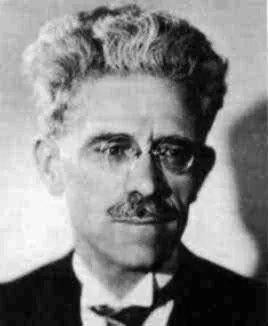
Maurice-Rene Frechet
Human Design Chart
Biography
He died on June 4, 1973.
Maurice-Rene Frechet — Generator with Profile 4/1
Generator 4/1 — Design at a Glance
Maurice-René Fréchet revealed himself as someone with remarkable inner endurance, comparable to that of a workhorse. His design as a Generator endowed him with a high capacity for sustained effort, provided he acted in harmony with his specific mechanics. The central dynamic of his character did not lie in the active initiation of projects but rather in responding to impulses from the environment. Only through this response could he effectively utilize the energy of his Sacral Center.
This “yes” signal from the gut was the key to his productivity and satisfaction. When Maurice-René Fréchet responded to such life signals, his strength flowed naturally and sustainably. Conversely, ignoring this inner guidance or forcing initiatives led to frustration and energy depletion. Two main risks shaped his potential: first, wasting his power on tasks that did not resonate with him internally, leading to long-term exhaustion; second, being interrupted in activities he pursued with full power even though he wanted to continue.
His deepest fulfillment thus arose not from constant pushing forward but through consistent waiting and responding to what truly engaged him. Living by this strategy of reacting rather than initiating enabled no one to hinder his creative force. Avoiding energy waste on unloved paths as well as protecting his heart project from external interruptions were crucial for maintaining his characteristic vitality and preventing burnout symptoms.
Emotional Authority
Maurice-René Fréchets design indicated a tendency towards emotional wave dynamics: His inner truth did not manifest in immediate reactions but only after going through an emotional cycle. As someone with defined Emotional Authority, he was subject to permanent fluctuations between enthusiasm and distance. This configuration meant that his current mood merely represented a provisional coloring of perception, not the final realization. Spontaneous decisions thus carried the risk of being based on an incomplete snapshot.
The mechanics of his inner authority required patience as the central instrument for clarity. Since the defined Solar Plexus Center always took precedence over other defined centers—regardless of further configurations in the chart—Maurice-René Fréchet had to learn not to make decisions based on initial impulses. Instead, the strategy was to wait and consider multiple times. Only when the initial emotional intensity subsided and a calmer state set in did true composure arise. This process of emotional distancing allowed him to recognize deeper connections beyond the first often misleading impression. His decision-making thus was not a linear act but a cyclical process where the quality of choice directly depended on the waited time until the emotional wave had naturally reached its peak and decline.
The 4/1 Profile — Opportunist / Investigator
Maurice-René Fréchet revealed himself as someone deeply rooted in his essence, allowing little deviation from his individual path. As a carrier of Profile 4/1, the only fixed profile in Human Design, his inner structure was stable and unchangeable. This led to a marked dynamic: While Line 4 embodied a big heart and the desire for network and acceptance, the rigid firmness of Line 1 rigorously protected this sensitive center from external influences.
Well-intentioned advice towards change was often felt by Maurice-René Fréchet as fundamental non-acceptance of his essence. Since he neither could nor wanted to fundamentally change, he preemptively excluded people setting such impulses from his emotional space. From the outside, this frequently appeared as stubbornness or inability to accept criticism—traits attributed to him because his inner compass was programmed for constancy rather than adaptation.
This configuration marked the transition from “I” to “you”. Line 1 emphasized humility and the process of rejection as a necessary part of development. Maurice-René Fréchet learned to feel changes and not take rejections personally but store them as reflections. Once he rested secure in his character, he acted like a rock in the waves—steadfast and able to give orientation through his unshakeable presence rather than adapting to the currents.
Split Definition — Defined & Open Centers
Maurice-Rene Frechet was characterized by a consistent internal structure driven by willpower (defined Heart Center), clear direction and love (defined G Center) as well as profound vitality (defined Sacral and Root Centers). His voice (defined Throat Center) served as a reliable channel to bring this energy into the world. With his Solar Plexus being defined, his emotional wave acted as an inner authority; he needed time to clarify feelings before acting.
This configuration created a robust foundation of ego strength and endurance. The Heart Center gave him the power to keep promises and determine resources for himself, while the G Center provided a secure self-worth and sense of life mission. The connection between Sacral and Root Centers generated a constant life impulse and pressure to move forward.
In contrast, Head, Ajna, and Spleen Centers were open. This meant an absence of consistent mental inspiration or spontaneous intuitive certainty. Instead of relying on fixed answers or immediate well-being, he was prone to mental confusion and absorption of uncertainties from the environment. The open Spleen Center tended to reflect fears about survival or health concerns if not guided by his emotional clarity. Rather than making spontaneous decisions or getting lost in intellectual doubts, he learned to use the silence between thoughts and listen to his deep emotional truth. This openness allowed him to be flexible with new information without being overwhelmed as long as he held onto his inner emotional authority.
Channels for intimacy, community, change and reflective expression.
Maurice-Rene Frechet was characterized by a deep desire for genuine belonging and fair exchange. His design suggested that he did not engage in impersonal contacts but waited for direct, personal touch over time. This attitude stemmed from Channel 37-40 in his Persona. This channel connected the Solar Plexus Center with the Heart Center and demanded emotional clarity as well as willpower for agreements. Frechet sought his place within the whole based on the principle: 'I do this for you if you do that for me.' He waited to be asked to become part of an organization, as spontaneous deals did not work here.
Alongside this social focus, other mechanisms were at play. Channel 1-8 connected G Center and Throat Center through Gate 1 (Self-expression) and Gate 8 (Contributing). This gave him the ability to inspire others through his unique example without needing to explain it. His presence attracted attention by living his individual direction.
Channel 60-3 connected Root and Sacral Centers. Gate 60 (Limitation) and Gate 3 (Ordering) created a pulsating energy of change. Frechet had to learn to accept limitation and endure the confusion of a new beginning until new mutations showed up. This melancholic frequency drove evolutionary change, often unexpectedly in the gaps between pulses.
Channel 59-6 connected Sacral and Solar Plexus Centers. Gate 59 (Sexuality) and Gate 6 (Friction) created an electromagnetic connection to intimacy. Here it was about merging and fertility in relationships marked by emotional waves of pleasure and pain. Patience was needed to recognize the timing of these intimate feelings.
Additionally, Channel of the Lost Son 13-33 between G Center and Throat Center was at work. Gate 13 (Listener) gathered information and secrets while Gate 33 (Withdrawal) offered space for reflection. Frechet withdrew to sort experiences and find deeper meaning before sharing these insights. This combination of listening and reflecting allowed him to bring continuity into development.
Tribal Circuitry — Circuit Signature
Maurice-Rene Frechet was characterized as someone who worked in communities and created resources through cooperation. His design connected Heart and Solar Plexus Centers via Channel 37-40, establishing a dynamic balance between giving and taking: support was provided with the expectation of receiving help later on. Since this connection did not lead to the Sacral Center, there was no constant life force; thus, mandatory pauses for energy regeneration were required for the stem. The underlying energy was timeless, conservative, and tradition-oriented.
Parallel to this, two additional separate streams were at work. The Knowledge Circuit connected Throat and Identity Centers (Channel 8-1) with the power of inspiration on one hand, while Sacral and Root Centers (Channel 3-60) through the energy of mutation – that is, deviation from the known. These two groups were not interconnected but existed as separate impulses: once the expression of unique identity, alongside the urge for change from the subconscious.
A third stream formed in the Meaning Circuit. Here Channel 33-13 also connected Throat and Identity Centers. This allowed reflecting on emotional insights from the past and sharing these experiences with others to learn collectively. The energy of these channels was cyclical and wave-like.
As a person with split definition, Maurice-Rene Frechet consisted of these parallel, not directly interconnected fields of power. He did not act as a unified flow but had to integrate these different energies – stem cooperation, individual inspiration, mutative urges, and emotional reflection – in life without them automatically overlapping.
Juxtaposition Cross of Denial
Maurice-René Frechet's Human Design configuration established a structural dynamics where the experience of rejection was not seen as merely an obstacle but rather as a central process. This setup describes an active mechanism, not a passive victim role: Through the Rejection Cross, Maurice-René was assigned a specific life task to confront resistance and rejection in order to gain deeper insights.
The mechanics of this cross mean that various energies within his design collided, creating a tension field defined by rejection. For Maurice-René, this was not an accident but an architectural feature of his Human Design. It was a structural dynamic that led him to integrate situations of non-acceptance as necessary components of his development.
Instead of avoiding this energy, it became fuel for his inner growth. Constant confrontation with rejection served to sharpen his own identity and boundaries. This process was integral to his design: He had to learn how to navigate an environment often opposed to him without losing his internal stability. Rejection thus became the key through which he accessed his depth and resilience, rather than a mere symptom of his fate.
Saturn Return · Uranus Opposition · Chiron Return · 2nd Saturn Return — Life Cycles
Maurice-René Frechet's development showed a line where inner maturity was visible through clear external structures and positioning. His design suggested that astronomical cycles served as archetypal frameworks for these phases. The first Saturn return marked the transition from education to responsibility. In 1906, at age 28, Maurice-René Frechet earned his doctorate at the École normale supérieure. This event condensed years of groundwork into a solid result and established his professional foundation.
Later, the Chiron return acted as a fulfillment cycle where his incarnation cross unfolded increasingly, making sense experientially. This period promoted the role of mentor or establishing authority through knowledge transfer. In 1928, at age 50, Maurice-René Frechet was transferred to Paris. There he took on the position of Maþtre de Recherches at the École des Hautes-Études and a professorship at Faculté des Sciences. This transfer confirmed his status as an established authority and demonstrated the synchronicity between the archetypal demands of both cycles: Structuring through Saturn followed by blooming and mental alignment in Chiron return. Career milestones marked concretely the path from graduate to recognized scientific figure.
Generator · Emotional Authority — Synthesis
Maurice-René Frechet lived as a Generator, whose sacral energy enabled sustained activity - so long as it aligned with his inner drive. His Profile as 4/1 Networker/Researcher points to a deeply rooted nature that cautiously formed relationships and tended to reject changes to protect his heart. This tendency towards constancy combined with emotional authority, forcing him to let decisions mature over longer periods to gain clear perception from the emotional wave.
A central paradox shaped Frechet's life: The creative energy of the Knowledge Circuit (Channel 1-8) pushed him to express inspiring impulses and seek attention, while the Rejection Cross naturally distanced him from others' expectations. This led to a tension between the desire for expression and the necessity to preserve his individuality - an interplay that showed in documented career events and shaped his work style.
5 Defined Channels
Incarnation Cross - Juxtaposition Cross of Denial
Solar Return
The Solar Return shows the moment when the sun returns to its exact birth position - your personal solar year.
Life Cycles
Discover the life cycles with a detailed triple view (birth chart, cycle chart, composite).
Human Design Profile
- Type
- Generator
- Strategy
- To respond - wait for something to respond to
- Authority
- Emotional Authority
- Profile
- 4/1 - Opportunist / Investigator
- Definition
- Split Definition
- Incarnation Cross
- Juxtaposition Cross of Denial
- Date of Birth
- 02.09.1878 02:00
- Place of Birth
- Maligny, France
Frequently Asked Questions
What was Maurice-Rene Frechet's Human Design type?
What was Maurice-Rene Frechet's Profile in Human Design?
What authority did Maurice-Rene Frechet have in his design?
What incarnation cross characterized Maurice-René Fréchet?
When was Maurice-René Fréchet born?
Discover your own Human Design
Are you also a Generator? Find out in a personal reading how to use your sacral energy correctly and discover deep satisfaction.
More Personalities
Back to overviewAaliyah

Alexia

Angèle

Anne-Marie

Arcángel

Arno
