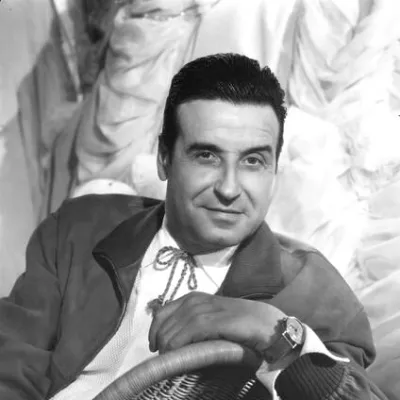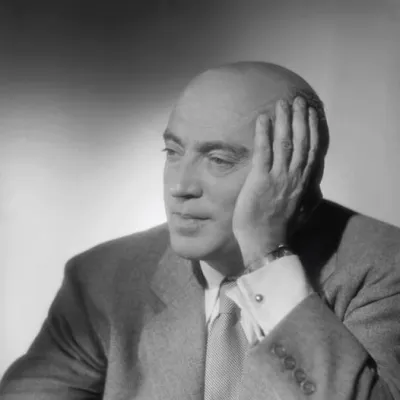
Max Ophüls
Human Design Chart
Biography
Died from a rheumatic heart condition in Hamburg, Germany on 26 March 1957.
The Human Design of Max Ophüls: Projector 2/4
Projector 2/4 — Design at a Glance
Max Ophuls revealed himself as someone who could immediately recognize weaknesses in systems and interpersonal dynamics. His Projector design endowed him with a dense, focused aura, comparable to a bright flashlight shining directly into dark corners. However, this ability to find flaws was a double-edged sword: Direct criticism was often perceived as unpleasant, like light being shone straight into someone's face. Instead, Max Ophuls was most effective through his own example; by embodying harmonious states, he magnetically drew others who would then seek advice from him on their own accord. His strategy involved waiting for respectful and honest invitations rather than acting proactively. Since Projectors do not have a constant intrinsic energy source, Max Ophuls worked in intense phases followed by necessary rest periods to regenerate. Ignoring this rhythm need led to burnout, whereas living according to his design rewarded him with success. Deviating from it sooner or later resulted in bitterness as an expression of his non-self. This mechanism shaped his life path: His impact did not come from constant pushing but through targeted shining and waiting for the right external invitation.
Splenic Authority
Max Ophuls demonstrated decision-making based on a fine, immediate inner impulse. His design placed authority in the Spleen Center, which required that his Emotional and Sacral Centers be open – a configuration unique to Projectors or Manifestors. This Spleen Authority functioned as a highly sensitive health and alarm system. It gave him pronounced survival intelligence: an instant awareness of whether a situation, environment, or society was right for him. His instinct and physical well-being served as reliable indicators.
For Max Ophuls, this meant that decisions could only be made in the moment. The first spontaneous impulse was correct and immediately served his health. This allowed him to rigorously distance himself from harmful influences and take good care of himself. However, this Spleen voice was a very subtle impulse that came once per moment and could easily be ignored or drowned out by other influences, requiring high vigilance. A brief retreat for decision-making could be helpful.
Since Max Ophuls only knew what was right for him in the respective moment, plans could change short-term. Long-term commitments were therefore difficult; he needed a lot of space and flexibility in his life to accommodate this spontaneous nature.
The 2/4 Profile — Hermit / Opportunist
Max Ophuls revealed himself as someone who oscillated between a deep need for withdrawal and a drive towards community. His design inclined him to absorb knowledge from his environment, reflecting it during isolated phases. As a 2/4 Profile ("Natural Talent / Networker"), he was under the tension of Line 2 (Hermit) and Line 4 (Community). This created a constant oscillation: He withdrew to gain clarity and then returned to his favorite people. Clear communication of his boundaries – when he sought company and when he needed silence – was crucial.
His natural talent (Line 2) often worked unconsciously; he needed external confirmation to recognize this direction. Simultaneously, he suffered from the emotional burden of listening (Gate 13). People shared their stories with him, which tired and weighed on him emotionally. This emotional absorption led to exhaustion followed by a necessary retreat for reflection. Only in this 'cave' could he evaluate the absorbed impressions and develop brilliant ideas. The defined ego supported him in realizing his talent, while an open ego would have hindered it. Thus, fatigue from living others' lives was transformed into creative power through the protection of withdrawal.
Split Definition — Defined & Open Centers
Max Ophuls revealed himself through a design based on constant mental activity and clear willpower. His defined Head and Ajna Centers created a perpetual pressure to question things, understand concepts, and develop ideas. This mental process was not only an inspiration for others but also an internal state he had to accept without wanting to discharge it through hasty actions. Parallel to this, he possessed a defined Heart Center that gave him reliable willpower and the ability to actively shape his life, fulfill promises, and assert his own authority in the material world. His defined Spleen Center further provided intuitive, momentary orientation for health and well-being.
At the same time, Max Ophuls was characterized by several open centers, making him susceptible to external influences. His open Throat Center meant that he could not communicate consistently; he tended to wonder if he was noticed and attracted attention best when waiting until an invitation to speak came. The open G Center left him without a fixed identity or direction; he adapted to his environment and found his orientation through the right place and people, rather than seeking them out himself. His open Sacral Center led to not having constant vital energy but being dependent on episodic availability and learning to set boundaries to avoid exhaustion. Additionally, his open Solar Plexus absorbed the emotions of others, making him vulnerable to emotional conditioning, while his open Root Center amplified external stress that he could not identify as his own to prevent hyperactivity and burnout.
Channels for inner truth and instinctive strength.
Max Ophuls revealed himself as someone whose mind was constantly engaged with auditory disturbances – the "white noise" of inspiration from Gate 61. His design set a tendency for sudden moments of insight, which did not arise through logical deduction but appeared as spontaneous mutations in thought. This quality was marked by the Channel of Awareness 61-24: The pressure in the Head Center to know the unknown transformed into rational answers via Gate 24. His mind sought silence because knowledge could only emerge at the right pace and without control; he was designed to inspire others with this inner truth, distinguishing what is worth knowing from what is not.
Parallel to this, the Channel of Devotion 44-26 worked, connecting a deep tribal memory with ego strength. This configuration gave him an instinctive sense for what his "tribe" – his audience or fellow fighters – needed often before they knew it themselves. As an entrepreneur at the forefront, he used this ability to convincingly communicate products or ideologies and generate resources for the team. The combination of the mystical, inspiring thought process of Channel 61-24 and the pragmatic, sales-oriented intelligence of Channel 44-26 created a profile that united creative visions with their market-relevant implementation.
Additionally, prioritized Gates contributed to orientation: Gate 1 emphasized uniqueness and creative mutations in the here and now, while Gate 7 promoted leadership personality and future-oriented pattern projection. Gate 2 stood for receptivity as the basis of every reaction, and Gate 13 ensured continuity and collective memory through the accumulation of experiences and stories. Even Gate 28, which highlighted risks in the present, played a role in decision-making orientation. Max Ophuls lived this mechanism by surrendering to the happy coincidences of his inner truth and using his gifts as soon as the market or his tribe recognized them and asked him to promote them.
Individual Circuitry — Circuit Signature
Max Ophuls revealed himself through his design as someone carrying separate, parallel existing energetic focal points. His Split Definition meant that these areas did not overlap but worked as independent forces. Part of this structure lay in the Knowledge Circuit. Here Max Ophuls connected the Head Center with the Ajna Center via the Channel of Awareness (Gates 24-61). This connection promoted innovative flashes of insight and creative intuition, which however operated isolated from other centers. The second part was located in the Ego Circuit. There he linked the Heart Center with the Spleen Center through the Channel of Devotion (Gates 26-44). This supported cooperation and resource exchange within a group based on mutual support. Since these two circuits were not directly connected in Max Ophuls, the creative impulses of the mind and the cooperative dynamics of the heart existed as separate experience fields. They did not flow into each other but stood side by side. This configuration shaped a lifestyle where intuitive insights and social contracts were experienced as separate, non-directly merging energies.
Right Angle Cross of the Sphinx 2
Max Ophüls showed a basic attitude that was shaped by the design of the Right Cross of the Sphinx. This configuration set a specific dynamic: the urge to delve deeply into oneself and uncover hidden truths, only to share them with others. It wasn't about superficial communication but rather sharing insights derived from intensive inner work. Max Oph༜ls lived this tension between withdrawing for self-discovery and conveying these insights to his surroundings. His design challenged him to act as a channel – not just for himself, but as a bridge that makes the hidden accessible. This mechanism determined how he handled information and experiences: He sought out the essential elements, filtered them through his own depth, and passed them on so others could benefit from them. It was a life task that created transparency by making the invisible visible. Max Oph༜ls fulfilled this role not through loud declarations but through authentic transmission of what he had found in his inner world. His path involved identifying these hidden connections and conveying them in ways that resonated with others. The Right Cross of the Sphinx thus described his central function: uncovering truth and sharing it as a service to the community.
Saturn Return · Uranus Opposition · Chiron Return — Life Cycles
Max Oph༜ls was someone whose life journey was marked by clear, cyclical turning points. His design set a structure in which external events signified inner developmental steps and propelled them forward. In 1931, at age 29, he directed his first short feature film “Dann schon lieber Lebertran” (Rather Liver Oil). For his design, this was a typical moment of the First Saturn Return: A point where years of groundwork and learning processes condensed into concrete, viable results. This cycle often signaled the transition from immaturity to structural maturity in one's work.
Ten years later, another dynamic took hold. In 1941, at age 39, Max Oph༜ls fled over Switzerland to the USA. This coincided with his Uranus Opposition, an aspect often described in Human Design as a crisis or radical turning point. Here it wasn't about gradual development but rather the sudden breaking of old structures and the necessity to reorient oneself in completely new, foreign circumstances. These two events illustrate the mechanics of his chart: Phases of consolidation and buildup alternated with times of destruction and necessary flight, each step being a direct response to the archetypal energies of these planetary transits.
Projector · Splenic Authority — Synthesis
Max Oph༜ls was a projector whose life seemed marked by a constant oscillation between the need for isolation and the search for connection (Profile 2/4). This inner rhythm corresponded with an acute ability to recognize patterns and identify dysfunctional elements in systems – a trait amplified by his defined Head and Ajna Centers. He lived in observation, projected light onto hidden aspects, thereby creating spaces for insight, yet this process carried the risk of being perceived as intrusive.
A central paradox lay in his inner authority anchored in the Spleen Center. This intuition allowed him spontaneous knowledge about well-being and the correctness of situations while the Knowledge Circuit simultaneously propelled him to discover new things and transform them (Channel 24-61). The tension between instinctive boundaries and a drive for innovation led to phases of deep clarity, but also crises – as his flight in 1941 illustrates – where he had to reorient himself to continue on his unique path.
2 Defined Channels
Incarnation Cross - Right Angle Cross of the Sphinx 2
Solar Return
The Solar Return shows the moment when the sun returns to its exact birth position - your personal solar year.
Life Cycles
Discover the life cycles with a detailed triple view (birth chart, cycle chart, composite).
Human Design Profile
- Type
- Projector
- Strategy
- Wait for the respectful invitation
- Authority
- Splenic Authority
- Profile
- 2/4 - Hermit / Opportunist
- Definition
- Split Definition
- Incarnation Cross
- Right Angle Cross of the Sphinx 2
- Date of Birth
- 06.05.1902 11:00
- Place of Birth
- Saarbrücken (Saarland), GER
Frequently Asked Questions
What was Max Ophüls' Human Design type?
What profile did Max Ophüls have?
What authority did Max Ophüls have?
What incarnation cross did Max Ophuls have?
When was Max Ophuls born?
Discover your own Human Design
Are you also a Projector? Find out in a personal reading how to unfold your leadership qualities and recognize the right invitations.
More Personalities
Back to overviewSissy Spacek

Alain-Fournier

Anémone

Ann-Margret

Bourvil
Christian-Jaque