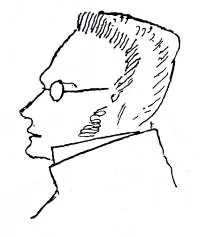
Photo: Wikimedia Commons
Max Stirner
Human Design Chart
Biography
Stirner's main work is The Ego and Its Own, first published in October 1844 in Leipzig, and has since appeared in numerous editions and translations. Stirner's book can plausibly be claimed to have had an immediate and destructive impact on contemporary left-Hegelianism, to have played a significant role in the intellectual development of Karl Marx. Since its appearance the book has seen periodic revivals of popular, political and academic interest, based around widely divergent translations and interpretations — some psychological, others political in their emphasis. Today, many ideas associated with post-left anarchy's criticism of ideology and uncompromising individualism are clearly related to Stirner's. He has also been regarded as pioneering individualist feminism. His ideas were also adopted by post-anarchism.
Many thinkers have been affected by his ideas, including Rudolf Steiner, Friedrich Nietzsche, Emma Goldman, Georg Brandes, John Cowper Powys, Martin Buber, Sidney Hook, Robert Anton Wilson, Italian individualist anarchist Frank Brand.
He died penniless on 26 June 1856 in Berlin.
The Human Design of Max Stirner: Projector 6/2
Projector 6/2 — Design at a Glance
Max Stirner was someone who immediately recognized flaws in other systems. His Human Design type is a Projector, which describes a dense, focused aura – comparable to a bright flashlight that shines directly on dark spots in others. This configuration allowed him to see instantly where things weren't functioning or were hidden in others.
The challenge of this design was that addressing these weaknesses head-on often felt uncomfortable, similar to shining light directly into someone's face. Instead of pushing his insights onto others, the most effective strategy for him was to wait for a respectful and honest invitation from those around him. By radiating harmony himself, he became attractive, so that others would naturally seek out his insights.
Since Projectors do not have a defined Sacral Center, they lack a constant intrinsic energy source. Max Stirner therefore moved through phases of high activity and rapid productivity followed by necessary rest periods for regeneration. If he did not live according to the strategy of invitation and truth, the non-self theme of 'Bitterness' would arise. However, if he adhered to it, his lifestyle was rewarded successfully as his specific ability to illuminate others' paths came into optimal play.
Splenic Authority
Max Stirner showed a decisive tendency for immediate, instinctive boundary setting against anything that threatened his integrity. His inner authority lay in the defined Spleen Center – an area that only functions as a decision-making center for Projectors or Manifestors if the Emotional and Sacral Centers are open. This gave him precise survival intelligence: His body signaled immediately whether a situation or person was healthy or harmful. The first spontaneous impulse always indicated the right path to protect himself and set strict boundaries.
This Spleen voice, however, was a very fine, unique impulse in the present moment. It could easily be drowned out by external influences, so high vigilance was necessary not to ignore this inner compass. Often a short retreat helped to hear the actual message clearly. Since Max Stirner only knew what was right for him in each situation, his plans often changed frequently in the short term. Long-term commitments were therefore difficult and often counterproductive; he needed instead much space and flexibility to react spontaneously to circumstances without unnecessarily limiting himself.
The 6/2 Profile — Role Model / Hermit
Max Stirner showed himself as someone who learned through intense experimentation and trial-and-error principles in his youth. Before turning thirty, his 6/2 line acted like a 3-line: He gathered diverse personal experiences, withdrew after failures, and tested his actions against reality. This was not theoretical abstraction but a living process of testing.
Around the age of thirty, this dynamic changed fundamentally. The sixth line became active, leading him into a phase of deep distance and reflection. He metaphorically retreated to his 'cave' to look back at earlier experiments from great heights. This period served for healing and intense self-knowledge. Central was value consequence: He reviewed whether his values were sustainable or risky. At the same time, he reflected on his natural leadership ability (Gate 31). Without adequate development, this could be perceived as arrogance since it often acted without regard to collective opinion. Through distance, however, he learned to take responsibility and not become a 'paper tiger'.
Finally, Max Stirner emerged from this introspective phase as a wise person. His life wisdom became apparent to others. People came to him to share in his insights and learn the ability for deep introspection. He had thus become an example role model that led through lived experience and clear value decisions rather than authority. His development from the experimenting 3-stance towards reflective 6-wisdom shaped his entire later work and influence on others.
Split Definition — Defined & Open Centers
Max Stirners Human-Design profile created a persistent internal pressure to question and understand connections. This mental intensity stems from his defined configuration between Head Center and Ajna Center: a constant stream of inspiration and concept formation, but without direct energy for implementation. He tended to use this thought process as a resource for others rather than implementing it himself. Simultaneously, he had a firm sense of self (defined G Center) and a reliable body instinct (defined Spleen), giving him clear inner direction and spontaneous judgment.
His open centers shaped his challenges. His open Throat Center left him under pressure to demand attention or control the timing of his words, even though he was designed to speak spontaneously when invited. His open Heart Center pushed him to prove his worth through promises and competition – a spiral of self-doubt as he lacked consistent willpower for this task. Additionally, his open Solar Plexus absorbed foreign emotions, leading to confusion if he identified these as his own rather than just observing them. His open Root Center amplified external stress, often putting him under pressure to constantly prove himself or flee from inappropriate demands. His open Sacral Center also meant no constant energy flow; he was prone to exhaustion when taking on the borrowed vitality of others instead of trusting his own rhythms and limits.
Channels for critical scrutiny and intuitive life art.
Max Stirner emerged as someone with a sharp, skeptical mind that continuously filtered patterns. The Logic Channel 63-4 connects Head and Ajna Centers through the Gate of Doubt (63) and the Gate of Formulation (4). This created a doubting spirit: Only what was practically verifiable counted as logically true. Unfounded belief found no space here; skepticism served the necessary proof. Simultaneously, he moved intuitively through the world. The Perfect Form Channel 57-10 connects Spleen and G Centers via Gate of Intuitive Insight (57) and Gate of Self Behavior (10). This gave him a spontaneous, acoustic sensitivity to his environment. His behavior stems from deep survival instinct rather than cognitive planning. He acted appropriately in the present to secure his physical well-being. Additional Gates shaped him: Gate 50 (Protection Reflex, Traditions) and Gate 3 (Mutation, Order Creation from Confusion) underscored the need for stable structure amidst change. Gate 41 (Evolutionary Development through Crisis) drove him from experience to experience. On a personality level, Gate 17 (Logical Teaching, Emancipation) and Gate 28 (Risk Assessment in Here and Now) were at play. This configuration described a person who perfected existence through logical scrutiny and intuitive adaptation without relying on collective recognition.
Individual Circuitry — Circuit Signature
Max Stirners design inclined towards clear, structured analysis. The Understanding Circuit connects his Head Center to Ajna Center via the Logic Channel (Gates 63/4). This promoted the ability to share rational insights free from emotional conditioning and strategically use them for future improvements. As Solar Plexus was not involved, it constituted a sober ratio.
Simultaneously, an independent energetic structure emerged in integration. Split definition here means that this power did not merge directly with his mind but worked independently. The Perfect Form Channel (Gates 10/57) connects Identity and Spleen Centers. This allowed him to channel intuitive wisdom through proper behavior and live as individual strength in the Now Moment. These two systems – logical future shaping on one hand and intuitive self-empowerment on the other – existed side by side as separate, not directly connected energy flows. Max Stirner thus used rational thinking for structuring ideas while his identity was strengthened here and now through acoustically-intuitive impulses.
Left Angle Cross of Wishes 2
Max Stirners Human-Design profile featured the left Desire Cross. This shaped a fundamental stance where internal desires and personal motivation acted as central driving forces. His energy was directed towards recognizing his own longings and seeking ways to make them effective in life. It wasn't just dreaming but a structural orientation that pushed him to use his deepest wishes as a compass for his actions. The mechanics of this cross describe a process where the individual learns to distinguish between superficial impulses and their true, soulful direction. For Max Stirner, this meant constant engagement with what truly moved him, separate from external expectations or societal norms. His focus was on integrating the power of his own desires and turning them into concrete steps that aligned with his innermost feelings. This configuration promoted a profound self-reflection, as only by listening closely to his desire stream could he make authentic decisions. Thus, he appeared as someone who took his personal motivation seriously and made it the starting point for his work rather than being guided by foreign goals.
Saturn Return · Uranus Opposition · Chiron Return — Life Cycles
Max Stirners Human-Design profile indicated a tendency towards radical self-determination. His major work, 'The Ego and Its Own', was published in 1844 at the age of 38 – a time marked by the Uranus opposition. This planetary position often signifies a break with established structures; here years of intellectual labor culminated in public success that severed old ties and paved new individual paths. Prior to this, he married his first wife Agnes Clara Kunigunde Burtz at age 31 during his first Saturn return in 1837. The first Saturn return often stabilizes the foundation through partnership or responsibility, which in this case established a firm relationship. His Chiron return occurred in 1856 when he was 50 years old. This cycle signals maturity and fulfillment of life's purpose within Human Design, not healing in a medical sense. Instead, his life ended due to an infection from an insect bite. Death at this phase concluded the arc of his incarnation; the work was complete, the individual statement had reached its peak and manifested itself before the physical body failed.
Projector · Splenic Authority — Synthesis
He was a projector whose life was marked by a deep need to recognize patterns and make them accessible to others (Logic Channel: Gates 63 & 4). This showed in an ability to identify missing or inconsistent elements in systems – a bright light that illuminated other people's shadows. His inner authority lay in the Spleen, allowing him to know spontaneously what was right for him and shield himself from harmful influences. This combination of recognizing dysfunction in others and a strong self-protection led to a way of life based on deep understanding and selective interaction.
A central paradox in his design lay in the interplay between the role model profile (6/2 Profile) and the defined Head Center. He intensely experimented in his youth to gather personal experiences, then withdrew to reflect and gain wisdom – yet simultaneously, his mind was perpetually engaged in analysis and questioning. This internal pressure to question and formulate patterns created a tension between the desire for deep understanding and the necessity of sharing gained insights. The experience of a relationship (31 years) and the success of a work (38 years) occurred during phases of this inner dynamics, until a sudden death at 50 marked its end.
2 Defined Channels
Incarnation Cross - Left Angle Cross of Wishes 2
Solar Return
The Solar Return shows the moment when the sun returns to its exact birth position - your personal solar year.
Life Cycles
Discover the life cycles with a detailed triple view (birth chart, cycle chart, composite).
Human Design Profile
- Type
- Projector
- Strategy
- Wait for the respectful invitation
- Authority
- Splenic Authority
- Profile
- 6/2 - Role Model / Hermit
- Definition
- Split Definition
- Incarnation Cross
- Left Angle Cross of Wishes 2
- Date of Birth
- 25.10.1806 06:00
- Place of Birth
- Bayreuth, GER
Frequently Asked Questions
What is Max Stirner's Human Design type?
Which Profile did Max Stirner have in Human Design?
What Authority did Max Stirner possess?
What incarnation cross did Max Stirner have?
When was Max Stirner born?
Discover your own Human Design
Are you also a Projector? Find out in a personal reading how to unfold your leadership qualities and recognize the right invitations.
More Personalities
Back to overviewSissy Spacek

Alain-Fournier
Anémone

Angeli
Ann-Margret

Bourvil