

Photo: Wikimedia Commons
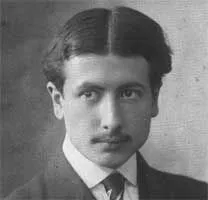
Miguel de Unamuno y Jugo
Human Design Chart
Biography
He was an early existentialist who concerned himself largely with the tension between intellect and emotion, faith and reason. Man's "hunger for immortality" is, he held, constantly denied by reason and can only be satisfied by faith, and the resulting tension results in unceasing agony. His major works include, ""The Live of Don Quixote and Sancho" in 1927, "Mist " in 1928, "The Agonies of Christianity" in 1928 and "Three Exemplary Novels and a Prologue" in 1930. He is also noted for two plays and further philosophical works.
Unamuno died in Salamanca, on 3 December 1936.
Miguel de Unamuno y Jugo as a Generator 3/5 in Human Design
Generator 3/5 — Design at a Glance
Miguel de Unamuno y Jugo's Human Design leans towards great endurance if he responds to inner impulses. As a Generator, he had plenty of sacral energy, which made him extremely strong and durable – but only when this power could flow into tasks that truly mattered to him. His life force didn't generate through arbitrary initiative; instead, it came from reacting to signals in his environment. The motto of his design was clear: don't initiate, wait until the sacral center gives a clear "yes" before fully committing.
Sacral Authority
Miguel de Unamuno y Jugo's decision-making process was characterized by direct physical resonance. As a Generator, he had sacral authority, which simplified his process: strategy and inner guidance merged into one. A prerequisite for this was his open emotional center; he didn't let short-term moods dictate actions but waited for clarity. His responses came from the gut as spontaneous bursts of energy or loud noises like grunts in agreement and groans in disagreement. When a stimulus hit the sacral motor, he felt vitality and inexhaustible energy. This reaction signaled that an activity could be carried out with great enthusiasm and without obsessive purposefulness. He was born to immerse himself fully in his work and feel joy and satisfaction while doing so. Additionally, his activated spleen center acted as a supportive instance for sacral authority. This connection allowed him to react spontaneously and swiftly to external circumstances. He had direct access to his instinctive perception and physical well-being. Miguel de Unamuno y Jugo could reliably use these inner signals to make decisions in the here and now, rather than overthinking or waiting. This configuration created a robust foundation for his actions based on direct bodily truth.
The 3/5 Profile — Martyr / Heretic
Miguel de Unamuno y Jugo was someone who gained knowledge not from abstract theory but through direct experimentation and experience. His design as a 3/5er-"Explorer/Hero" established a fundamental stance: he had to experience everything firsthand before offering solutions to others. This line of experimenting (Line 3) meant that he initially didn't accept pre-fabricated truths, learning instead through his own experiences and even failures. This practical knowledge made him attractive to others; they saw in him someone who could solve problems – the role of a Hero (Line 5).
This dynamic was ambivalent: while sharing his insights defined him, failing in public eyes could be painful. Additionally, he carried the energy of Line 3 with its "fanatical zeal" to correct connections and bring order into materiality. On the other hand, Line 5 had the power to remain silent during crises and only clearly express itself when necessary. This precise, focused communication was effective in the collective if not distorted by unnecessary complexity. Miguel de Unamuno y Jugo's path involved developing an authoritative voice from personal experimentation that supported others in their own difficulties – always based on what he truly lived through and tested.
Split Definition — Defined & Open Centers
Miguel de Unamuno y Juarez's Human Design points to a deeply rooted inner stability paired with a strong intuitive compass. His defined G Center gave him a firm sense of self-identity and clarity about his direction in life; he knew who he was without having to rely on others for validation. This internal security allowed him to comfort or offer new perspectives to others, as long as he did not try to direct them against their will. His energy source came from the defined Sacral Center, a motor that constantly generated vital power. For him, it was essential to wait for inner resonance – an instinctive 'yes' or 'no' – before acting, in order to avoid frustration and exhaustion. Additionally, his defined Root energy flowed into his Spleen Center, helping him transform existential pressure into healthy vigilance and a sense of well-being in the present moment.
At the same time, he was strongly exposed to several open centers. His open Head and Ajna Centers meant that his mental field was flexible but vulnerable to external inspirations or confusion; he tended to identify with others' questions or seek answers that were not his own. His open Heart Center made him sensitive to the pressure of proving his worth, which could lead into a cycle of promises and disappointment if he did not trust his inner authority. Furthermore, his open Solar Plexus absorbed the emotions of his environment like a sponge, making him emotionally vulnerable and often avoiding conflict to maintain stability. This constellation revealed someone who carried a powerful inner truth but constantly had to learn not to personalize external mental and emotional influences as their own reality.
Channels for powerful rhythm and discerning judgment.
Miguel de Unamuno y Juarez's Human Design points towards innovative direction-finding paired with a sharp analytical eye for structural flaws. The Channel of the Beat (14-2) connects the generative energy of the Sacral Center to identity in the G Center. Through Gate 14 (Power Competence) and Gate 2 (Higher Knowledge), he received resources to drive mutations and introduce new perspectives, supporting his ability to encourage others through authentic presence without actively leading them.
Parallel to this, the Channel of Judgment (58-18) between Root and Spleen Centers worked. Gate 58 (Vitality) fueled a desire for constancy while Gate 18 (Correction) checked what was healthy or flawed. This configuration promoted an insatiable drive to question and perfect patterns to restore joy in life within the collective.
Additional Gates shaped his profile: Gate 52 demanded focused pauses for pattern correction, while Gate 17 linked logical teaching for the future with service to human rights. Gate 44 brought awareness and transformational ability through interaction; Gate 32 ensured continuity and checked material stability. Gate 57 provided intuitive clarity in the present moment, Gate 1 emphasized unique creativity without limitations. Gate 42 required completing processes to release new power, while Gate 48 allowed deep pattern recognition but often without direct implementation. Gate 15 supported adaptation to natural rhythms and collective behavior through humility.
Individual Circuitry — Circuit Signature
Miguel de Unamuno y Juarez's Human Design points towards rhythmic expressive strength and instinctive clarity. As a person with split definition, he possessed two independent, defined energy blocks that did not flow directly into each other but rather acted as parallel power fields.
The Knowledge Circuit connected his Identity Center to the Sacral Center in him. Through the Channel 'The Beat' (Gates 2 and 14), a pulsating acoustic energy emerged. This shaped his way of emphasizing individuality through an internal rhythm, driven by the creative force of the Sacral Center.
Simultaneously, there existed a second isolated block: The Understanding Circuit connected Spleen to Root Centers. Here, the Channel 'Judgment' (Gates 18 and 58) worked. This configuration promoted focused visual perception of future possibilities supported by instinctive selection from the Spleen Center and the pressing energy of the Root Center. It was an emotionless ratio aimed at improving logical structures.
Since there was no connection between these two groups, these aspects – rhythmic-creative self-expression potential on one hand and strategic-analytical vision for the future on the other – developed separately from each other. They did not form a continuous experiential line but stood as independent, side-by-side resources without energetically reinforcing or disturbing each other.
Right Angle Cross of Service 3
Miguel de Unamuno y Jugo's Human Design shows a tendency towards deep and often painful dedication to tasks or people outside of himself. He defined his identity and life purpose strongly through carrying the burdens of others, where this readiness was not always light-hearted but carried with it a certain weight and willingness to sacrifice. This configuration corresponds to the right cross of service in Human Design, a pattern based on a specific connection between emotional intensity and the will to act. It describes a life task where the individual learns to take responsibility for others, often at the expense of personal comfort or recognition. Miguel de Unamuno y Jugo lived this dynamic by immersing himself in relationships or projects that required him to put his own needs aside and prioritize those of others. This was not mere helpfulness but a structural necessity of his system: Only through carrying these burdens did he find confirmation and his place in the world. The mechanics of this cross show that true satisfaction for him did not lie in individual success, but in the ability to serve others and share their burdens, which profoundly shaped his life.
Saturn Return · Uranus Opposition · Chiron Return · 2nd Saturn Return — Life Cycles
Miguel de Unamuno y Jugo's Human Design shows a tendency towards profound structural upheavals often accompanied by external obligations or crises. His first Saturn Return around age 27 marked a transition into a phase of responsibility and anchoring. This was concretely seen in the year 1891 when he married Concepción Lizárraga Ecenarro – a step that solidified his personal structure and established long-term commitments.
The Chiron Return, a cycle of blooming and fulfillment of the incarnation purpose, occurred around Miguel de Unamuno y Jugo's age 49. Here, his inner work condensed into a visible expression of his life purpose. In 1913 he published 'El espejo de la muerte', a work reflecting the creative and intellectual maturity of this fulfillment cycle.
His second Saturn Return around age 56 brought another test of personal boundaries and social position. This phase was marked by conflicts with established structures. In 1920, Miguel de Unamuno y Jugo was sentenced to 16 years in prison for insulting the majesty – later pardoned. This event underscored the tension between his individual expression and the rigid demands of the outside world, a typical feature of this late Saturn phase where old patterns had to be either stabilized or broken.
Generator · Sacral Authority — Synthesis
He was a Generator with sacral authority and lived his energy through constant experimentation and learning (Profile 3/5). He did not accumulate these experiences in silence but shared them willingly, making him an attractive figure for others. His defined G Center gave him clear identity and direction, manifesting in a deep understanding of change and innovation – particularly through the Beat Channel (Gate 14/2), which drove him to explore new paths and promote mutation. He drew his strength from the present moment and used it to expand his knowledge and share this with others.
A central tension field in his design lay between the necessity to let his sacral energy flow freely through work on heart projects, and repeated crises (Cross of Service 3, Saturn Returns, Conviction), which forced him to redefine himself repeatedly. The Line 5 in his profile pointed towards a role as a hero, yet the experimenting nature of Line 3 required constant reevaluation and adaptation. This oscillation between the drive to complete something and an unceasing urge to explore shaped his life.
2 Defined Channels
Incarnation Cross - Right Angle Cross of Service 3
Solar Return
The Solar Return shows the moment when the sun returns to its exact birth position - your personal solar year.
Life Cycles
Discover the life cycles with a detailed triple view (birth chart, cycle chart, composite).
Human Design Profile
- Type
- Generator
- Strategy
- To respond - wait for something to respond to
- Authority
- Sacral Authority
- Profile
- 3/5 - Martyr / Heretic
- Definition
- Split Definition
- Incarnation Cross
- Right Angle Cross of Service 3
- Date of Birth
- 29.09.1864 07:15
- Place of Birth
- Bilbao, Spain
Frequently Asked Questions
What was Miguel de Unamuno y Jugo's Human Design type?
What Profile did Miguel de Unamuno y Jugo have?
What Authority did Miguel de Unamuno y Jugo have?
What incarnation cross did Miguel de Unamuno y Jugo have?
When was Miguel de Unamuno y Jugo born?
Discover your own Human Design
Are you also a Generator? Find out in a personal reading how to use your sacral energy correctly and discover deep satisfaction.
More Personalities
Back to overviewAaliyah

Alain-Fournier
Alexia

Angèle

Angeli
Anne-Marie
