

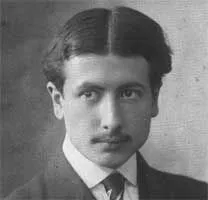
Photo: Wikimedia Commons
Mika Waltari
Human Design Chart
Biography
Mika Waltari — Generator with Profile 4/1
Generator 4/1 — Design at a Glance
Mika Waltari revealed himself as someone who unleashed his strength not through spontaneous initiatives but by reacting to external impulses. As a Generator, he had an immense, sacral energy source that enabled him to achieve great endurance – comparable to a workhorse that only reaches its full capacity when it is burning for the task. His design dictated a clear strategy: not to initiate but to wait until life sent a signal, and then to respond from the gut.
This mechanism was crucial for his well-being. When he responded to such inner 'yes' signals, his energy flowed freely and led to a deep sense of fulfillment. Conversely, two specific dangers loomed: either he wasted his strength on tasks that internally repelled him, leading to exhaustion, or he was hindered in his heart project despite still being full of power. In both cases, this resulted in frustration and a noticeable energy deficit. Waltari's life energy was thus not a constant, self-controlled fire but a reactive force that was only activated through the right external stimuli and inner confirmation. Only in harmony with this reactive strategy could he utilize his enduring creative power without internal blockages and experience the deep satisfaction that his design promised when applied correctly.
Emotional Authority
Mika Waltari revealed himself through an internal decision-making structure that did not rely on immediate clarity but on the observation of emotional waves. His design carried emotional authority, meaning that his defined Emotional Center held the lead in all important life decisions – regardless of which other centers were also defined. This priority was a central mechanism of his system.
He was subject to a constant up and down of emotions, which colored his perception of the world through the current mood. What appeared inspiring in one moment could turn negative in the next. His immediate feeling was just a snapshot, not yet the final truth. Quick, spontaneous actions out of this emotional excitement often risked negative consequences, as the first impression had not yet matured.
The strategy of his design required patience. He had to take time to let decisions mature, often by sleeping on them multiple times. Only when the intense emotions subsided and emotional distance was gained did the necessary clarity and calmness set in. This process of distancing was essential to recognize the deeper truth, especially in long-term decisions that significantly influenced his life course.
The 4/1 Profile — Opportunist / Investigator
Mika Waltari revealed himself as someone whose essence was deeply rooted and hardly deviated from the individual course. As a 4/1 Networker/Researcher, he had a big heart that, however, protected itself from injuries. Well-meaning advice for change was often blocked; those who did not fully accept him were quickly excluded. This stubbornness led to him being perceived as incapable of criticism, which undermined his self-confidence.
His emotional structure was dominant. The fourth line in Gate 6 acted like an emotional steamroller that pushed outward. This force was amplified and reflected by others. It was about conquering and cleansing emotional fields. At the same time, Gate 15, Line 1 stood for duty consciousness and existentialism. Here, it was about cultivating harmonious relationships without being drawn into extreme rhythms of others.
When Mika Waltari recognized his own nature and rested stably in his character, he became a rock in the storm. Then he could teach others magnificently and share his wisdom. The path there was challenging, as he had to learn to accept his unchangeable nature rather than tearing himself apart through external expectations. His firmness was both a strength and a source of conflicts until he found the balance between his dominant emotional power and the necessity of harmonious distance.
Triple Split Definition — Defined & Open Centers
Mika Waltari was characterized by a defined G Center, which gave him a firm, reliable self-identity and a clear sense of direction in life. This inner security allowed him to love without dependence on external validation and to open new perspectives for others. His design combined this identity with a defined Ajna Center: his conceptual thinking was steady and specific, enabling him to construct concepts and theories in a consistent manner and making him hard to influence. This flowed into his defined Throat Center, which served as a pivot point to transform these mental processes, as well as the energy of his defined Sacral Center, into communication and action. As a Generator, he possessed a tremendous vital energy source, which, however, could only be correctly activated through reaction to external initiatives; his Sacral Center responded with a yes or no to provide energy for fulfilling activities.
At the same time, his Solar Plexus Center was defined, meaning he had to wait for his emotional wave to gain clarity rather than acting impulsively. In contrast, his open centers revealed areas of conditioning. His open Head Center made him vulnerable to mental pressure and the need to find answers to questions that were not his own. His open Heart Center meant that he could not prove his worth through willpower or promises but had to learn not to put his value on the line. Additionally, his open Root Center absorbed the adrenalized stress from the environment, making him tend to amplify stress that actually came from others. This constellation shaped his life as someone who acted from inner direction and sacral response while having to protect himself from external mental and stress-induced influences.
Channels for intimacy, intuitive elegance and accepting clarity.
Mika Waltari's design inclined towards intense, time-bound intimacy and a clear, logical structuring of perception. This configuration marked him as someone who deepened relationships and thoughts through patience and meticulous analysis.
The Partnership Channel 59-6 connected his Sacral Center with his Solar Plexus. Through the Gate of Sexuality (59) and the Gate of Friction (6), a powerful energy emerged that was experienced as intimacy. This connection required Mika Waltari to wait for his emotional wave to gain clarity. Instead of acting immediately, he used the time to nurture friendships before delving into deeper realms. His desire was to merge, but the emotional wave determined the timing. By waiting, he could perceive whether a real connection was forming, making his interactions personal and profound, but also carrying the risk of misunderstandings due to his intensity.
Parallel to this, the Acceptance Channel 17-62 between Ajna and Throat Centers was at work. The Gate of Opinions (17) visualized patterns, while the Gate of Details (62) translated these into language. Mika Waltari's mind permanently organized details into his mental system. He sought logical order to understand and communicate information. Anything he could not integrate into his worldview remained incomprehensible to him. This gave him the ability to clearly explain complex connections, but required him to wait for invitations to avoid resistance.
The Channel of Perfect Form 57-10 connected Spleen and G Centers. Through the Gate of Intuitive Insight (57) and the Gate of Self Behavior (10), he acted spontaneously from deep awareness. This allowed him to let go of unfounded future fears and move existentially through the world. His behavior was guided by intuitive wisdom that existed beyond thoughts. He perfected his own form through self-love and thus created something healthy and beautiful that inspired others unconsciously, without recognition being his motive.
Additionally, he carried Gate 36, which understood crises as cyclical movement, as well as Gate 15, which reflected collective behavior and natural rhythms. These gates underscored his ability to orient himself in larger contexts and through reflection (Gate 33) as well as restraint (Gate 12) to enable individual mutations.
Tribal Circuitry — Circuit Signature
Mika Waltari's design inclined towards clear, structured communication that was free from emotional coloring. This was evident through the Understanding Circuit, which connected his Ajna Center with his Throat Center in him. This configuration promoted the ability to formulate and share logical insights and strategic concepts precisely. It was an 'emotionless ratio' aimed at improving things or guiding society towards a better future by conveying rational insights without conditionally distorted perspectives.
Parallel to this, a deeply rooted, instinctive power focused on the survival of the family. The Archer Circuit connected Mika Waltari's Sacral Center with his Solar Plexus Center. This generated a primal energy aimed at protecting, defending, and preserving one's own genetics. The emotional wave of the Solar Plexus was here supported by the life force of the Sacral, establishing care and nurturing the family as a central theme.
A third, independent aspect of his nature concerned individual self-reinforcement. Through the Integration Circuit, his Identity Center and Spleen Center were connected. This helped him to draw strength from reacting to life and to guide this through intuitive knowledge and correct behavior. Since Mika Waltari had a triple definition, these three areas - rational communication, familial protection, and individual integration - existed as separate, parallel existing forces. They did not flow into each other but shaped his essence as three distinct, independent pillars, each possessing its own logic and expression without mixing energetically.
Juxtaposition Cross of Conflict
Mika Waltari's Human Design configuration carried the specific tension of the Juxtaposition Cross of Conflict. This configuration established an internal dynamic oriented towards confrontation and the engagement with conflicting forces. It was not about arbitrary conflict but a structural necessity to feel opposition and gain clarity through the friction of opposing energies.
The Conflict Cross connects various energetic centers that often send different or even opposing impulses. For Mika Waltari, this meant that his inner compass was frequently guided by the experience of discrepancy. While others sought harmony, he found a point of orientation in polarity. This mechanism challenged him to not shy away from tensions but to use them as a source of insight.
The juxtaposition, the side-by-side arrangement of these energies, created a constant friction surface. It prevented a simple, one-sided alignment and forced differentiation. Mika Waltari lived in a system that encouraged him to question positions and sharpen his own stance in the fire of confrontation. Conflict here was not a negative event but a functional element of his design, serving differentiation and the clarification of his own truth. Through this constant internal debate, a deep, though often turbulent, intelligence emerged, based on the ability to endure and penetrate complex contradictions.
Saturn Return · Uranus Opposition · Chiron Return · 2nd Saturn Return — Life Cycles
Mika Waltari's life followed a rhythmic sequence of structuring and letting go, marked by the cyclical turning points of his astrological constellations. His design foresaw that his life phases would be re-adjusted at regular intervals, each event bringing a specific energetic task.
The first Saturn Return marked the transition into a phase of consolidation. Here, years of groundwork condensed into solid results; it was a time to take responsibility and lay the foundations for the future. This did not happen as a sudden break but as a logical consequence of previous efforts.
Later came the Uranus Opposition, a moment of liberation from outdated structures. This phase demanded adaptability and the willingness to let go of the old to make space for new impulses. It was a necessary destruction that created room for renewal, often accompanied by a feeling of unrest that could be creatively utilized.
The Chiron Return, around the age of 50, marked the peak of personal fulfillment. During this time, his incarnation cross became experiential; the meaning and purpose of existence became clearer. It was not a time of healing old wounds but of blooming and realizing inner potential.
The second Saturn Return rounded off this cycle. It brought another level of maturity and wisdom, integrating previous experiences into a stable life approach. Mika Waltari thus moved through a clearly defined sequence of building, change, fulfillment, and integration.
Generator · Emotional Authority — Synthesis
Mika Waltari lived deeply rooted in his sacral center (Generator type) and was characterized by extraordinary endurance as long as he found energy for a task. However, this ability to generate energy and invest it in work was always colored by the emotional wave of his authority (emotional generator). Decisions required time to gain clarity, and quick reactions could prove detrimental. His profile as a 4/1 Networker/Researcher indicates a deeply rooted, unchangeable essence that protected him from
3 Defined Channels
Incarnation Cross - Juxtaposition Cross of Conflict
Solar Return
The Solar Return shows the moment when the sun returns to its exact birth position - your personal solar year.
Life Cycles
Discover the life cycles with a detailed triple view (birth chart, cycle chart, composite).
Human Design Profile
- Type
- Generator
- Strategy
- To respond - wait for something to respond to
- Authority
- Emotional Authority
- Profile
- 4/1 - Opportunist / Investigator
- Definition
- Triple Split
- Incarnation Cross
- Juxtaposition Cross of Conflict
- Date of Birth
- 19.09.1908 18:20
- Place of Birth
- Helsinki, Finland
Frequently Asked Questions
What was Mika Waltari's Human Design type?
What profile did Mika Waltari have?
What authority guided Mika Waltari?
What incarnation cross did Mika Waltari have?
When was Mika Waltari born?
Discover your own Human Design
Are you also a Generator? Find out in a personal reading how to use your sacral energy correctly and discover deep satisfaction.
More Personalities
Back to overviewAaliyah

Alain-Fournier
Alexia

Angèle

Angeli
Anne-Marie
