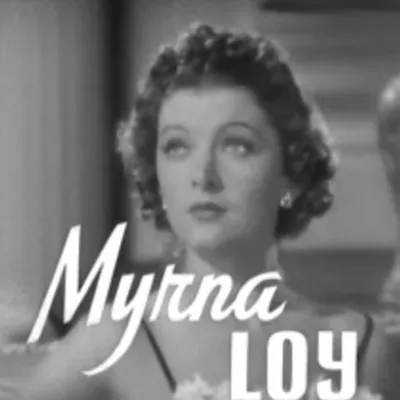
Myrna Loy
Human Design Chart
Biography
The first of two children born into a pioneer family, Myrna began dancing at the age of three. Her dad, a cattleman's son who became a state representative, died of influenza and was buried on 11 November 1918. Her mom moved the children to Los Angeles shortly after so Myrna would benefit from a cultural environment. She left Westgate School for Girls due to short finances and attended Venice High School. Her art teacher had her pose for a statue he sculpted that is still on the campus. She was teaching dancing to children and dancing at Grauman's theater when she was discovered.
When she began films, thinking Williams too common, she took the name Loy which suited her parts as a Eurasian. She played vamps in over 80 films before coming into her own as the perfect wife, sophisticated and glamorous Nora in the "Thin Man" series of 13 films. The hit series, with William Powell as her foil, completed the first of the sequence in two weeks in 1934. Loy was the first actress to challenge the system, renegotiate a contract and receive equal pay for equal work.
She starred with and was pursued by some of Hollywood's biggest stars but she remained at home taking care of her mom and brother until she was 27. She was named Queen of Hollywood in 1937. At the beginning of World War II Loy moved to New York to work for the Red Cross, making only one film during the war. In 1947 she sued a magazine for $1 million when she was accused of being a sponsor of a communist front organization but dropped the suit when a retraction was published. The same year she played in "Song of the Thin Man" in exchange for release from her MGM contract.
Human Design Analysis: Myrna Loy as Projector 3/5
Projector 3/5 — Design at a Glance
Myrna Loy revealed herself as someone who focused her energy on her environment. As a Projector, she had a dense aura that worked like a bright light beam: She immediately recognized weaknesses in systems or relationships of other people. However, this sharp perception could be misunderstood if she directly expressed her observations; the person she was talking to often felt attacked, as if being hit with a direct light beam.
The most effective strategy for Myrna Loy therefore did not lie in actively correcting others but rather in developing a harmonious presence herself. By walking her own path and shining internally, she attracted people who sought her out of their own accord to seek advice; they recognized clarity in her presence. Her design required her to wait for an honest invitation before taking on a leadership role.
Since Projectors do not have a constant energy source, Myrna Loy lived through phases of high activity and necessary rest periods. This up-and-down was structurally determined; continuous work without recovery would have led to exhaustion. If she followed her nature and responded to recognition as well as invitations, she was rewarded with success. Ignoring this dynamic and trying to push against the resistance of her environment eventually led to a feeling of bitterness, the typical non-self theme for this type.
Emotional Authority
Myrna Loy's design showed a tendency towards emotional depth and necessary delays in decision-making. She was someone who did not base decisions on first impulses but whose inner truth only emerged after intense emotions had subsided. This resulted from her inner authority: the defined Emotional Center. Since this center was activated, it automatically functioned as her decision-making instance, independent of other defined areas in her chart.
Her perception of the world was subject to constant wave movements; moods swung between enthusiasm and negative coloring. A current emotional outburst was only a snapshot, not an ultimate truth. Spontaneous reactions from this state often proved misleading or harmful. Instead, her system required patience. She had to let decisions rest, ideally sleeping on them overnight, to gain emotional distance. Only when the initial intensity faded and clarity set in could she recognize her true direction. This process of 'pondering' - repeatedly pausing and questioning - was not an obstacle but the essential mechanism of her integrity. Through this delay, she filtered out the noise of passing moods and made decisions from calmness rather than impulsive excitement. This was especially important for long-term life decisions that shaped her path.
The 3/5 Profile — Martyr / Heretic
Myrna Loy's design was characterized by the configuration of the Explorer and Hero profiles. She showed a fundamental attitude based on direct, personal experimentation; theoretical knowledge alone was not enough for her. Only through her own experiences, including associated mistakes, did she gain practical wisdom that attracted others. This profile combined the line of an adventurer with the hero's line: She learned from her attempts and sometimes publicly failed, which could be painful, but precisely this authenticity made her knowledge credible to others. Others sought her proximity to benefit from these lived insights.
At the same time, her configuration demanded courage in confessing past ignorance or mistakes. This process of disclosure was not a sign of weakness but a path towards justification and integration of past experiences. Particularly effective was this dynamic during crisis times or dealing with strangers, where her honest empathy for her own missteps created trust. The responsibility for withdrawal and reflection served as the foundation to later let others share in her mature insights. Myrna Loy lived this tension between private experimentation and public role as a rescuer by shaping her personal lessons into forms that helped others overcome their own challenges.
Split Definition — Defined & Open Centers
Myrna Loys Design revealed a tendency towards clear, resolute communication that drew from a stable inner identity and emotional depth. Her defined Throat Center served as a reliable channel for expression, while her also defined G Center provided her with a firm self-image and sense of purpose in life's direction. Enhanced by a defined Heart Center, she possessed constant willpower to keep promises and focus her energy effectively. This combination shaped a personality that knew who they were and what they wanted.
At the same time, her chart revealed areas of susceptibility to external influences. Her open Head Center made her vulnerable to mental pressure and the need to find answers to questions that weren't necessarily her own. Similarly, her open Ajna Center caused her to adopt concepts and opinions from her environment rather than possessing an immutable intellectual truth of her own. Particularly influential was her open Sacral Center. Without a constant source of generative energy, she tended to absorb and amplify the life force of others, which carried the risk of exhaustion through 'borrowed' energy. Likewise, her open Spleen Center made her sensitive to the well-being in her environment; spontaneous decisions here were risky as they could be guided by fears of survival issues or false security. Finally, her open Root Center absorbed stress and adrenalized pressure from the environment, which could make her feel overwhelmed if she didn't learn to distinguish this foreign pressure from her own. Her strength lay in using her defined centers as anchors while carefully observing the open areas to avoid conditioning.
Channels for awakening, principles and communal connection.
Myrna Loy's design showed her radiating rooted clarity in the present moment. The Awakening Channel 10-20 connected her G Center with her Throat Center, expressing the essence of 'I am!' and enabling her to inspire others through authentic self-presence without conscious control. Her presence was a mirror that helped others accept themselves; resistance was minimized as her inner awareness was perceived from outside as trustworthy guidance.
At the same time, she carried the emotional dynamics of Channel 37-40, linking Solar Plexus and Heart Center. This was about building bridges between individuals. Myrna Loy sought her place in the whole and understood the value of fair agreements. She built connections that were not based on spontaneous impulses but deepened over time through emotional clarity and willpower. This created an environment of mutual support where everyone found a honorable place.
Her inner process was further shaped by Gate 33, requiring reflection and withdrawal to process experiences and avoid repetition. Without these quiet phases, her insights would have remained superficial. This was complemented by Gate 19 with its focus on resources, territory, and spiritual community bonding as well as Gate 24 promoting mental mutations and the search for inner peace. Gate 44 contributed vigilance in dealing with others while Gate 12 caused creative restraint in communication. The emotional waves of Gate 55 brought mood swings that she only enjoyed if it felt right to her, and Gate 45 connected her actions with a deeper tribal loyalty and willpower.
Individual Circuitry — Circuit Signature
Myrna Loys design pointed towards structured cooperation and clear self-determination. She emerged as someone who worked in groups where her energy flowed along two separate paths: one on the social level of exchange and another on an inner line of personal integrity.
In the Ego Circuit, she connected Heart and Solar Plexus Centers through the Community Channel (37–40). This created a sense for the balance between giving and taking within a tribe or team. Since her circuit lacked a connection to the Sacral Center, there was no constant life force; instead, her resource generation required necessary pauses to regenerate.
Parallel to this, the Integration Circuit worked. Here she connected Throat with Identity Center through the Awakening Channel (20–10). This allowed her to translate intuitive impulses and proper behavior directly into the present moment. She acted from a deep inner confirmation without needing external validation.
As someone with split definition, Myrna Loy possessed these two systems side by side but they were not energetically fused. The social dynamics of the Ego Circuit and the individual clarity of Integration remained separate fields of experience. She navigated between the need to support communities and the urge to express her own truth in the present moment, always with the necessary pause for regenerating her energy reserves.
Right Angle Cross of the Four Ways 2
Myrna Loys Design shows a tendency towards a deep, often unspoken search for the meaning of life. She appeared as someone who did not accept superficial answers but sought to understand the hidden connections and the true essence behind things. This trait is described in Human-Design by the "Right Cross of Four Paths." This configuration marks a specific spiritual life task: finding the path not just as an end goal, but as an ongoing process of recognition and understanding.
In contrast to the left cross, which focuses more on understanding concepts, the right variant centers on direct experience and intuitive grasping of reality. Myrna Loy carried this energy within her, meaning that her inner compass always sought authenticity and deeper significance. It was not an intellectual exercise but an existential need to understand her place in the larger whole and actively walk this path through life. This structure shaped her inner attitude: a continuous movement towards clarity, driven by the desire to penetrate beyond surface illusions and touch upon the essential nature of things.
Saturn Return · Uranus Opposition · Chiron Return · 2nd Saturn Return — Life Cycles
Myrna Loy revealed herself as someone whose inner energy was channelled through clear structure and long-term planning. Her design showed a tendency to not act on impulses impulsively, but rather to pour them into enduring forms. This was particularly evident during her first Saturn return, a cycle that often marks the transition from an experimental phase to established identity. In 1932, at age 27, she made the move to MGM and took on a lead role in "The Desert Song". This step condensed years of groundwork into a viable career leap, typical of Saturn energy, which fosters stability and recognition through consistent building.
Later, other planetary influences shaped her development. The Uranus opposition often brings unexpected turns or public affirmation after many years of work. In 1946, at age 41, she received the prize for best actress at the Brussels Film Festival for "The Best Years of Our Lives". This success was no coincidence but rather the result of maturity enabled by previous structuring. The mechanics of her chart show how external recognition often occurs when inner authority and outer circumstances resonate. Loy lived this dynamic by not only showcasing her talents but also translating them into sustainable successes that were honoured by the public. Her path was marked by this connection between inner discipline and external affirmation.
Projector · Emotional Authority — Synthesis
Myrna Loy embodied a fascinating dynamic between recognizing patterns and the necessity of trying them out herself. As a Projector with emotional authority, she perceived the world through a sensitive filter (emotional center), quickly identified imbalances and potential paths for improvement (Gate 11). However, her Profile as an Experimenter/Hero required not just seeing insights but also experiencing them firsthand to authentically pass them on – a search for her own "I am!" (Awakening Channel). This combination of intuitive perception and practical experience shaped her approach to life.
A central paradox lay in the tension between her Projector nature, which tended to identify flaws in the system and offer solutions, and the need of her emotional center to let decisions mature. The quick "throwing light into darkness" (Projector) clashed with the necessity for patience and deliberation (emotional authority). Confirmed career events illustrated this: only through personal experience (switch to MGM, 1932) could she then successfully act on behalf of others (award, 1946), underscoring her path as a Saver.
2 Defined Channels
Incarnation Cross - Right Angle Cross of the Four Ways 2
Solar Return
The Solar Return shows the moment when the sun returns to its exact birth position - your personal solar year.
Life Cycles
Discover the life cycles with a detailed triple view (birth chart, cycle chart, composite).
Human Design Profile
- Type
- Projector
- Strategy
- Wait for the respectful invitation
- Authority
- Emotional Authority
- Profile
- 3/5 - Martyr / Heretic
- Definition
- Split Definition
- Incarnation Cross
- Right Angle Cross of the Four Ways 2
- Date of Birth
- 02.08.1905 21:00
- Place of Birth
- Radersburg, MT, United States
Frequently Asked Questions
What Human Design type was Myrna Loy?
Which Profile did Myrna Loy have in Human Design?
What Authority guided Myrna Loy?
What incarnation cross was assigned to Myrna Loy?
When was Myrna Loy born?
Discover your own Human Design
Are you also a Projector? Find out in a personal reading how to unfold your leadership qualities and recognize the right invitations.
More Personalities
Back to overviewSissy Spacek

Alain-Fournier
Anémone

Ann-Margret

Arletty
Arno