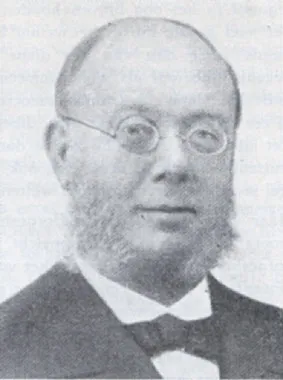
Nicolaas Pierson
Human Design Chart
Biography
Pierson was a professor of economics and statistics at the University of Amsterdam and director and presiding director (president-directeur) of the De Nederlandsche Bank, the Dutch national bank. He was minister of Finance in the Cabinet Van Tienhoven. During his term of office he introduced an important tax revision. After serving as chairman of the Council of Ministers for four years he took a seat in the House of Representatives for the constituency of Gorinchem from 1905 to 1909. Pierson received an honorary doctorate from the University of Cambridge.
On 30 October 1862, Pierson married Catharina Rutgera Waller in Amsterdam. She died shortly after their marriage, and the couple remained childless. Pierson died on 24 December 1909, in Heemstede, aged 70.
Nicolaas Pierson — Generator with Profile 6/2
Generator 6/2 — Design at a Glance
Nicolaas Pierson's design shows a tendency towards great endurance and inner drive. As a Generator, he had a lot of sacral energy, which made him extremely strong and resilient, much like a workhorse – provided he dedicated himself to tasks that truly mattered to him. His chart pointed to two specific pitfalls: on one hand, there was the risk of energy waste and burnout if he tackled tasks that did not bring him joy. On the other hand, there was the danger of being held back from his true passion, even though he was still full of power.
The mechanics of his design emphasized that his energy was most freely available when he responded to impulses rather than initiating things himself. The motto was clear: don't start, but answer. His most successful strategy was to wait for signals from life and then act when his sacral center gave a clear "yes".
If Nicolaas Pierson lived in harmony with this strategy, nothing could stop him. He was rewarded with a deep sense of satisfaction and fulfillment. However, if he went against his design and constantly tried to initiate things, he would eventually encounter persistent frustration and a lack of energy. His path was thus characterized by the ability to respond from the gut to what life offered him.
Emotional Authority
Nicolaas Pierson's inner compass was shaped by the defined Solar Plexus Center, making him an emotional authority. This configuration was subject to a constant wave movement of feelings, coloring his perception of the world through the current mood. What appeared inspiring in one moment could be perceived as negative in the next. For Nicolaas Pierson, the immediate feeling was thus only a snapshot, not yet the final truth. Quick, spontaneous decisions that emerged directly from this emotional heat often proved problematic, as they had not yet reached the deeper clarity.
The mechanics of his authority required patience and time. Nicolaas Pierson had to let decisions mature, often through multiple reconsiderations, to let the intense feelings subside. Only when emotional distance was gained did the necessary calmness and clarity set in. This was especially true for long-term decisions that influenced the course of his life. Crucial was the absolute priority of this authority: The Solar Plexus Center carried the inner guidance, regardless of which other centers were also defined in his chart. Nicolaas Pierson thus showed himself to be someone who found his truth not in the first impulse, but in the subsequent, clear echo of the emotion.
The 6/2 Profile — Role Model / Hermit
Nicolaas Pierson's design is characterized by a clear division of his life path, driven by the dynamics of Line 6/2. In his younger years, before the age of 30, the energy of Line 3 dominated. This shaped him as someone who learned through intense experimentation and direct experience. Trial and error were his driving principles; after each failure, he withdrew to integrate the experience before acting again.
Around age 30, Line 6 kicked in. Nicolaas Pierson then showed a tendency to withdraw to reflect on his earlier experiments from a distance. This phase of intense reflection served for healing and deep self-knowledge. From this "cave," he developed into a figure of wisdom. Others sought him out to partake in his life wisdom and learn the ability for deep introspection.
This development was supported by specific Gates. Gate 13 on Line 6 conveyed an unwavering hope for openness and better relationships, despite initial pessimistic tendencies. He saw every interaction as a necessary step towards greater unity. At the same time, Gate 43 on Line 2 brought a high readiness and deep engagement. His unique mental habits and insights could initially be perceived by outsiders as unconventional or even "crazy," but were crucial for his later breakthroughs. Educating and holding onto these specific behaviors enabled him to project his knowledge in extraordinary ways and make it accessible to others.
Triple Split Definition — Defined & Open Centers
Nicolaas Pierson's design was characterized by a rare combination of resolute willpower and profound emotional intuition. His defined Heart Center provided him with a constant source of willpower and ego strength; he had the energy to make promises and keep them, which gave him a natural authority in leadership and resource management. This material strength was complemented by his defined Sacral Center, which provided him with an enormous vital energy source. As a Generator, he was designed to respond to requests to use his energy efficiently and satisfyingly, rather than taking initiative and exhausting himself.
At the same time, Nicolaas Pierson had a defined Solar Plexus Center, which formed his inner authority. This meant that he did not make decisions impulsively but waited for the emotional wave to clear before making decisions. His perception was thus characterized by understanding things in their depth and development over time, rather than just the current state. His defined Ajna Center ensured a constant, specific mental function; he processed data and concepts in a trustworthy, recurring way that protected him from external mental influence. The connection to his defined Throat Center allowed him to communicate his mental concepts and emotional clarity reliably.
However, his open Head Center made him vulnerable to external mental pressure and the temptation to engage with questions that were not his own. He tended to be overwhelmed by the need to find answers rather than trusting the natural flow of his inner authority. His open Spleen Center revealed a deep survival fear and a tendency to cling to people or situations that provided a false sense of security and well-being, rather than cultivating his own intuition. Additionally, his open Root Center absorbed the stress and adrenaline-driven pressure of his environment, which could lead him to be driven by external necessities rather than acting in his own, calm rhythm. This configuration required him to always question the source of his pressure and thoughts to avoid squandering his powerful essence.
Channels for intimacy, insight and spiritual pioneering.
Nicolaas Pierson was someone who sought deep intimacy and trusted the emotional wave. The Channel of Union 59-6 connected his sacral sexuality with the emotional friction of the Solar Plexus. This configuration required patience: first friendship, then merging. His emotional clarity emerged only over time, allowing him to shape relationships sustainably and fruitfully rather than overwhelming them with premature intensity.
At the same time, he possessed the ability to clearly structure complex connections. The Channel of Structuring 43-23 connected spontaneous insights from the Ajna Center with the assimilating expression of the Throat Center. Pierson's thinking often seemed prescient; he formulated innovative perspectives that promoted efficiency. However, this knowledge needed time to be accepted. If he waited for the right timing, his contribution was recognized as valuable; otherwise, he risked misunderstandings.
Another defining aspect was his competitive spirit aimed at individualization. The Channel of Initiation 51-25 connected the egoistic energy of the Heart with the spiritual perspective of the Higher Self. Pierson pushed himself and others forward through challenges to overcome limits. This process of initiation occurred authentically only when he was invited or followed his own design, not through forced pressure.
Additionally, Gates like 13 (Continuity), 7 (Leadership), and 36 (Crisis) were active in his design. They underscored his ability to learn from past experiences and recognize new directions in crisis moments, always seeking the balance between collective memory and individual leadership.
Individual Circuitry — Circuit Signature
Nicolaas Pierson's design showed three separate, parallel functioning energy blocks, as he had a Triple Definition. This configuration meant that his powers did not flow as a continuous stream but as independent, coexisting focal points.
A first block connected the Solar Plexus with the Sacral Center through the Channel 59-6 (Union). This gave him a primal, instinctive life force that focused on protection, preservation, and the necessities for survival. It was an energy of care and survival, deeply rooted in instincts.
A second block connected the Ajna with the Throat Center through the Channel 43-23 (Structuring). Here lay the ability to clearly organize thoughts and express them verbally. Pierson could carry his inner structuring outward, which helped him explain complex connections clearly.
A third block connected the Identity with the Heart Center through the Channel 25-51 (Initiation). This created a firm inner conviction and a strong self-worth. His identity was closely linked to his will and courage, even though these firm convictions were often not directly expressed through the Throat Center, as this connection was missing.
Overall, these three areas – instinct and protection, structured communication, and inner conviction – acted as separate pillars. They shaped Nicolaas Pierson's character through their own logic, without merging into a single, continuous flow. Each of these energies stood on its own, clear and definable.
Left Angle Cross of Masks 1
Nicolaas Pierson's design was characterized by the configuration of the Left Cross of the Masks. This structure set a specific dynamic: the tension between the need to protect or hide oneself and the simultaneous urge to carry this inner truth outward. It was a life task related to navigating between privacy and public presentation.
In Human-Design, this cross describes a developmental line where the "mask" – the role one takes on outwardly – serves not as deception but as a necessary step toward self-awareness. The path often led through phases where Nicolaas Pierson withdrew to clarify his own identity before showing it to others. The challenge was to not get stuck in the role but to use it as a tool to define his essence.
This mechanism acted as an inner compass guiding him to bridge the gap between his perceived self and his true self. It was not about hypocrisy but about the process of figuring out which parts of his personality were authentic enough to be made visible and which still needed protection. Through this ongoing confrontation with his mask, Nicolaas Pierson found his unique expression, rooted in a deep, personal integrity that emerged only after wearing and later shedding these layers.
Saturn Return · Uranus Opposition · Chiron Return · 2nd Saturn Return — Life Cycles
Nicolaas Pierson's design was characterized by a clear, cyclical structure in which professional responsibility and societal role condensed at regular intervals. His path followed the rhythm of planetary cycles, which in his Human Design chart acted as points of consolidation and transformation.
The first Saturn return marked the transition from preparation to a fixed position. In 1864, at the age of 25, Pierson became the director of the De Surinaamsche Bank. This step corresponded to the typical effect of the first Saturn return: years of preparation and learning processes culminated in a stable, structural responsibility. The energy of this cycle promoted stability and the acceptance of a defined role within an existing system.
At the age of 38, the Uranus opposition hit his design. This cycle often brings sudden changes or the opening of new perspectives. In 1877, Pierson received a professorship at the University of Amsterdam. Here the dynamic power of the opposition was evident: a new intellectual level was opened, which led him beyond his previous banking activities and solidified his authority in an academic context.
With the Chiron return, the cycle of blooming and fulfilling the incarnation purpose, his development reached a new quality. In 1891, at the age of 52, he held the position of Minister of Finance. In this phase, one's design increasingly unfolds in public life; meaning and purpose become experiential. Pierson's role expanded from institutional leadership to national responsibility.
The second Saturn return crowned this development with maximum structural confirmation. In 1897, at the age of 58, he became Prime Minister of the Netherlands. This cycle condensed the previously built experiences and positions into the highest political authority. Pierson's life demonstrated how the gradual acceptance of responsibility in harmony with planetary cycles can lead to a comprehensive societal imprint.
Generator · Emotional Authority — Synthesis
Nicolaas Pierson lived deeply within his own emotional preservation, which was inherent to him as a Generator with emotional authority. The time he needed to let decisions mature allowed him to see the world through the shifting hues of his emotions and ultimately arrive at a profound, encompassing realization. This process, combined with his defined Ajna Center, led to a persistent, specific way of thinking and the ability to shape concepts and inspire others through the pressure of his thoughts. His life was marked by the endurance and productivity typical of Generators, always striving to invest energy in tasks that were close to his heart.
Pierson embodied a paradox between the need for deep reflection and the ability to effect transformation through knowledge and creativity. The left cross of the Masks indicates a tension between the desire for authenticity and the necessity to conform to societal expectations. His repeated professional successes, which coincided with specific cycles, demonstrated how he used his inner wisdom and ability to forge new paths to initiate change – always in harmony with his emotional wave and sacral response (Channel 59-6).
3 Defined Channels
Incarnation Cross - Left Angle Cross of Masks 1
Solar Return
The Solar Return shows the moment when the sun returns to its exact birth position - your personal solar year.
Life Cycles
Discover the life cycles with a detailed triple view (birth chart, cycle chart, composite).
Human Design Profile
- Type
- Generator
- Strategy
- To respond - wait for something to respond to
- Authority
- Emotional Authority
- Profile
- 6/2 - Role Model / Hermit
- Definition
- Triple Split
- Incarnation Cross
- Left Angle Cross of Masks 1
- Date of Birth
- 07.02.1839 10:00
- Place of Birth
- Amsterdam, NETH
Frequently Asked Questions
What was Nicolaas Pierson's Human Design type?
What profile did Nicolaas Pierson have?
Which authority guided Nicolaas Pierson?
What incarnation cross did Nicolaas Pierson have?
When was Nicolaas Pierson born?
Discover your own Human Design
Are you also a Generator? Find out in a personal reading how to use your sacral energy correctly and discover deep satisfaction.
More Personalities
Back to overviewAaliyah

Alexia

Angèle

Anne-Marie

Arcángel

Arno