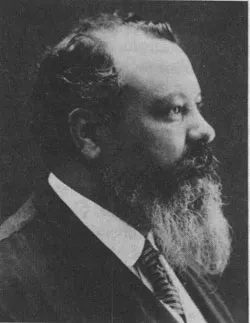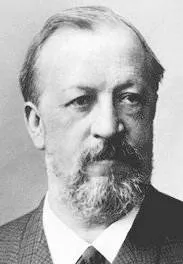
Nikolaus Otto
Human Design Chart
Biography
He died 26 January 1891 in Cologne, Germany.
Human Design Analysis: Nikolaus Otto as Manifestor 1/3
Manifestor 1/3 — Design at a Glance
Nikolaus Otto revealed himself as a pioneer and visionary whose design was geared towards leading the world into a new future. His Human Design type is that of a Manifestor, a configuration that compares him to an emperor in ancient Rome: He had the grand vision for the empire but did not wage the necessary wars himself; instead, he let others act on his behalf. This structure often led to misunderstandings and polarization. Some people were inspired by his far-reaching thoughts and followed him, while others rejected or even hated them. To find his true followers, it was crucial for him to inform others in a timely and precise manner about his visions. This formed the ideal strategy for his type. When he adhered to this strategy and trusted his inner authority, he was rewarded with a sense of inner peace. If he lived against his design, however, he likely felt an ongoing deep-seated anger within him. His essence was thus characterized by the tension field between great leadership vision and the necessity of clear communication to minimize resistance and gain support.
Emotional Authority
Nikolaus Otto demonstrated decision-making that did not occur in the moment of first enthusiasm or rejection. His design carried Emotional Authority, meaning his defined Emotional Center always took precedence over all other defined centers – a strict rule of his inner mechanics. He was subject to an emotional wave with permanent ups and downs; his perception of the world was always colored by current mood swings. What felt enthusiastic in one moment could appear negative in the next. His immediate feeling, however, was only a snapshot, not a final truth statement. Quick, spontaneous decisions from this emotional heat would often have had negative consequences for him. Instead, his system required patience and conscious hesitation. Nikolaus Otto needed to allow time for decisions to mature, often through multiple nights of reflection. Only when the intense feelings subsided and an emotional distance was gained did clarity and calmness set in. This breathing process was crucial for long-term life decisions. Only after going through this emotional phase could he recognize his deeper, more comprehensive truth and become action-ready.
The 1/3 Profile — Investigator / Martyr
Nikolaus Otto revealed himself as someone who seamlessly combined theoretical knowledge with practical experience. His design established a fundamental approach: first thoroughly learn, then test by experimenting. As both researcher and experimenter – comparable to a mix of scientist and adventurer – his life revolved around the process of trial and error.
Line 1 of his profile called for withdrawal and study, similar to a monk preparing for an inner change. Yet Line 3 urged adaptability and joyful acceptance of changes through direct practice. This configuration meant that self-earned insights were at the core of his theme. When Nikolaus Otto deemed something right, he had previously examined it both theoretically and practically down to his heart and gut. His judgment was not based on mere theory but on tested experience. Sometimes the energy of Line 1 could dominate, leading to doubts about whether enough knowledge existed to move into implementation. Yet Profile 1/3 thrives on closing this gap through experiments and learning from mistakes, thereby developing deep trust in his own judgments.
Single Definition — Defined & Open Centers
Nikolaus Otto revealed himself as someone with a deeply rooted, consistent inner identity and a clear sense of direction in life. His defined G Center gave him this reliable self-love and orientation that allowed him to guide others on new paths without being dependent on them. This inner security was strengthened by his defined Heart Center, which provided him with permanent willpower. He could keep promises, control his own resources, and work independently, driven by a desire for success and recognition of his contribution.
His actions and words flowed from a defined Throat, serving as a pivot point to translate information from his design into clear communication and action. As this Throat was connected to motor centers, he had the potential to express his truth with ease and honesty if he trusted his inner guidance.
At the same time, Nikolaus Otto moved through a complex emotional landscape. His defined Solar Plexus acted as an emotional authority; he needed to wait out waves of feelings to reach clarity rather than reacting impulsively to highs or lows. This process of emotional maturation was supported by a defined Root Pressure, which helped him deal with existential and social tensions and move forward.
In contrast, his design revealed a vulnerability to mental overload. His open Head Center tended to get entangled in others' questions or overwhelmed by irrelevant mental pressure rather than trusting inspiring thoughts. Similarly, his open Ajna Center was flexible and open to foreign concepts but risked interpreting them as his own truth or pretending uncertainty. His open Sacral Center made him susceptible to exhaustion from borrowed energy of others since he lacked a consistent personal flow. Finally, his open Spleen Center was exposed to fundamental survival anxiety that led him to cling to things for a false sense of security rather than making spontaneous decisions.
Channels for emotional depth, reflection and communal cohesion.
Nikolaus Otto showed himself as someone whose social and creative expression was closely tied to the rhythmic fluctuations of his emotional wave. The Channel of Openness 22-12 connected his Solar Plexus Center with the Throat Center; this meant that his ability to touch others through voice or words and trigger mutative impulses depended on his current mood. He worked most powerfully when he waited for the right moment rather than forcing himself into social interactions where he might otherwise appear harsh or misunderstood.
Parallel to this, he possessed the mechanics of the Channel of Transience 36-35, also between Solar Plexus and Throat. This channel drove him to seek new experiences often through creating crises or resisting restrictive patterns to generate movement. His wisdom emerged from fully experiencing these emotional depths; he learned that feelings are transient and could later advise others to seize the moment.
Another defining aspect was the Channel of the Lost Son 13-33 between G Center and Throat. Here, he gathered life stories and secrets (Gate 13) before retreating (Gate 33) to reflect on these experiences before sharing them. This process of patience and listening allowed him to extract deep truths from past events and pass them on as lessons.
In interpersonal relationships, the Channel of Synthesis 19-49 between Root and Solar Plexus Centers was active. He sought belonging and security within a tribal structure, reacting sensitively to emotional resonance in bonds. Loyalty and protection of shared resources were crucial for him to create a stable environment where his other energies could manifest.
Additionally, Gates like Gate 11 (visual memory), Gate 6 (friction as growth factor), and Gate 58 (experimenting towards perfection) contributed to his careful assessment of situations, using pressure as an opportunity for development, and optimizing patterns through experiments. His design required a balance between emotional openness, experience-based learning, and the search for stable community.
Collective Circuitry — Circuit Signature
Nikolaus Otto's design inclined him toward emotional authenticity and communal action. As a simply defined type, he connected Throat, Solar Plexus, Root, Heart, and Identity Centers in an uninterrupted energetic flow, shaping his actions as coherent wholes.
The Knowledge Circuit worked through the Channel of Openness between Throat and Solar Plexus Centers. This promoted the ability to express inner emotional waves directly and acoustically, turning new insights into words. Parallel to this, the Meaning Circuit shaped his stance: The Channels of 'lost son' and Transience connected Throat, Solar Plexus, and Identity Centers. Here it was about sharing past experiences to draw common meaning from them and go through emotional cycles with others.
Furthermore, Nikolaus Otto was active in the Ego Circuit belonging to the tribal group. The Channels Community (Heart-Root) and Synthesis (Solarplexus-Heart) connected Heart, Solar Plexus, and Root Centers. This underscored a strong need for cooperation, mutual support, and building material resources collectively. Since this circuit did not connect to Sacral Center, regular rest pauses were necessary to replenish energy for these communal tasks. His Sensitivity Awareness Stream of consciousness further emphasized the perception of moods and feelings within his social environment, further shaping his empathetic nature.
Right Angle Cross of Eden 2
Nikolaus Ottos design was marked by the right cross of Eden. This configuration established a fundamental attitude characterized by a strong drive for self-determination and independence. In Human Design, this pattern is understood as an expression of a deep inner will that often works against external resistance or societal norms. It wasn't arbitrary defiance but rather a structural necessity to follow one's own path and maintain autonomy.
For Nikolaus Otto, this meant finding himself in situations where he had to assert his independence. The right cross of Eden describes a process of maturation through challenges. Those who carry this structure often learn the hard way that freedom must be fought for and is not simply given. This dynamic shaped his actions: He sought ways to free himself from bonds or expectations felt as limiting.
The mechanics of this design show that the path to inner strength often leads through conflicts. Nikolaus Otto repeatedly had to prove himself and secure his position. This did not stem from malice but was a direct result of his energetic alignment. His design challenged him to take responsibility for his own life, even if it came with resistance. Thus emerged a personality defined by its own power, independent of others' recognition. This structure created a person who strengthened their identity through active action and the overcoming of trials.
Saturn Return · Uranus Opposition · Chiron Return · 2nd Saturn Return — Life Cycles
Nikolaus Ottos design was characterized by a strong orientation towards structure and long-term commitments, which were particularly evident during Saturn returns. The first Saturn return often marked the transition from youth to serious life engagement. In 1858, at age 26, he met Anna Gossi – an event that took over this phase of relationship building and responsibility.
With the Uranus return came a period of change and liberation from old structures. This was evident in 1872 when, at age 40, he drove forward the transformation into the gas engines factory Deutz AG. This step underscored his ability to reorganize established systems and implement innovative solutions.
The Chiron return brought a period of personal fulfillment and recognition. In 1882, Nikolaus Otto received an honorary doctorate from the University of Würzburg at age 50. This honor reflected the culmination of his life's work, where his efforts increasingly became meaningful and purposeful.
The second Saturn return often signaled the end of a major life cycle. In 1891, Nikolaus Otto died in Cologne at age 59. His death marked the conclusion of a path characterized by continuous development and profound changes.
Manifestor · Emotional Authority — Synthesis
Nikolaus Otto was a Manifestor whose life was shaped by a deep drive for innovation and the expression of an inner vision. The connection of a defined Throat Center (communication and manifestation) with emotional authority points to someone who acted impulsively but had to filter their decisions through a maturing emotional wave. This combination created a dynamic in which creative impulses from the knowledge circuit (support, creativity) were channeled through voice and throat center – always filtered by the need to emotionally validate one's inner truth. The line 1/3 in Profile further strengthened this process by establishing an unending cycle of research, experimentation, and the need for self-discovered insights.
A central paradox in his design lay in the tension between the manifesting impulse (pioneer, leader) and the emotional wave. While the Manifestor design pushed him to take initiatives and spark changes, his emotional authority required a phase of inner clarification and waiting. This likely led to an internal conflict between the desire for immediate implementation and the necessity of letting decisions mature – a tension field that showed in documented cycles from early learning phases through to recognition of his work.
5 Defined Channels
Incarnation Cross - Right Angle Cross of Eden 2
Solar Return
The Solar Return shows the moment when the sun returns to its exact birth position - your personal solar year.
Life Cycles
Discover the life cycles with a detailed triple view (birth chart, cycle chart, composite).
Human Design Profile
- Type
- Manifestor
- Strategy
- To inform others before acting
- Authority
- Emotional Authority
- Profile
- 1/3 - Investigator / Martyr
- Definition
- Single Definition
- Incarnation Cross
- Right Angle Cross of Eden 2
- Date of Birth
- 14.06.1832 09:10
- Place of Birth
- Holzhausen an der Haide, GER
Frequently Asked Questions
What was Nikolaus Otto's Human Design type?
What profile did Nikolaus Otto have?
What authority did Nikolaus Otto have?
What incarnation cross did Nikolaus Otto have?
When was Nikolaus Otto born?
Discover your own Human Design
Are you also a Manifestor? Find out in a personal reading how to use your initiation power peacefully and dissolve resistance.
More Personalities
Back to overviewChristian-Jaque
Kesha

Lucebert
Marilyn

Masaccio
Papus