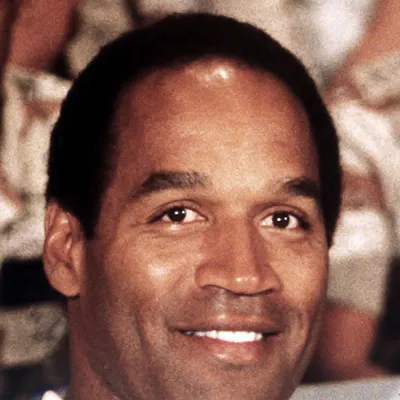
O. J. Simpson
Human Design Chart
Biography
His first marriage was to Marguerite Whitley in 1968; the relationship lasted for 11 years and produced three children. A fourth child, Aaren, born 1 September 1977 was in a drowning accident at 23 months. After a week in a coma, she died on 25 August 1979, a week before her second birthday. They divorced due to Simpson's extramarital affairs.
Charming, arrogant, handsome and self-assured, Simpson met Nicole Brown in 1977 when she was 18, and they married in 1985. The couple had two children, Sydney and Justin. On 24 May 1989, Simpson was sentenced to a fine, 120 hours of community service and counselling for a beating of his wife that occurred on 1 January 1989. They divorced in 1992.
On 25 October 1993, a 911 police call reported Simpson at Nicole's house threatening that "he was going to beat the s**t out of her." On 12 June 1994, Nicole and a friend, Ron Goldman, were found at Nicole's home, savagely slashed and stabbed to death. Simpson was accused of the murder and arrested; the ensuing trial began on 17 September 1996. The public was riveted by the trial, as the case was shown on TV for the following year and became, to many, a joke and parody, a gross use of tax-payers funds. America was glued to their seats, even up to the shocking conclusion of the trial on 4 February 1997 which resulted in his acquittal at 07:13 PM (PST) in Santa Monica, California.
The criminal case, and the following civil trial, tied up the courts for over two years. Some believe that the sensationalism that was associated with the trial inhibited a true and just hearing being served.
O. J. Simpson — Manifesting Generator with Profile 2/4
Manifesting Generator 2/4 — Design at a Glance
O. J. Simpson revealed himself as someone who quickly brought things into his life and pushed several projects forward simultaneously. As an Manifesting Generator, he had a hybrid nature: He possessed the constant energy of a Generator through his defined Sacral Center, but combined this with the ability to skip steps. This configuration allowed him to act swiftly, but also carried the risk of missing important stages or becoming overwhelmed by working on multiple impulses at once.
His strategy was not to initiate himself but to react to life impulses. Only when his Sacral Center responded with a clear "Yes" and his inner authority agreed should he proceed. With correct application of this reactive tactic, he could draw deep satisfaction from his work. Then parallel working was no obstacle, but rather enhanced his creative power by putting him in a playful mode. Without this orientation towards internal confirmation and reaction, however, his speed tended to cause frustration when he had to make up for missed steps or lost the joy of creation through overloading. His design suggested that variety and fun were crucial for whether this dynamic energy worked constructively or led to resistance.
Emotional Authority
O. J. Simpson exhibited a decision-making approach heavily influenced by strong emotional waves. His inner authority was located in the defined Solar Plexus Center, meaning he followed Emotional Authority. This configuration ensured that his perception of the world was always colored by his current mood. At one moment, he could be enthusiastic about something, only to negatively evaluate the same situation moments later. However, his immediate feeling was merely a fleeting snapshot and not necessarily the deeper truth.
The mechanics of his authority required patience. Quick, spontaneous decisions made directly from intense emotions carried the risk of having negative consequences. For O. J. Simpson, it was essential to allow time for these strong feelings to dissipate. Only after he had reconsidered a decision multiple times and gained emotional distance did clarity set in. This process of waiting and maturing was key to finding calmness and making well-founded judgments, especially regarding long-term life decisions. Emotional Authority always took precedence over other defined centers in his design, regardless of additional configurations.
The 2/4 Profile — Hermit / Opportunist
O. J. Simpson revealed a constant oscillation between the deep desire for withdrawal and a strong attraction to his social environment. His design tended to swing between two poles: Line 2, which demanded solitude and inner processing, and Line 4, which sought community with familiar people. This configuration required clear communication of his needs – when he needed company and when he wanted to be left alone. During his withdrawal phases, O. J. Simpson immersed himself in internal processes to gain clarity; once this inner peace was achieved, he returned to maintain his network.
This dynamic was reinforced by specific energies. Line 2 in the Swing Gate projected an ability to start anew externally but often acted impatiently and expected quick success, which could only be stabilized through patient waiting for the right call. Simultaneously, the fourth line in the Shock Gate shaped a fixed reactive response to competition and crises. While there was some limitation in handling sudden disturbances, there was also potential to recognize new opportunities in catastrophes and react inventively. O. J. Simpson utilized insights from his environment but processed them first in solitary silence before acting or developing ideas further. His path involved integrating the tensions between isolation and connection as well as between impulsive swing and fixed shock reaction without overstepping his boundaries.
Single Definition — Defined & Open Centers
O.J. Simpson's Human Design profile indicated a tendency towards persistent physical expression strength paired with deep emotional wave dynamics. As a Generator, he had a defined Sacral Center, which endowed him with an immense source of vital energy and fertility. This power manifested as a constant hum within him that required activity and the burning of energy to find satisfaction. His strategy involved not initiating but waiting for questions or opportunities so his Sacral could respond – a 'Yes' or 'No', signaling the availability of his energy.
This sacral force flowed through his defined Throat Center, serving as a pivot point for communication and action. His voice and actions spoke directly from this motoric source, giving him a reliable yet limited form of expression. He could manifest his truth with ease so long as he trusted the correct sacral response rather than acting impulsively.
Simultaneously, his defined Solar Plexus Center shaped his inner authority. It was a center of passion and longing that experienced emotions as chemical waves. For him, it was essential to wait for this emotional wave before making decisions. The truth did not reveal itself in the 'now', but over time when emotional clarity emerged. This gave him a seductive depth and sensitivity, yet required patience to avoid impulsivity.
In contrast, his Head, Ajna, and G Centers were open. His open Head Center made him vulnerable to mental pressure and confusion often coming from outside. He tended to identify with others' questions or seek inspiration to relieve this pressure rather than trusting his inner authority. His open Ajna Center meant a flexible but unstable mind that absorbed concepts and opinions from the environment without holding them as personal truth. The open G Center led him not to have a fixed identity or direction, blending into his surroundings. He often sought 'borrowed' identity in relationships or places, making him vulnerable to false environments that could amplify his misfortune.
Channels for emotional depth, intuitive action and individual power.
O.J. Simpson's social presence strongly depended on his emotional state. Channel of Openness 22-12 connected his Solar Plexus with the Throat Center and regulated interactions through the 'emotional wave'. He did not seek constant connection but created a receptive environment for his potential when he felt it was right. Forced social situations led to harshness; at the right moment, he could deeply touch others through voice and warmth.
At the same time, he possessed immense physical drive. Channel of Charisma 34-20 channeled his generative energy from the Sacral Center directly into immediate expression. This conveyed a desire for instant manifestation that made it hard for him to sit still. His vitality was self-reinforcing and inspiring but required inner guidance to avoid chaotic overreach.
This power was guided by intuitive sharpness. Channel of Flash of Insight 57-20 connected the Spleen with the Throat Center, allowing him to articulate truth in the moment. His spontaneous verbal outbursts often hit the core of an issue, supported by deep survival knowledge.
The connection between this intuition and his physical energy was formed by Channel of Power 34-57. It linked the Sacral Center with the Spleen, creating a archetype of individualized survival fighter. This configuration kept him perpetually alert to dangers in his environment and enabled quick, instinctive reactions based on body awareness.
Additionally, Gates like 53 (Pioneer Spirit) and 54 (Linking worldly success and spirituality) shaped his pursuit of new paths. Gate 62 promoted logical pattern recognition while Gate 16 supported experimenting with skills. Thus, his structure combined intuitive survival intelligence with charismatic presence and emotion-led social competence.
Individual Circuitry — Circuit Signature
O.J. Simpson's design was characterized by pulsating acoustic energy aimed at forging new paths and initiating change. His energetic connections appeared coherent and direct in simple definition. The Knowledge Circuit connected his Throat Center to the Solar Plexus and Spleen, creating a flow between emotional wave movement, intuitive knowledge, and immediate expression here and now. Channels like Flash of Insight (20-57) promoted innovative impulses while Openness (12-22) provided readiness for new information intake. This process translated emotional reactions into concrete expressions.
Parallel to this, the Integration Circuit secured his survival through a connection between Throat Center, Sacral Center, and Spleen. Here Charisma (20-34) and Power (34-57) worked. It meant he drew strength from reacting to life, channeled it through proper behavior, and manifested it in the moment. Thus, integration linked immediate reaction capability with the endurance of the Sacral Center. Both circuits shared Throat and Spleen Centers, showing a tight connection between expression, intuition, and action. His energy was geared towards carrying individual identity into the world through spontaneous, emotional, and intuitive impulses, always focused on the present moment.
Right Angle Cross of Penetration 2
O. J. Simpson exhibited a fundamental stance aimed at profound transformation and breaking through old structures. His design bore the signature of the right cross of penetration, a configuration that did not seek superficial adaptation but rather aimed to shake the foundations of beliefs and relationships. This energy acted as a catalyst for processes where the old was irreparably shattered to make way for the new – often under significant pressure and with the necessity of radically reinventing oneself.
The mechanics of this cross describe a path of transformation through confrontation. It is not about harmonious evolution but rather penetrating illusions. Those who carry this structure often experience their lives as a series of breaks that are necessary to achieve true authenticity. O. J. Simpson lived out this dynamic by placing himself in situations or creating them that challenged established norms and forced him to constantly question his identity. It was a path of intense inner work, where external circumstances often served as mirrors for internal conflicts. The energy of this design demands an honest confrontation with the shadow to develop a stronger, more authentic self-awareness from it. This shaped his way of moving through the world: directly, demanding, and always in search of a truth that lies beyond societal facade.
Saturn Return · Uranus Opposition · Chiron Return · 2nd Saturn Return — Life Cycles
O. J. Simpson's design was characterized by a strong orientation towards interpersonal bonds and public recognition. This configuration profoundly marked his life, with significant turning points often occurring within the context of partnerships or social affirmation.
In 1977 at age 30, his first Saturn return began. This cycle typically marks the transition into a phase of greater responsibility and structuring. For O. J. Simpson, this energy crystallized in September through the birth of his daughter Aaren. The event underscored his role as father and anchored him deeper in familial duties, a classic feature of this astrological passage that often leads to stabilization of one's personal environment.
Later, in 1985 at age 38, the Uranus opposition came into play. This phase often brings sudden changes and a need for freedom or new identities. O. J. Simpson married Nicole Brown and also won the Heisman Trophy. The combination of private reorganization (marriage) and public affirmation (trophy) shows how this cycle can simultaneously challenge and redefine both the personal and public status.
The Chiron return around 1996, at age 49, is a fulfillment cycle where one's inner life purpose unfolds or confronts. For O. J. Simpson, this process began in September of that year. It was not a moment of healing in a therapeutic sense but an intense confrontation with his own existence and the consequences of his path. The cycle brought his deepest themes to the surface, independent of external circumstances, and demanded a complete integration of life experience.
Manifesting Generator · Emotional Authority — Synthesis
He was a Manifesting Generator who navigated through life driven by sacral energy and the potential to quickly initiate things (the Manifestor aspect). However, this fundamental need for activity and the ability to seize opportunities were inseparably linked with a deeply rooted emotional wave (Emotional Authority). The necessity of allowing decisions to ripen and taking time for inner clarity was in constant tension with the impulse to act immediately. This dynamic shaped his interactions and revealed a pattern of quick reactions followed by phases of reflection – a tendency amplified by open channel 22-12, which brought volatility and emotional expressiveness into communication.
A central paradox lay in his simultaneous need for connection and exchange (Line 4) with a strong desire for solitude and inner retreat (Line 2). This tension led to constant oscillation between engaging with others and retreating into privacy to realign. The right cross of penetration suggests that he often confronted challenges head-on, reinforced by the knowledge in his circuit – a striving for transformation and expression of one's identity, even amidst emotional turbulence and societal perception.
4 Defined Channels
Incarnation Cross - Right Angle Cross of Penetration 2
Solar Return
The Solar Return shows the moment when the sun returns to its exact birth position - your personal solar year.
Life Cycles
Discover the life cycles with a detailed triple view (birth chart, cycle chart, composite).
Human Design Profile
- Strategy
- To respond - wait for something to respond to
- Authority
- Emotional Authority
- Profile
- 2/4 - Hermit / Opportunist
- Definition
- Single Definition
- Incarnation Cross
- Right Angle Cross of Penetration 2
- Date of Birth
- 09.07.1947 08:08
- Place of Birth
- San Francisco, CA, United States
Frequently Asked Questions
What was O. J. Simpson's Human Design type?
Which Profile did O. J. Simpson have in his Human Design?
What Authority guided O. J. Simpson's decisions?
Which incarnation cross characterized O. J. Simpson's design?
When was O. J. Simpson born?
Discover your own Human Design
Are you also a Manifesting Generator? Find out in a personal reading how to unfold your multi-talents and direct your energy wisely.
More Personalities
Back to overviewAldair

Alizée

Angeli

Arletty

Artus

Balthus