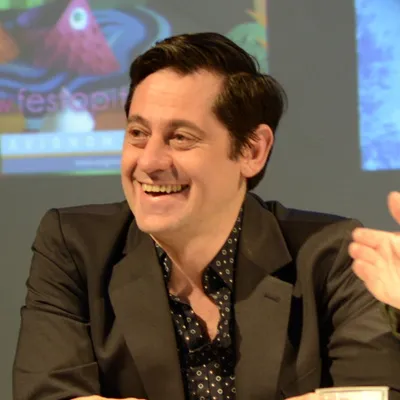
Olivier Py
Human Design Chart
Biography
In 1997, Py became director of the Centre Dramatique National d'Orléans. In 2007, he became director of the Théâtre de l'Odéon.
Py describes himself as Catholic and homosexual. He is known for his emphasis on Catholic and homoerotic themes.
Since the early 2000s, Py has increasingly devoted himself to the opera. His productions of La Damnation de Faust, Tannhäuser and Tristan und Isolde, all in Geneva, have generally been well received. In March 2008, he debuted at the Paris Opéra.
Human Design Analysis: Olivier Py as Manifestor 6/2
Manifestor 6/2 — Design at a Glance
Olivier Py showed himself to be someone who naturally had the ability to guide others into a new direction. His design as a Manifestor established a foundational stance as a pioneer and visionary. Similar to an emperor in ancient Rome, who had the vision of a great empire but did not lead battles himself, but sent his soldiers out to conquer lands for him, Olivier Py initiated processes that others then carried out.
This configuration, however, brings a specific challenge with it: Not everyone shares these big dreams. Olivier Py inevitably polarized, as he often thought further ahead than his surroundings. Some loved and followed him because of his visions, while others rejected or even hated him. The central pain point of this design lies in the misunderstanding that arises from this pioneering role.
To minimize this polarization and find the right followership, the strategy of informing was crucial. By communicating his intentions and visions early and clearly, Olivier Py could prevent resistance. If he followed this path, his system rewarded him with a feeling of inner peace. If he lived against this design, without informing, it often resulted in a lasting, deep anger. His path, therefore, was to create space for his leadership through clear communication.
Ego Authority
Olivier Py showed a rare configuration: His inner truth lay in the will, carried by a defined Ego Center, while emotional, sacral, and spleen-induced impulses remained open. This structure made him highly susceptible and vulnerable to distractions, but at the same time created immense openness. His authority – the 'authority in the Ego' – required him to listen to himself when speaking. Not the thoughtful mind, which often represents the interests of others, but the spontaneous, uncensored, which came directly from the throat, marked his true direction.
This mechanism required a clear distinction between thoughts and true will. What Olivier Py did had to be personally close to his heart and pay off for him – whether through material success or the urge to exceed limits and be first. Only then did he have the necessary strength to keep promises and achieve goals. Consistently following this will could appear egoistic to the outside, but was essential for his integrity. Also important was the pause after goal achievement; constant work without rest did not lead to results in this design, but to exhaustion. His path was to rely on this inner will, rather than getting lost in the open centers.
The 6/2 Profile — Role Model / Hermit
Olivier Py's design laid a tendency towards experimental learning and later, distant reflection. Before the age of 30, his Profile's 6-line still acted as a 3-line. During this phase, everything revolved around trial and error, coupled with withdrawal after failures to collect personal life experiences.
Around 30 years of age, the 6-line activated. This marked the transition into a phase of intense introspection. Olivier Py showed himself to be someone who withdrew to look back on earlier experiments with distance. This period served for healing and deep self-awareness. The mechanics describe this as a retreat into a metaphorical cave to process collected impressions.
The 6/2 configuration projects a strong, caring aura outward, even if the person does not always fully recognize their own strength. This requires sensitivity and learning that results often turn out differently than expected. Trust or mistrust determined the effectiveness of this line.
When the reflection period was complete, Olivier Py emerged as a wise person from his retreat. Others could recognize his life wisdom and came to him to learn from his ability for deep introspection. He became a role model, inspired by lived experiences and not just theory. The development from the experimental 3-phase to the reflective 6-phase shaped his path to self-awareness and sharing insights.
Single Definition — Defined & Open Centers
Olivier Pys design points towards clear, strong-willed communication. His defined Throat Center gave him a reliable voice to carry inner messages outward. This expressive ability was fueled by his defined Heart Center, which gave him access to willpower and ego strength. Olivier Py showed himself to be someone who enjoyed setting his own schedule and deciding which resources to use. His "I" statements were powerful; he only promised what he could keep, thereby strengthening his self-esteem. The combination of defined Throat and Heart meant that he articulated his truth with honesty and clarity, driven by an inner motivation to be successful and recognized.
At the same time, his chart revealed a high sensitivity to external influences. His open Head Center made him vulnerable to mental pressure and the questions of others, which he easily took on as his own problems. Similarly, his open Ajna Center led him to adopt concepts and opinions from his environment without always identifying them as his own truth. This could lead to confusion when he tried to find answers that did not actually belong to him.
His open G Center lacked a fixed identity; he tended to blend with his environment and sought the right place to find his direction. His open Sacral Center left him running on borrowed energy from others, which could lead to exhaustion if he did not respect his limits. Additionally, his open Solar Plexus absorbed the emotions of his environment, making him emotionally vulnerable, while his open Spleen Center made him susceptible to fears and clinging to unhealthy situations. Finally, his open Root Center took on the stress of the world, which could plunge him into a cycle of adrenalized pressure and seeking relief.
Channels for the courage to realize your own potential.
Olivier Py revealed himself to be shaped by a fundamental attitude that combined material responsibility with the ability to translate complex relationships into tangible images. His design carries the energy of the "Money Line 21-45," which connects the Heart Center with the Throat Center. This channel describes the desire to take control of resources to protect and gather one's tribe. It deals with the tension between the need for independence and the duty to serve others. Olivier Py had to learn to use his will in a way that preserves his interests while simultaneously exercising authority. The challenge lay in not being controlled but setting his own pace to avoid burnout and secure loyalty.
In addition to this structural leadership competence, other energies were at work. Gate 56 allowed the abstraction of mental processes into pictorial representations, which is central to telling collective stories. Gate 27 brought genetic care and warmth, enriching all activities qualitatively. Gate 28 demanded decisions in the here and now, coupled with the courage to take risks to fulfill personal meaning. Gate 60 reminded of the necessity to accept limitations to overcome melancholy through transformation and creativity. Gate 40 sought liberation through work, expecting calm and recognition as a reward. Gate 35 drove change through interaction and new experiences, while Gate 20 promoted awakening to one's unique self in the present. Together, these elements created a profile that united leadership, narrative clarity, and authentic action.
Tribal Circuitry — Circuit Signature
Olivier Pys Design shows a tendency towards strategic action based on the exchange of resources and mutual support. As someone with a simple definition, he appears as a person whose energetic structure is clear and focused, without internal contradictions or divided impulses.
This simplicity manifests concretely in the Ego Circuit, which in his case belongs to the group rather than being individual. Here, it is less about the isolated self and more about cooperation and the joint creation of wealth. In Olivier Py, only the "Money Line" (Channel 21-45) is active. This channel connects his Heart Center with his Throat Center. This means that his willpower and intentions are directly translated into words and actions that create material value or resources. It is a direct line from inner motivation to outer expression, which can be used to accumulate material wealth.
Important in this context is the distinction: Since there is no connection to the Sacral Center, the constant, automatic life force is missing. Therefore, Olivier Py needs rest periods to regenerate the energy needed for these resource-oriented actions. The Ego Circuit requires a good balance between giving and taking – "today I give, tomorrow you give" – which points to a conservative, traditional understanding of support. Without the constant drive of the Sacral Center, strategic pauses are essential to maintain the strength for the mediation and creation of resources.
Left Angle Cross of Distraction 1
Olivier Pys Human Design shows a tendency towards inner fragmentation, which manifested as a constant distraction from his true life purpose. This configuration, the left-hand distraction cross 1, describes a state where consciousness is scattered by numerous, often contradictory impulses. Instead of following a clear, focused path, Olivier Py tended to get lost in details and side issues, which fragmented his central energy.
The mechanics of this cross work like a prism, breaking light into many small rays instead of focusing it. For Olivier Py, this meant that large projects or personal goals were often interrupted by unforeseen detours and new emerging interests. It was not a lack of intelligence or willpower, but a structural tendency to lose focus. Attention was constantly redistributed before a matter could truly mature.
This constant interplay between concentration and distraction shaped his experience. Olivier Py was someone who had difficulty staying with a single topic, as new stimuli constantly awakened his interest. The result was often a feeling of incompleteness or of not finishing, even though many small advances were made. The challenge lay in recognizing this fragmentation and not valuing it as personal failure, but as part of the design that fosters a broad, albeit less deep, engagement with the world.
Saturn Return · Uranus Opposition · Chiron Return · 2nd Saturn Return — Life Cycles
Olivier Pys Human Design shows a tendency towards deep transformation processes that condensed into concrete career steps. This dynamics is particularly evident in two cycles. In 2007, at the age of 42, he became the director of the Théâtre National de l’Odéon in Paris. This period fell during the Uranus opposition, a phase in which old structures often dissolve to make way for new, unexpected developments. For his design, this was a moment of structural reorganization, in which external circumstances suddenly changed.
Later, in 2015, at the age of 50, he staged the first production of The Flying Dutchman. This occurred during the Chiron Return, a fulfillment cycle in which the individual's incarnation cross unfolds and meaning becomes tangible. Here, no healing in the traditional sense occurred, but a bloom: Years of work according to his strategy and authority culminated in a concrete artistic realization that made the core of his purpose palpable. Both events illustrate how the mechanical phases of his chart translated into tangible career milestones, marking both transformation and fulfillment.
Manifestor · Ego Authority — Synthesis
A central red thread in this Human Design chart is the dynamic connection between inner will and the ability to mobilize resources. As a Manifestor with a defined Throat (connected to the Heart Center through the Money Line), the pattern is designed for taking initiatives and leading others. The authority in the ego emphasizes the importance of spontaneous, uncensored expression of one's will – a voice that comes from the heart and has the ability to gather and provide for the 'tribe'. The profile as a Role Model/Natural Talent indicates that experiences are collected and reflected upon to develop wisdom that can then be passed on.
The central paradox lies in the tension between the impulsive, initiating character of the Manifestor and the need for reflection and withdrawal. The 6/2 line implies a cycle of experimenting followed by withdrawal for self-discovery, while the Manifestor type tends to act directly. This creates an inner dynamic in which the desire for independent leadership collides with the wish for deep insight and the processing of experiences – a give-and-take that is amplified by the defined Throat as an expression of these inner processes.
1 Defined Channel
Incarnation Cross - Left Angle Cross of Distraction 1
Solar Return
The Solar Return shows the moment when the sun returns to its exact birth position - your personal solar year.
Life Cycles
Discover the life cycles with a detailed triple view (birth chart, cycle chart, composite).
Human Design Profile
- Type
- Manifestor
- Strategy
- To inform others before acting
- Authority
- Ego Authority
- Profile
- 6/2 - Role Model / Hermit
- Definition
- Single Definition
- Incarnation Cross
- Left Angle Cross of Distraction 1
- Date of Birth
- 24.07.1965 07:45
- Place of Birth
- Grasse, France
Frequently Asked Questions
What is Olivier Py's Human Design type?
What Profile does Olivier Py have in Human Design?
What authority determines Olivier Py's decisions?
What incarnation cross does Olivier Py have?
When was Olivier Py born?
Discover your own Human Design
Are you also a Manifestor? Find out in a personal reading how to use your initiation power peacefully and dissolve resistance.
More Personalities
Back to overviewSissy Spacek

Anémone

Ann-Margret

Arletty
Arno
Artus