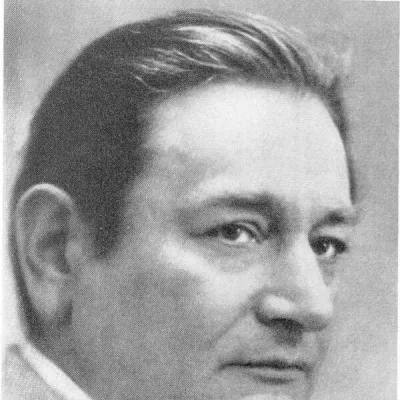
Paul Bekker
Human Design Chart
Biography
The music library of Yale University houses the Paul Bekker Collection, which contains a variety of letters, documents, receipts, photographs, printed scores and other forms of miscellany, some of which have great historical and musicological value.
He died on 7 March 1937 in New York City, aged 54.
Human Design Analysis: Paul Bekker as Generator 2/4
Generator 2/4 — Design at a Glance
Paul Beckers design as a Generator featured immense sacral endurance. His design indicated that he worked most efficiently when he did not initiate things himself but responded to external impulses. This energy source functioned like an engine that only started with the right trigger – often described as a gut reaction.
His operational strategy involved waiting until his inner signal was clear and then acting accordingly. Living this way led to deep satisfaction and fulfillment. Conversely, constant initiating or doing things without internal resonance resulted in frustration and energy depletion. Two main pitfalls shaped his potential: either he wasted his strength on tasks that did not interest him, which could lead to burnout, or he was hindered from continuing work on heart projects despite still having plenty of energy.
His success therefore depended not on how much he forced himself to do but whether he aligned his actions with internal confirmation. By responding rather than pushing, he optimally utilized his endurance and avoided the exhaustion that comes from working against his design.
Sacral Authority
Paul Beckers design indicated a tendency towards intuitive, body-based decision-making. He was someone who did not act based on intellectual analysis but responded to direct signals from his body. This mechanism came from his sacral authority, unique to the Generator type, whose strategy aligned with inner guidance, simplifying his process. A prerequisite for this was an open emotional center.
His responses manifested as gut feelings or bursts of energy in response to external stimuli. Paul Beckers had to learn to recognize these bodily sounds – like grunts, hums, or loud „Mhm“ and soft „Hm-hm“ noises – as valid answers. When his sacral motor kicked in, he felt vital and alive; an almost inexhaustible energy was at his disposal, filling his work with great enthusiasm. He was born to walk through life with joy and immerse himself in activities without them being bound by a strict purpose.
His design also pointed out that the spleen center could play a supportive role. If it was activated or directly connected to the sacral center, this gave him particular speed and spontaneity in reacting. This allowed immediate access to his physical well-being and instinctive perception, which he could reliably follow. This configuration promoted vitality rather than frustration, provided he trusted these primary bodily impulses.
The 2/4 Profile — Hermit / Opportunist
Paul Beckers basic attitude oscillated between the need for withdrawal for internal clarity and the desire for time with his closest community. His design as Profile 2/4 set this constant tension: Line 2 demanded hermitage for reflection while line 4 sought connection to the network. This required him to clearly communicate his availability limits – when he needed company and when he wanted solitude. During his withdrawal phases, Paul Beckers immersed himself in internal processes to find peace. Only once this need was satisfied did he return from this „cave“ to connect with his favorite people. This structure allowed him to evaluate the knowledge of his network during alone time and develop new ideas from it. The second line of his configuration projected ambition outward but often sought healing activity to free himself from distress. This was part of a maturation process towards inner sanctity. Simultaneously, the fourth line directed through transpersonal context, where material actions should benefit the tribe. Paul Beckers design used this dynamic to recognize opportune moments for collection in service of higher principles. The interplay between withdrawal and community shaped his way of taking in and processing information without losing sight of the need for clear signals to his environment.
Split Definition — Defined & Open Centers
Paul Becker was a Manifesting Generator with seven defined centers, creating an enormous, constant energy base and presence. His design tended towards continuous mental activity: The definition of Head and Ajna Center generated a permanent pressure to ask questions and form concepts. These thoughts flowed through his defined Throat Center into words or actions, but without the confirmation from his Sacral Center, there was a lack of necessary power for implementation. His G Center gave him clear identity and direction while his open Heart Center made him vulnerable to self-doubt; he tended to question whether he had enough value or could keep promises, often ending in cycles of overcompensation. Additionally, his Solar Plexus was open, causing him to absorb and amplify the emotions of his surroundings. He frequently personalized these foreign feelings and wondered if he was emotionally unstable or needed to avoid confrontation to prevent rejection. His challenge lay in distinguishing the mechanical stress from his defined Root Center from these absorbed emotional waves. By listening to his inner authority and waiting for a response from his Sacral Center, he could effectively utilize his massive energy rather than squandering it through mental frenzy or emotional reactions.
Channels for intuitive clarity, rhythm and structured maturation.
Paul Becker was revealed as a Channel-Generator whose design showed a powerful connection between generative life force energy and personal identity. His defining mechanism was the channel of Beat 14-2, connecting Sacral Center with G Center. Through Gate 14 he had the competence to skillfully use material resources to drive mutations, while Gate 2 served as a driver for higher knowledge and direction. This configuration made him a 'Keyholder', transforming innovative impulses into material reality. His task was to trust his inner reaction from the Sacral Center without needing to know the goal in advance. By remaining open and reacting to life, his healthy aura encouraged others mechanically to find their own direction.
Additionally, the channel of Brainwave 57-20 led intuitive insight directly from Spleen Center to Throat Center. This allowed him to make clear, truth-based statements in the moment based on deep survival knowledge. The channel of Structuring 43-23 connected his mind with expression; he received spontaneous insights through Gate 43 and processed them through Gate 23 to clearly communicate innovative perspectives. His thinking often felt forward-looking but required patience until the right moments for communication arrived.
The channel of Maturation 42-53 linked Root and Sacral Centers, driving him to fully experience each encounter and draw wisdom from it. Each new experience built upon the previous one, learning without rigid expectations in cycles. Finally, the channel of Abstraction 47-64 shaped his mind; he filtered every experience through mental images to recognize patterns and stories, even if this caused temporary confusion. Through these channels, Paul Becker contributed to mutation and innovation by living authentically and reacting to life.
Individual Circuitry — Circuit Signature
Paul Becker's design presented itself through a Split Definition: two energetically independent blocks existed parallel without direct internal flow between them. This required resonance from the outside to connect both halves and experience wholeness.
The Knowledge Circuit formed one block out of Identity and Sacral Center as well as a second, separate piece from Ajna, Throat, and Spleen Centers. This configuration propelled the expression of a unique identity forward. Through channels like 20-57 (Flash of Insight) and 3-60 (Mutation), pulsating, acoustic creativity emerged. New insights were transformed and articulated through the Throat Center, with the emotional wave from Solar Plexus – here indirectly addressed via Spleen Channel – serving as a pulse. It was about innovation and one's own path.
Parallel to this, the Sensemaking Circuit worked with two further isolated groups: Head and Ajna Centers on one side, Sacral and Root Centers on the other. Here visual, cyclical processing of past experiences dominated. Channels like 64-47 (Abstraction) and 42-53 (Maturation) promoted emotional reflection on events. The focus was on learning from the past and sharing these insights with the collective to foster common meaning.
The tension between optimistic, forward-looking knowledge and backward-facing, emotional sensemaking shaped Paul Becker's experiential world. Since the centers were not continuously connected, he had to wait for external impulses to integrate these different energetic fields and fully unleash his power.
Right Angle Cross of Rulership 3
Paul Bekker's design carried the signature of the Right Authority Cross 3. This configuration marked a specific archetypal framework within his structure. Since the mechanical effects of this cross are not detailed in the available data, its interpretation is limited to noting its presence as an overarching context for his energetic alignment. Without inventing or assuming further specific mechanical implications that are not explicitly stated, this mention served purely as a factual reference to a particular typological aspect. Paul Bekker lived with this archetypal imprint, whose precise operational dynamics are not elaborated upon here beyond basic classification. The presence of this cross determined the structural background without deriving concrete behavioral patterns or life events going beyond simple categorization. It remained a static element in his design map serving as a reference point but did not provide an active mechanical explanation for his actions. Thus, Paul Bekker's chart was marked by this specific cross configuration whose significance in this context is confined to its mere identification.
Saturn Return · Uranus Opposition · Chiron Return — Life Cycles
Paul Bekker's design was characterized by a deep engagement with personal identity within partnerships. His life path showed how internal structuring and external commitments intertwined. In 1909, at the age of 27 during his first Saturn Return, he married painter Dorothea Zelle in Berlin. This cycle often marks the transition from youth to a stable life structure; here early impulses crystallized into a sustainable relationship.
Yet the need for change remained potent. In 1920 at the age of 38 during his Uranus Opposition, he married Hanna von Rath. This phase brings sudden upheavals and a drive towards new freedom or identity often manifesting in a fresh partnership.
The peak of this internal development was shown in 1930 at the age of 48 during his Chiron Return. In this fulfillment cycle, one's essence is often put to radical test. The divorce from Hanna von Rath was not merely loss but a moment of clarity: the incarnation cross here demanded separation from structures no longer aligned with true self. Through these phases - binding, upheaval and release - Paul Bekker increasingly found an authentic form of coexistence driven by the necessity to make his inner truth visible in relational life.
Generator · Sacral Authority — Synthesis
Paul Bekker lived a life deeply influenced by the dynamics of a Generator – a being whose energy comes from the Sacral Center and waits for external impulses. This sacral response formed the red thread of his work, an ongoing readiness to engage when internal permission was given. His defined G-Center reinforced this impulse by giving him a strong sense of direction and identity - an inner compass guiding him through life while he simultaneously invested his energy in creative ventures. The combination of sacral reaction and defined authority in the G-Center points towards someone who truly came alive when motivated from within, carrying that motivation into the world. Channel 14-2 as part of his definition underscored a capacity for innovation and breaking conventional paths.
Bekker's design contained however a central paradox: The connection between his defined Head and Ajna Centers created constant mental pressure to understand and question while his open Solar Plexus Center made him vulnerable to the emotions of others. He was thus confronted with an unceasing internal dialogue and constantly received external emotional stimuli. This likely led to tension between the need for intellectual clarity and the challenge not to lose oneself in the emotional currents of one's environment – a dance of thinking and feeling that shaped his decision-making and continually reoriented him.
5 Defined Channels
Incarnation Cross - Right Angle Cross of Rulership 3
Solar Return
The Solar Return shows the moment when the sun returns to its exact birth position - your personal solar year.
Life Cycles
Discover the life cycles with a detailed triple view (birth chart, cycle chart, composite).
Human Design Profile
- Type
- Generator
- Strategy
- To respond - wait for something to respond to
- Authority
- Sacral Authority
- Profile
- 2/4 - Hermit / Opportunist
- Definition
- Split Definition
- Incarnation Cross
- Right Angle Cross of Rulership 3
- Date of Birth
- 11.09.1882 05:30
- Place of Birth
- Berlin, Germany
Frequently Asked Questions
What is Paul Bekker's Human Design type?
What Profile did Paul Bekker have in Human Design?
Which authority guided Paul Bekker?
Which incarnation cross was active for Paul Bekker?
When was Paul Bekker born?
Discover your own Human Design
Are you also a Generator? Find out in a personal reading how to use your sacral energy correctly and discover deep satisfaction.
More Personalities
Back to overviewAaliyah

Alexia

Alizée

Angèle

Anne-Marie

Arcángel