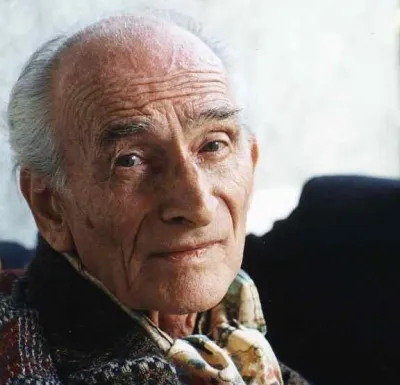
Paul Thomas Anderson
Human Design Chart
Biography
Interested in film-making at a young age, Anderson was encouraged by his father Ernie Anderson (a disc jockey, and television and radio announcer/voiceover artist) to become a filmmaker.
Anderson received critical and commercial success for his film Boogie Nights (1997), set during the Golden Age of Porn in the 1970s and 1980s. His third feature, Magnolia (1999), received strongly positive reviews despite struggling at the box office. The epic drama There Will Be Blood was released to wide acclaim from critics in 2007.
Anderson has been nominated for six Academy Awards over the course of his career, while his films have earned a further fourteen Academy Award nominations for cast and crew. There Will Be Blood has been named by several critics as the best film of the 2000s.
The Human Design of Paul Thomas Anderson: Manifesting Generator 1/3
Manifesting Generator 1/3 — Design at a Glance
Paul Thomas Anderson's design presents a hybrid nature: the speed of a manifestor paired with the constant energy of a generator. This allows him to skip steps and achieve results quickly. However, this configuration carries the risk of frustration if necessary stages are ignored or multitasking is pursued without inner consent.
As a Manifesting Generator, he had a defined Sacral Center, providing constant energy. The strategy was not initiating but responding to impulses. Crucial was checking the Sacral response – a clear 'Yes!'. Only when this internal approval remained and also applied to parallel projects could he effectively use his speed.
Without this alignment, frustration, the non-self theme of this type, threatened through hasty action or skipping important phases. The solution lay in maintaining a 'Play Mode'. When Paul Thomas Anderson responded to impulses and consulted his authority, he drew deep satisfaction from his work. Then, variety was not an obstacle but a source of strength, as parallel working in this state was felt enriching rather than distracting.
Emotional Authority
Paul Thomas Anderson's design predisposes him towards emotional delay at crucial decision points. His inner authority resides in the defined Emotional Center, meaning he is subject to constant waves of rising and falling emotions. This configuration colors his perception of the world continuously through current mood: A project could appear absolutely brilliant one moment, completely worthless the next.
This mechanism required him not to follow spontaneous impulses immediately. Since the first feeling was often a deceptive snapshot and did not yet reflect deep truth, quick decisions based on emotion would have had negative consequences. Instead, his chart indicated the need for time. Through patience and repeatedly 'sleeping on' questions, he could let intense feelings subside. Only when this emotional distance was gained did clarity and calm set in. This process of waiting until calming down shaped his decision-making significantly, especially regarding long-term steps with significant influence on his life path. The strategy involved hesitating and not giving in to initial enthusiasm or rejection but letting the full emotional cycle run its course before taking a final stance.
The 1/3 Profile — Investigator / Martyr
Paul Thomas Anderson's design presents an intense tension: between the deep need for thorough preparation and the urge to experiment practically through trial and error. As a Research-Experimentor (Profile 1/3), he showed himself as someone who only makes authentic judgments when theory and practice fully merge.
This dynamic stems from Line 1, which requires a pause for concentration. Here, there is pressure to provide energy for the thought process before acting. Early action risks time loss; instead, calming energy leads to stillness and allows weighing the consequences of actions. Simultaneously, Line 3 demands its counterpart: understanding through direct experience. Shortcuts are felt as harmful here since they neglect important details. The best path involves detailed work and consciously engaging with errors to learn from them.
For Paul Thomas Anderson, this means that trust in his own decisions only arises after thorough theoretical and practical examination. The danger lies in paralysis through excessive planning, blocking the necessary step into experimentation. Yet, only when both aspects – careful study of fundamentals and bold testing in real life – are integrated can he trust a judgment that is intellectually grounded as well as empirically tested.
Split Definition — Defined & Open Centers
Paul Thomas Anderson's design points towards a tendency for constant, reliable presence driven by massive internal energy sources. His defined Sacral Center generated daily vital force that served as the engine for work and expression; however, this energy was only available when responding correctly to external stimuli, not through arbitrary initiation. This was supported by his defined Heart Center, which gave him willpower and a desire for control over his own resources – he tended to make promises and keep them, strengthening his self-esteem.
His G Center was also defined, bringing with it a firm sense of self-identity and clear direction. He knew who he is and where he's going without others being responsible for that. This inner structure contrasts strongly with his open mental centers: Head and Ajna were undefined. Here, there was no constant inspiration or steady conceptual thinking. Instead, he was vulnerable to the pressure of finding answers to questions that weren't his own, or feeling mentally secure to be accepted.
His emotional authority lay in his defined Solar Plexus Center. Truth revealed itself to him not in the moment but after going through an emotional wave; he needed time until clarity arrived before making decisions. His defined Spleen Center provided spontaneous, intuitive warning signals in the present that protected his survival and well-being, while his defined Root Center generated a constant pressure for movement in the world. The combination of stable energy, willpower, and identity formed a foundation that allowed him to observe situational mental uncertainties from his open centers without being led by them.
Channels for courage, intimacy, logic, leadership and maturation.
Paul Thomas Anderson's design points towards a tendency for powerful, transformative presence characterized by deep intimacy and strict material control. This structure arose from the connection of sacral energy with emotional depth and willful implementation.
The Beat 14-2 connected the Gate of Power Competence (14) to that of Higher Knowledge (2). This created an individual, tantric power for innovation and mutation. Paul Thomas Anderson could initiate new directions through trust in his own sacral reaction and provide material resources without predicting the exact outcome. This energy drove unique, often melancholic impulses that redefined identity and direction.
The Pairing 59-6 linked Gate of Sexuality (59) to that of Friction (6). Here, the core creative essence lay in deep intimacy. Paul Thomas Anderson showed a drive for merging, where the emotional wave of Solar Plexus determined timing for friendships and partnerships. Only through patience and waiting for this wave movement did true confidentiality and fertility arise in relationships or projects.
The Judgment 58-18 tied Gate of Vitality (58) to that of Correction (18). This generated an insatiable, perfectionist drive towards pattern correction. Paul Thomas Anderson possessed the ability to use logic to identify and correct imbalances. It was crucial here to only bring in this critical assessment when requested to conserve energy and find accepted solutions.
The Money Line 21-45 connected Gate of Hunter (21) with that of Gatherer (45). This anchored material mastery and willful implementation in the present moment. Paul Thomas Anderson aimed for independence and control over resources to maintain his own rhythm. Success came from taking responsibility without overwhelming himself by acting as his own boss.
The Ripening 42-53 linked Gate of Growth (42) with that of Beginnings (53). It ensured that experiences were cyclically run through and reflected upon. Paul Thomas Anderson had to complete cycles fully before new ones began to generate wisdom. Expectations were avoided; instead, it was about living each experience for its own sake and creating collective history from them.
Individual Gates like 52 (Concentration), 17 (Logical Teaching) or 34 (Integration) supported these mechanisms through focused pattern correction, serving leadership and individual power integration.
Collective Circuitry — Circuit Signature
Paul Thomas Anderson's design reveals two separate yet parallel operating energy fields. One area connects the Sacral with the Identity Center via the Channel 'The Beat'. This configuration generates a pulsing, acoustic rhythm that focuses on one's unique path and transformation. It's about expressing the form of a unique individuality defined through change.
Completely independently exists a second field: The Heart is connected to the Throat Center via 'The Money Line'. Here, it's not the individual pulse in the foreground but the timeless dynamics of resources and cooperation within the clan. This area promotes material well-being through mutual support without directly tapping into the life-giving power of the Sacral Center.
Additionally, a third aspect is evident: The connection between Spleen and Root Centers (Channel 'Judgment') provides focused, logical clarity for future-oriented decisions. Parallel to this, the Channel 'Ripening' links the Sacral with the Root Center, emphasizing cyclical learning processes from past experiences. Finally, the Channel 'Pairing' connects the Sacral with the Solar Plexus Center, providing instinctive emotional waves for protection and care.
This divided definition means that Anderson is not experienced as a continuous flow but as a coexistence of different energies: the pulsating search for individual identity on one hand and the grounded, resource-oriented cooperation on the other. Both strands remain energetically separate yet jointly shape his expression style.
Right Angle Cross of Service 2
Paul Thomas Anderson's design set a tendency to serve others or a greater whole. This attitude worked as a subtle background factor for his character development and shaped the way he perceived his role within the context of community and support. The right service cross defines this deeper motivation and life direction. It is less dominant than solar energy, but it fundamentally forms an inner sense of commitment and readiness to help. This mechanism points towards an internal impulse that does not take center stage but rather influences actions and decisions as a constant undercurrent. Thus, Paul Thomas Anderson was marked by this quieter yet persistent orientation towards the well-being of his surroundings. The energy of this cross ensures that support and willingness to serve are not mere virtues but spring from a deeply rooted inner logic. It is a configuration that structures self-understanding in relation to the group without being loud or obtrusive. Instead, it acts as a constant yet often unconscious driving force guiding actions towards shared responsibility and community spirit.
Saturn Return · Uranus Opposition · Chiron Return — Life Cycles
Paul Thomas Anderson's design was characterized by recurring career milestones marking maturity and artistic deepening. This structure is evident in the condensation of groundwork into sustainable results. In 1998, at age 28, he was nominated for Best Original Screenplay for 'Boogie Nights' – a typical moment of the first Saturn return, often leading to stable success after years of development.
The dynamics changed with the Uranus opposition at age 42 in 2012 when he released 'The Master'. This cycle frequently brings inner restlessness or the urge towards individual differentiation, which in this case led to the publication of a new work that further solidified his artistic position.
Around the Chiron return around age 48, a fulfillment cycle occurred. Here, one's incarnation cross increasingly unfolds in life if strategy and authority are observed. In 2018, Anderson was nominated for Best Picture with 'The Master'. This moment reflects the bloom phase where meaning and purpose become tangible, and artistic vision reaches its full effect. The sequence of these events underscores how cyclic mechanisms in Paul Thomas Anderson's design structured concrete career peaks.
Manifesting Generator · Emotional Authority — Synthesis
A central red thread runs through his design: the dynamic balance between inner drive and the need for external validation. The defined sacral energy provides a constant reactive life force (Sacral), while the connection to the Throat Center enables quick manifestation (Design). This is reinforced by the Profile of the Researcher/Experimentator – an ongoing testing and verification of experiences (Profile) –, but also through emotional authority that requires time to gain clarity (Authority). This combination creates a personality that is both impulsive and reflective, driven by inner energy yet always seeking validation and correction from external stimuli.
The central paradox lies in the tension between the need for control and the inherent unpredictability of life. The defined Heart Center (Centers) signals the desire to shape one's life self-determinedly, while open Centers for Mental Awareness and Intuition (Centers) require constant adaptation to new information and impulses. This contradiction manifests in a tendency to act quickly as well as hesitate, initiate and react to life simultaneously – a dynamic interplay of willpower and surrender.
5 Defined Channels
Incarnation Cross - Right Angle Cross of Service 2
Solar Return
The Solar Return shows the moment when the sun returns to its exact birth position - your personal solar year.
Life Cycles
Discover the life cycles with a detailed triple view (birth chart, cycle chart, composite).
Human Design Profile
- Strategy
- To respond - wait for something to respond to
- Authority
- Emotional Authority
- Profile
- 1/3 - Investigator / Martyr
- Definition
- Split Definition
- Incarnation Cross
- Right Angle Cross of Service 2
- Date of Birth
- 26.06.1970 03:47
- Place of Birth
- Los Angeles Cedars of Lebanon, CA, United States
Frequently Asked Questions
What is Paul Thomas Anderson's Human Design type?
What are Paul Thomas Anderson's Profiles in Human Design?
What Authority guides Paul Thomas Anderson?
What incarnation cross does Paul Thomas Anderson have?
When was Paul Thomas Anderson born?
Discover your own Human Design
Are you also a Manifesting Generator? Find out in a personal reading how to unfold your multi-talents and direct your energy wisely.
More Personalities
Back to overviewAldair

Alizée

Angeli

Arletty

Artus

Balthus