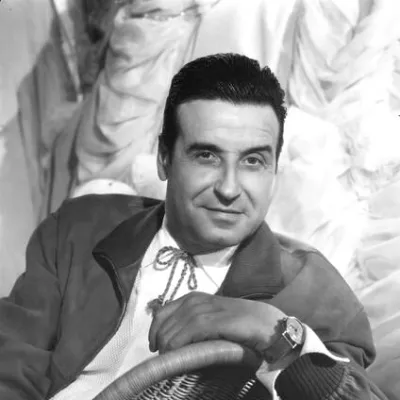
Paul Tudor Jones
Human Design Chart
Biography
One of Jones' earliest and major successes was predicting Black Monday in 1987, tripling his money during the event due to large short positions.
In 1988, Jones married Australian-born Sonia Klein, a New York–based yoga entrepreneur at a wedding in Memphis. They have four children.
Paul Tudor Jones as a Projector 2/4 in Human Design
Projector 2/4 — Design at a Glance
Paul Tudor Jones revealed himself as someone who immediately spots the flaw in the system. His Projector design tends to direct energy like a bright flashlight onto areas that are still in the dark for others. This dense, focused aura can quickly be perceived as unpleasant by the environment if it acts too early or without invitation.
The mechanics of his type describe this dynamic exactly: A projector sees immediately what is wrong and addresses these deficits directly. If he shines a light right into someone's face, it often triggers resistance. The more effective way to express his design is simply to glow pleasantly, perhaps by setting an example with a harmonious relationship or clear structures. Others will then automatically be drawn to this radiance and ask for the insider tips.
Therefore, Paul Tudor Jones' central strategy is to wait for a respectful invitation before sharing his knowledge. Since Projectors do not have a defined Sacral Center, they lack a constant intrinsic energy source. Instead, they experience phases of high productivity followed by necessary rest periods to avoid burnout. If Paul Tudor Jones lived according to this design, he was rewarded with success; if he ignored these rhythms and the need for invitation, sooner or later the non-self theme 'Bitterness' would arise.
Splenic Authority
Paul Tudor Jones demonstrated decision-making based on immediate physical intuition. His design suggested that he did not let himself be guided by long-term plans or analytical considerations but acted in each moment based on a fine inner signal. This ability stemmed from his authority in the Spleen, which functions as a health and alarm system. It grants spontaneous survival intelligence that immediately recognizes whether a situation or environment is beneficial or harmful.
For this Spleen Authority to be effective, his Emotional and Sacral Centers needed to be open. This means he was not driven by emotional waves or sacral energy but had to listen clearly to these precise impulses. The first spontaneous thought was the decisive one; it served to protect his well-being and allowed a rigorous delineation against negative influences. Since this impulse only comes once in the present moment and is very subtle, it required high vigilance not to overlook it or ignore it under external pressure.
This mechanism fostered a need for great flexibility. As the correct decision only showed itself in the current moment, rigid long-term commitments were counterproductive for his system. Paul Tudor Jones needed space to react spontaneously to his inner voice rather than being bound by fixed structures that would limit this spontaneous adaptability. His design thus promoted a lifestyle that adapted to the present moment to maintain health and integrity.
The 2/4 Profile — Hermit / Opportunist
Paul Tudor Jones revealed himself through a constant oscillation between the need for deep withdrawal and the urge towards close community. His design set up a tension: On one hand, he sought solitude to gain inner clarity; on the other hand, it drew him into the circle of his intimates to absorb energy there. This dynamic required clear communication from him – when he needed company and when he needed to be left alone.
During times of withdrawal, Paul Tudor Jones immersed himself in internal processes. Here Gate 18 with its Line 2 came into play, which addresses the necessity of correction but also the acceptance of what cannot change. If he accepted these limits instead of fighting against them, it allowed for spiritual renewal and inner peace. Without this phase of distancing, his ability to reflect would have been impaired.
Once this internal balance was restored, Paul Tudor Jones returned to his network. Here Gate 52 with Line 4 came into play, which is oriented towards self-discipline and focused concentration. Although this energy is socially active and maintains contacts, it must assert itself against external distractions. The shared doubts or uncertainties within this close group did not serve weakness but were transformed into collective benefit. Through the synthesis of isolated analysis in the 'cave' and exchange in the familiar circle, Paul Tudor Jones could evaluate his network's knowledge and derive precise decisions from it.
Split Definition — Defined & Open Centers
Paul Tudor Jones’ Design points towards a tendency for consequent and structured analysis. His defined Ajna Center ensures constant mental processes; he processes data and concepts in a trustworthy manner, unaffected by external opinions. This cognitive stability directly flows into his communication: The also defined Throat Center allows him to clearly express what is thought. His voice serves as a reliable channel for his intellectual concepts, thereby encouraging others to think through pressure and clarity.
In addition to this mental firmness, his defined Spleen Center acts as an intuitive instance in the present moment. It provides spontaneous judgments about health and well-being that cannot be rationalized but require immediate trust. The defined Root Center generates a constant drive for material correction and survival, propelling him forward.
At the same time, Paul Tudor Jones is vulnerable to several open centers for conditioning. His open Head Center leaves him easily entangled in foreign mental questions; he tends to wonder if he must find inspiring answers instead of following his inner guidance. The open G Center means a lack of firm identity; he often seeks direction and love through adapting to the environment rather than determining it himself. In his open Heart Center, constant willpower is lacking, which can lead him to want to prove himself through promises in order to demonstrate value. Furthermore, his open Solar Plexus absorbs foreign emotions, leading to false identification with emotional waves. His open Sacral Center makes him receptive to the energy of others; he tends to overextend beyond his own limits driven by the assumption that he must keep going.
Channels for logical clarity, meaning-making and transformative endurance.
Paul Tudor Jones revealed himself as someone who not only observed complex patterns but actively translated them into logical structures, pursuing an unrelenting drive for correction and perfection. This attitude stemmed from his ability to mentally organize visual information and make it accessible through precise language, coupled with a deep instinct for what works or needs correcting in life.
Channel 17-62 connected his Thinking Center with the Throat Center. This allowed him to visually grasp patterns and translate them into understandable details using words. Everything he could integrate into this mental system he understood; everything else remained unclear. This channel created a constant pressure to communicate his opinions and insights in detail, enabling him to prepare information for others.
Parallel to this, Channel 58-18 between the Root Center and Spleen Center drove an insatiable urge to question and perfect patterns. This mechanism acted like a sentry evaluating whether something served the collective's well-being or required correction. It was not about criticism for its own sake but rather seeking the best answer and restoring healthy balance.
Additionally, Channel 38-28 shaped his determination. It gave him the strength to fight external resistance to preserve his individual integrity and find personal meaning in conflicts. This struggle was not blind action but served to individuate and protect his path.
Channel 54-32 complemented this with ambition and a desire for advancement. Driven by fear of failure or loss of position, he sought ways to use his talents to elevate himself and his "tribe"—his environment or organization. This ambition was closely tied to the need for recognition and support from others to sustain transformation.
Individual Gates like Gate 52 also promoted intense focus on pattern correction through targeted pauses for reflection. Gate 43 enabled spontaneous insights that he communicated clearly, while Gate 44 provided vigilance in handling resources and relationships. This combination of logical structuring, critical evaluation, combative perseverance, and transformative ambition formed his unique approach to tackling complex systems.
Collective Circuitry — Circuit Signature
Paul Tudor Jones’ design is characterized by a clear separation of two energetic poles that work in parallel but do not connect directly with each other. On one side, his Mind Circuit shows two separate segments: The connection between Ajna and Throat Centers allows him to formulate logical strategies focusedly and express them clearly. This involves rational insight, free from emotional influence. The second segment of this circuit connects the Spleen and Root Centers through the Judgment Channel, supporting a quick, instinctive evaluation of personal safety.
Parallel to this exists a second pole: The Knowledge Circuit also links Spleen and Root Centers, this time via the Will-to-Power Channel. This brings pulsating energy aimed at forging new paths and shaping individual identity through experience. Similarly, the Ego Circuit attaches to this Spleen-Root axis, here through the Transformation Channel. It promotes collaborative resource creation and the ability to adapt in group contexts, but requires pauses for rest since there is no direct connection to the Sacral Center.
In summary, Paul Tudor Jones’ design works as a balance between clear, rational communication (Ajna-Throat) and a deeply rooted, instinctive adaptability (Spleen-Root), contributing both to individual knowledge acquisition and cooperative resource creation. This divided structure calls for balance between the clear thinking of the Mind and the intuitive impulses of the Spleen.
Right Angle Cross of Service 3
Paul Tudor Jones demonstrated a fundamental orientation of unconditional dedication to a higher service that transcends the ego. His design indicated that his actions were always marked by a deep, almost fateful commitment to helping others or serving a greater whole – not out of everyday duty but as an expression of an inner, sacred mission.
This alignment corresponds with the mechanics of the 'Right Cross of Service'. In Human Design language, this configuration marks a specific spiritual dynamic: it does not describe passive submission but rather an active, powerful energy aimed at enabling transformation through service. The person who carries this design is often perceived as someone who puts aside their own needs to prioritize the well-being of others or a community. It is an energy of sacrifice and dedication that does not remain trapped in suffering but consists of exerting a positive influence through selfless action.
For Paul Tudor Jones, this meant that his decisions and life path were strongly guided by this serving intention. He did not primarily seek personal fame or isolated success but rather how he could use his abilities to benefit others. This inner compass needle ensured that his work always had a clear direction: supporting and fostering what lies beyond himself. It is a design of connection through service, radiating deep loyalty and strong responsibility towards the environment.
Saturn Return · Uranus Opposition · Chiron Return · 2nd Saturn Return — Life Cycles
Paul Tudor Jones showed in his late twenties as someone who took on internal maturity and structural responsibility. In 1980, at age 26, he founded Tudor Investment Corporation. This step marked his first Saturn Return, a cycle where years of inner development often condense into a tangible outer form. It was the moment when potential from earlier life phases became concrete and laid a stable foundation for future action. The first Saturn Return typically demands translating personal values into real structures; it is not merely aging but rather a process of anchoring. For Paul Tudor Jones, this meant that his previous experiences and insights now formed the framework for a professional existence. Founding the asset management company was thus less an impulsive move than the logical consequence of long internal preparation. This cycle shapes life through the necessity to take oneself seriously and assume responsibility for one's creation. It is about laying foundations that can withstand further progress. The mechanics of Saturn Return here clearly show how inner maturity translates into outer reality by committing to a task that goes beyond short-term goals and promises long-term stability.
Projector · Splenic Authority — Synthesis
A central red thread in this design is the ability to recognize patterns and shed light on darkness – both for oneself and others. The defined mental center (Ajna) with the channel of Acceptance (17/62) points towards a constant processing of information, a mental sorting and naming of reality. This is reinforced by the profile as a natural talent/networker, which implies the ability to recognize and utilize connections combined with the need for withdrawal for internal processes (Line 2). The Spleen Authority underscores an instinctive knowledge of what is right, a kind of inner compass that further fuels this pattern recognition.
The central paradox lies in the tension between the desire for isolation and connection. The profile demands phases of retreat (Line 2) to gain clarity while Line 4 emphasizes the wish for exchange with a chosen community. This corresponds with the Projector nature, which has the talent to 'shine' others but also possesses a sensitive aura that needs protection from overstimulation. The Right Cross of Service points towards focusing on how one can help others, while the underlying energy of the Knowledge Circuit stresses the necessity of staying true to one's individuality.
4 Defined Channels
Incarnation Cross - Right Angle Cross of Service 3
Solar Return
The Solar Return shows the moment when the sun returns to its exact birth position - your personal solar year.
Life Cycles
Discover the life cycles with a detailed triple view (birth chart, cycle chart, composite).
Human Design Profile
- Type
- Projector
- Strategy
- Wait for the respectful invitation
- Authority
- Splenic Authority
- Profile
- 2/4 - Hermit / Opportunist
- Definition
- Split Definition
- Incarnation Cross
- Right Angle Cross of Service 3
- Date of Birth
- 28.09.1954 17:37
- Place of Birth
- Memphis, TN, United States
Frequently Asked Questions
What is the Human Design type of Paul Tudor Jones?
What Profile does Paul Tudor Jones have in Human Design?
Which Authority determines the decision-making of Paul Tudor Jones?
What incarnation cross does Paul Tudor Jones have?
Discover your own Human Design
Are you also a Projector? Find out in a personal reading how to unfold your leadership qualities and recognize the right invitations.
More Personalities
Back to overviewSissy Spacek

Alain-Fournier

Anémone

Ann-Margret

Bourvil

Christian-Jaque