
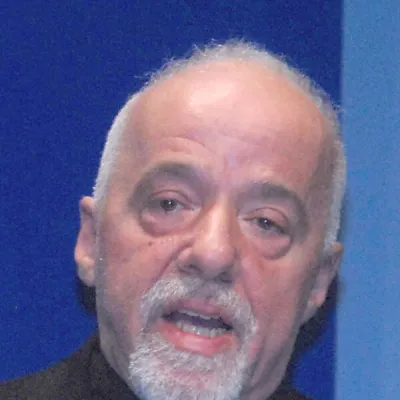
Paulo Coelho
Human Design Chart
Biography
Coelho married Brazilian artist Christina Oiticica in 1980. Together they had previously spent half the year in Rio de Janeiro and the other half in a country house in the Pyrenees Mountains of France, but now the couple resides permanently in Geneva, Switzerland.
Paulo Coelho as a Manifesting Generator 6/3 in Human Design
Manifesting Generator 6/3 — Design at a Glance
Paulo Coelho's design revealed him as someone who possessed both constant energy and the ability to accelerate processes through a hybrid configuration. His design combined the endurance of a Generator with the direct impact of a Manifestor, allowing him to skip steps and quickly draw results into his life. This structure inclined him not primarily to push forward through initiatives but rather to respond to inner impulses.
The challenge in this configuration lay in the risk of haste. With speed came the danger of skipping important stages or getting distracted by parallel processing of multiple projects. Frustration arose when he did not wait for confirmation from his sacral center – the internal compass for energy and approval.
By applying the correct strategy, which involved acting only after an inner 'yes' and regularly reviewing motivation, Paulo Coelho found deep satisfaction. His design benefited from variety rather than linear focus. In this state, he fell into a 'play mode', where parallel work did not mean fragmentation but became the source of his creative power. Thus, the mechanics of his design show that success does not come through rigid planning but through conscious response to living impulses while maintaining inner resonance.
Sacral Authority
Paulo Coelho's decision-making was not based on intellectual deliberation but rather on a direct physical response. His design indicated that his internal authority lay in the defined Sacral Center. This meant he responded to external stimuli with spontaneous physiological signals – audible grunts or felt surges of energy. This 'gut feeling' served as a reliable compass: A positive signal like a loud 'mmh' signaled vitality and inexhaustible energy, while negative feedback acted as warning signs.
This mechanism allowed him to perform tasks with great enthusiasm, free from purposefulness. The connection to the Spleen supported this reaction; it enabled quick, instinctive judgments about his own well-being. Paulo Coelho could thus make spontaneous decisions and reliably orient himself towards this immediate perception rather than falling into strategic considerations. The focus was on hearing physical signals to generate energy and satisfaction. This differed clearly from impulsive actions without resonance; it involved a direction confirmed by the body that allowed him to fully immerse in his tasks.
The 6/3 Profile — Role Model / Martyr
Paulo Coelho's design inclined him towards intense, permanent self-experiments, especially during the first three decades of life. This phase served the collection of unusual experiences far from standards. After around 30 years, this energy transformed: The collected adventure experiences became the foundation for wisdom and the role of a role model. Internally, however, restlessness remained, marked by the search for the 'extraordinary perfect'.
This configuration corresponds to Profile 6/3 (Role Model / Experimenter). Like the 3/6, people with this profile live as 3/3 in their first 30 years, which means many self-experiments. Experimentation slows down after Saturn's return but never truly ends because Line 3 is always present. 6/3s are very old souls and often feel internally restless, as if they were forever searching for the right thing without finding it. They want to lead an extraordinary life far from standard conventions.
While they love adventures (Line 3), responsibility and wisdom become self-evident for those over 30 years of this profile. They use their unusual experiences to become wise, visionary, and humorous role models. Gate 29 on Line 6 shows the transition into a process of finding meaning and confusion in choosing commitments. It's about whether an experience leads to development or can be sustained. The third line of Gate 20 is characterized by constant self-analysis and self-awareness, which can lead to surprises as the present moment is sometimes not perceived.
Single Definition — Defined & Open Centers
Paulo Coelho's Design establishes a tendency towards consistently available energy that is strictly dependent on reaction. His defined centers – Sacral (Motor/Vitality), G Center (Identity/Direction), Throat (Expression) and Root (Stress/Pressure) – create a robust energy architecture for work and manifestation. The Sacral Center generates daily reserves of vitality, which can only be correctly utilized through affirming responses to external impulses; waiting for the right moment is crucial to avoid frustration. This sacral power flows through the defined Throat into clear communication and action, driven by a firm identity in the G Center and the constant pressure of the Root Center.
At the same time, his chart reveals five open centers: Head, Ajna, Heart, Solar Plexus, and Spleen. These reflective fields made him vulnerable to conditioning by the environment. In the open Head and Ajna Centers, he tended to identify with foreign mental questions or concepts rather than trusting his inner authority. The open Heart Center drew him into cycles of promises and attempts to prove his worth, despite lacking consistent willpower for this task. The open Solar Plexus absorbed emotional waves from others, which could lead to identifying with non-own feelings. Additionally, the open Spleen Center was vulnerable to spontaneous decisions out of fear or a desire for false security. The challenge lay in not personalizing these open fields as his own truth but using them as informative mirrors while the defined energy came into play through patient waiting and correct responding.
Channels for focus, logical leadership and powerful impact.
Paulo Coelho showed a basic attitude based on collective trust and intensive detail work. His design suggested that he sought leadership not through authority but through invitation. The Alpha Animal Channel 7-31 connected the G Center with the Throat Center, creating logical, future-oriented qualities of leadership. He had to first gain trust and be elected by the majority to fulfill his role as "the power behind the throne." His authority depended on whether he understood existing societal patterns and could demonstrate satisfaction with them.
This leadership energy was shaped by the Channel of Concentration 52-9. This channel between the Root Center and Sacral Center acted as format energy for focused detail work. Paulo Coelho possessed the ability to remain silent and avoid distractions in order to perfect patterns. This energy required patience and precise attention to apply logic step-by-step.
His actions were guided by the Sacral Center, specifically Gate 29 of Saying Yes. This gate emphasized persistence and the need to meet challenges with an affirmative attitude towards life. At the same time, Gate 30 helped him recognize emotional fate patterns and desires, giving his reactions deeper meaning. Individual mutation and contribution were supported by gates like 8 and 14, which motivated him to advocate for group goals and handle power with self-control. This configuration shaped a person who found their unique role in the collective through patient reflection and sacral response.
Collective Circuitry — Circuit Signature
Paulo Coelho exhibited a fundamental approach based on logical clarity and strategic construction. His design suggested sharing rational insights free from emotional influence to improve societal structures. This was achieved through visual precision and focused thinking.
The Mind Circuit significantly shaped this orientation. In Paulo Coelho's case, it connected two separate energetic areas. On one hand, energy flowed between the Throat Center and Identity Center (Channel 31-7, "The Alpha Animal"). This allowed for clear articulation and externalization of inner visions and strategies. On the other hand, a connection existed between Sacral and Root Centers (Channel 9-52, "Concentration"). Here, the necessary endurance and sharp focus emerged to penetrate complex relationships. Since the Solar Plexus Center was not involved, this rationality remained objective and unburdened by moods.
Additionally, the Integration Circuit supported this structure. Channel 20-34 ("Charisma") directly linked Throat and Sacral Centers. This endowed his forms of expression with a natural, compelling power that arose from reacting to life itself. Through this combination, Paulo Coelho could not only think abstract ideas but also convey them with visual and verbal presence that resonated with others. The left chart side emphasized looking towards the future: it was always about how logic and strategy can be applied to better shape what is to come.
Left Angle Cross of Industry 2
Paulo Coelho's Human Design profile established a foundational disposition oriented towards endurance and methodical approach. His inner compass did not point to spontaneous impulses but rather to the ability to embed oneself in structures and carry processes through to completion. This configuration defines the left cross of Diligence 2, a life architecture where constant effort becomes the central tool.
The strategic advantage lies in the quality of diligence itself. It is not about achieving quick results through impulsive action but rather about patiently and step-by-step implementing plans. This mechanism describes a transformation: hard work and labor are not experienced as obstacles but condense into material or spiritual substance. Thus, Paulo Coelho demonstrated someone who achieved success through perseverance by utilizing the energy of persistence to create stable outcomes. The architecture of his design promoted an attitude where adhering to rhythms and continuously nurturing tasks paved the way for realization. It is a system that rewards readiness to accept long-term processes and find strength in them rather than seeking short-term solutions.
Saturn Return · Uranus Opposition · Chiron Return · 2nd Saturn Return — Life Cycles
Paulo Coelho's Human Design profile shows a clear development from existential threat towards global affirmation. In 1974, at age 27 during his first Saturn return, he was arrested and tortured for advocating more freedom under the military regime. This cycle often marks a deep crisis where external oppression tests one’s internal structure.
The turning point came with the Chiron Return around 1996 when Coelho received French and Italian honors such as Chevalier dans l’Ordre des Arts et des Lettres at age 49. This fulfillment cycle brings one's life work to bloom; if one follows their strategy, the inner purpose becomes experiential and recognized.
Confirmation deepened during his second Saturn return in 2004 when he received comprehensive international awards for “The Alchemist” and other works, including orders from Ukraine and Great Britain at age 57. This later structural point condenses long-term work into a stable, globally visible authority. The path from political resistance and suffering to spiritual and artistic validation reflects these structural turning points: first enduring the crisis, then unfolding one's mission in broad recognition.
Manifesting Generator · Sacral Authority — Synthesis
A central red thread runs through this design: the dynamic connection between initiation and reaction. As an Manifesting Generator (with defined Sacral Center), this person has a constant energy source, yet the key lies in *responding* to impulses rather than independently initiating something. The profile as Role Model/Experimentator (6/3) amplifies this aspect by hinting at an unceasing drive for experience and testing new paths – a continuous trial of what truly ignites (Sacral Authority). The Channel of the Alpha Animal (Gate 7/31) points to a natural ability to recognize logical structures and bring them into the world, always in harmony with inner sacral responses.
The central paradox lies in the tension between the desire for freedom and the necessity to adapt. The defined Throat Center, connected with the G Center (Channel of the Alpha Animal), implies a voice that wants to be heard – an expression of leadership and future visions. Simultaneously, the Sacral Center demands reacting to the present moment and not getting lost in abstract ideas. The documented cycles show crises (arrest) and successes (awards), indicating that navigating this tension is a lifelong process of experimentation and integration.
3 Defined Channels
Incarnation Cross - Left Angle Cross of Industry 2
Solar Return
The Solar Return shows the moment when the sun returns to its exact birth position - your personal solar year.
Life Cycles
Discover the life cycles with a detailed triple view (birth chart, cycle chart, composite).
Human Design Profile
- Strategy
- To respond - wait for something to respond to
- Authority
- Sacral Authority
- Profile
- 6/3 - Role Model / Martyr
- Definition
- Single Definition
- Incarnation Cross
- Left Angle Cross of Industry 2
- Date of Birth
- 24.08.1947 00:05
- Place of Birth
- Rio de Janeiro (Rio de Janeiro), Brazil
Frequently Asked Questions
What is Paulo Coelho's Human Design type?
What Profile does Paulo Coelho have in Human Design?
What authority does Paulo Coelho have?
What incarnation cross is active for Paulo Coelho?
When was Paulo Coelho born?
Discover your own Human Design
Are you also a Manifesting Generator? Find out in a personal reading how to unfold your multi-talents and direct your energy wisely.
More Personalities
Back to overviewAlain-Fournier

Aldair

Alizée

Angeli

Arletty

Artus
