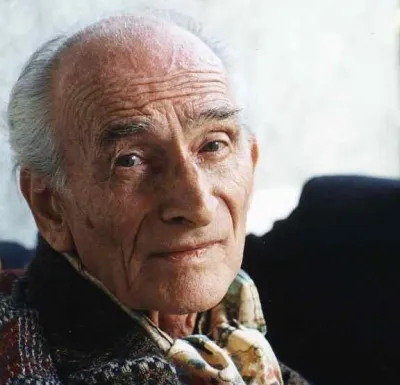
Percival Lowell
Human Design Chart
Biography
Percival Lowell as a Manifesting Generator 6/2 in Human Design
Manifesting Generator 6/2 — Design at a Glance
Percival Lowell's design tends towards lightning-fast implementation, which only becomes sustainable when based on inner impulses. As a Manifesting Generator, he had constant sacral energy, allowing him to skip steps and quickly draw things into his life. This hybrid nature combined the endurance of a Generator with the initiating power of a Manifestor. The challenge lay in the speed: without the strategy of first reacting to life, he tended to overlook important stages or start multiple projects simultaneously, leading quickly to frustration – his specific non-self theme.
The mechanics of his type required him to act only when his Sacral Center gave a clear “yes”. Only through this reaction to external stimuli could he channel his creative power without overloading himself. If he followed this strategy, a state of deeper satisfaction would ensue. Then it was no problem for him to work on several tasks at once; on the contrary, variety and a playful approach to his projects were essential to maintain his energy. His design was most effective when he did not initiate but responded, thus aligning his inner authority with his fast execution.
Emotional Authority
Percival Lowell's design tends towards emotional wave movement, significantly influencing his perception and decision-making. He was someone whose inner authority was anchored in the defined Emotional Center. According to Human Design mechanics: If the Emotional Center is defined, it always takes on the role of inner authority, regardless of other defined centers in the graph. This meant for Percival Lowell that he was subject to constant emotional fluctuations. His view of the world was always colored by the current mood; what appeared inspiring in one moment could be negatively evaluated in the next.
This up and down was, however, only a snapshot, not necessarily the deeper truth. Quick, spontaneous decisions made directly from such an emotional peak often proved problematic for his design. The mechanics of his authority required patience: he had to let decisions mature, take his time, and practice sleeping on important questions. Only when the intense feelings subsided and emotional distance was gained, the necessary clarity and calmness would set in. This process of delay was essential to make long-term life decisions that would sustainably influence his life path. Percival Lowell therefore had to be patient and ask multiple times before acting, to recognize the deeper truth of his emotional wave.
The 6/2 Profile — Role Model / Hermit
Percival Lowell's design tends towards profound maturity and societal transformation, which only unfolded in his later life. As a person with Profile Line 6/2, he acted in his youth mainly through experiments and the principle of trial and error. This phase served to collect many personal life experiences before he withdrew to reflect on them.
After the age of 30, when Line 6 becomes active, his design retreated into a metaphorical “cave”. This was a time of intense distancing and self-knowledge, in which he looked back on the earlier experiments. The mechanics of Line 6 represent here maturity, metamorphosis, and the alignment of form and content. It allowed societal interactions to bring out leadership qualities and a new, non-conformist model to be carried forward through mutation.
At the same time, Profile Line 2 carried elements of strictness and inflexibility. It required knowledge of his own process and was prone to boredom if ideas could not be brought to the outside. Percival Lowell had to let his ideas mature and “do homework” to overcome this stagnation. If he projected his undeveloped ideas onto others, it generated boredom in them.
When the time of reflection was over, he emerged as a wise person from his isolation. Other people recognized his life wisdom and came to him to participate in his ability for deep introspection. Thus, he became a role model and natural talent, creating a material basis for new societal structures through his personal mutation and leadership qualities.
Split Definition — Defined & Open Centers
Percival Lowell's design inclined him towards consequent, conceptual work, characterized by a persistent mental structure. His defined Ajna Center ensured that he created concepts and theories in a trustworthy, specific manner. He was not easily influenced by external opinions, as his mind possessed its own stable logic. This mental energy flowed directly into his defined Throat Center, meaning that he could express what he thought. His communication was thus a direct expression of his intellectual processes, without emotional or intuitive filtering.
As a Generator with a defined Sacral Center, he possessed an enormous vital energy source. However, his energy was only available when he responded to an external request and felt an inner confirmation ("Yes"). Initiating actions without this sacral response led to frustration and exhaustion, as he then worked against his own energy. His inner authority lay in his defined Solar Plexus Center; he needed time to gain emotional clarity before making decisions. Impulsive reactions to emotional waves would have been counterproductive for him.
At the same time, he was vulnerable to conditioning through open centers. His open Head Center made him susceptible to the mental pressure of others, leading to doubts or the assumption of others' problems. His open G Center meant that he did not have a fixed, unchanging identity but reflected in relationships and environments. He tended to question whether he was in the right place, as he often found his direction through the confirmation of his surroundings. His open Heart Center led him to avoid promises to prevent getting caught in spirals of self-proving. His open Spleen Center required caution with spontaneous decisions, as he might otherwise take on foreign fears or impulses.
Channels for change, emotional depth and clear insight.
Percival Lowell's design inclined him towards evolutionary change, which was, however, marked by a deep, mechanical moodiness. This energy came from the Mutation Channel 60-3, connecting the Root Center with the Sacral Center. Gate 60 brought the limitation and pressure of the underground, while Gate 3 tried to create order out of the confusion of a new beginning. This combination generated a pulsating energy that felt like melancholy when the impulse ceased. Lowell had to learn to accept this silence and not try to explain it through logic, but rather wait for the spontaneous reaction from his Sacral Center to bring innovations into the world.
Alongside this inner dynamics, a specific form of communication was evident. The Openness Channel 22-12 connected the Solar Plexus Center with the Throat Center. Here, the emotional wave determined when Lowell was ready to exchange. Gate 22 brought passion and romance, while Gate 12 brought necessary caution and restraint to limit interaction to people with mutative potential. His voice and expression could emotionally touch others, but only if he waited for his own mood. Forced social interaction at the wrong moment led to misunderstandings and isolation, while patience allowed him to create a receptive environment for his unique ideas.
Furthermore, the Channel of Structuring 23-43 shaped his intellectual expression. This channel connected the Ajna Center with the Throat Center. Gate 43 received spontaneous insights and breakthroughs, which were assimilated and clearly expressed through Gate 23. Lowell's thinking often felt light-years ahead; he developed techniques and concepts that promoted efficiency. The challenge lay in communicating these innovative perspectives in a way that they were understood and accepted. Without the right timing and patience to explain his knowledge step by step, he risked being dismissed as an outsider. His genius unfolds best when he lets go of control and allows his mind to process and express his knowledge at its own pace.
Individual Circuitry — Circuit Signature
Percival Lowell's design inclined him towards innovative, structural thinking, driven by emotional impulses. His chart showed a Split Definition, meaning two parallel, not directly connected energetic streams. The Knowledge Circuit shaped his identity. Within this circuit, the first group connected the Ajna, Throat, and Solar Plexus Centers. This generated a flow of creative flashes (Channel 20-57, implicitly in the circuit, but here only the relevant channels: Structuring 43-23, Openness 12-22, Mutation 3-60) over emotional waves to linguistic articulation. Mutation (Channel 3-60) promoted deviations from the known, while Structuring (43-23) and Openness (12-22) shaped and made these ideas accessible. Percival Lowell was someone who gained new knowledge and expressed it authentically through the Solar Plexus filter. Parallel to this, the second group with Sacral and Root Centers existed. These were directly connected but did not provide a direct energetic bridge to the first group. They acted as a separate power source for endurance and reaction, independent of the cognitive-emotional expression. Percival Lowell utilized these separate systems: on the one hand, the pulsating, acoustic creativity for transformation, on the other hand, the sacral energy for consistent action capability, without the two streams overlapping.
Left Angle Cross of Informing 1
Percival Lowell's design indicated a tendency towards clear, direct, and often abrupt communication. He was someone who articulated his thoughts and beliefs with a certain urgency and precision, where the way he spoke was less about diplomatic consideration and more about the immediate conveyance of his inner truth. This attitude stemmed from the configuration known as the 'left cross of communication'. In Human Design mechanics, this specific energy describes a connection between the Personality Center and the Communication Center. It promotes a style of expression that is spontaneous, honest, and sometimes blunt, as it is not primarily geared towards sparing the recipient but rather clearly conveying one's own perspective. Percival Lowell lived this dynamic by openly and without much filtering bringing his insights and viewpoints to the fore. This shaped his interactions and public appearances, as he tended to say things as he saw them, without much concern for the possible reactions of others. His words were often a direct reflection of his inner convictions, which lent him a certain authenticity, but also led to misunderstandings when his directness was misinterpreted as infallibility or arrogance. This mechanical alignment significantly determined how he engaged with his environment and how his messages were received by others.
Saturn Return · Uranus Opposition · Chiron Return · 2nd Saturn Return — Life Cycles
Percival Lowell was someone who strengthened his inner authority through external structures to firmly anchor his visions. This inclination towards institutional founding aligned with the dynamics of his Uranus opposition, which often marks a phase of breaking free from old bonds and building new, independent systems. In 1894, at the age of 39, he founded the Lowell Observatory in Flagstaff, Arizona. This step was not merely a career change but the concrete realization of his strategic need to create a space where his specific perception method could operate undisturbed.
Later, at the age of 50, his Chiron Return occurred. In Human Design mechanics, this cycle does not signal healing but rather the bloom and unfolding of the incarnation purpose, provided the person has followed their strategy. In 1905, Lowell used this phase of fulfillment to hire Elizabeth Langdon Williams as a mathematician and physicist. This decision underscores how his design fully unfolded in this life phase: through the integration of specialized talents that deepened his own work and made his life purpose in the realm of astronomical research tangible. The mechanics of his chart were clearly evident here: creating structure and then incorporating the right resources to carry his inner potential outward.
Manifesting Generator · Emotional Authority — Synthesis
Percival Lowell lived a life marked by a deep drive for knowledge and the desire to forge new paths. The combination of sacral energy (defined sacral center) and the ability to skip steps (Manifesting Generator) points to a character who both reacts to inner impulses and possesses a remarkable speed in implementing his own ideas. This dynamic was evident in a constant search for new concepts and theories (defined Ajna Center), filtered and reflected over a long period through emotional depth (emotional authority). The process of gaining knowledge was thus characterized by a balance between quick action and thorough review, making him an indefatigable researcher.
Central to Percival Lowell was a paradox between the need for individual discovery and the ability to inspire others. The Knowledge Circuit, paired with the Role Model Profile, indicates an inner necessity to develop and transform his own concepts (Channel 3-60), while the wisdom gained through intense reflection served to empower and guide others. The left cross of communication reinforces this tendency to share insights. This tension between his own, pulsating format of creativity and the desire to share knowledge shaped his journey and led to verifiable events where he both accomplished groundbreaking work and included others in his research.
3 Defined Channels
Incarnation Cross - Left Angle Cross of Informing 1
Solar Return
The Solar Return shows the moment when the sun returns to its exact birth position - your personal solar year.
Life Cycles
Discover the life cycles with a detailed triple view (birth chart, cycle chart, composite).
Human Design Profile
- Strategy
- To respond - wait for something to respond to
- Authority
- Emotional Authority
- Profile
- 6/2 - Role Model / Hermit
- Definition
- Split Definition
- Incarnation Cross
- Left Angle Cross of Informing 1
- Date of Birth
- 13.03.1855 07:45
- Place of Birth
- Boston, Massachusetts, United States
Frequently Asked Questions
What was Percival Lowell's Human Design type?
What Profile did Percival Lowell have in Human Design?
What Authority did Percival Lowell have?
What incarnation cross did Percival Lowell have?
When was Percival Lowell born?
Discover your own Human Design
Are you also a Manifesting Generator? Find out in a personal reading how to unfold your multi-talents and direct your energy wisely.
More Personalities
Back to overviewAldair

Alizée

Angeli
Arletty
Artus

Balthus