
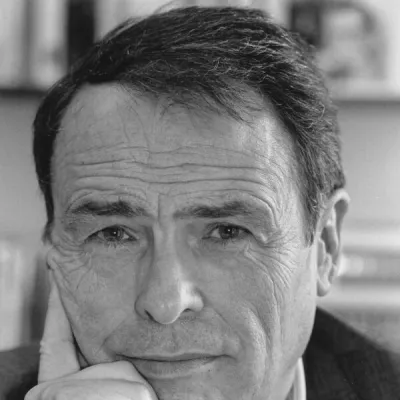
Pierre Bourdieu
Human Design Chart
Biography
He died on 23 January 2002.
What does Manifesting Generator 1/3 mean for Pierre Bourdieu?
Manifesting Generator 1/3 — Design at a Glance
Pierre Bourdieu's design featured a tendency towards hybrid energy: As an Manifesting Generator, he possessed constant sacral power that required a reaction to impulses rather than mere initiation. This was combined with the ability to skip steps and call things into being quickly. This configuration shaped a dynamic where speed held both potential and risk. The inclination to pursue multiple things at once could lead to frustration if strategy and inner authority did not align; missed steps would then need to be made up. Crucial was the orientation towards the "yes" of the sacral center. Only through reacting to life, rather than fighting against it, did Pierre Bourdieu manage to channel his creative power effectively. When this strategy was correctly applied, deep satisfaction resulted. The pressure to complete projects one after another went against his nature; instead, parallel work allowed access to a "play mode." In this state, variety was not a disturbance but a source of satisfaction. His energy worked most efficiently when he responded to impulses and felt the inner confirmation that chosen actions were appropriate. This protected him from the typical MG trap of hastiness and ensured that his ability to move quickly became beneficial rather than hindering.
Sacral Authority
Pierre Bourdieu revealed himself as a Generator whose decision-making relied on sacral authority. This internal instance did not react through cognitive analysis but rather through immediate physical signals. When faced with an external stimulus, he experienced gut feelings or bursts of energy, often audible as grunts, hums, or affirming "mmhms."
This reaction was the key to his vitality. Once his sacral motor kicked in, he had inexhaustible energy and tackled his tasks with great enthusiasm. His design established a basic attitude that placed joy and satisfaction at the forefront – a life that did not revolve around purposelessness but rather consisted of fully immersing oneself in activity.
The authenticity of these paths lay in physical sensation: vitality and enthusiasm confirmed the right step. Since his Emotional Center was open, this clear sacral authority made it possible. It simplified his process since strategy and inner guidance were identical. Pierre Bourdieu therefore did not live by an external plan but responded authentically to life, driven by this internal confirmation of well-being and energy that showed up with every correct response.
The 1/3 Profile — Investigator / Martyr
Pierre Bourdieu revealed himself as a researcher who combined theoretical depth with practical experimental enthusiasm. His design indicated a tendency to study knowledge not just academically but also to test it thoroughly through trial and error, on heart and gut. This configuration of Profile 1/3, the researcher and experimenter, defined his life task as a synthesis of withdrawal and action.
Line 1 promoted the urge for withdrawal and reflection, maintaining wisdom in weak positions; unconsidered bravery was rejected here; it was necessary to act only after the internal process was complete. Simultaneously, the energy of Line 3 drew him into experimenting, driven by the need to learn from mistakes and expose false knowledge.
This inner conflict between the fear of inadequate preparation (Line 1) and the impulse for immediate testing (Line 3) shaped his work style. Only insights he had personally worked out and practically confirmed were considered trustworthy. Through this process, he overcame regression and irrationality by exposing false knowers and creating new terminology. His judgment always relied on a combination of theory and practice, enabling him to understand hidden connections and draw valid conclusions.
Split Definition — Defined & Open Centers
Pierre Bourdieu revealed himself as someone with a robust internal structure, characterized by defined centers in Sacral, Heart, Spleen, Root, and Throat. This endowed him with a reliable energy source (Sacral), which was directed through inner authority (Spleen) and willpower (Heart) to clearly express himself (Throat) under the pressure of survival (Root). His mechanics described a person with strong substance who was mentally, identity-wise, and emotionally open to environmental influences. The open centers Head, Ajna, G, and Solar Plexus acted as situational antennae: they absorbed inspiration, concepts, identities, and emotions from the environment rather than generating them themselves. This required discipline not to be overwhelmed by foreign ideas or feelings. Instead of identifying with taken-in mental pressure (Head/Ajna) or emotional waves (Solar Plexus), he used this information while trusting his defined inner guidance. The open G Center also meant that identity and direction were not predetermined but explored through interaction with the environment. This configuration created a core conflict: the task was to use the open fields as mirrors without taking them for one's own truth, while the defined base provided stability. Thus, he could deploy his vital energy purposefully without falling into mental confusion or emotional dependence on others. His expression was steady and clear, flowing from the connection of his motor centers to Throat rather than fleeting mental concepts.
Channels for ambition, care and meaningful struggle.
Pierre Bourdieu was marked by a constant internal conflict between the need for control and authority. The 21-45 Money Line connected Heart with Throat Center, fostering the urge to master the material plane and be independent. Gate 21 demanded control for heart recovery, while Gate 45 as an authoritative voice possessed resources and wanted the last word. This created a tension between service and leadership that required independence.
Simultaneously, the 27-50 Preservation Line linked Sacral and Spleen Center, automatically attracting trust and positioning Pierre Bourdieu as a provider and protector of values. Gate 27 fostered selfless care, while Gate 50 guarded traditional values. This led him to take responsibility with the risk of overloading himself since his aura attracted support-seeking people.
The Life Struggle 38-28 drove the fight for individual integrity. By connecting Root and Spleen Center, Pierre Bourdieu sought meaning in his struggles. Gate 38 exerted pressure to resist external forces while Gate 28 recognized which fights had value. This stubborn determination helped him walk his own path and find significance in difficulties.
Additionally, gates like Reflection (33) and Resources (19) influenced his stance. Gate 33 promoted withdrawal for memory, while Gate 19 emphasized the search for safe territory and community. Other aspects such as mental mutation (24) or awareness (44) rounded out the picture by enabling transformation through interaction and rational renewal in life's pulse. Pierre Bourdieu lived this mechanics by oscillating between work and rest, serving communities, and fighting for his identity.
Tribal Circuitry — Circuit Signature
Pierre Bourdieus design showed a clear division of energetic forces. On one side stood strategic resource building, on the other an ancient protective instinct. These separate axes worked parallel alongside each other without directly merging.
The Ego Circuit in him connected Throat Center with Heart Center via Channel 21-45, the 'Money Line'. This created a concrete ability to accumulate material well-being and strategic exchange within a group. It was about cooperation and mutual support, requiring rest periods since there was no direct connection to the constant life force of Sacral Center.
Simultaneously, the Protector Circuit existed as a separate unit. Here Channel 27-50 ('Preservation') linked Sacral with Spleen Center. This connection served instinctive protection of genetics and family, marked by themes like food, care, and preservation. It stood for the ancient energy of 'Mother and Father', independent of strategic resources in the Ego domain.
Additionally, Pierre Bourdieu was present through Channel 28-38 ('Life Struggle') in the Knowledge Circuit. This channel connected Spleen with Root Center. It generated a specific, combative impulse for identity finding and survival but did not activate the entire new knowledge circuit; instead, it worked as an isolated drive for individual confirmation.
This configuration shaped his life through the tension between conscious resource building in social fields and unconscious instinctive need for protection and preservation of one's line. Energy flowed in two separate channels: one for strategic exchange and one for biological survival.
Right Angle Cross of the Four Ways 2
Pierre Bourdieu's design carried the archetypal structure of the Right Cross of Four Paths 2. This configuration shaped his deeper existential dynamics and set a specific context for his life path. In Human Design mechanics, this cross marks a fundamental orientation that is less defined by individual centers or channels but rather by the entire pattern. It points to a particular kind of destiny associated with this specific cross category.
As no further mechanical details were present in the raw content, the interpretation was limited to this overarching structure. Pierre Bourdieu lived within this framework, which determined his fundamental alignment. The Right Cross of Four Paths 2 acts as an enduring backdrop influencing how energy and attention were distributed throughout his life. This is not an active strategy or a conscious process but rather a static given of the design. This structure provided the ground upon which all other expressions took root. Without additional specific mechanics, only this archetypal affiliation can be held. It defined the basis of his inner landscape and the associated life task as described in the teachings for this cross type. Pierre Bourdieu's path was thus preordained from the start by this archetypal framework, which significantly shaped his existential dynamics.
Saturn Return · Uranus Opposition · Chiron Return · 2nd Saturn Return — Life Cycles
Pierre Bourdieus Design set a tendency to test theoretical foundations through direct practice and later receive institutional validation for this work. This structure was evident in his career path as a transition from preparation to application. In 1957, at the age of 27, he experienced his first Saturn return. This cycle often marks the point where years of preparatory work condenses into a new, viable direction. Bourdieu abandoned his dissertation that year to dedicate himself to ethnological-sociological field research in Algeria – a concrete step from theory to practice.
Later, the Uranus opposition in 1971 at age 41 had an impact. This turning point often brings unexpected changes or new perspectives on old topics. In this year, the German translation of "The Illusion of Equal Opportunity" was published, making his ideas accessible to a broader audience and solidifying his approach.
His Chiron return in 1980 at age 50 is a fulfillment cycle where one's life purpose increasingly unfolds and becomes experientially meaningful. Bourdieu published "Social Sense: Critique of Theoretical Reason". This was not just an academic contribution but the crystallization of his long-term search for the mechanisms of social action.
Finally, his second Saturn return in 1988 at age 58 had its effect. This cycle often brings final recognition and stabilization of a life's work. Bourdieu received the Goethe Medal. This award institutionally confirmed the value of his work, which spanned from practical field research to theoretical critique.
Manifesting Generator · Sacral Authority — Synthesis
A central red thread through Pierre Bourdieu's life seems to have been the dynamic connection between strategic action and deep understanding of social forces (Channel 21-45, Ego Circuit). The combination of defined Throat and Heart Centers points to a strong willpower that manifested in the ability to communicate ideas and shape material realities. This drive was, however, modulated by the defined Root Center – a constant pressure to become active and exert influence (Sagittarius Circuit). The connection between Sacral, Spleen, and Root Centers indicates an instinctive perception of resource distribution and the ability to use these resources in the interest of one’s 'tribe'. This is evident in his work aimed at analyzing social structures and uncovering mechanisms of power and inequality.
A central paradox lies in the tension between the need for control (Heart Center) and the inherent openness to external influences (open Solar Plexus). While he himself set a strong direction, he was simultaneously deeply influenced by the emotional currents of his environment. This dynamic led to an ability to intuitively grasp social fields and understand the subtle forces that shape human behavior (Gate 27-50). The cyclical events show that he went through phases of departure and transformation, always driven by the desire to gain new insights and challenge existing structures.
3 Defined Channels
Incarnation Cross - Right Angle Cross of the Four Ways 2
Solar Return
The Solar Return shows the moment when the sun returns to its exact birth position - your personal solar year.
Life Cycles
Discover the life cycles with a detailed triple view (birth chart, cycle chart, composite).
Human Design Profile
- Strategy
- To respond - wait for something to respond to
- Authority
- Sacral Authority
- Profile
- 1/3 - Investigator / Martyr
- Definition
- Split Definition
- Incarnation Cross
- Right Angle Cross of the Four Ways 2
- Date of Birth
- 01.08.1930 01:00
- Place of Birth
- Denguin, France
Frequently Asked Questions
What is Pierre Bourdieu's Human Design type?
Which Profile did Pierre Bourdieu have in Human Design?
What Authority did Pierre Bourdieu have?
What incarnation cross did Pierre Bourdieu have?
When was Pierre Bourdieu born?
Discover your own Human Design
Are you also a Manifesting Generator? Find out in a personal reading how to unfold your multi-talents and direct your energy wisely.
More Personalities
Back to overviewAlain-Fournier

Aldair

Alizée

Angeli

Arletty

Artus
