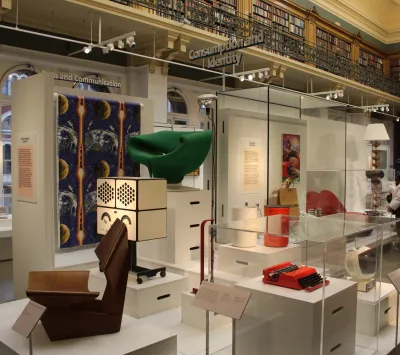
Pierre Paulin
Human Design Chart
Biography
He died on 13 June 2009 in Montpellier, France.
Human Design Analysis: Pierre Paulin as Manifesting Generator 1/3
Manifesting Generator 1/3 — Design at a Glance
Pierre Paulin revealed himself as someone who combined a hybrid energy: the constant power of a Generator with the lightning-fast implementation ability of a Manifestor. His design tended to quickly draw things into his life, often skipping steps in the process. This speed was a double-edged sword. If he moved too quickly, he risked overlooking important stages, forcing him to backtrack and retrace his steps—a potential source of frustration. Additionally, he had a tendency to pursue multiple projects simultaneously, driven by various impulses.
The mechanics of his type, the Manifesting Generator, required a specific strategy to make this energy fruitful. Instead of initiating things himself, he responded to life. Only when his Sacral Center gave a clear "yes" did he apply his power. Only then could he use his speed without falling into frustration. When this resonance was present, he found deep satisfaction in his work. The advice to focus on one thing did not suit him; instead, he thrived in "play mode," where variety and parallel work nourished his creative power. His inner authority helped him check whether the paths he had started were still valid. Thus, the potential restlessness transformed into a productive, playful dynamic that allowed him to work efficiently and contentedly without neglecting the necessary steps.
Emotional Authority
Pierre Paulin exhibited a decision-making style that was characterized by his defined Solar Plexus Center. This center carried his inner authority, meaning that his emotional waves dictated the course of his life paths. Regardless of other defined centers in his design, this emotional authority always took precedence. He experienced the world colored by his current mood, which could shift from enthusiasm in one moment to doubt in the next. An impulsive decision based on a first feeling was often just a snapshot, not his deeper truth.
His mechanics required patience. Rather than acting immediately, he let decisions ripen over time. He used the time to observe the intense feelings until they subsided. Only when emotional distance was created and clarity emerged did he act. This "sleeping on" important questions was not hesitation, but a necessary process to feel the true resonance. Quick, spontaneous reactions risked negative consequences, as they ignored the fleeting nature of emotions. Through this conscious delay, Pierre Paulin gained composure and made decisions that aligned with his deep inner truth, rather than just the passing mood of the moment.
The 1/3 Profile — Investigator / Martyr
Pierre Paulin revealed himself as someone who did not just collect knowledge theoretically, but validated it through direct experimentation and learning from mistakes. His design showed a tendency to initially research intensively before daring to take the step into practical implementation – often accompanied by the worry of not knowing enough. This tension between the desire for perfect preparation and the necessary courage to experiment shaped his process.
This aligned with the mechanics of Profile 1/3, the researcher and experimenter. Line 1 emphasized the gathering of experiences as the foundation for development and maturation. It was under the pressure to start something new, sometimes due to criticism of the old. Line 3 complemented this with adaptability in shock or uncertainty situations. Here, the path of trial and error was the way forward. Shocks or unexpected events demanded quick reactions, which could either lead to spontaneous adaptation or retreat.
For Pierre Paulin, this meant that his judgment was only absolutely trustworthy when he had tested a matter both theoretically and practically to the core. Self-earned insights were his main focus. He did not use errors as failures, but as a necessary part of the learning process that allowed him to adapt to changing circumstances and show courage in doing so.
Split Definition — Defined & Open Centers
Pierre Paulin was characterized by a consistent, trustworthy mental function that allowed him to develop concepts and theories independently of external influences. His defined Ajna Center ensured that his mind was always active, processing data, and acting as an inner authority without being easily conditioned by others. This mental stability combined with a clear, reliable way of communicating. His defined Throat Center served as a pivot point, translating messages from his mind as well as other areas of his design into the world. He spoke what he thought and could manifest his ideas, learning to not give in to every impulsive urge but to use his voice consciously.
His actions were also shaped by a firm self-identity and a sense of direction. The defined G Center gave him the confidence to feel loved and enabled him to show others new perspectives without being dependent on them. At the same time, he had a strong will and a need to determine his life himself. His defined Heart Center drove him to keep promises and prove his worth, being careful to only take on commitments he could fulfill.
Despite this inner strength, Pierre Paulin was vulnerable to external mental pressure. His open Head Center had no consistent way to process inspiration; he tended to engage with questions that were not his own and sometimes desperately sought answers to relieve inner pressure. Additionally, he absorbed stress from his environment. His open Root Center made him sensitive to the adrenalized pressure of others, often leading him to reduce this pressure through hyperactivity or trying to do too much rather than recognizing it as not his own and letting it go.
Channels for curious seeking, intuitive integrity and authentic power.
Pierre Paulin was characterized by a deeply rooted intuition that guided his actions in the present moment. This attitude stemmed from the Power Channel 34-57, which connected the sacral life force with the survival-oriented intelligence of the Spleen. He reacted spontaneously to his environment, guided by an inner sense of security and vitality, without needing external confirmation.
His design also promoted a pronounced self-love and independence. The Channel of Exploration 34-10 connected the supportive power of the Sacral with the behavior of the self in the G Center. Pierre Paulin lived his own beliefs authentically, allowing him to assert himself as an individual and demonstrate the benefits of self-acceptance to others through his example. This was complemented by the Channel of Perfect Form 57-10, which linked intuitive insight with this self-referential behavior. He perfected his existence through spontaneous, intuitively guided actions that secured his physical well-being and brought a unique, aesthetic quality to his interactions.
In communication, he acted as a storyteller, connecting ideas and experiences. The Channel of Curiosity 11-56 drove him to constantly seek new perspectives and present them as captivating narratives that inspired or taught others. At the same time, his social openness fluctuated rhythmically. The Channel of Openness 22-12 connected his emotional wave with articulation. He spoke and acted with passion and depth, but only when his mood allowed it; he needed time to emotionally prepare for an interaction and withdrew when the inner resonance was lacking.
Additionally, he carried the energy of the Initiation Channel 51-25, which combined natural competitiveness with the ability to recognize potential in others and encourage individualization through 'shocks'. His personality was further shaped by Gates like 53 (Freedom, Pioneer Spirit) and 54 (Connection of worldly success and spirituality), emphasizing his drive for development and significance. Gate 28 in the Personality represented the conscious taking of risks in the present, while Gate 59 represented a genetic strategy of bonding. In his design, Gates like 15 (collective rhythm), 23 (assimilation, otherness), and 9 (detail work, perfection) worked together to create a structure that allowed both logical formulas (Gate 4) and fine detail accuracy.
Individual Circuitry — Circuit Signature
Pierre Paulin's design tended towards inner strength, paired with a specific kind of emotional communication. His chart featured a Split Definition, indicating two parallel, non-directly connected energetic systems.
The first system connected the Identity, Heart, and Sacral Centers through the Centering Circuit. This created a deep, individual power base that equipped Pierre Paulin with strong convictions. The Integration Circuit complemented this by linking Identity, Sacral, and Spleen Centers. This configuration promoted high individuality and the ability to draw strength from reacting to life and acting in the present.
The second system included the Throat, Solar Plexus, and Ajna Centers. Here, the Knowledge Circuit worked through the Channel of Openness, connecting the Throat and Solar Plexus Centers. This allowed emotional waves and new insights to be expressed through speaking. The Meaning Circuit also connected Ajna and Throat Centers, allowing reflection on past experiences to be put into words.
These separate systems worked alongside each other: one area of inner, individual strength and one area of emotional, communicative processing. Pierre Paulin was someone who used his firm inner identity to articulate both emotional and cognitive content from the past and present. The mechanics described a person who, while not uniting all their energies in a single flow, possessed clear, defined channels in both areas – inner stability and outer expression – that shaped his actions and perception.
Right Angle Cross of Penetration 2
Pierre Paulin's design indicated a tendency towards profound, often painful clarity. His configuration, the right Cross of Permeation, shaped a lifestyle that could not avoid breaking through the illusions of the surface. This was not a superficial interest in truth, but an existential necessity to reduce things to their core, even if this process was painful or destabilizing.
This mechanism describes a path defined by direct confrontation with harsh reality. Those who carry this structure experience life not as a soft shell, but as a sharpening instrument. The 'permeation' here means that protective mechanisms and societal fictions offered little resistance; they were pierced to reveal the bare facts. It was an energy that dissolved distance and created intimacy in a nearly brutal way.
For Pierre Paulin, this was a constant imprint. He showed himself to be someone capable of reducing the most complex human or situational entanglements to their elemental truths. This ability to separate the essential from the inessential did not occur through intellectual analysis alone, but through an intuitive, almost physical penetration of matter. The right Cross of Permeation marked the specific focus on the active, shaping power of this insight, which not only observed but changed the structure of things by limiting them to the necessary.
Saturn Return · Uranus Opposition · Chiron Return · 2nd Saturn Return — Life Cycles
Pierre Paulin revealed himself as someone who solidified his professional identity in clear, cyclical phases. His design indicated a tendency to set structural milestones based on inner maturity. In 1953, at the age of 26, he participated in the Foyer d'aujourd'hui exhibition. This marked his first Saturn Return, a time when years of groundwork often condensed into a viable, public result.
His life path followed this pattern of consolidated development. In 1975, at the age of 48, he founded the design agency ADSA. This fell during his Chiron Return, a fulfillment cycle in which one's incarnation cross unfolds and the meaning of life becomes tangible. Here, Pierre Paulin was in his prime, translating his insights into a concrete structure.
The second Saturn Return confirmed this development. In 1981, at the age of 54, he founded the design consultancy ADSA & Partners. This cycle deepened the foundations previously created and anchored his work sustainably. Pierre Paulin lived this mechanism by shaping his career not as a linear ascent, but as a series of maturation processes, where inner clarity took on external form.
Manifesting Generator · Emotional Authority — Synthesis
Pierre Paulin was a Manifesting Generator, whose life was marked by a deep, sacral energy (defined Sacral Center). This constant energy source connected with mental clarity (defined Ajna Center), enabling him to develop concepts and pursue them with inner strength (Channel 34-10). His profile as a researcher and experimenter (1/3) indicates a lifelong search for knowledge, testing things to the core, and learning from experience – a process accelerated by his ability to quickly initiate things (Manifestor aspect), but also requiring that steps not be skipped.
A central paradox in his design lay in the tension between the impulsive action inherent in his manifesting aspect and the emotional authority that required mature decision-making. He lived in a constant interplay between the urge to try new things and shape them, and the necessity to experience his feelings and not rush decisions. The event of him participating in an exhibition at the age of 26 (1953) and later founding design agencies at the ages of 48 and 54 (1975, 1981) illustrates how he combined swift implementation with thorough preparation in his work.
6 Defined Channels
Incarnation Cross - Right Angle Cross of Penetration 2
Solar Return
The Solar Return shows the moment when the sun returns to its exact birth position - your personal solar year.
Life Cycles
Discover the life cycles with a detailed triple view (birth chart, cycle chart, composite).
Human Design Profile
- Strategy
- To respond - wait for something to respond to
- Authority
- Emotional Authority
- Profile
- 1/3 - Investigator / Martyr
- Definition
- Split Definition
- Incarnation Cross
- Right Angle Cross of Penetration 2
- Date of Birth
- 09.07.1927 00:05
- Place of Birth
- Paris, France
Frequently Asked Questions
What was Pierre Paulin's Human Design type?
What Profile did Pierre Paulin have in Human Design?
What Authority did Pierre Paulin have?
What incarnation cross did Pierre Paulin have?
When was Pierre Paulin born?
Discover your own Human Design
Are you also a Manifesting Generator? Find out in a personal reading how to unfold your multi-talents and direct your energy wisely.
More Personalities
Back to overviewAldair

Alizée

Angeli

Arletty
Artus
Baekhyun