
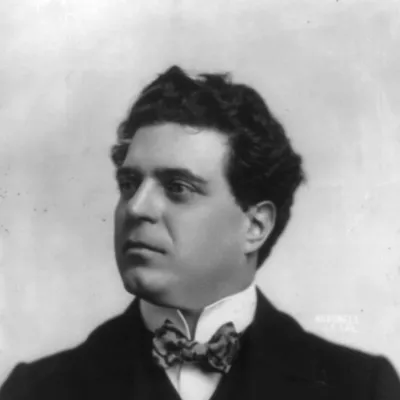
Pietro Mascagni
Human Design Chart
Biography
Mascagni studied at the conservatory at Milan, but, unable to submit to the discipline of his master, Amilcare Ponchielli, he left to join a traveling opera company. In 1889 he won the first prize in a competition with his one-act opera Cavalleria rusticana, based on a Sicilian melodrama by Giovanni Verga. It was produced at the Teatro Costanzi, Rome, on May 17, 1890, and was an instant success; it subsequently maintained its popularity, usually being given with Ruggero Leoncavallo’s one-act Pagliacci. Le maschere (1901), reviving thecommedia dell’arte, is musically superior, though it had little success. Mascagni succeeded Arturo Toscanini as musical director of La Scala, Milan, in 1929.
Mascagni wrote fifteen operas, an operetta, several orchestral and vocal works, as well as songs and piano music. He enjoyed immense success during his lifetime, both as a composer and conductor of his own and other people's music. He created a variety of styles in his operas: a Sicilian passion and warmth of Cavalleria, the exotic flavor of Iris, the idylls of L'amico Fritz and Lodoletta, the Gallic chiaroscuro of Isabeau, the steely, Veristic power of Il piccolo Marat, the over-ripe post-romanticism of the lush Parisina, which demonstrate a versatility.
He died 2 August 1945.
What does Manifesting Generator 4/6 mean for Pietro Mascagni?
Manifesting Generator 4/6 — Design at a Glance
Pietro Mascagni revealed himself as someone who carried energy and speed within him, yet often faced the challenge of channeling this power. As a Manifesting Generator, he had a constant sacral energy source, which endowed him with robust endurance. At the same time, he possessed the ability to skip steps and draw quick results into his life. This hybrid nature of Generator and Manifestor traits meant that while he could act quickly, he risked overlooking important stages in the process. His strategy was to not initiate himself but to react to impulses from the environment. Only when his sacral center responded with a clear 'yes' should he proceed. Doing so allowed him to draw deep satisfaction from his work and even manage multiple projects simultaneously without becoming frustrated. However, if he lost connection with this inner confirmation or ignored the need to wait for stimuli, his joy in creating quickly turned to frustration. The danger of moving too fast or taking on too many things at once was always present. Yet, if he remained in 'play mode' and sought variety while listening to his inner authority, he could effectively utilize his unique speed without overburdening himself or neglecting important foundations.
Sacral Authority
Pietro Mascagni lived as a Generator whose decision-making was shaped by sacral authority. This configuration simplified his process, as strategy and inner authority were identical. His inner guidance came from the defined sacral center, which acted as a motor and responded to external stimuli with immediate physical signals. These reactions manifested as gut feelings, bursts of energy, or sounds like grunts or hums. Such signals marked the moment when he felt energy and vitality. In this resonance, he had inexhaustible power and carried out his tasks with great enthusiasm, fully immersed in the work without compulsion or purposefulness. The open emotional center was the necessary prerequisite for this sacral guidance. Additionally, the activated spleen center served as a supporting instance. Through its connection to the sacral center, it enabled quick, spontaneous reactions. He had immediate access to his physical well-being and instinctive perception. These instincts could be reliably used as a guide, allowing him to make decisions that were both energetically and instinctively sound. Thus, his design promoted a lifestyle based on joy and satisfaction, driven by the direct response of his body to the environment.
The 4/6 Profile — Opportunist / Role Model
Pietro Mascagni showed himself to be someone who struggled throughout his life with the tension between a deep need for belonging and the simultaneous urge for detached, wise observation. In his first thirty years, before the return of Saturn, his sixth profile line still appeared as a third. Pietro Mascagni therefore enjoyed experimenting a lot in his youth, particularly in relationships and friendships, to find his role in the world. Once the sixth line became active, he frequently experienced the contradiction between the desire to belong to a community and the longing to stand high on a mountain to contemplate the meaning of life. His entire life revolved around the conflict between heart and head, which was naturally confusing. In his later years, he was expected to meet the high standards of a wise role model and to stand out through cooperation with other people. Like all people with the fourth line in their profile, Pietro Mascagni's great heart was always cautious about opening up to the wrong people to avoid injury. His fourth line guaranteed survival and success by maintaining his own rhythm, while the sixth line represented mental security and victory over confusion. He enjoyed the variety of data and could serve as inspiration without having to offer solutions. Vigilance was important for him to avoid getting lost in enthusiasm.
Single Definition — Defined & Open Centers
Pietro Mascagni revealed himself as someone who possessed a reliable inner identity and a clear direction. His defined G Center gave him a firm self-image and the feeling of being lovable without being dependent on others. This inner security allowed him to follow his own paths instead of orienting himself towards the expectations of others.
At the same time, he had an enormous vital energy source. His defined Sacral Center generated daily energy, which he used by reacting to life. Rather than initiating himself, he waited for questions or occasions to respond with a clear "Yes" or "No". This ensured him satisfaction and prevented exhaustion, as he used his energy only for things that received his inner approval.
His communication was steady and clear. The defined Throat Center served as a pivot point to bring information from his design into the world. He did not speak impulsively, but from a reliable source, which made his statements authentic and honest. Additionally, he had spontaneous body awareness. His defined Spleen Center gave him intuitive signals in the present moment, which he used for his well-being without having to rationalize them.
In contrast, his Head Center was open. He did not have a constant mental pressure but could take in inspiration from the environment without identifying with confusing thoughts. His open Ajna Center allowed him to think flexibly and grasp various concepts without insisting on them as absolute truth.
Similarly, his Heart Center was open. He was not programmed to prove willpower or keep promises to demonstrate his worth. This freed him from the pressure of constantly having to prove himself. His open Solar Plexus absorbed emotions from the environment but did not amplify them as his own. This required distance to avoid being drawn into foreign emotional waves. Finally, his open Root Center absorbed external stress. He had to learn not to experience this adrenalized pressure as his own to avoid hyperactivity or burnout, but rather to observe it as a temporary phenomenon.
Channels for inspired presence, intuitive power and immediate action.
Pietro Mascagni revealed himself as someone whose life force was marked by intense, instinctive awareness. His design connected intuitive insight (Gate 57) with sacral power (Gate 34) in the Power Channel 34-57. This configuration created an archetype of individualized survival: he reacted spontaneously to his environment, driven by a deep, physical intelligence that warned him of dangers and kept him physically fit. However, this energy was oriented solely towards his own well-being, not the needs of others.
At the same time, he had the potential to carry this inner vitality outward. The Charisma Channel 34-20 connected his sacral energy with the expression of the moment (Gate 20). This gave him a charismatic presence, but it was effective only when he responded to external stimuli rather than acting from mental "shoulds." Without this inner guidance, his energy could become chaotic.
On the personality level, the Inspiration Channel 1-8 was at work. He was designed to serve as an example through his individual, creative life and inspire others. This happened not through explanations, but by courageously showing his unique identity. However, he lacked an inherent social adaptability; he had to learn to wait for the right timing and patiently display his individuality to gain recognition.
Additionally, gates like 5 (Rhythm) and 35 (Change through Experience) shaped his quest for pattern perfection and progress. His personality sought clarity through the interpretation of past experiences (Gate 64) and struggled with doubt (Gate 63) to improve uncertain patterns. Deep within his design, Gate 48 (Depth/Pattern Recognition) and Gate 18 (Correction/Discrimination) helped him distinguish between what is essential and what is not, while Gate 50 acted as a protective reflex to preserve his values and traditions.
Individual Circuitry — Circuit Signature
Pietro Mascagni's Design set a tendency towards impulsive, creative outbursts that sprang directly from intuition. His simple definition combined Throat, Identity, Sacral, and Spleen Centers into a single, coherent flow. This created a direct line from inner perception to outer articulation.
The Knowledge Circuit worked through him via the Channels Lightning-Flash and Inspiration. These connected the Throat Center with the Identity and Spleen Centers. It was about expressing a unique identity through innovative flashes of insight and spontaneous inspiration. New knowledge did not arise from long contemplation but through acoustic, pulsing impulses that immediately demanded expression.
Parallel to this, the energy of the Integration Circuit flowed. The Channels Charisma and Power connected the Throat Center with the Sacral and Spleen Centers. Here, securing survival was paramount. Strength from reacting to life (Sacral) was guided by intuitive knowledge (Spleen) and expressed in the present moment. This gave his actions a natural charisma and powerful presence.
Both circuits shared the Throat and Spleen Centers, making the connection between intuitive perception and verbal expression particularly strong. Pietro Mascagni emerged as someone who projected inner impulses directly into the world, driven by the need to affirm his individual identity through creative and survival-secure actions.
Right Angle Cross of Consciousness 4
Pietro Mascagni's Human Design configuration inclined him towards intense, often passionate dedication to what was emotionally closest to him. This orientation stemmed from the energy of the right cross of consciousness, a configuration that fostered a deep, almost painful connection to his own inner impulses and relationships. Those who carried this structure tended to become fully and intensely involved in projects or people, with emotional engagement often seeming limitless. It was not superficial interest but existential dedication that could harbor both great joy and deep disappointment, as expectations of others or endeavors were high. This energy drove Pietro Mascagni to not only feel his emotions but to actively and passionately live them out. The connection between what he felt and what he did was close and immediate. This configuration described a life task of gathering deep experiences through this intense emotional involvement and bringing them into the world. It was less about rational planning and more about trusting his emotional truth and the willingness to fully commit without holding back. This attitude shaped his way of connecting with his environment and fellow humans.
Saturn Return · Uranus Opposition · Chiron Return · 2nd Saturn Return — Life Cycles
Pietro Mascagni's Human Design configuration set a tendency towards cyclical phases of consolidation and new beginnings. His first Saturn return around the age of 27 marked a point where years of groundwork condensed into a viable result. This was evident in 1890 when *Cavalleria rusticana* had its premiere and brought lasting success.
The Uranus opposition around the age of 39 often brought a phase of expansion or breaking with established structures. Mascagni traveled to the United States in 1902, which can be valued as a career-relevant step during this dynamic phase.
The Chiron return, a fulfillment cycle between the ages of 49 and 51, when the incarnation cross unfolds, fell for Mascagni in a time of reorientation. In 1911, at 48 years old, he claimed that the time of Verismo was over. This was not a sign of healing but a positioning within his developing life task and the unfolding process of finding meaning.
The second Saturn return around the age of 54 brought renewed consolidation and affirmation. In 1917, Mascagni experienced a resurgence of fame with the successful *Lodoletta* in Rome. This success underscores how his design generated stable structures and recognition in later years, after having gone through previous phases of change and redefinition.
Manifesting Generator · Sacral Authority — Synthesis
Pietro Mascagni lived a lifestyle marked by a constant interplay between inner reaction and outer expression. His design as a Manifesting Generator (MG) with sacral authority indicates that he was primarily oriented towards reacting to impulses and utilizing energy as soon as something resonated within him (Sacral Center). This reaction could then be carried out into the world through the connection to the Throat Center in rapid succession – a process that allowed him to quickly spark and shape things. The defined communication and manifestation area, connected with the Channel of Inspiration (1-8), points to a natural talent for publicly expressing creative impulses and inspiring others.
However, this potential was complemented by the profile as a Networker/Role Model (4/6) and the right cross of consciousness 4, creating an internal tension field. The need for belonging and connection (Line 4) stood in contrast to the desire for distance and reflection to act as a wise advisor (Line 6). This led to an internal conflict between heart and head, which was evident in phases of experimentation and searching for his own truth, but also in the ability to contribute through cooperation and exchange with others. The cycles confirmed this dynamic, as both successes and crises were recorded as turning points in his life.
4 Defined Channels
Incarnation Cross - Right Angle Cross of Consciousness 4
Solar Return
The Solar Return shows the moment when the sun returns to its exact birth position - your personal solar year.
Life Cycles
Discover the life cycles with a detailed triple view (birth chart, cycle chart, composite).
Human Design Profile
- Strategy
- To respond - wait for something to respond to
- Authority
- Sacral Authority
- Profile
- 4/6 - Opportunist / Role Model
- Definition
- Single Definition
- Incarnation Cross
- Right Angle Cross of Consciousness 4
- Date of Birth
- 07.12.1863 06:30
- Place of Birth
- Livorno, Italy
Frequently Asked Questions
What was Pietro Mascagni's Human Design type?
What profile did Pietro Mascagni have in Human Design?
What authority did Pietro Mascagni have?
What incarnation cross did Pietro Mascagni have?
When was Pietro Mascagni born?
Discover your own Human Design
Are you also a Manifesting Generator? Find out in a personal reading how to unfold your multi-talents and direct your energy wisely.
More Personalities
Back to overviewAaliyah

Aldair

Alexia

Alizée

Angèle

Angeli
