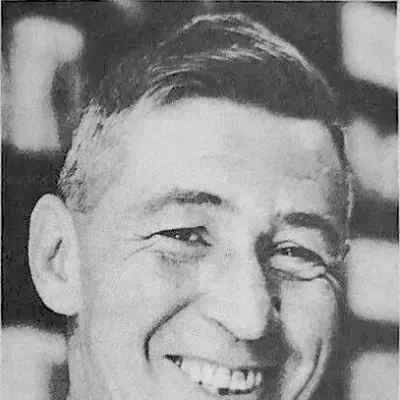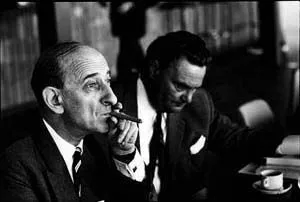
Raymond Aron
Human Design Chart
Biography
He is best known for his 1955 book "The Opium of the Intellectuals."
Aron died of a heart attack in Paris on 17 October 1983.
The Human Design of Raymond Aron: Projector 1/3
Projector 1/3 — Design at a Glance
Raymond Aron's Human Design configuration included a focusing aura that made system errors immediately apparent. As a Projector, his energy acted like a bright beam directed towards areas where others were still in the dark. This mechanism allowed him to identify weaknesses in structures or relationships instantly. However, directly addressing these deficiencies would often be perceived as unpleasant, similar to shining a bright light straight into someone's eyes.
A more effective way of expressing his nature was by attracting through his own harmony. By living functional patterns himself, he became attractive to his environment; others sought him out and asked for advice. This attraction protected him from conflict and spared him the rejection that direct criticism would have caused.
Central to this approach was waiting for an honest, appreciative invitation. Since his sacral center was undefined, Raymond Aron lacked a constant intrinsic energy source. He went through phases of high productivity followed by necessary rest periods for regeneration. Ignoring this rhythm could lead to burnout. Living according to the principle of selective leadership on invitation rewarded him with success. However, if he got lost in unbridled action without this confirmation, his non-self theme of Bitterness would come into play. His design thus demanded restraint and precision rather than constant availability.
Emotional Authority
Raymond Aron's inner authority was marked by a defined Solar Plexus Center. This configuration was subject to an emotional wave that manifested as a permanent up-and-down in his feelings. He saw the world colored through his current mood: totally enthusiastic at one moment, completely negative about the same thing the next. However, his feeling in the moment was just a snapshot, a first impression that did not necessarily represent the truth yet. Therefore, quick, spontaneous decisions based on emotion could have very negative consequences for him.
The more time he took to let a decision mature, the deeper and more comprehensive he could understand something. This required patience and repeatedly reconsidering a decision. He should take his time and ask himself multiple times before making a choice. Over time, intense feelings subsided, he gained emotional distance, clarity set in, and calmness followed. Only then had he gone through the process. This mechanism primarily applied to long-term decisions with significant influence on his life path. Emotional authority always took precedence over other defined centers regardless of what else was defined in his chart.
The 1/3 Profile — Investigator / Martyr
Raymond Aron's design leaned towards a synthesis of theoretical depth and practical testing. His Profile 1/3, the Researcher-Experimentor, shaped him as someone who not only gathered knowledge but validated it through trial and error. Line 1 drove him to deeply explore crises and uncertainties to gain fundamental security. Simultaneously, Line 3 demanded action in the field; it rejected rigid planning in favor of adapting to real circumstances.
This dynamic created a specific pattern: Aron appeared as someone whose judgments were based on double testing. Before he declared an idea valid, it underwent both the intellectual analysis of Line 1 and the practical stress test of Line 3. This built high confidence in self-earned insights. The fear of ignorance typical for the first line was overcome by the drive to experimentally validate the third line. Mistakes were not failures but necessary steps towards correction and renewal. His attitude was characterized by the understanding that ideas are transient and can only prove their validity through continuous testing. Thus, a life task emerged that combined theoretical comprehension with practical experience, making his judgment particularly well-founded as it integrated both speculation and action-oriented blindness.
Split Definition — Defined & Open Centers
Raymond Aron revealed himself mechanically through a massive inner strength. His defined lower centers – Root, Spleen, Solar Plexus, Heart, and G – formed a foundation of existential intuition, emotional depth, and clear identity. He possessed reliable self-love and knew intuitively his direction without needing external validation. His defined Heart Center gave him the willpower to take responsibility and keep promises; he determined his life self-determinedly. Stress was processed through the connection between Root with Spleen (Survival) and Solar Plexus (Emotion): He used existential consciousness and emotional intelligence rather than mental frenzy. His emotional authority in the Solar Plexus Center required patience; truth revealed itself to him only after waiting out the emotional wave, not in impulsive now.
At the same time, his upper centers – Head, Ajna, Throat, and Sacral – were open. This openness did not mean a lack of security but situational availability. Mental inspiration (Head) and conceptual certainty (Ajna) were fleeting; he tended to be distracted by doubts or searching for answers when he didn’t trust his inner authority. The open throat drew attention without him having to actively seek it out; spontaneous communication was possible, but not predictable. The open Sacral Center lacked consistent generative energy; he absorbed the life force of others and could easily overextend himself if he ignored boundaries. His strength lay in using this mental and energetic openness as a tool while strictly relying on his emotional clarity and existential intuition to make decisions and live his identity.
Channels for community, intuitive form and emotional recognition.
Raymond Arons Design establishes a constant foundation of intuitive self-love and survival skills. The Channel of Perfect Form 57-10 connects the Spleen Center with the G Center, guiding his behavior from a deep, spontaneous wisdom that exists beyond thought. This mechanism allowed him to move through the world unburdened and invited others through his unique example to live life as themselves. However, this stability was driven by an insatiable emotional longing for new experiences. The Channel of Recognition 30-41 connects Root Pressure with the Solar Plexus's emotional fantasy, creating a strong desire to explore "what if" scenarios and to investigate the nuances of emotions through direct experience. This internal tension between intuitive adaptation and emotional drive was negotiated in communities. The Channel of Community 37-40 links Solar Plexus with Heart Center, showing Raymond Aron's yearning for belonging and fair agreements. He sought his place within the whole and understood the necessity of building bridges between individuals to live in a group where everyone has an honorable place. For him, good deals were not spontaneous closures but carefully formulated connections sealed over time through willpower and emotional clarity to secure loyalty and mutual support within a community.
Tribal Circuitry — Circuit Signature
Raymond Arons Design points towards an emotional sense-making tendency, driven by the connection between Solar Plexus and Root Center in the Meaning Circuit. This configuration generates a wave-like energy that deals with processing past experiences. In contrast to purely logical processes, this is a cyclical movement – with beginning, middle, and end – aimed at recognizing meaning behind past events and sharing these felt insights emotionally filtered with the collective. Parallel to this, the Ego Circuit operates through the connection between Heart and Solar Plexus Centers. Here it’s not about individual ego but tribal dynamics: mutual support and a balanced relationship of giving and taking. Since there is no direct connection to the Sacral Center, resource building necessarily requires periods of rest for regeneration. A third, separate aspect appears in the Integration Circuit, which connects Identity with Spleen Center. This concerns securing survival through intuitive guidance and the ability to draw strength from reactions to life to make it effective in the current situation. Due to his Split Definition, these three areas – emotional sense-making, social cooperation, and individual intuition – exist as parallel adjacent forces. They are not energetically intertwined but form separate fields that Raymond Aron used independently of each other: once for collective reflection on the past, another time for building community resources, and finally for personal orientation in the present.
Right Angle Cross of Eden 1
Raymond Arons Human-Design charted a tendency towards pragmatic realization. His design carried the signature of the right cross of Eden, a configuration that did not allow ideas to remain in theoretical space but compelled them to be translated into material reality. This structure promoted the ability to achieve tangible results through concrete action. It was an energy of practical implementation: abstract concepts were made tangible. Aron showed himself as someone whose inner mechanism aimed at transforming visions into real structures. The emphasis lay on efficiency and the direct applicability of insights. His chart described a person who closed the gap between concept and execution. This was not merely a tendency towards contemplation, but an impulse to create substance. The right cross of Eden conveyed a specific kind of manifestation in terms of action: it was about turning the possible into the given. Arons design supported a process where pragmatic action formed the decisive factor for success. He lived the logic of this configuration by focusing on what actually worked and had staying power. The energy of this pattern helped him translate complex relationships into manageable realities. Thus, an idea became a tangible object or a stable situation. His design offered the tools to continuously advance this transformation.
Saturn Return · Uranus Opposition · Chiron Return · 2nd Saturn Return — Life Cycles
Raymond Arons Human-Design charted a tendency towards intellectual clarity and systematic analysis. He showed himself as someone who structured complex relationships and made knowledge accessible. This attitude was effective during the Chiron Return cycle, a fulfillment cycle between the ages of 49 and 51. In this phase, his previous path condensed into a palpable authority. The individual's incarnation cross unfolds increasingly here; meaning and purpose become experiential if one follows their strategy and authority. It is a bloom period where earlier learning processes mature into fruition. In 1955, at the age of 50, Raymond Aron became Professor of Sociology at the University of Paris (Sorbonne). This event marked his concrete transition into this phase of integration. The academic position was no coincidence but an expression of how his inner design turned outward after decades of work. Previously gathered insights and experiences now found their institutional anchoring. The Chiron Return served here as a catalyst for this recognition. It was not about healing old wounds in the mythological sense, but about confirming one's path through external structures. Raymond Aron used this moment to solidify his intellectual authority and pass on his knowledge within a stable framework. The connection of inner maturity and outer position defined this time decisively.
Projector · Emotional Authority — Synthesis
Raymond Arons life was marked by a deep drive to recognize patterns and make these insights accessible to others. This is evident in the combination of a defined G-Center – the center for direction and identity – with the ability, through open Head and Ajna Centers, to take in and process information without being bound to rigid concepts. He was an observer who recognized subtle nuances within complex systems (Gate 36) to then pass these on through his work. The connection between Root and Solar Plexus Center points to inner strength arising from engagement with challenges, coupled with emotional depth that allowed him to understand the impact of these experiences (Channel 41-30). This ability to proceed both analytically and intuitively seems to characterize his life's work.
A central tension field in Raymond Arons design lies between the need for clarity and the inherent fluidity of his perception. On one hand, he sought control and willpower through a defined Heart Center (Gate 51) to solidify and convey his insights. On the other hand, open Head and Ajna Centers made him receptive to new perspectives but also brought a certain inner uncertainty with them. This dynamic between the desire for certainty and acceptance of uncertainty created a creative space where he could explore complex themes without being bound by dogmatic notions.
3 Defined Channels
Incarnation Cross - Right Angle Cross of Eden 1
Solar Return
The Solar Return shows the moment when the sun returns to its exact birth position - your personal solar year.
Life Cycles
Discover the life cycles with a detailed triple view (birth chart, cycle chart, composite).
Human Design Profile
- Type
- Projector
- Strategy
- Wait for the respectful invitation
- Authority
- Emotional Authority
- Profile
- 1/3 - Investigator / Martyr
- Definition
- Split Definition
- Incarnation Cross
- Right Angle Cross of Eden 1
- Date of Birth
- 14.03.1905 04:00
- Place of Birth
- Paris, France
Frequently Asked Questions
What is Raymond Aron's Human Design type?
What Profile did Raymond Aron have in Human Design?
What Authority did Raymond Aron have?
What incarnation cross did Raymond Aron have?
When was Raymond Aron born?
Discover your own Human Design
Are you also a Projector? Find out in a personal reading how to unfold your leadership qualities and recognize the right invitations.
More Personalities
Back to overviewSissy Spacek

Alain-Fournier
Anémone

Ann-Margret

Bourvil
Hergé