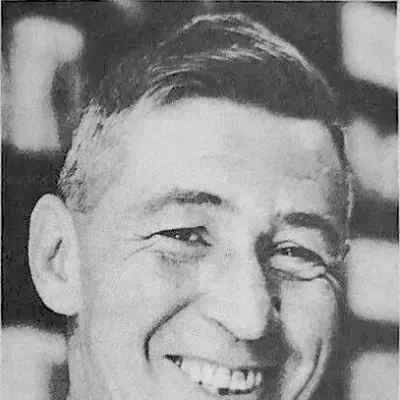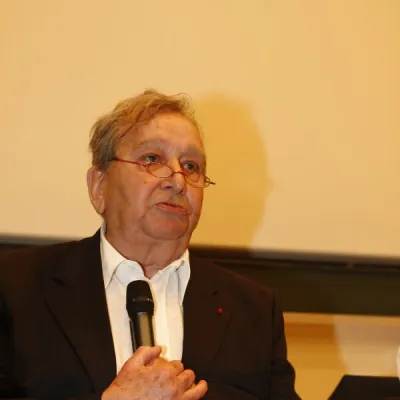
Raymond Boudon
Human Design Chart
Biography
He was a fellow at the Center for Advanced Study in the Behavioral Sciences and an invited professor notably at Harvard, Oxford University, and the Universities of Geneva, Chicago, and Stockholm.
A biographical study of him by Jean-Michel Morin was published in 2006.
He died on 10 April 2013 in Paris.
Raymond Boudon — Projector with Profile 6/2
Projector 6/2 — Design at a Glance
Raymond Boudon's design tended towards diagnostic sharpness, making systemic errors in his environment immediately apparent. His Human Design type was the Projector, whose aura metaphorically acted like a bright flashlight: It projected energy onto the surroundings and illuminated precisely those areas that were still in darkness or not functioning properly in others. However, this ability to identify system failures instantly carried its own risk. A direct confrontation with these flaws often felt off-putting; shining the bright light directly into another's face tended more towards rejection than solution.
Raymond Boudon's optimal strategy therefore did not lie in actively pointing out problems but rather in passively glowing through his own harmonious example behavior. By embodying reference points such as functioning relationships or clear structures, he generated a natural attraction. Others were drawn to him automatically and sought his advice actively. His design required waiting for an appreciative, honest invitation from others before exercising his leadership function.
Since his Sacral Center was undefined, Raymond Boudon did not have a constant intrinsic energy source. Instead, he was subject to energetic waves: Phases of high productivity alternated with necessary rest phases to avoid burnout. Living by this principle of invitation and rhythm rewarded him with success. Deviations from it eventually led to his non-self theme: bitterness.
Emotional Authority
Raymond Boudon's design established an inner decision-making entity that was not in the Head Center but anchored in the emotional center. As a defined Emotional Authority, he was constantly subject to waves of emotional ups and downs. His perception of the world was always colored by his current mood; what appeared inspiring at one moment could seem negative the next. This up-and-down did not mean that immediate emotion represented truth. It was merely a snapshot, an initial impression yet to mature.
Quick, spontaneous decisions from this emotional heat carried the risk of negative consequences for him. The mechanics of his authority required patience and time. By hesitating and rethinking important questions multiple times – ideally by sleeping on them overnight – he allowed the process of settling down. Once intense feelings subsided, he gained emotional distance. Only then did clarity and calmness set in. This path was especially crucial for long-term decisions with significant influence on his life course. Only through this distancing could he reach a deeper, comprehensive understanding rather than being guided by transient moods.
The 6/2 Profile — Role Model / Hermit
Raymond Boudon showed a clear developmental arc from experimental learning in youth to detached wisdom in old age. His design as Profile 6/2 initially marked him by the principle of trial and error. Before his thirtieth year, the energy of the second line dominated: He sought active interaction, integrated diverse forces, and learned through direct life experience. Mistakes were not seen as failure but as necessary steps to ensure quality in his personal development.
Around the age of thirty, his basic attitude fundamentally changed. The activation of the sixth line led him to withdraw from immediate action. Instead of continuing to experiment, Boudon sought distance and reflection. This phase was characterized by intense introspection and healing. He looked back at his earlier experiences from a higher perspective to recognize patterns and gain deep self-knowledge.
This process of transcendence and secrecy allowed him to develop a new form of superiority. When he eventually re-entered the exchange, it was not as an inquisitive beginner but as a role model. Other people were drawn to his filtered wisdom. They came to him to participate in this deep introspection and learn the skill of qualitative reflection. Boudon's path thus served as a classic example of how early experimentation transitions into late insight that is useful for others.
Split Definition — Defined & Open Centers
Raymond Boudon's Human Design profile indicated a tendency towards inner stability and situational adaptability. He operated consistently from the strength of willpower, emotional depth, intuitive presence, and steady life force pressure. These four defined centers – Heart, Solar Plexus, Spleen, and Root – formed his internal architecture. The defined Heart Center gave him the ability to keep promises and recognize his own worth, while the also defined Solar Plexus Center taught him to make decisions only after waiting for emotional waves to subside. His intuition was guided by the present moment through the Spleen Center, and the Root Center provided the necessary pressure for progress and survival.
At the same time, five open centers – Head, Ajna, Throat, G, and Sacral – shaped his interaction with the environment. Raymond Boudon was situationally dependent here: open to inspiration, concepts, communication, identity, and vital energy from the surroundings, yet not self-sustaining in these areas. The open Head Center made him vulnerable to mental pressure and the temptation to answer questions that were not his own. His open Ajna Center allowed a flexible mind that could take on concepts without needing to hold them as personal truth. The open Throat led him to wait for invitations to speak rather than actively seeking attention. The open G Center meant that his identity and direction were defined through relationships and places; he tended to blend with his environment or seek out a fixed role. Finally, his open Sacral Center made him sensitive to the energy of others, leading him to absorb “borrowed” vitality instead of relying on a constant personal energy supply. Decisions and actions were ultimately guided by the defined centers, especially the emotional authority of the Solar Plexus and the willpower of the Heart, while the open centers served as mirrors for environmental stimuli.
Channel 49-19: Synthesis — Channels & Gates
Raymond Boudon revealed himself through a deep rooting in tribal dynamics, paired with entrepreneurial vigilance and an insatiable drive for intense experience. His design suggested that he understood loyalty not as an abstract virtue but as an intuitive, emotional imperative. The Channel of Synthesis 19-49 connected the Root Center with the Solar Plexus and established a frequency of belonging defined by the protection of resources and territory. Here, an emotional wave of acceptance or rejection determined who belonged to the “tribe”; logic played no role, but rather the instinctive need for security and cohesion through shared principles.
Simultaneously, Raymond Boudon acted with the sharpness of intuition from the Channel of Devotion 44-26. This connection between Spleen and Heart Centers gave him the ability to immediately “smell” threats or improvement potentials. He had an entrepreneurial sense for what the market or his environment needed—often before they knew it themselves—and could sell ideas or products persuasively. However, this mechanism also required a balance between work and rest, as his energy flow worked in compressed bursts, not in a steady office rhythm.
A third driver was the Channel of Perception 30-41, which linked restlessness with emotional intensity. The pressure from the Root Center for new experiences was amplified by the emotional wave of the Solar Plexus, leading to a strong desire to deeply feel and explore life. For Raymond Boudon, patience was crucial: only by trusting his emotional authority and waiting until clarity emerged could he turn the often intense desires of this channel into meaningful decisions, rather than blindly following the next impulse.
Tribal Circuitry — Circuit Signature
Raymond Boudon's design shows a tendency towards cyclical, emotional processing of past experiences. He was someone who gained insights not through cold logic but by experiencing emotions and then sharing these with the collective. This resulted from the Meaning-Making Circuit, whose energy flows in waves – with beginning, middle, and end. Here, Channel 30-41 ("Recognizing") was active. This channel connects the Solar Plexus Center (Emotion) directly to the Root Center (Pressure/Reaction). Since the Sun is often the strongest aspect in Gate 41, this connection marked a dominant ability: drawing meaning from past events and passing it on as visual or emotional lessons.
Parallel to this, Raymond Boudon's Ego Circuit formed separate segments. As part of the Stem Group, it focused on cooperation and resources. Two channels were active here: Channel 26-44 ("Devotion") connected Heart (Will) and Spleen (Health/Intuition), enabling a devoted, intuitive support in the collective. The second channel, 49-19 ("Synthesis"), also linked Solar Plexus and Root Center – but with an emphasis on information synthesis. Important: Although both channels use the Solar Plexus and Root Centers, they are energetically separate from the Heart-Spleen aspect in the chart. There was no direct flow between Will/Intuition and Emotion/Synthesis. Instead, two parallel forces existed: a devoted resource provision (Heart-Spleen) and an emotional, synchronous information processing (Solar Plexus-Root). The absence of a connection to the Sacral Center in this circuit also required necessary pauses for regenerating shared resources.
Left Angle Cross of the Alpha 2
Raymond Boudon's Human Design followed the structure of 'The Left Cross of Alpha 2'. This configuration acted as a formative framework for his inner dynamics. It did not define concrete actions but rather the archetypal background against which his essence unfolded.
This cross represents a specific energetic quality in Human Design, describing a state of potential power and latent potential. Those who carry this cross move within a field of possibilities that have yet to fully unfold. It is about the essence of a beginning or a fundamental structure that is ready but not necessarily activated.
For Raymond Boudon, this meant that his inner compass was shaped by this archetypal form. The energy of this cross created a foundation of strength and integrity, even if it wasn't always visible externally. It was a quiet yet constant presence. The dynamics lay less in external actions than in the internal stance. This structure offered a stable anchor point amidst changing circumstances, conveying a sense of connection to something greater without needing concrete actions to prove it. Raymond Boudon thus lived within this framework whose power lay in its silent emanation and how he perceived himself.
Saturn Return · Uranus Opposition · Chiron Return · 2nd Saturn Return — Life Cycles
Raymond Boudon's Human Design indicated a tendency towards a decisive change in the middle years of life. He was someone who left behind old structures to take on individual responsibility and adopt an independent, often revolutionary stance. This phase is marked by the Uranus Opposition. It signals a turning point toward maturity and breakthrough, where self-understanding breaks free from earlier bindings.
This mechanism became active in 1974 when he was 40 years old with the publication of his work 'Education, Opportunity, and Social Inequality' in English. This event served as evidence for the described dynamics. The publication on the international market signaled a step out of perhaps more limited spheres into broader, independent forms of expression. It wasn't just a career move but an expression of a new self-determined stance. Through this work, he established himself independently from earlier conditions. The Uranus Opposition demanded here to distance oneself from the known and muster the courage for one's own voice. Boudon used this moment to present his insights in a way that resonated not just locally but globally. This underscores the function of this astrological configuration in Human Design: it forces clarity about one's identity relative to the collective, enabling true breakthroughs.
Projector · Emotional Authority — Synthesis
Raymond Boudon was an observer who, through his mental projection (Design), recognized flaws in systems and gained profound insights. His ability to recognize patterns (Gate 48) was strengthened by emotional authority that gave him time for judgment maturation – a process that initially drove him into experimental phases (Line 6) before he developed wisdom through deep reflection. He was inclined to grasp the needs of others and offer solutions, but his energy source did not lie in constant action but rather in the ability to draw from the flow of life and connect with the right circumstances (open Sacral Center).
A central paradox in Raymond Boudon's Human Design lies in the tension between his need for connection and his inner independence. He was a mediator whose roots lay in the emotional realm, yet he was also compelled by open centers to constantly adapt to his environment. This dynamic led to deep sensitivity towards others' needs, paired with the ability to withdraw from collective pressure and develop personal principles (Gate 49). This oscillation between engagement and distance shaped his work and allowed him to be both in tune with the pulse of time while maintaining a unique perspective on it.
3 Defined Channels
Incarnation Cross - Left Angle Cross of the Alpha 2
Solar Return
The Solar Return shows the moment when the sun returns to its exact birth position - your personal solar year.
Life Cycles
Discover the life cycles with a detailed triple view (birth chart, cycle chart, composite).
Human Design Profile
- Type
- Projector
- Strategy
- Wait for the respectful invitation
- Authority
- Emotional Authority
- Profile
- 6/2 - Role Model / Hermit
- Definition
- Split Definition
- Incarnation Cross
- Left Angle Cross of the Alpha 2
- Date of Birth
- 27.01.1934 23:40
- Place of Birth
- Paris, France
Frequently Asked Questions
What was Raymond Boudon's Human Design type?
What Profile did Raymond Boudon have in Human Design?
Which Authority guided Raymond Boudon in decision-making?
What incarnation cross was assigned to Raymond Boudon?
When was Raymond Boudon born?
Discover your own Human Design
Are you also a Projector? Find out in a personal reading how to unfold your leadership qualities and recognize the right invitations.
More Personalities
Back to overviewSissy Spacek

Alain-Fournier

Anémone

Ann-Margret

Bourvil
Hergé