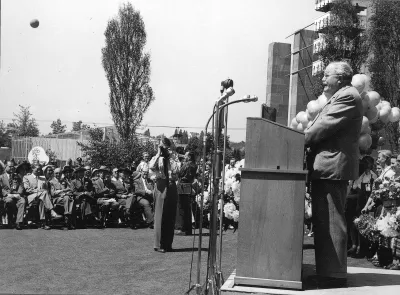
Reinhold Maier
Human Design Chart
Biography
He served as the 4th President of the Bundesrat in 1952-1953, the only FDP politician in German history to do so to date, as well as one of only two Presidents to not come from either the CDU/CSU or the SPD (the other one is Winfried Kretschmann, who is member of Alliance '90/The Greens and was the 67th President of the Bundesrat in 2012-2013).
During the Nazi era he worked as a lawyer; his wife Gerta Goldschmidt flew to the United Kingdom with their two children. Reinhold Maier was forced to divorce her under Nazi pressure but remarried her after the war in 1946.
Reinhold Maier died on 19 August 1971 at age 81 in Stuttgart.
Reinhold Maier — Generator with Profile 4/6
Generator 4/6 — Design at a Glance
Reinhold Maier revealed himself as someone who did not unleash his power through constant pushing, but rather through reactive action. As a Generator, he possessed immense sacral energy, which enabled him to achieve great endurance – comparable to a robust workhorse that carries on as long as it burns for the task. However, his life energy was not released through initiatives but through reacting to signals from his environment. The motto of his design was clear: not to initiate, but to wait until life posed a question to which his inner self responded with a clear 'yes'.
This mechanism protected him from two typical pitfalls. First, he avoided exhaustion that arises from binding himself to tasks that do not find an inner resonance. Second, he could concentrate his energy where it truly mattered, rather than being distracted from the outside. When he responded to this inner confirmation and acted, he was rewarded with a deep sense of fulfillment. Acting out of pure will or expectation, without this impulsive support, eventually led to frustration and a noticeable lack of energy. His path was to answer from the gut, thereby efficiently and satisfyingly utilizing his enormous capacity.
Emotional Authority
Reinhold Maier revealed himself as someone who did not make decisions in the first impulse but consciously let them rest. His design carried Emotional Authority, meaning that his defined Emotional Center held the inner leadership – independent of all other defined centers in his chart. This configuration was subject to a natural emotional wave, a permanent up and down of feelings. The world appeared to him always colored by his current mood; what was still seen as exciting in one moment could appear negative in the next.
For Reinhold Maier, the immediate feeling was therefore only a snapshot, a first impression, which did not necessarily represent his truth. Quick, spontaneous decisions based on such an emotion could often have negative consequences. Instead, his mechanism required patience. He took time to let decisions mature, often through multiple nights of reflection. This process allowed the intense feelings to fade. Only with increasing emotional distance did clarity and calmness set in. This 'pondering' and the multiple reviews were for him not hesitation, but the necessary way to go through the emotional process. Especially for long-term decisions that significantly influenced his life course, this waiting period was crucial to gain the deeper, comprehensive insight that only became visible after the initial wave subsided.
The 4/6 Profile — Opportunist / Role Model
Reinhold Maier's design laid a tendency towards experimental behavior in the first three decades of his life before establishing a role as a wise role model. As a person with the Profile 4/6, the sixth line in his youth initially appeared like a third: He sought connections and extensively tested boundaries in relationships and friendships. This phase of 'trial and error' shaped his early years, in which he pursued material success through detailed work and correct communication, yet still without the later inner discipline.
With the return of Saturn, that is after the age of 30, his focus fundamentally shifted. The inner conflict between the Heart – the desire for belonging and cooperation (Line 4) – and the Head – the drive to think about the meaning of life and distance oneself (Line 6) – became the central life motif. Reinhold Maier then revealed himself as someone who, although cooperative, carefully guarded his big heart to avoid opening up to the wrong people and getting hurt.
His sixth line developed through three phases: from early mistakes over the pursuit of material success to authentic self-assertion. He stood by his principles but showed opportunistic flexibility as long as it was safe. Saturn gave him inner strength and endurance as long as he felt secure. His task was to carry justice and power outward, distinguishing himself as a role model through self-discipline and the ability to communicate complex connections correctly. He lived the contradiction between the need for community and individual wisdom by proving himself through cooperation but always maintaining a certain distance.
Split Definition — Defined & Open Centers
Reinhold Maier revealed a design that combined constant mental activity with a deep, reactive energy base. His defined Ajna Center ensured continuous, conceptual thinking; he was always in the process of conceptualizing, unaffected by external influences but tending to make decisions purely cognitively. This mental structure flowed directly into his defined Throat Center, allowing him to reliably articulate what he thought. His communication was therefore not impulsive talking but the articulation of his clear, though stubborn, mental preferences.
At the same time, Maier had a defined Sacral Center, the motor of a Generator. This gave him enormous daily vitality, but it only flowed correctly in response to external initiatives. Instead of initiating, he was designed to respond to questions or offers with an internal “yes” or “no” to conserve energy and avoid frustration. This responsiveness was moderated by his defined Solar Plexus Center as an inner authority. He had to wait for the emotional wave to gain clarity rather than acting impulsively on emotional highs or lows.
In contrast, his open Head Center revealed a vulnerability to mental pressure and confusion if he did not trust his authority. He tended to get entangled in non-self questions or seek inspiration to resolve uncertainties. His open Heart Center lacked consistent willpower; he was not designed to make promises or prove his worth through competition. Instead, he absorbed the egos of others, making him sensitive to the integrity of commitments but often pushing him into the trap of self-proving in a competitive world if he did not follow his inner strategy.
Channels for intimacy, presence, intuition, logic, clarity and growth.
Reinhold Maier revealed a deeply rooted ability for intuitive self-assertion and logical structuring of his environment. His design tended towards spontaneous existential clarity, expressed in interpersonal relationships through demanding yet nurturing intimacy.
The Channel of Union 59-6 connected his sacral energy with the emotional wave of the Solar Plexus. This configuration created a strong desire for merging and intimacy, but it required patience as the emotional wave needed time to gain clarity. Without this waiting period, confusion and complex social dynamics threatened. Parallel to this, the Channel of Awakening 10-20, connecting the G Center with the Throat Center, expressed an inner stance: “I am now.” This promoted self-love and self-confidence as a basis for survival and inspired others through mere presence to live their own authenticity.
The connection of intuitive insight and self-determined behavior was strengthened by the Channel of Perfect Form 57-10. It guided his behavior from momentary, intuitive impulses from the Spleen, resolving unfounded future anxieties and enabling harmonious, secure survival in the present. Additionally, the Channel of Acceptance 17-62 organized his thought world. It translated visual patterns and details into language to logically structure and communicate opinions. However, this required careful timing to avoid resistance.
Momentary truths were articulated through the Channel of Flash of Insight 57-20, which directly spoke intuitive insights into the present, fostering deep self-awareness. Long-term development occurred through the Channel of Ripening 42-53, driving him to complete experiences and draw wisdom from them before starting new cycles. Additional facets like the search for continuity (Gate 32), inner truth (Gate 61), and the ability to correct patterns (Gates 58, 52) rounded out his profile, while Gates like 39, 38, and 4 indicated provocative analysis, defensive integrity, and formulaic thinking.
Individual Circuitry — Circuit Signature
Reinhold Maier revealed a split definition, where two energetically separate fields worked in parallel. One field connected the Solar Plexus, Sacral, and Root Centers; the other linked Identity, Throat, Ajna, and Spleen Centers. This separation meant that emotional waves (Solar Plexus) did not flow directly into rational communication (Ajna/Throat) but existed as separate impulses.
In the Knowledge Circuit, the Channel “Flash of Insight” (20-57), connecting the Throat with the Spleen Center, promoted intuitive, acoustic creativity and the urge to express new ideas in the present. Parallel to this, the Understanding Circuit connected the Ajna with the Throat Center via the Channel “Acceptance” (17-62). Here, the focus was on logically focused transmission of rational insights, free from emotional coloring.
The Sacral and Root Centers were connected in the Meaning Circuit via the Channel “Ripening” (42-53), generating a cyclical energy aimed at learning from past experiences and emotionally processing them. In the Protector Circuit, the Channel “Union” (59-6) connected the Sacral with the Solar Plexus Center, anchoring primal protective and nurturing energies to ensure survival and preservation of one's genetics through instinctive emotional reactions.
Finally, the Integration Circuit connected the Throat, Identity, and Spleen Centers via the Channels “Awakening” (20-10) and “Perfect Form” (10-57). This strengthened individual expressiveness by combining intuitive knowledge (Spleen) and correct behavior (Identity) in the present moment (Throat). Reinhold Maier's design thus combined rational clarity with intuitive creativity, while emotional and survival-preserving forces acted in a separate, physical field.
Right Angle Cross of Maya 3
Reinhold Maier was characterized by a fundamental attitude aimed at organizing complex relationships and transforming them into stable structures. His design was marked by the right cross of Maya 3, a configuration that established a deep connection between historical pattern awareness and the ability to pour these into practical, tangible forms.
This mechanism described a natural inclination to not only analyze the past but actively integrate it into the present to develop solutions for current challenges. It was an energy that created structure by linking past wisdom with present needs. Reinhold Maier used this ability to bring order to seemingly chaotic situations and lay sustainable foundations.
The right cross of Maya 3 promoted a sense of responsibility towards the continuum of history and future. It was not about mere nostalgia but the conscious application of tested principles. Reinhold Maier thus acted as someone who built bridges between tradition and innovation by ensuring that new developments rested on solid, historically grown foundations. This orientation shaped his approach to problems: always with an eye on long-term stability and the continuity of the whole, ensuring that every measure was in harmony with the underlying laws.
Saturn Return · Uranus Opposition · Chiron Return · 2nd Saturn Return — Life Cycles
Reinhold Maier was someone who underwent an intense phase of internal restructuring in the 1920s, which manifested in his partnership. The Uranus opposition around the 40th year of life typically marks a turning point where old bonds are questioned and new, often unexpected paths are taken. In 1929, he married Gerta Goldschmidt – a step that anchored this dynamic realignment in a stable relationship, far from traditional expectations.
Later, at the age of 57, the second Saturn return occurred. This cycle often requires the integration of responsibility and the establishment of long-term structures. For Reinhold Maier, this was evident in 1946 when he became a member of the Landtag of Württemberg-Baden. This political role was not a sudden career leap but the result of years of groundwork that now crystallized into a stable, public position. The Saturn return condensed his previous experiences into a stable foundation for his further work. Both events underscore how Reinhold Maier utilized the challenges of his design cycles: the Uranus phase for personal liberation and reorientation, the Saturn return for institutional anchoring and the assumption of leadership roles. His life paths thus followed the energetic guidelines of his chart by creating new, stable forms both privately and publicly in critical phases.
Generator · Emotional Authority — Synthesis
Reinhold Maier lived a life marked by a deep, sacral energy (Generator type), manifesting in endurance and the ability to shape things. This energy, however, was inseparable from an emotional depth (Emotional Authority) that compelled him to make decisions not spontaneously but to let them mature over time. His profile as a networker and role model (4/6) suggests that he always oscillated between the desire for community and the need for independent thinking, with the line 6 prompting him to reflect on the meaning of life and seek wisdom. Through the knowledge circuit, he was also destined to gain new insights and express them through emotional authenticity.
A central paradox in Reinhold Maier's design lay in the tension between his powerful, sacral energy and his emotional wave. While he was destined to be active and creative (Channel of Pairing), his emotional authority required patience and waiting for clarity. This led to an internal conflict between the impulse to act immediately and the necessity to make decisions only after thorough emotional deliberation. The documented events – a relationship at age 40 and a career step at 57 – fell into cycles suggesting change and new beginnings, underscoring the dynamic interplay of these forces.
6 Defined Channels
Incarnation Cross - Right Angle Cross of Maya 3
Solar Return
The Solar Return shows the moment when the sun returns to its exact birth position - your personal solar year.
Life Cycles
Discover the life cycles with a detailed triple view (birth chart, cycle chart, composite).
Human Design Profile
- Type
- Generator
- Strategy
- To respond - wait for something to respond to
- Authority
- Emotional Authority
- Profile
- 4/6 - Opportunist / Role Model
- Definition
- Split Definition
- Incarnation Cross
- Right Angle Cross of Maya 3
- Date of Birth
- 16.10.1889 23:00
- Place of Birth
- Schömberg (Baden-Württemberg), Germany
Frequently Asked Questions
What was Reinhold Maier's Human Design type?
What Profile did Reinhold Maier have in Human Design?
What Authority guided Reinhold Maier in his decisions?
What incarnation cross did Reinhold Maier have?
When was Reinhold Maier born?
Discover your own Human Design
Are you also a Generator? Find out in a personal reading how to use your sacral energy correctly and discover deep satisfaction.
More Personalities
Back to overviewAaliyah

Alexia

Angèle

Anne-Marie

Arcángel

Arno