
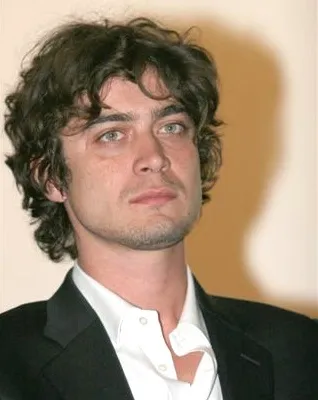
Riccardo Scamarcio
Human Design Chart
Biography
He trained as an actor at the Scuola Nazionale di Cinema in Rome, where he now lives. His debut acting role was in a TV series in 2000, while his first ever lead role in a feature film was in Tre metri sopra il cielo (2004), directed by Luca Lucini. Through this he immediately became well known to the Italian speaking public, especially a young audience. His success brought him prominence as a sex symbol and boosted requests for his acting skills, leading to his role in Texas (2005), directed by Fausto Paravidino and he soon joined the cast of Romanzo criminale, playing a monosyllabic, enigmatic thug in a powerful portrait of a mafiosi community directed by Michele Placido.
In 2006, he acted in The Black Arrow, a TV series broadcast by Canale 5, adapted from the novel by Robert Louis Stevenson, and took on four new film roles: Mio fratello è figlio unico (2007), directed by Daniele Luchetti, based on the novel Il Fasciocomunista by Antonio Pennacchi. Scamarcio won a David di Donatello nomination for Best Supporting Actor for this work. He also played in Manuale d'amore - Capitoli successivi (2007), directed by Giovanni Veronesi, Ho voglia di te (2007), directed by Luis Prieto, and Go Go Tales (2007), directed by Abel Ferrara.
In 2007, he began work on Colpo d'occhio (2008) directed by Sergio Rubini, and Italians (2009), a comedy directed by Giovanni Veronesi and Il grande sogno (2009), set in Italy in 1968, directed by Michele Placido. Eden à l'Ouest, directed by Costa-Gavras, saw Scamarcio playing an illegal immigrant-cum-innocent abroad. L'uomo nero (2009), directed by Sergio Rubini, co-starred Scamarcio's partner, Italian-Greek actress Valeria Golino, who plays his sister.
The Human Design of Riccardo Scamarcio: Generator 3/5
Generator 3/5 — Design at a Glance
Riccardo Scamarcio's design points to a tendency for great endurance and an inner reservoir of strength. As a Generator, he had plenty of sacral energy, making him work like a strong draft horse – provided this energy was used for appropriate tasks. His nature did not show itself through the initiative rights of other types but rather through fundamental responsiveness. The motto of his design is: Not to initiate but to respond to signals from the environment.
This mechanism meant that his full power only became free when he reacted to impulses and gave a clear "yes" with his sacral center. If Riccardo Scamarcio lived according to this strategy, acting from his gut, it rewarded him with a feeling of deep fulfillment and satisfaction. Conversely, two specific pitfalls threatened: Either he spent energy on things that did not resonate, leading to exhaustion, or he was held back from his heart project even though his inner self still brimmed with power. In both cases, this resulted in frustration and a lack of energy. His design therefore challenged him to listen carefully when the internal signal to start came, so as to effectively and satisfyingly use his immense endurance.
Emotional Authority
Riccardo Scamarcio displayed a fundamental disposition characterized by emotional wave movements: His perception of the world was always colored by his current mood. At one moment he could be totally enthusiastic about something, and in the next that same thing appeared completely negative to him. This fluctuation is typical for his inner authority, which is carried by the defined Solar Plexus Center.
In Human Design mechanics, this emotional authority always takes precedence over all other defined centers, regardless of which additional energies are active in the design. This means that his feeling at any given moment was merely a snapshot – a first impression that did not necessarily reflect his deeper truth. Quick, spontaneous decisions made directly from this emotional heat could often have negative consequences.
The strategy of his design required patience and conscious hesitation. By taking time to let decisions mature – ideally over several days – he could go through the process of emotional condensation. Over time, intense feelings subsided, an emotional distance set in, and clarity and calmness emerged eventually. This mechanism was particularly important for long-term decisions, as they could have a significant impact on his life course. By waiting, he gained the necessary perspective to not only follow superficial emotions but also to reach deeper insight.
The 3/5 Profile — Martyr / Heretic
Riccardo Scamarcio is characterized by an Explorer and Hero Profile. His basic attitude is determined by the necessity to try things out for himself before accepting them as true. This line of adventure demands direct experience; knowledge here does not arise merely from hearing, but through his own actions and the resulting mistakes.
This process of trial and error forms the basis for his later role. Through adaptability and tolerance towards criticism, he accumulates a rich treasure trove of practical wisdom. These experiences make him attractive to others who want to learn from the solutions he creates. He thus steps into the role of the Hero, solving other people's problems with his self-acquired knowledge.
At the same time, there is a dynamic of seduction and energy giving off. Others are prompted to take responsibility to advance the logical process. Without this external support, however, the solution remains incomplete. When he expresses his answers, it can lead to undeserved praise. This interplay flatters his ego but becomes painful when experiments fail in public. The constant recognition of others' understanding also harbors potential for cynicism, as his own knowledge often only fully comes into effect through validation by external forces.
Split Definition — Defined & Open Centers
Riccardo Scamarcio's Human Design suggests a tendency towards constant mental activity and clear willpower. His defined Ajna Center ensured a continuous process of conceptual thinking that was not easily switchable off. This mental energy flowed directly into his also defined Throat Center, allowing for reliable communication: he spoke what he thought. Simultaneously, his defined Heart Center served as a source of willpower and ego strength, enabling him to keep promises and control his own resources.
These internal structures contrasted with his open centers. His open Head Center made him vulnerable to external mental pressure; he tended to engage with others' questions or seek inspiration from outside rather than trusting his inner authority. The open G Center meant that he did not have a fixed identity or direction, but acquired these through interaction with his environment and other people. He could easily adapt, making him vulnerable to borrowed identities. Additionally, his open Root Center absorbed stress from the environment, potentially leading to cycles of adrenalized pressure if he tried to rid himself of this foreign tension by his own actions.
However, his defined centers – Ajna, Throat, Heart, Sacral, Solar Plexus and Spleen – provided a strong foundation. His defined Sacral Center generated constant vital energy waiting for reactions. The defined Solar Plexus Center required waiting out the emotional wave for clarity, while the defined Spleen Center delivered spontaneous intuitive judgments in the moment. The challenge was to not be driven by the mental pressure of his open Head or the stress of his open Root, but rather to use his own energy from Sacral and Heart as well as the emotional depth of Solar Plexus to act authentically.
Channels for intimacy, insight, intuitive power and connection.
Riccardo Scamarcio showed a fundamental disposition swinging between a deep drive for merging and the necessity to clearly articulate innovative insights. His design indicated that he understood intimacy not as spontaneous events but as processes requiring patience. The Channel of Union 59-6 rooted his creativity in a powerful connection between sexuality and emotional wave. This configuration shaped him through the need to nurture relationships on a friendly basis before deep intimacy could develop. His emotional wave determined timing; he had to wait for clarity about the quality of the connection to avoid confusion or failure.
Parallel to this, the Channel of Manifestation 23-43 influenced his way of thinking and expression. He received spontaneous breakthroughs through Gate of Insight (43) and processed these via Gate of Assimilation (23). This allowed him to translate complex perspectives into efficient, understandable concepts. However, it took time for others to accept his innovative thoughts; wrong timing often led to rejection of his ideas.
On an existential level, the Channel of Power 34-57 and the Channel of Community 37-40 shaped his interaction with the environment. The first endowed him with sharp intuitive awareness focused on survival and individual vitality – he reacted spontaneously to vibrations in his surroundings independent of mental considerations. The second channel emphasized fair agreements within a group. He sought his place in the whole based on mutual benefit and emotional clarity, not hierarchy. Additional gates like Gate of Formulation (4) supported him in recognizing logical patterns while Gate of Sacrifice (49) promoted resource redistribution within his tribe.
Tribal Circuitry — Circuit Signature
Riccardo Scamarcio's design points towards a tendency for structured individual expression connected with deep instinctive awareness. These separated energetic poles shaped his essence as two parallel existing forces: on one hand, the ability for clear communication and identity formation; on the other, an ancient protective intuition for survival.
The Knowledge Circuit linked Ajna and Throat Center via Channel of Manifestation (Gates 43-23). This encouraged a tendency to bring inner thoughts into orderly, understandable forms – a process of expressing individuality through words or creative concepts.
Parallel to this, the Ego Circuit connected Heart and Solar Plexus Centers (Channel 37-40). Here it was about cooperation and resource exchange within a community. As there was no direct connection to Sacral Center, this dynamic required regular rest pauses for energy regeneration for social interactions.
Another aspect was the Protector Circuit linking Sacral and Solar Plexus Centers (Channel 59-6). This brought an ancient instinctive power into play aimed at protection, care, and preserving the near – an energy of 'mother and father' ensuring continuity.
Finally, the Integration Circuit connected Sacral and Spleen Centers (Channel 34-57). This allowed drawing strength from reactions to life and making it effective through intuitive knowledge in the here and now. The combination of structured communication, social exchange, instinctive protection, and reactive intuition formed a complex but clearly defined energetic profile.
Right Angle Cross of Explanation 4
Riccardo Scamarcio's design indicated a tendency towards clarifying and enlightening power. He was someone destined to make complex or hidden connections visible and understandable. This orientation aligns with the mechanism of the right cross in Explanation 4. In Human Design mechanics, this configuration represents the ability not only to recognize truth but also to articulate it in such a way that others can absorb it. It is less about personal opinion than an objective illumination of situations or topics.
Riccardo Scamarcio often acted as a bridge between hidden facts and general understanding. His energy was used to resolve misunderstandings and bring clarity to areas previously shrouded in darkness. This did not happen through coercion or aggressive enforcement, but rather through the natural authority of knowledge itself. When he spoke or acted, it aimed to shed light on the unknown and give others the tools to better understand their own reality. This gift of explanation is a central part of his design and shapes how he interacts with his environment.
Saturn Return · Uranus Opposition — Life Cycles
Riccardo Scamarcio's design indicated a tendency towards sudden, disruptive turning points that break old structures and force new identities. This dynamic was evident in 2017 when, at the age of 38, he played Santino D’Antonio in “John Wick: Chapter 2” – a success not only relevant to his career but also confirming the underlying mechanics of his Uranus aspect.
The opposition to Uranus marks phases of radical transformation. It acts like an external shock or internal rebellion against the status quo, breaking free from the compulsion to adapt gradually. Instead of continuing step-by-step development, there is often a sudden realignment where the old is discarded to make way for something unexpected. This aspect demands flexibility and the ability to handle the unpredictable without falling back into old patterns.
For Riccardo Scamarcio, this meant that his role as Santino was not just another station but a moment of confirmation of his inner need to break free from conventional expectations. The success of this portrayal underscored the power of this aspect: when one embraces the impulse for change and channels it creatively, it can lead to groundbreaking results. It is not about steady growth but qualitative leaps enabled by breaks.
Generator · Emotional Authority — Synthesis
A central red thread in this Human Design chart is the deep connection between creative energy and emotional process. The sacral definition (Generator type) provides a constant source of life force, which must be channeled through emotional authority – waiting for the inner wave to achieve clear perception (emotional center). This manifests as a dynamic interaction between the urge to create new things and experiment (line 3 in profile), and the need to filter these impulses through emotional maturation. The defined Ajna channel further strengthens this process by providing a consistent thought pattern that creates and transforms concepts – an inner drive for understanding and expression.
The central paradox lies in the tension between impulsive experimentation (line 3) and the emotional wave needing time for clarity. The chart points to a personality driven by a strong desire to accumulate experiences and acquire knowledge, but simultaneously urged by the emotional center not to rush decisions. A documented event illustrates this inner drive – a success (2017) after 38 years enabled through the connection of creativity and emotional depth.
4 Defined Channels
Incarnation Cross - Right Angle Cross of Explanation 4
Solar Return
The Solar Return shows the moment when the sun returns to its exact birth position - your personal solar year.
Life Cycles
Discover the life cycles with a detailed triple view (birth chart, cycle chart, composite).
Human Design Profile
- Type
- Generator
- Strategy
- To respond - wait for something to respond to
- Authority
- Emotional Authority
- Profile
- 3/5 - Martyr / Heretic
- Definition
- Split Definition
- Incarnation Cross
- Right Angle Cross of Explanation 4
- Date of Birth
- 13.11.1979 23:30
- Place of Birth
- Trani, Italy
Frequently Asked Questions
What is Riccardo Scamarcio's Human Design type?
What Profiles does Riccardo Scamarcio have in Human Design?
Which Authority guides Riccardo Scamarcio?
Which incarnation cross is active for Riccardo Scamarcio?
When was Riccardo Scamarcio born?
Discover your own Human Design
Are you also a Generator? Find out in a personal reading how to use your sacral energy correctly and discover deep satisfaction.
More Personalities
Back to overviewSissy Spacek

Aaliyah

Alexia

Anémone

Angèle

Ann-Margret
