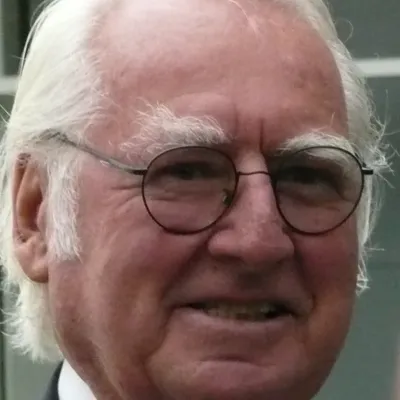
Richard Alan Meier
Human Design Chart
Biography
In 1957 he began with an apprenticeship in an architectural firm. To relax, he did abstract-expressionist painting and collages. For 13 years he taught architectural design and, in 1963, he opened a private practice, gaining national attention by 1967.
In 1984 Meier was commissioned with the design of a lifetime, the 13-year construction of the Getty Museum in Santa Monica, CA. He had just turned 50 when he beat out a roster of 32 international architects to win the outstanding job. The cultural Camelot was over $1 billion in the making and is without doubt a Mecca for Southern California residents as well as tourists from every country in the world. The six buildings occupy nearly a million square feet of space on 24 acres and offer a breathtaking view of the Los Angeles basin from the mountains to the ocean. The Museum, a center of priceless art and awesome architectural excellence, opened to the public on 16 December 1997. For the prior dozen years, the New York based Meier spent two weeks of every month in Los Angeles, living in a small ranch house on the site.
Meier conveys a great presence with his impressive appearance at 6' tall and 170 lbs. He married Katherine Gormley on 21 January 1978 and has two children. The family live in a Manhattan apartment that has been totally redesigned and reconstructed by Meier, even to the lowering of the floor. The furniture is also designed by him, except for pieces by Le Corbusier and Marcel Breuer, and Stella paintings adorn the walls. He still makes collages, which he considers his "workout" for architecture. His awards are many and impressive.
The Human Design of Richard Alan Meier: Generator 4/6
Generator 4/6 — Design at a Glance
Richard Alan Meier revealed himself as someone who did not find his strength in driving projects forward but rather in powerfully responding to external impulses. His design showed a tendency towards great endurance – comparable to that of a workhorse – which only became effective when he responded to signals from his environment. As a Generator, he possessed much sacral energy that was released as soon as his inner self signaled a clear “yes”. This mechanism meant: not initiating but waiting until life asked a question and then responding with full force.
This approach was crucial for his satisfaction. When he listened to this inner resonance, no one could stop him; he worked efficiently and fulfilling. Conversely, ignoring this principle – such as by constantly initiating without an internal signal or forcing himself to work on uninteresting topics – quickly led to frustration and energy loss. The danger lay in either expending his strength on things that did not receive internal approval or being held back from his heart project despite still having plenty of power left. His life task therefore consisted in channeling this sacral energy through reaction rather than squandering it through false initiatives.
Emotional Authority
Richard Alan Meier's design showed a tendency towards emotional wave movement, where his inner authority was carried exclusively by the defined Solar Plexus Center. This means that his decision-making process was always influenced by a natural up and down of his emotions. The world often appeared colored by his current mood: in one moment he could be totally enthusiastic, in the next the same situation completely negative. His immediate feeling, however, was only a snapshot, an initial impression that did not necessarily represent his deeper truth yet. Quick, spontaneous decisions based on such emotion could therefore have negative consequences.
The mechanics of his emotional authority required patience and time. The longer he let a decision mature, the deeper and more comprehensive he could perceive the situation. This demanded consciously sleeping over important questions and allowing others to bring them up multiple times. Over time, intense feelings subsided, he gained an emotional distance, clarity and calmness set in. Only then was the inner process complete and a well-founded decision possible. This strategy was particularly relevant for long-term decisions with significant influence on his life course. Important here is absolute priority: since the Solar Plexus Center is defined, he always followed this emotional wave regardless of which other centers were also defined in his chart. His inner truth never showed itself in the first impulse but only after the initial emotional reaction had subsided.
The 4/6 Profile — Opportunist / Role Model
Richard Alan Meier exhibited a basic attitude shaped by the tension between the need for belonging and the urge for wide perspective. His design as a 4/6 profile indicated that his life revolved around the inner conflict between heart and head: the desire to be deeply rooted in communities often stood in opposition to the impulse to think reflectively about the meaning of things. In his first three decades, this dynamic was still immature; he likely experimented intensively with relationships and friendships, driven by line 4 which ensures survival through social networks. This phase was characterized by a fixation on interpersonal connections as means for self-confirmation.
With the activation of line 6, typically after the first Saturn return, the focus shifted towards reflection and long-term meaning-making. The pressure to repeat successful patterns met the need to collect new experiences that were truly worthwhile. Richard Alan Meier thus became an exemplar whose authority did not arise through dominance but wise cooperation. His Venus position promoted a masterful handling of relationships for creating harmony, while potential Mars influences could lead to authoritative decisions under threat. His path was therefore not a linear ascent but constant negotiation between the tight circle of intimates and the wide, reflective distance of the sage.
Split Definition — Defined & Open Centers
Richard Alan Meier was characterized by a design marked by constant vitality and profound emotional resonance. His defined Sacral Center generated a reliable energy source that could only be activated through reactions to external stimuli; initiatives without prior questioning led to frustration and exhaustion here. This powerful foundation was connected to his also defined Solar Plexus Center, which acted as an inner authority. Decisions therefore required patience: He had to go through the emotional wave until clarity emerged, rather than reacting impulsively to highs or lows.
Additionally, his defined Spleen Center and defined Root Center provided a precise intuition for the present moment as well as a stable internal pressure to maintain the life impulse. This created a robust foundation for wellbeing and existential security.
In contrast, his undefined centers revealed areas of receptivity and potential conditioning. His open Head Center was prone to being influenced by foreign inspiration or mental confusion; he was vulnerable to seeking answers to questions that were not his own concern. Similarly, his open Ajna Center reflected the concepts and opinions of the environment, leading to the risk of adopting these as personal truth or feeling uncertain due to a lack of firm mental structure.
His open Throat Center meant that he could not communicate consistently; trying to force attention through constant talking only created stress. Instead, his open throat naturally attracted attention when he waited. The open G Center showed a flexible identity: He adapted to people and places to find where he truly belonged, rather than dictating a fixed direction. Finally, his open Heart Center revealed a vulnerability for the need to prove his worth through promises or competition – a path that would have led him into spirals of self-doubt had he not relied on his authoritative energy source and emotional clarity.
Channels for intuitive power, mystical synthesis and emotional recognition.
Richard Alan Meier exhibited a fundamental disposition oscillating between a deep desire for tribal loyalty and restless exploration of new experiences. The Synthesis Channel 19-49 connected the pressure of the Root Center with the emotional wave of the Solar Plexus. This generated a sensitive feeling for belonging: He sought principles that held communities together, rejecting anything undermining this connection. Loyalty and resource protection were not logical decisions but emotional imperatives determining who belonged to his inner circle.
Simultaneously, he was driven by the Recognition Channel 41-30. The urge from Gate 41 stirred restlessness and fantasy for countless scenarios of what could be. Linked with Gate 30, emotions intensified this impulse into a passionate search for new experiences. Here lay the tension: While the first channel sought stability through tradition, the second demanded constant change and diving into unknown emotional nuances.
This dynamic was reinforced by the Power Channel 34-57. It connected the intuitive insight of the Spleen (Gate 57) with the generative life force of the Sacral (Gate 34). This gave him a defensive, individual vigilance. His intuition responded spontaneously to vibrations in his environment, free from mental delay. It was a survival instinct that made him selectively open and protect his own vitality often independent of others' needs.
Additionally, Gates like 51 (Willpower), 53 (Freedom for New Cycles), and 54 (Connection between worldly success and mysticism) emphasized a drive for individual affirmation and the ability to transform shocks into adaptation. Gate 18 also brought political sensitivity towards human rights while Gate 29 enhanced persistence in the Sacral Center. Richard Alan Meier thus moved within a field of instinctive demarcation, emotional bond-seeking, and constant oscillation between traditional stability and pioneering curiosity.
Individual Circuitry — Circuit Signature
Richard Alan Meier's design inclined toward emotional processing and resource-oriented collaboration. His Shared Definition was active, meaning two independent energetic blocks: A connection between Solar Plexus and Root Center as well as a separate one between Sacral and Spleen Center. These groups were not connected to each other; they existed as parallel, distinct forces.
The Meaning Circuit in him linked the Solar Plexus with the Root Center via the Recognition Channel. This created a cyclical emotional wave aimed at reflecting past experiences and finding their meaning. These emotional insights served to share them with others and learn collectively from the past. Parallelly, the Ego Circuit also operated through the Solar Plexus and Root Center but via the Synthesis Channel. Here it was about cooperation and jointly creating resources as well as mutual support in giving and taking. Since there was no connection to the Sacral Center, rest periods for regeneration were necessary.
Independently of this, the Integration Circuit worked through the Power Channel linking the Sacral with the Spleen Center. This referred to individual survival security: Drawing strength from reacting to life, guiding it through intuitive knowledge and applying it in the present moment. Richard Alan Meier thus showed a structure where emotional past resolution and social resource building on one hand as well as intuitive, present-focused self-empowerment on the other stood side by side as separate but equally valid life domains.
Right Angle Cross of Penetration 3
Richard Alan Meier's Human Design suggests a tendency towards profound, often unexpected turning points. The right cross of the 3rd Authority does not describe linear development but rather moments of intense transformation where old structures must be broken through to make way for new insights. This configuration acts as a catalyst: it forces confrontation with the status quo when it is no longer sustainable.
For Richard Alan Meier, this means that his path was marked by sudden insights that dissolved existing patterns. It's not about gentle adaptation but rather a radical realignment of perspective. The energy of this cross challenges him to engage with the unknown and develop new capacity for action from apparent crises.
This dynamic appears as a recurring pattern: when resistance or confusion arises, it is not a sign of failure but the trigger for the next developmental stage. Richard Alan Meier had to learn to accept these breakthroughs not as disruptions but as essential impulses. The strength lies in enduring the moment of destruction of old certainties and deriving from it a clearer, more authentic direction. Thus, the 'piercing' becomes a tool of self-discovery that touches and transforms deep layers of ego.
Saturn Return · Uranus Opposition · Chiron Return · 2nd Saturn Return — Life Cycles
Richard Alan Meier's Human Design points towards structural clarity and the creation of independent, defined spaces. This orientation was evident in 1963 when he opened his own architecture firm at age 29. For his Human Design, this marked a typical moment of the first Saturn Return: a cycle where years of groundwork and inner maturation often condense into a sustainable external result. The founding here signified the transition from development to independent implementation of his architectural visions.
Further unfolding followed this pattern of increasing realization. In 1984, at age 50, Richard Alan Meier won the Pritzker Prize. This timing fell during his Chiron Return, a fulfillment cycle in Human Design mechanics that is considered a phase of bloom. During this period, one's incarnation cross unfolds increasingly in life – provided the person has lived according to their strategy and authority up until then. Meaning and purpose become experiential not through healing old wounds but through late yet clear confirmation of their path. The prize was thus no coincidence but the visible crowning of a long-term, consistent alignment with his specific architectural language.
Generator · Emotional Authority — Synthesis
A central red thread in this design is the dynamic connection between energy and emotional maturation process. Sacral energy (Sacral Center) forms the foundation, a constant power source that, however, filters through emotional waves (Emotional Authority) to lead to authentic decisions only after thorough engagement. This process is not linear but cyclical (Perception-Circuit), where experiences from the past continually influence present perception and fuel the desire for exchange and division in the collective (Synthesis Channel). The profile as a networker/role model indicates that this energy and emotional depth are relevant not just for his own life, but also serve to inspire others and give meaning through cooperation.
The central paradox lies in the tension between the need for belonging (Line 4 of Profile) and the desire for independent thinking and reflection (Line 6). This ambivalence manifests as an internal conflict between heart and head, a constant weighing between others' expectations and one's own truth. While sacral energy urges action, emotional authority demands time and space for decision maturation – a tension field that is reinforced through cyclical experiences (Cross of Piercing 3) and manifests in professional success (charted event) as well as the quest for meaning.
3 Defined Channels
Incarnation Cross - Right Angle Cross of Penetration 3
Solar Return
The Solar Return shows the moment when the sun returns to its exact birth position - your personal solar year.
Life Cycles
Discover the life cycles with a detailed triple view (birth chart, cycle chart, composite).
Human Design Profile
- Type
- Generator
- Strategy
- To respond - wait for something to respond to
- Authority
- Emotional Authority
- Profile
- 4/6 - Opportunist / Role Model
- Definition
- Split Definition
- Incarnation Cross
- Right Angle Cross of Penetration 3
- Date of Birth
- 12.10.1934 06:30
- Place of Birth
- Newark, NJ, United States
Frequently Asked Questions
What is the Human Design type of Richard Alan Meier?
Which Profile does Richard Alan Meier have in Human Design?
What Authority determines the decisions of Richard Alan Meier?
Which incarnation cross is relevant for Richard Alan Meier?
When was Richard Alan Meier born?
Discover your own Human Design
Are you also a Generator? Find out in a personal reading how to use your sacral energy correctly and discover deep satisfaction.
More Personalities
Back to overviewAaliyah

Alexia

Angèle

Anne-Marie

Arcángel

Arno