
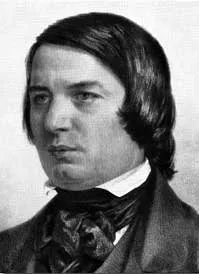
Robert Schumann
Human Design Chart
Biography
Schumann died 29 July 1856 in Endonich. Germany.
What does Manifesting Generator 1/3 mean for Robert Schumann?
Manifesting Generator 1/3 — Design at a Glance
Robert Schumann's design inclined him towards lightning-fast action that allowed skipping steps. As an Manifesting Generator, he combined the constant sacral energy of a generator with the direct output of a manifestor. This hybrid configuration created potential for great dynamism but required precise control to avoid frustration.
The mechanics of his type instructed him not to initiate himself but to react to external impulses. Only when his sacral center responded clearly with a 'yes' was internal consent given. Without this reaction, he risked skipping important steps out of haste, leading to later arduous catch-up work and thus frustration – the specific non-self theme of his design.
Moreover, his speed tended towards pursuing multiple projects simultaneously. This was not a disturbance for him but necessary to enter a productive 'play mode' with deep satisfaction. The instruction to focus on one thing would have hindered rather than promoted his creative power. Crucial was regular review: As long as his inner self confirmed the current path, he could use this multitasking ability without sliding into exhaustion or dissatisfaction. His success thus depended less on speed alone but whether he maintained the strategy of reacting despite this speed and thereby kept his energy flowing.
Sacral Authority
Robert Schumann's design inclined him to make decisions not through intellectual deliberation but through immediate physical resonance. As a Generator, his strategy was identical with his inner authority: sacral authority. This fundamentally simplified his decision-making process as he had to trust the signals of his body to find vital energy and satisfaction in action.
Sacral authority manifested for him as a so-called 'gut feeling' or sudden surge of power in response to external stimuli. These physical signals often materialized in sounds like grunting, humming, or an affirming hmm. Once his sacral motor kicked in, he felt vital and alive; an almost inexhaustible energy was at his disposal. He tackled his work with great enthusiasm and lived to go through life with joy, fully immersed in his activities without the need for external purpose. His life was shaped vividly by this inner resonance. When the spleen center was activated and possibly directly connected to the sacral center, it supported his ability to react particularly quickly and spontaneously. This gave him immediate access to his physical well-being and an instinctive perception he could reliably trust.
The 1/3 Profile — Investigator / Martyr
Robert Schumann's design inclined towards a fundamental stance that showed as a synthesis of deep theoretical drive and the necessity for practical experimentation. As a person with Profile 1/3, the Researcher and Experimenter, he lived in constant tension between the desire for comprehensive knowledge and the impulse to learn through direct experience. This profile describes a personality that does not just gather information but must validate it through trial and error.
Line 1 drove him to engage intensively with topics and accumulate knowledge, sometimes leading to fear of inadequate preparation. Simultaneously, Line 3 demanded simple action and learning from mistakes. This dynamic created space for self-discovered insights that were both intellectually grounded and practically tested. When Robert Schumann deemed something valuable, it was the result of a rigorous testing process that united theory and practice.
Especially influential in this regard was the aspect of emotional development through relationships. Line 3 stands for a long journey towards 'perfect grace', which leads through entering and dissolving relationships as well as emotional openness. This process of trying, failing, and starting anew shaped his authenticity. His judgment did not rest on authorities but on self-legitimation through experience. Thus, his life showed as an ongoing balance between the scientist seeking knowledge and the adventurer taking risks to find truth behind things.
Split Definition — Defined & Open Centers
Robert Schumann's design laid the groundwork for a massive, permanent availability of energy and willpower. His defined Sacral Center generated a daily constant supply of vitality, while his also defined Heart Center channeled this power through clear ego and resource control. This combination created the mechanical basis to keep promises and push projects with persistence – provided that initiation occurred only after an inner 'yes' from the Sacral. His defined G Center stabilized this dynamic through a firm self-identity and a clear sense of direction, allowing him to lead others on his path without being dependent on their expectations.
The ability for precise communication and action came from his defined Throat Center, which acted as a pivot point for messages from the motor centers into the world. This was supported by a defined Spleen Center, providing a reliable instinct for health and 'now', along with a defined Root Center that supplied specific pressure to maintain life impulse. These six defined centers formed a robust foundation, but required strict leadership through strategy and authority to avoid overload.
In contrast, Robert Schumann's sensitivity was revealed in his open fields. His open Solar Plexus Center absorbed and amplified the emotions of the environment, making him vulnerable to emotional waves that were not his own. Without personalizing these feelings, he could serve as a barometer for social climate; however, if he identified with them, it led to inner unrest. Similarly, his open Head and Ajna Centers showed flexibility but instability in mental processing. Instead of consistent inspiration or conceptual clarity from within, Robert Schumann took mental impulses from the outside. This could lead to confusion when trying to solve others' problems rather than trusting his internal authority. His strength lay in using this openness as a mirror for new ideas without getting entangled in non-self-understanding.
Channels for devotion, rhythm, focus and material realization.
Robert Schumann's design set a tendency towards taking on material responsibility, paired with the need for autonomy. The Money Line Channel 21-45 connected the Heart Center to the Throat Center. Gate 45 carried the authoritative voice of the tribe and the will to control resources ('I have or I don't'), while Gate 21 sought service to others but needed peace in the heart. This channel created a tension between leadership and surrender; success required willpower to master the material plane, ideally as his own boss with his own rhythm, since delegation caused stress.
Alongside this structural authority, the Rhythm Channel 5-15 between Sacral and G Centers also played a role. Gate 5 held onto fixed habits while Gate 15 integrated the diversity of society into life flow. This gave Robert Schumann an inner sense of timing and a magnetic pull that propelled him forward as long as he followed his natural reactions. Outside this rhythm, chaos ensued.
The Concentration Channel 52-9 connected Root and Sacral Centers. Gate 9 focused on details, supported by the passive urge from Gate 52 to stand still. This allowed deep, undisturbed alignment with patterns that needed perfection but required absolute calm before distractions.
The Surrender Channel 44-26 linked Spleen and Heart Centers. Gate 44 was instinctively alert for threats or improvements, while Gate 26 used ego strength to offer the tribe suitable solutions. This promoted entrepreneurial thinking and recognizing needs before others' conscious awareness. Individual Gates complemented this picture: Gate 47 sought meaning in past experiences, Gate 22 allowed calm listening for mutations. In personality spectrum, Gate 59 with its genetic strategy of bonding and Gate 2 as a receiver of new directions were active. The design showed Gate 23 for communication through language, Gate 3 for necessary changes, and Gate 1 for unique creativity in the here and now. Gate 48 recognized deep patterns but often led to frustration during implementation.
Tribal Circuitry — Circuit Signature
Robert Schumann's design set two parallel, energetically separate forces: a rational structuring power and a cooperative tribe orientation. This separation characterized his experience as coexisting worlds without direct flow between them.
The Mind Circuit in him connected Identity, Sacral, and Root Centers. Here the Rhythm Channel 15-5 created natural rhythm and predictability, along with the Concentration Channel 9-52 that allowed focused attention. Without Solar Plexus Center, this was an 'emotionless ratio': logic and strategy served to improve things or lead society towards a better future, free from emotional conditioning. This was energy of the future, visually and format-focused.
Parallel existed the Ego Circuit connecting Throat, Heart, and Spleen Centers. It belonged to the tribe group and concerned cooperation as well as joint resource creation. The Money Line Channel 45-21 supported accumulation of material wealth while the Surrender Channel 26-44 provided the gift for mediation and communication. Without connection to Sacral Center, constant life force was missing; this required necessary pauses for resource generation. This area was timeless, conservative, and tradition-oriented without the formatted urgency of mind. Both circuits worked as independent systems: one structured rationally forward, the other nurtured traditional tribe relationships in the here and now.
Right Angle Cross of Rulership 2
Robert Schumann's design indicated a tendency towards strategic action based on inner clarity and resolve. He was someone who demonstrated clear leadership qualities in situations not through external pressure but through the radiance of deep conviction. This stance arose from the influence of the right cross of Governing 2.
This configuration emphasized his role as a strategic leader or initiator. The mechanics suggested that Robert Schumann was called to act precisely when clear decisions were needed. His authority did not stem solely from a position of power but rather from sharpened judgment and the will to take the right path. It was about leading through clear thinking and bringing others along because his own direction was convincing.
The right cross of Governing 2 shaped him as someone who took strategic initiatives when inner conviction was strong enough. His leadership showed in the consistency of his actions, which rested on a solid internal foundation. He did not act impulsively but from a position of strategic distance and clear insight into what mattered most. This quality allowed him to set the right course in complex situations and inspire others with his decisiveness without appearing authoritarian. His strength lay in the connection between willpower and strategic foresight.
Saturn Return · Uranus Opposition — Life Cycles
Robert Schumann's design indicated a tendency towards intense creative outbursts triggered by specific astrologically-HD-resonance points in his life cycle. These cyclical patterns manifested as two distinct phases of productive development.
The first Saturn return, which typically occurs around the 28th year and often facilitates the crystallization of years of groundwork into tangible results, affected him in 1838. In this year, he composed Scenes from Childhood op. 15, Arabesque op. 18, Flower Pieces op. 19, and Humoreske op. 20. This aligned with the mechanics of this cycle where inner maturity translated into concrete creative power.
Ten years later, at age 40, the Uranus opposition hit him. This point often marks a phase of breaking free from old structures and a drive for new forms of expression. In 1850, Robert Schumann used this energy to compose Symphony No. 3 in E-Flat Major (Rhenish), as well as the Overture in C Minor to Schiller's drama The Bride of Messina. Both events illustrate how his inner architecture responded to cosmic cycles and utilized these moments as catalysts for artistic peak performance rather than passively experiencing them.
Manifesting Generator · Sacral Authority — Synthesis
Robert Schumann lived a life characterized by a dynamic interplay between initiation and reaction. As an Initiator Generator, he possessed the ability to quickly spark processes (Sacral Center connected with Throat Center), yet his design also challenged him to pay attention to inner impulses—a sacral response as the basis for action. This combination of apparent spontaneity and profound inner wisdom was evident in his work, marked by rapid creative outbursts followed by phases of intense scrutiny and refinement (Profile 1/3). The Rhythm Channel (Gates 5 & 15) underscored this natural wave movement, a universal life force that connected him with the flow of the world.
A central paradox in Schumann's nature lay in the tension between his need for expression and the necessity to focus on the present moment. The Mind Circuit challenged him to share insights while sacral authority continually brought him back to the here and now—away from abstract concepts towards immediate experience. This led him to both develop complex ideas (Governing 2 Cross) as well as fully immerse himself in the current creative process, especially when a clear sacral impulse was present.
4 Defined Channels
Incarnation Cross - Right Angle Cross of Rulership 2
Solar Return
The Solar Return shows the moment when the sun returns to its exact birth position - your personal solar year.
Life Cycles
Discover the life cycles with a detailed triple view (birth chart, cycle chart, composite).
Human Design Profile
- Strategy
- To respond - wait for something to respond to
- Authority
- Sacral Authority
- Profile
- 1/3 - Investigator / Martyr
- Definition
- Split Definition
- Incarnation Cross
- Right Angle Cross of Rulership 2
- Date of Birth
- 08.06.1810 21:30
- Place of Birth
- Zwickau, GER
Frequently Asked Questions
What is Robert Schumann's Human Design type?
What profile did Robert Schumann have in Human Design?
Which authority guided Robert Schumann?
What incarnation cross did Robert Schumann have?
When was Robert Schumann born?
Discover your own Human Design
Are you also a Manifesting Generator? Find out in a personal reading how to unfold your multi-talents and direct your energy wisely.
More Personalities
Back to overviewAaliyah

Aldair

Alexia

Alizée

Angèle

Angeli
