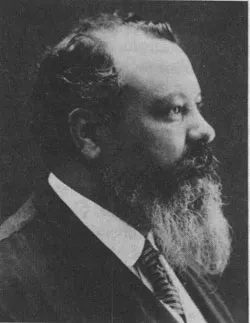
Roland Gérard Barthes
Human Design Chart
Biography
He died March 26, 1980.
What does Manifestor 1/3 mean for Roland Gérard Barthes?
Manifestor 1/3 — Design at a Glance
Roland Gérard Barthes was a pioneer and visionary whose design predestined him to lead the world in new directions. His inner self carried an imperial dynamism: He had foresight for great futures but left the operational execution to others – similar to a Roman ruler who sends soldiers instead of fighting battles himself. This superior mindset inevitably led to misunderstandings and polarization; while some loved his visions and followed him, he faced rejection or hatred from others. The core conflict of his design lay in this split caused by his own greatness.
To minimize these frictions and find the right followership, informing was central. Through timely and precise communication about his intentions, Roland Gérard Barthes ensured that only those who were at the right place at the right time followed him. This strategy of informing was key to his inner stability. Living according to this principle rewarded him with a deep sense of peace. However, deviating from it and trying to go against others' flow or not speaking clearly resulted in lasting, deep anger. His design thus showed clear causality: Information as a tool for binding the right resonance and maintaining inner balance versus the destruction of this peace through strategic neglect.
Emotional Authority
Roland Gérard Barthes was subject to an emotional wave that manifested in constant ups and downs of his feelings. His inner authority carried the defined Solar Plexus Center; this instance always took precedence over all other defined centers, regardless of the rest of the configuration. The world appeared colored by his current mood: In one moment he could be totally enthusiastic about something, in the next view it deeply negatively. However, this immediate feeling was only a snapshot, a first impression that did not necessarily represent the truth yet. Quick, spontaneous decisions from this emotional heat carried the risk of negative consequences.
For Roland Gérard Barthes, time was crucial to gain decision maturity. The process required patience and multiple reconsiderations of important questions. He should be asked repeatedly until intense feelings subsided. Only when an emotional distance had been gained did clarity and calm set in – a sign that he had gone through the process. This method of delay was particularly important for long-term decisions that could have a significant impact on his life course. Only this way could he ensure that his choice was not dictated by a temporary mood but arose from deeper insight.
The 1/3 Profile — Investigator / Martyr
Roland Gérard Barthes showed himself through Profile 1/3 as someone whose judgments only gained absolute credibility after they had gone through the full cycle of theoretical examination and practical experimentation. His design laid down an attitude that knowledge was not just collected but actively validated in the fire of experience. Line 1 in his chart promoted patience and introspection; it gave him the security to deeply examine new insights before acting. Without this depth, there was a risk that his impulses would be perceived as superficial. At the same time, the energy of Line 3 propelled him forward – a drive to experiment where mistakes were understood not as failure but as essential learning mechanisms. This tension field between the fear of Line 1 of still not knowing enough and the impulse of Line 3 to simply act shaped his life strategy. Roland Gérard Barthes learned through trial and error. When he believed something was right, he had thoroughly examined it both intellectually and practically. His authenticity emerged only from this combination: Theory alone was insufficient; it had to work in real life. Thus, his judgment became a product of self-discovered truth based on equally grounded knowledge and courageous application.
Single Definition — Defined & Open Centers
Roland Gérard Barthes was characterized by a constant, independent presence in thinking and communication. His defined Ajna Center ensured continuous conceptual thought; he processed data continuously and was mentally hard to influence. These thoughts flowed directly into his defined Throat Center, allowing him to reliably manifest his concepts. His identity was stabilized by the defined G Center: Roland Gérard Barthes had a clear sense of self-love and direction without being dependent on others. He did not make emotional decisions impulsively; his defined Solar Plexus required waiting for the emotional wave until clarity emerged. Additionally, he had specific Root pressure that propelled him forward.
In contrast, his Head Center was open. Roland Gérard Barthes lacked a constant source of inspiration and tended to engage with foreign questions or doubts rather than generating mental pressure points himself. His open Heart Center meant lacking consistent willpower; ideally, he avoided making promises to prevent spirals of self-proof and disappointment. Similarly, his Sacral Center was also open: His energy was variable, not constantly available. He had to learn to set boundaries and rest instead of running on borrowed energy from others, which otherwise led to exhaustion. Finally, his Spleen was open. Roland Gérard Barthes tended to absorb fears or well-being from the environment. Spontaneous decisions were risky for him as he was prone to holding onto things that weren't good for him just to simulate a sense of security.
Channel 43-23: Structuring — Channels & Gates
Roland Gérard Barthes combined logical leadership with emotional depth in his design, showing a tendency towards collective leadership through pattern recognition and individual influence through voice and timing.
The Alpha Animal Channel 7-31 connected the G Center with the Throat Center. It described logical, collective leadership based on tested patterns. Gate 7 provided the role of self for guiding society, while Gate 31 acted as a collective leader. This configuration required Roland Gérard Barthes to first gain trust and be invited by the majority before leading. It was not about absolute authority but showing the way from an influential position by understanding trends and people's needs.
Parallel to this, the Openness Channel 22-12 between Solar Plexus and Throat Center regulated individual emotional articulation through mood swings. Gate 22 expressed passion and drama while Gate 12 maintained a cautious restraint. Roland Gérard Barthes used the quality of his voice to emotionally impact others only when his inner wave allowed it. This combination enabled him to persuade through logical argumentation and simultaneously touch with an authentic, emotional expression.
Further influences came from the Structuring Channel 23-43, which translated spontaneous insights into clear explanations, as well as the Lost Son Channel 13-33, promoting reflection and collecting life stories. The Synthesis Channel 19-49 emphasized emotional bonding with the tribe through loyalty and principles. Additional nuances were provided by Gates such as Gate 4 (Formulation), Gate 60 (Acceptance of Limitations) and Gate 53 (Freedom for New Cycles). These mechanisms shaped his way of structuring knowledge, processing experiences, and integrating into communities.
Individual Circuitry — Circuit Signature
Roland Gérard Barthes was marked by pulsating acoustic energy that combined creative intuition with emotional truth. His design dominated the Knowledge Circuit: He gained new knowledge, transformed it, and brought change through authentic expression from the Throat Center to the world. This connection of Ajna (creative mind), Solar Plexus (emotional waves) and Throat allowed him to articulate his unique identity – reinforced by structuring and openness.
Parallel to this, the Understanding Circuit operated via the Alpha Animal Channel. Here, the Throat Center connected with the Identity Center. Roland Gérard Barthes shared logical, rational insights free from conditioning, focused on the future. This contrasted with the Meaning Circuit (Lost Son Channel), which also linked Throat and Identity but cyclically reflected emotions from the past to learn together.
Another aspect was the Ego Circuit via the Synthesis Channel. This connected Solar Plexus and Root Center. It was about cooperation and collectively creating resources in the tribe. Without a connection to the Sacral Center, Roland Gérard Barthes needed rest periods for regenerating his energy for these supportive processes.
As a simply defined person, these centers – Ajna, Throat, Solar Plexus, Root, and Identity – existed as an interconnected energetic system. The various circuits thus shaped his work: emotional expression of new insights, rational future visions, reflective learning from the past, and cooperative resource creation in the collective.
Right Angle Cross of Explanation 4
Roland Gérard Barthes had the Right Cross of Explanation as an archetypal background signature in Human Design. This configuration did not manifest through specific behavior patterns derived from centers or defined channels, since the underlying mechanical details were not specified in this context. Instead, it presented itself as a general, structuring framework within his overall design. The Right Cross of Explanation functioned less as an immediate trigger for concrete actions or decisions but rather formed a subtler layer of identity. Without linking to specific Gates or defined centers, this aspect of the chart remained abstract and acted more as an underlying quality than as an overt driving force. It was part of the overall map noted without being able to attribute specific behavioral characteristics to it. The absence of detailed mechanical effects did not signify a void but indicated that this aspect of Roland Gérard Barthes' design operated on another level – as a silent signature influencing the overall picture, without coming to the forefront of conscious experience.
Saturn Return · Uranus Opposition · Chiron Return · 2nd Saturn Return — Life Cycles
Roland Gérard Barthes’ professional development followed a clear rhythm of condensation and opening. In 1962, at age 47, he was appointed Directeur d’études for Sociology of Signs. This period fell within the Chiron Return cycle (approximately ages 49–51), a phase of bloom and fulfillment of the incarnation purpose. Here it showed how his design, when lived consistently, reached maturity: The inner structure found its external confirmation through a position that precisely tested his analytical competence for symbols. It was not a sudden break but rather the result of years of alignment with his strategy and authority, now visibly manifest in a fixed role at the École des Hautes Études en Sciences Sociales.
A decade later, in 1973, the publication of “The Pleasure of the Text” marked his second Saturn Return (approximately age 58). This cycle often demands a realignment or deepening after the phase of establishment. Barthes did not use this turning point to reflect on the past but rather to expand his theoretical boundaries and bring the emotional dimension of reading into focus. The Saturn Return served here as a catalyst for a new quality in his work: From structural analysis to aesthetic experience. Both events underscore how cycles for Roland Gérard Barthes did not appear as random stations but as necessary steps in the unfolding of his specific design – first institutional anchoring, then content liberation.
Manifestor · Emotional Authority — Synthesis
Roland Gérard Barthes’ design reveals a central thread of transformative mediation. The defined connection between G Center, Throat Center and Solar Plexus points to deep inner directionality manifesting in the ability to clearly articulate personal insights (Channel 22-12, 43-23). These impulses are reinforced by the defined Root Center, suggesting a constant drive to engage with the world and its transformation. The focus is on pattern recognition, analysis, and the dissemination of this knowledge to others – a cycle of perception, reflection, and expression strengthened through circuits of understanding and meaning-making.
Simultaneously, a central paradox between inner clarity and outer expression reveals itself. Defined emotional authority (Solar Plexus) implies a need for decision maturation and attention to internal feelings, while the connection between G Center and Throat Center suggests a drive towards communication and manifestation. This tension between the desire for inner maturity and the ability to carry ideas into the world creates a dynamic interplay reinforced by undefined centers (Sacral, Spleen, Head) – an ongoing engagement with external influences and one’s own internal compass.
5 Defined Channels
Incarnation Cross - Right Angle Cross of Explanation 4
Solar Return
The Solar Return shows the moment when the sun returns to its exact birth position - your personal solar year.
Life Cycles
Discover the life cycles with a detailed triple view (birth chart, cycle chart, composite).
Human Design Profile
- Type
- Manifestor
- Strategy
- To inform others before acting
- Authority
- Emotional Authority
- Profile
- 1/3 - Investigator / Martyr
- Definition
- Single Definition
- Incarnation Cross
- Right Angle Cross of Explanation 4
- Date of Birth
- 12.11.1915 09:00
- Place of Birth
- Cherbourg, France
Frequently Asked Questions
What was Roland Gérard Barthes' Human Design type?
What Profile did Roland Gérard Barthes have?
What Authority guided Roland Gérard Barthes' decisions?
What incarnation cross did Roland Gérard Barthes have?
When was Roland Gérard Barthes born?
Discover your own Human Design
Are you also a Manifestor? Find out in a personal reading how to use your initiation power peacefully and dissolve resistance.
More Personalities
Back to overviewChristian-Jaque

Kesha

Lucebert

Masaccio

Nadar
Papus