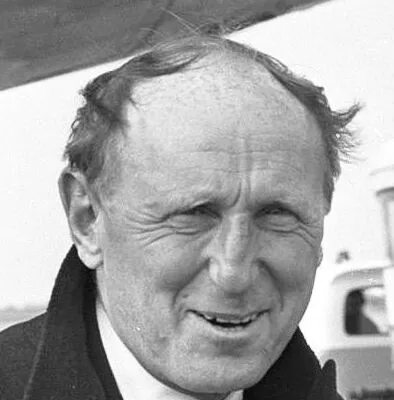
Roy Jacobsen
Human Design Chart
Biography
In his teens, Jacobsen was a member of the criminal "Årvoll gang". At age 16 he was arrested by the police and kept in solitary confinement for 35 days. He was subsequently convicted of among other things weapons offences and theft, and given a six-month suspended sentence.
Jacobsen wrote the screenplay for the 2008 Danish film "Valhalla Rising" with Nicolas Winding Refn, who also directed the film. In 2023, he was appointed a Commander of the Royal Norwegian Order of St. Olav "for his outstanding writing."
Jacobsen died from lung failure on 18 October 2025 in Oslo aged 70.
What does Projector 1/3 mean for Roy Jacobsen?
Projector 1/3 — Design at a Glance
Roy Jacobsen's design inclined towards precise, focused perception. As a projector, his aura acted like a bright flashlight, directing light towards areas in his environment that were still in darkness or not functioning optimally. This configuration gave him the ability to immediately recognize systemic errors and weaknesses in others.
However, the challenge lay in the manner of communication. Directly addressing these deficiencies would often be perceived as unpleasant, akin to shining bright light directly into someone's face. Instead, his design showed an elegant way: by shining his own light and harmonizing in his relationships, he became attractive to others. People would automatically come to him seeking advice, rather than him having to confront them.
His strategy was to wait for a respectful and sincerely meant invitation before bringing in his knowledge or leadership skills. Since his sacral center was undefined, he lacked a constant, intrinsic source of life energy. This led to phases of high productivity that had to be followed by rest phases to prevent burnout. Living this rhythm and the strategy of waiting for an invitation rewarded him with success. Neglecting these principles, the non-self theme of bitterness would appear, a sign that he was acting against his natural design.
Splenic Authority
Roy Jacobsen's design inclined towards spontaneous, instinctive orientation. As a projector with authority in the spleen, he possessed a fine survival intelligence that showed as immediate inner knowledge whether a situation or environment was healthy for him. His first, spontaneous signal served as a reliable indicator of his physical well-being and intuition. This spleen voice, however, was a very subtle impulse that appeared only once in the moment and could easily be drowned out by external influences. Therefore, his decision-making required high vigilance; a short retreat often helped him to perceive this fine impulse before acting. Since he could only know what was right in the moment, his plans often changed short-term. Long-term commitments were difficult for him, so he needed a lot of free space and flexibility to rigorously protect himself from harmful influences and take good care of himself. His design thus showed through the necessity of deciding in the here and now, rather than orienting himself towards rigid plans.
The 1/3 Profile — Investigator / Martyr
Roy Jacobsen's design was characterized by the dynamic tension between the urge for theoretical perfection and the insatiable need for practical experience. As a person with the Profile 1/3, the Researcher and Experimenter, he lived in a constant interplay of learning and doing. The first line of his profile drove him to accumulate knowledge and plan, which sometimes led to a paralyzing fear of the first step, as he felt he didn't know enough. But the third line, the line of experiment and error, challenged him to overcome these theoretical reservations and simply act.
This configuration created a characteristic rhythm of trial and error. Jacobsen learned not primarily through passive reception but through actively testing his theories in reality. When he decided on something, he had previously examined it both intellectually and practically. His judgment was therefore particularly trustworthy, as it was based on tested experience. The energy of Gate 58 gave him a deep zest for life and mindfulness towards the process of correction, while Gate 18 in him awakened a certain 'fanatical zeal' for tidying up and materiality. He sought connections, broke old patterns, and accepted that errors were necessary steps towards secure insights. His life was a continuous process of testing, failing, and learning, always striving to derive corrective measures for the future from every failure.
Single Definition — Defined & Open Centers
Roy Jacobsen was marked by a defined Spleen Center, which gave him an intuitive, immediate perception of life. He had direct access to his physical well-being and instinct, allowing him to make spontaneous judgments without the need to rationalize them. This existential awareness in the "now" formed the basis of his inner authority. This was complemented by his defined Root Center, which generated a constant physical drive to move forward in the world and solve survival issues. This energy propelled him to material advancement and corrections, always connected to the joy of living in this body.
At the same time, his design revealed several sensitive areas. His open Head Center made him vulnerable to mental pressure and confusion when trying to find answers to questions that were not his own. He tended to get lost in intellectual monologues or be distracted by the uncertainty of others, rather than trusting his intuitive Spleen authority. His open Ajna Center amplified this mental flexibility, but left him without consistent conceptual thinking; he absorbed ideas without identifying them as his own truth.
His open G Center also meant that he did not have a fixed identity or life direction. Instead, he reflected the energy of his environment and sought the right place where he felt comfortable to find the correct direction. His open Heart Center prevented him from using willpower as a consistent resource; he was not designed to make promises or prove his worth through competition. Finally, his open Sacral Center was not designed for consistent generative energy, making him vulnerable to exhaustion when he was overloaded by the energy of others, rather than respecting his own boundaries. His open Solar Plexus also absorbed the emotions of his environment, making him a sensitive barometer for the emotional climate but also vulnerable to the moods and conflicts of others.
Channels for clear logic, life purpose and steady transformation.
Roy Jacobsen's design was characterized by a strong, root-driven urge to question and perfect patterns. This attitude was particularly evident through the Channel of Judgment 58-18, which combined logic with an insatiable desire for correction. Gate 58 propelled vitality, while Gate 18 assessed what was healthy or in balance. Jacobsen always sought the best answer, and his criticism was only fruitful when invited; otherwise, he risked being perceived as permanently dissatisfied.
Parallel to this, the Channel of Life Struggle 38-28 shaped his existence. This was not just about survival but finding a deeper meaning in the struggle. Gate 38 demanded resistance against external forces to maintain one's integrity, while Gate 28 evaluated which struggles were worthwhile. This gave him a stubborn determination to follow his own path, even against resistance.
The Channel of Transformation 54-32 added an ambition based on constant effort. Driven by Gate 54 and the continuity of Gate 32, Jacobsen aimed to rise through talent and competence. His success depended on support from the "tribe"; he proved his worth through hard work and loyalty to gain recognition and social standing.
Additionally, individual gates played a role: Gate 52 demanded focused silence for pattern correction, Gate 17 brought logical teaching for the future, Gate 39 provided adrenaline for provocative mutations, Gate 44 enabled awareness in relationships, and Gate 50 protected traditional values. Together, these elements formed a Profile based on critical analysis, combative individuality, and ambitious transformation.
Individual Circuitry — Circuit Signature
Roy Jacobsen's design was characterized by an intense, pulsating life energy that flowed directly into his survival instinct. His simple definition connected only the Spleen and Root Centers. This tight connection created a direct stream of instinctive wisdom and immediate reaction.
The Knowledge Circuit worked here through the Life Struggle Channel. It linked the selective perception of the Spleen with the acute energy of the Root. This shaped an attitude in which survival was secured through the identification of the essential. New insights served not abstract theory but concrete mastery of the here and now.
Parallel to this, the Understanding Circuit flowed through the Judgment Channel. Here too, it connected Spleen and Root. This allowed Roy Jacobsen to feel logical conclusions not just as thoughts but as immediate, survival-necessary strategies. Reason was not a cold tool but an instinctive reflex for improving the situation.
The Ego Circuit carried the Transformation Channel. Again, it linked Spleen and Root. This was evident in the ability to access resources and support not through long-term planning but through intuitive, transformative impulses. The energy was conservative and traditional, yet the impulse for change came from the deepest instinct. All three circuits worked together as a closed system of intuitive reaction and survival struggle, driven by a pulsating, acoustic energy that put the present moment front and center.
Right Angle Cross of Service 4
Roy Jacobsen's design carried the signature of the right cross of service, a configuration that shaped his life through a deep, often quiet dedication to other people. This structure manifested internally as a constant impulse to not stand in the spotlight but to work in the background to lay the foundation upon which communities or projects could stand. It was not about being a loud leader but about finding strength in sensing and responding to the needs of his environment without losing his own identity.
In Human Design, this cross describes a specific kind of energy distribution that combines readiness to serve with a certain reserve. Roy Jacobsen exemplified someone who took responsibility because he could and because it gave him inner stability, not because he sought recognition. His presence was calming and reliable; he was the anchor that helped others orient themselves. This mechanism meant that his greatest success often remained unseen, measured by the harmony he fostered in his surroundings. He lived this dynamic by being available where needed while maintaining a clear boundary between his own self and the role of helper. His path was one of quiet support, aimed at enabling others to flourish while he worked in the shadow side, which was indispensable to the overall picture.
Saturn Return · Uranus Opposition · Chiron Return · 2nd Saturn Return — Life Cycles
Roy Jacobsen's design showed a structure where long-term maturation processes were linked to concrete external milestones. This was particularly evident during his Saturn returns, which in Human-Design are understood as cycles of consolidation and structuring.
In 1982, at the age of 28, he debuted with the short story collection "Fangeliv". For his chart, this was a typical expression of his first Saturn return: a period in which internal groundwork and developments often condense into a firm, visible result. The publication marked the transition from internal collection to external form, a process stabilized and anchored by Saturn energy.
Later, in 2009 at the age of 55, he participated in the screenplay for the film "Valhalla Rising". This fell during the period of his second Saturn return. During this life phase, the design often focuses on reviewing and confirming already established structures. Working on a film project showed how his creative impulses now operated within an established framework based on years of experience.
These two events underscore how Roy Jacobsen's design was geared towards shaping internal processes through the discipline of time. The Saturn returns served as natural hinges where his creative energy was translated into enduring works that had a lasting impact beyond the moment. His way of life thus followed a rhythm of deepening and solidification.
Projector · Splenic Authority — Synthesis
Roy Jacobsen was a Projector who walked through the world and with his eye for what wasn’t working (Gate 18), he illuminated and corrected patterns (Channel 58-18). This judgmental ability, fueled by a defined Spleen Center, gave him a strong intuition for what was healthy and essential for survival, and allowed for spontaneous, instinctive reactions. He lived life as a constant researcher (Profile 1/3), gaining deep understanding through experience and testing, and then making this knowledge accessible to others.
A central paradox in his design lay in the tension between the Projector need to “project” onto others and shed light into the dark, and the fine, impulse-driven authority in the Spleen, which required waiting and reacting in the “now.” This combination led to a life in which the recognition of errors and the pursuit of correction were intertwined with the necessity of waiting for the right moment to pass on these insights – a dance between the urge to improve and the wisdom to wait until the time was ripe. His recurring career high points (1982, 2009) showed how he arrived at insights through experimentation and testing (Line 3) and then carried them into the world.
3 Defined Channels
Incarnation Cross - Right Angle Cross of Service 4
Solar Return
The Solar Return shows the moment when the sun returns to its exact birth position - your personal solar year.
Life Cycles
Discover the life cycles with a detailed triple view (birth chart, cycle chart, composite).
Human Design Profile
- Type
- Projector
- Strategy
- Wait for the respectful invitation
- Authority
- Splenic Authority
- Profile
- 1/3 - Investigator / Martyr
- Definition
- Single Definition
- Incarnation Cross
- Right Angle Cross of Service 4
- Date of Birth
- 26.12.1954 10:00
- Place of Birth
- Oslo, Norway
Frequently Asked Questions
What was Roy Jacobsen's Human Design type?
What profile did Roy Jacobsen have?
What authority did Roy Jacobsen have?
What incarnation cross did Roy Jacobsen have?
When was Roy Jacobsen born?
Discover your own Human Design
Are you also a Projector? Find out in a personal reading how to unfold your leadership qualities and recognize the right invitations.
More Personalities
Back to overviewSissy Spacek

Alain-Fournier

Anémone

Angeli

Ann-Margret

Bourvil