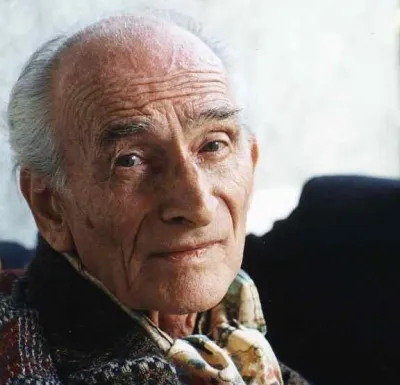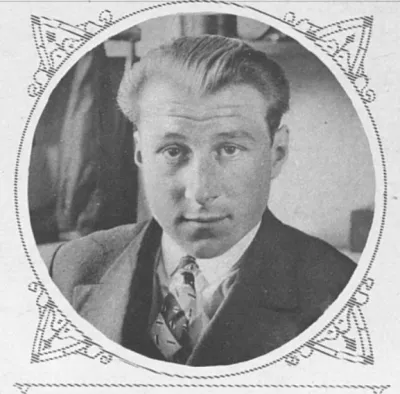
Rudi Schneider
Human Design Chart
Biography
Rudi was studied by researchers in France, England and Germany. There was much lively debate and skepticism. He was an auto mechanic by trade and opened a driving school. In his 40s, he gave up all psychic activities.
Schneider died on 28 April 1957.
Rudi Schneider as a Manifesting Generator 3/5 in Human Design
Manifesting Generator 3/5 — Design at a Glance
Rudi Schneider's design suggests a tendency towards hybrid work methods: He has the constant energy source of a Generator but also possesses the ability to skip steps in action through the connection of Motor Centers to Throat. This allowed him to quickly bring things into his life, yet it only proved helpful when he responded to impulses rather than initiating on his own. His inner strategy was to start only when the Sacral Center gave a clear "yes."
This configuration brought specific risks: Rudi Schneider tended to start several projects at once and overlook important steps. If he moved too quickly or ignored his authority, this often led to frustration – the non-self theme of his type. He then frequently had to backtrack to make up for missing steps.
When applying his strategy correctly, Rudi Schneider derived deep satisfaction from his work. For him, the statement "Finish one thing first" was counterproductive; instead, he needed variety and a playful mode to maintain his creative power. As long as he responded to impulses and regularly checked if projects still aligned with his inner "yes," he could work effectively with his speed without falling into overload or dissatisfaction. His energy was most effective when he let himself be carried by the flow of life rather than fighting against it.
Emotional Authority
Rudi Schneider's design points to a tendency towards emotional depth and wave-like feelings. As someone with defined Emotional Authority, he was subject to constant fluctuations in his emotions, which significantly colored his perception of the world. At one moment, he could be enthusiastic about something, only to negatively evaluate the same situation moments later. However, this emotional wave did not mean that the first impression was always the truth; quick decisions made out of affect often proved problematic.
The mechanics of this authority required patience and time. Rudi Schneider had to learn not to make immediate decisions but rather let them mature. Revisiting important matters multiple times allowed him to gain an emotional distance. Only when the intense feelings subsided did clarity and calmness set in. This process was particularly crucial for long-term life decisions, as they influenced his entire life course. The Emotional Authority always took precedence over other defined centers, regardless of further configurations in his chart. By enduring and waiting for emotional clarity, he could recognize his true impulses and become action-ready.
The 3/5 Profile — Martyr / Heretic
Rudi Schneider's design placed a tendency towards the role of an experimenter who acquired knowledge through personal experimentation. As someone with Profile 3/5, he initially believed nothing pre-made; he learned from his own experiments and the resulting failures. This self-acquired practical knowledge later served him to solve other people’s problems – the classical function of Line 5 of Hero. This combination created a natural attraction: others sought his advice because they wanted to learn from his experiences.
This dynamic was shaped by specific lines. The third line from Gate 31 emphasized the process of trial and error in leadership. Here it was about discernment and the quality of followership; it was necessary to choose the right influences rather than relying on sheer quantity or superficial opinion polls. Parallel to this, Gate 27 with its fifth line, which addressed managing other people's resources and crisis management, came into play. Rudi Schneider showed himself capable of offering practical solutions in difficult times and taking responsibility for others' means. However, this configuration also carried the risk of losing power or gaining negative reputation if trust was shaken by mistakes or perceived betrayal. His path involved forming a treasure from these practical life experiences to present to others – always aware of the risks that came with public visibility and responsibility.
Split Definition — Defined & Open Centers
Rudi Schneiders Human Design defined a tendency towards consistent expressive strength and inner willpower. His defined Throat, Heart, and Sacral centers gave him a reliable voice that spoke directly from his energy source. He had the potential to keep promises with emphasis and use his vital energy for tasks he responded correctly to. This configuration marked him as someone who acted when asked and showed honesty and clarity.
At the same time, his system was characterized by open Head, Ajna, and G centers. The open Head Center meant that mental inspiration wasn't consistently present; he tended to be distracted by doubts or seeking answers from others rather than trusting inner clarity. His open Ajna Center made him receptive to foreign concepts and opinions which he could interpret as his own truth, leading to confusion if he didn't listen to his emotional authority. The open G Center showed a dependence on the environment: his identity and direction crystallized only in correct relationships and places. He relied on others to initiate love and the right path rather than seeking these actively himself.
His defined Solar Plexus served as inner authority. Rudi Schneider was someone who didn't make decisions based on emotional ups and downs but patiently waited for emotional waves until clarity emerged. This ability to go through emotions before acting protected him from impulsive mistakes and gave his reactions depth and authenticity. The combination of defined energy and open mental and identity structures required him to trust his sacral response and emotional clarity rather than getting lost in mental confusion or seeking external confirmation. His design thus promoted a lifestyle based on reaction, patience, and trusting his own inner process.
Channels for emotional depth, finding meaning and mature growth.
Rudi Schneiders Human Design set a tendency towards emotionally driven social expression that strongly depended on his inner mood wave. This dynamic was marked by the Openness Channel 22-12: It connected the Solar Plexus Center with the Throat Center and allowed him to creatively articulate passion and melancholy. However, his openness wasn't constant but subject to natural restraint; he interacted most effectively when his emotional energy was high and he found a receptive environment. Forced into social situations when not feeling like it could make him appear harsh or misunderstood.
Parallel to this, his design showed a strong focus on material responsibility and control through the Money Line Channel 21-45. This channel connected the Heart Center with the Throat Center and drove him to maintain control over his resources to ensure security and independence. It was a tension between the will for leadership (Gate 21) and the authoritative voice of the tribe (Gate 45), which made him work hard but always mindful of setting his own rhythm.
Another defining element was the Life Struggle Channel 38-28, connecting the Root Center with the Spleen Center. Here it was about stubborn determination to find personal meaning in daily struggles. Rudi Schneider sought values worth fighting for and used this pressure to defend his individual integrity against external distractions. This process required regular movement to release inner stress.
Finally, the Maturity Channel 42-53 between Root and Sacral Centers influenced him. It drove him to complete experiences and reflect before starting new cycles. Without reflection, his design tended to repeat mistakes; with it, he could generate wisdom and make his depth accessible to others.
Individual Circuitry — Circuit Signature
Rudi Schneiders Human Design set a tendency towards a divided, non-connected energetic structure. His power showed in two parallel, isolated blocks: an emotional-communicative area and an instinct-driven survival area. This separation meant that his inner impulses didn't work as one flow but as separate, coexisting forces each following their own logic.
The Knowledge Circuit connected his Throat Center with the Solar Plexus and Spleen with Root Centers. This created a link between emotional wave and external expression on one side and instinctive intuition and stress reaction on the other. The channels 'Openness' and 'Life Struggle' promoted pulsating, acoustic creativity and the ability to form new identities through courage for his own path.
Parallel to this, the Meaning Circuit worked through the channel 'Maturity', connecting Sacral and Root Centers. Here it was about cyclic learning from past experiences and sharing these insights with the collective, driven by the constant life energy of the Sacral.
A third, isolated block formed in the Ego Circuit. The channel 'The Money Line' connected Heart and Throat Centers. This allowed a direct translation of willpower into material resources or communicative actions, but without the continuous energy source of the Sacral. Rudi Schneider had to consciously take breaks here to regenerate his power as this connection was timeless and traditionally structured but not continuously fed.
Right Angle Cross of the Unexpected 2
Rudi Schneider's design indicated a tendency towards unexpected turns, often experienced as challenges. This configuration, known as the right cross of the Unexpected, described a life dynamic where sudden events or unforeseen obstacles occurred. These occurrences did not feel like punishment but rather served as catalysts for profound inner restructuring. Rudi Schneider found himself compelled by such shocks to become vigilant and adaptable. The mechanics of this cross emphasized that life often made most sense when control was relinquished and trust placed in the flow of the unpredictable. It was a lesson in humility: attempts to control everything inevitably failed against reality. Instead, this configuration promoted the ability to remain clear-headed during chaotic moments and draw new order from chaos. Rudi Schneider learned that the unexpected was not an interruption but an integral part of his journey towards self-discovery. This experience shaped his attitude toward uncertainty; he developed resilience based on the acceptance that not everything could be planned. The right cross of the Unexpected challenged him to not cling to fixed structures, but to remain flexible and open to every moment, no matter how surprising.
Saturn Return · Uranus Opposition — Life Cycles
Rudi Schneider's design indicated a tendency towards structural rigidity that intensified around his first Saturn return years. This cycle marked a point where years of groundwork often crystallized into a solid result and internal values became visible externally. Simultaneously, the Uranus opposition acted as a powerful counterpoint: it introduced unexpected breaks in old patterns and demanded a release from established bonds to create new space. This constellation described a tension between the desire for stability and the necessity of radical change. Rudi Schneider showed himself during this phase as someone who had to learn to use structure not as a prison but as a foundation for innovation. The mechanics of his chart pointed towards true freedom only being possible through letting go of outdated identities, while simultaneously taking responsibility for one's achievements. This process significantly shaped his development by forcing him to distinguish between holding onto what was essential and discarding the superfluous. It was a phase of maturation where his inner compass system sharpened and clear decisions for the future were made based on newly gained independence.
Manifesting Generator · Emotional Authority — Synthesis
Rudi Schneider lived a life marked by a constant interplay between the urge for swift implementation and the necessity of emotional maturity. As an Manifesting Generator (MG), he possessed the ability to quickly initiate things – a trait amplified by his connection between the Sacral Center and Throat Center – yet he was always subject to emotional authority. This dynamic led him to often gain insights through experimentation and trial-and-error (3/5 Profile) before sharing his knowledge further. The defined communication and manifestation area suggests that his voice was an instrument of transformation, colored by his inner processes.
The central paradox in Rudi Schneider's design lay in the tension between his manifesting energy and emotional authority. He could seize impulses quickly and set things in motion, yet he needed time to process his emotions and make decisions from a deep internal clarity. This dynamic led him to possibly act impulsively (skipping steps) at first, only to arrive at new insights and a refined expression of his individuality (Knowledge Circuit) through emotional reflection.
4 Defined Channels
Incarnation Cross - Right Angle Cross of the Unexpected 2
Solar Return
The Solar Return shows the moment when the sun returns to its exact birth position - your personal solar year.
Life Cycles
Discover the life cycles with a detailed triple view (birth chart, cycle chart, composite).
Human Design Profile
- Strategy
- To respond - wait for something to respond to
- Authority
- Emotional Authority
- Profile
- 3/5 - Martyr / Heretic
- Definition
- Split Definition
- Incarnation Cross
- Right Angle Cross of the Unexpected 2
- Date of Birth
- 27.07.1908 19:00
- Place of Birth
- Braunau am Inn, AUS
Frequently Asked Questions
What was Rudi Schneider's Human Design type?
What Profile did Rudi Schneider have in Human Design?
What authority did Rudi Schneider have?
What incarnation cross did Rudi Schneider have?
When was Rudi Schneider born?
Discover your own Human Design
Are you also a Manifesting Generator? Find out in a personal reading how to unfold your multi-talents and direct your energy wisely.
More Personalities
Back to overviewAldair

Alizée

Angeli

Arletty
Artus
Balthus