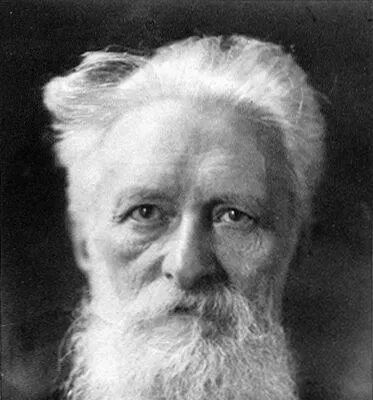
Rudolf Christoph Eucken
Human Design Chart
Biography
Human Design Analysis: Rudolf Christoph Eucken as Projector 6/2
Projector 6/2 — Design at a Glance
Rudolf Christoph Eucken appeared as someone who exhibited a focused aura and quickly identified weaknesses in others' systems. His design inclined him to immediately spot problems, which however risked provoking resistance when addressing these flaws directly with others. As a Projector, Eucken did not have an intrinsic constant energy source; instead, he experienced phases of high productivity followed by necessary rest periods to avoid burnout. The optimal strategy for him was to wait for honest invitations from others rather than acting independently. Through this patience and the radiance of his own harmony, he attracted people seeking his leadership. If he lived according to this pattern, he was rewarded with success; ignoring it led sooner or later to experiencing bitterness as an expression of his non-self. His dense aura functioned like a flashlight that brought light into darkness but only effectively when used invitingly rather than aggressively.
Emotional Authority
Rudolf Christoph Eucken showed a decision-making stance not based on immediate clarity, but on the management of emotional waves. His design carried emotional authority, meaning his defined Emotional Center determined his inner guidance – independent of all other defined Centers in his chart. This configuration subjected him to permanent ups and downs of feelings; the world appeared colored by his current mood. A moment of enthusiasm could quickly turn into negative perspectives, where these initial impressions did not yet represent his truth.
Quick, spontaneous decisions based on such emotions often had a negative impact on him. Instead, his path required patience: he took time to let decisions mature and reconsider them multiple times. Through this hesitation and waiting, intense feelings gradually subsided. Only then did he gain the necessary emotional distance that brought clarity and calmness. This process was particularly important for long-term decisions as they significantly shaped his life course. Only after going through this emotional phase did he make the right choice that aligned with his deeper insight.
The 6/2 Profile — Role Model / Hermit
Rudolf Christoph Eucken revealed in his early life stage as someone who learned through intense experimentation and the process of trial and error. His design inclined him to initially gather many personal experiences, where retreats following mistakes were the driving principle. This corresponded to the effect of the 3-line within his Profile 'Role Model / Natural Talent' (6/2), before Saturn's return occurred.
Around age thirty, this dynamic fundamentally changed. The 6-line became active, leading Rudolf Christoph Eucken into a phase of distancing and deep introspection. He metaphorically retreated into a 'cave' to look back at his earlier experiments with distance. This period served for healing and self-discovery, supported by the intuitive clarity of Gate 57 (Line 2), which enabled appropriate value orientations for survival – not as moral ideals but essential guidance.
The unyielding stance of Line 6, combined with potential for mutation, allowed him to transform misunderstandings into wisdom. After this intensive reflective phase, Rudolf Christoph Eucken emerged again. He now acted as a wise person whose life insights attracted others. People came to him to partake in his knowledge and learn the ability for deep self-reflection, marking the completion of the cycle from trial, distancing, and finally assuming the role of a model.
Single Definition — Defined & Open Centers
Rudolf Christoph Eucken revealed himself as someone whose inner compass needle did not lie in the head or will but was deeply anchored in the emotional waves of his body. His design indicated a tendency towards an intense, time-dependent perception: truth was not revealed to him in a flash of the present moment, but only after going through entire cycles of emotions. With a defined Solar Plexus Center, he possessed an emotional authority that required patience; he was designed to wait out the ups and downs of his moods before clarity emerged. This emotional depth was fed by his defined Root Center, which gave him a constant, adrenalized pressure – an existential energy that propelled him forward and connected him with the material world.
At the same time, he was open in wide areas of his design to external influences, making him vulnerable to conditioning. His open Head Center meant that he did not have consistent mental inspiration; instead, he tended to grapple with questions and doubts that were not his own or desperately sought answers to other people's problems. Similarly, his open Ajna Center caused him to absorb concepts and opinions from his surroundings without owning them as his firm truth. This created a mind that was flexible but easily fell into mental confusion when trying to hold the unstable.
His open G Center also revealed a lack of a fixed identity or life direction. Eucken did not actively seek out his path but reacted to initiations from his environment; he found his direction only through the right places and people who came across him. His open Heart Center made him susceptible to the pressure to prove his worth, even though he did not consistently possess this willpower. Finally, his open Sacral Center meant that he did not have constant vital energy available and easily became exhausted when taking on the work energy of others. His strength lay in using these open fields as mirrors while relying on his emotional clarity and inner pressure to navigate the world.
Channels for emotional release and mystical synthesis.
Rudolf Christoph Eucken revealed himself as someone deeply woven into the cohesion of his community, seeking a delicate balance between the need for support and his own ability to give. His design indicated a tendency towards living loyalty and belonging as fundamental values, always mindful that his basic needs were met and his territory protected.
This attitude was shaped by the Channel of Synthesis 19-49. This channel connected the Root Center with the Solar Plexus Center and created an emotional frequency that acted like glue for the tribe. Rudolf Christoph Eucken was sensitive to the principles holding his group together, rejecting anything incompatible with these highest ideals. He sought fair power within his relationships and saw family or community as his most important enterprise, which he wanted to lead to success through work and dedication.
At the same time, the Channel of Emotion Release 39-55 worked in him, generating a pulsating emotional wave between joy and melancholy. This channel connected provocation with the mind, allowing Rudolf Christoph Eucken to perceive and influence others' moods. He learned to accept his own mood without rationalizing it but lived in the alchemy of this emotional depth. This gave him the ability to explore the truth of his mind through authentic living and strengthen others with a spiritual passion for life if he allowed himself full experience of his emotions.
Additionally, he carried the energy of Gate 38, representing resistance against harmful forces to preserve individual integrity and set boundaries. Gate 57 granted intuitive clarity and self-awareness through presence in the here and now. Gate 51 brought a strong willpower that enabled him to adapt to shocks and choose between material or spiritual development. This combination shaped a person who stood for the cohesion of his community while living his own emotional and intuitive truth.
Individual Circuitry — Circuit Signature
Rudolf Christoph Eucken revealed himself through a design that combined emotional intensity with the ability to synthesize. His energy flowed between the Solar Plexus and Root Centers, creating a pulsating, acoustic quality. This connection shaped his inner rhythm: emotions would come in waves followed by phases of calm to generate new impulses.
The Knowledge Circuit worked through him via the channel 'Emotion Release'. This connected the Solar Plexus with the Root Center, enabling direct transformation of emotional waves into transformative energy. It was less about rational knowledge and more about intuitive, emotional insight that could immediately be effective. This configuration promoted an individual expression based on inner resonance.
Parallel to this, the Ego Circuit worked through him via the channel 'Synthesis'. Also connecting Solar Plexus and Root Centers, it emphasized integration of experiences. Here it was about bringing different aspects together into a coherent whole, supported by a conservative, traditional stance. Since both circuits used the same centers, they reinforced each other: emotional impulses were not only expressed but also synthesized and translated into stable structures.
Rudolf Christoph Eucken lived this dynamic as a unity of feeling and integration. His energy was timeless and tangible, shaped by the interplay between impulsive inspiration and the stabilizing power of the Root Center. This created an inner stability that allowed him to shape changes from his own identity without overextending his resources.
Left Angle Cross of Individualism 2
Rudolf Christoph Eucken revealed himself through a fundamental attitude based on inner self-determination and the shaping of an independent path. His design suggested that he did not simply follow the prescribed societal path but was committed to defining his own identity and living it consistently. This aligned with the essence of the left cross of individualism: It was less about rebellion than the deep necessity to free the individual from collective constraints and lead an authentic existence.
This configuration described a life task centered on the development of one's personality. Rudolf Christoph Eucken lived in a dynamic that drove him to reflect on his inner truth and carry it outward. It was a process of differentiation, where he learned to distance himself from others' expectations without isolating himself. Instead, he sought a balance between preserving his individuality and connecting with the world. His design promoted the ability to develop personal values and defend them with integrity. This shaped his way of acting: not out of adaptation but from a clear, self-determined conviction. The energy of this cross supported him in walking a unique path based on his personal experience rather than fitting into rigid patterns.
Saturn Return · Uranus Opposition · Chiron Return · 2nd Saturn Return — Life Cycles
Rudolf Christoph Eucken showed a clear orientation towards academic responsibility early in his career. In 1871, at the age of 25, he was appointed as Ordinarius for Philosophy and Pedagogy at the University of Basel. For his design, this marked the first Saturn Return. This cycle did not function merely as an age marker but as a structural turning point: years of inner work and experience accumulation condensed here into a tangible external result.
The first Saturn Return often acts like a milestone in Human Design. It demands that the lived strategy and authority up to that point be cast into a stable form. Those who followed this rhythm frequently found access during this phase to a position that made their internal structure visible externally. For Rudolf Christoph Eucken, this condensation was evident through his appointment at the university. This was the moment when previous learning and maturation translated into a concrete societal role. The mechanics described here were not sudden changes but logical consequences of consistent living: the foundation laid earlier proved stable enough to bear the weight of new responsibilities. This transition shaped the course of his further work, as it bridged personal development with public function.
Projector · Emotional Authority — Synthesis
Rudolf Christoph Eucken lived a deep thread of profound observation and evaluation, fueled by a projector strategy of recognizing system errors (Gate 19/49) combined with emotional authority. This constellation led him to engage intensively with the needs of others while simultaneously defending his own principles – a process that matured over time and fostered wisdom (6/2 Profile). His defined Emotional Center required extensive engagement with issues before reaching conclusions, which was reflected in a career marked by careful reflection. The connection between recognizing system errors and emotional maturation formed the foundation of his work.
Eucken's design contained a central paradox: As a projector, he was destined to guide others and point out their mistakes, yet his emotional authority required patience and waiting for the emotional wave. This created tension between the urge for immediate clarity (Knowledge Circuit) and the necessity of letting decisions mature over time. This inner dynamic led him initially to define himself through experimentation (6/2 Line before Saturn Return), followed by a phase of deep reflection from which he shared his wisdom.
2 Defined Channels
Incarnation Cross - Left Angle Cross of Individualism 2
Solar Return
The Solar Return shows the moment when the sun returns to its exact birth position - your personal solar year.
Life Cycles
Discover the life cycles with a detailed triple view (birth chart, cycle chart, composite).
Human Design Profile
- Type
- Projector
- Strategy
- Wait for the respectful invitation
- Authority
- Emotional Authority
- Profile
- 6/2 - Role Model / Hermit
- Definition
- Single Definition
- Incarnation Cross
- Left Angle Cross of Individualism 2
- Date of Birth
- 05.01.1846 07:30
- Place of Birth
- Aurich, Germany
Frequently Asked Questions
What was Rudolf Christoph Eucken's Human Design type?
What Profile did Rudolf Christoph Eucken have in Human Design?
What Authority guided Rudolf Christoph Eucken?
What incarnation cross characterized Rudolf Christoph Eucken?
When was Rudolf Christoph Eucken born?
Discover your own Human Design
Are you also a Projector? Find out in a personal reading how to unfold your leadership qualities and recognize the right invitations.
More Personalities
Back to overviewSissy Spacek

Alain-Fournier

Anémone

Ann-Margret

Bourvil
Hergé