
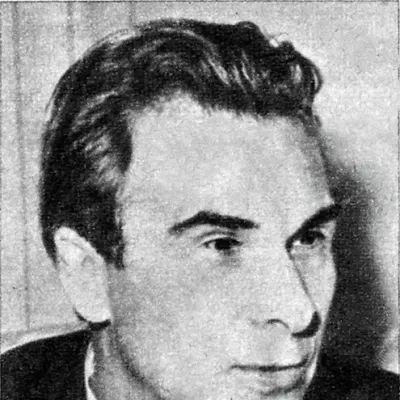
Rudolf Kempe
Human Design Chart
Biography
Kempe directed the Dresden Opera and the Dresden Staatskapelle from 1949 to 1952, making his first records. He maintained a relationship with the Dresden orchestra for the rest of his life, making some of his best-known records with them during the stereo era.
His international career began with engagements at the Vienna State Opera in the 1951 season, for which he conducted Die Zauberflöte, Simon Boccanegra, and Capriccio. He was invited to succeed Georg Solti as chief conductor of the Bavarian State Opera in Munich from 1952 to 1954, and was permitted by the East German authorities to do so without severing his ties with Dresden. In 1953 Kempe appeared with the Munich company at the Royal Opera House in London, where the General Administrator, Sir David Webster, quickly decided that Kempe would be an ideal Musical Director for the Covent Garden company. Kempe resisted the appointment, and did not accept the top job at any opera house after leaving Munich in 1954. He nonetheless conducted frequently at Covent Garden and was immensely popular there, Kempe’s début at the Bayreuth Festspielhaus was in 1960.
Kempe was associated with the Royal Philharmonic (RPO) from 1955. In 1960, he became its Associate Conductor, chosen by the orchestra's founder, Sir Thomas Beecham. From 1961 to 1962 he was Principal Conductor of the RPO, and from 1963 to 1975 its Artistic Director. In 1970, the RPO named him Conductor for Life, but in 1975, he resigned his post with the orchestra.
From 1965 to 1972 Kempe worked with Tonhalle Orchester Zurich, and from 1967 to his death conducted the Munich Philharmonic, with whom he made international tours and recorded the first quadraphonic set of theBeethoven symphonies.
In the final months of his life, Kempe was the chief conductor of the BBC Symphony Orchestra.
He died 12 May 1976 in Zürich.
The Human Design of Rudolf Kempe: Manifesting Generator 6/2
Manifesting Generator 6/2 — Design at a Glance
Rudolf Kempes design includes a tendency towards hybrid energy: He possesses the constant power of a Generator but also has the ability through his structure to skip steps in action and quickly draw results into his life. As an Manifesting Generator, he was not a pure Initiator like a Manifestor; instead, he had to react to internal impulses to be effective. His energy source lies in the sacral center; only by waiting for this "yes" signal could he channel his immense creative power meaningfully.
This configuration brought specific challenges with it. Due to his inclination towards speed, there was a risk of overlooking important process steps, forcing him to backtrack and fill gaps—a state that quickly turned into frustration if ignored, the classic non-self theme of this type. Additionally, he tended to pursue multiple projects simultaneously as he responded to many different life impulses at once.
However, when the strategy of reacting was followed and his inner authority agreed, Rudolf Kempe found deep satisfaction in his work. Instead of focusing on a single thing, he thrived in "play mode." Variety and parallel activities were not distractions for him but essential nutrients for his motivation. As long as the sacral center confirmed the activities, he could use his speed without falling into exhaustion or dissatisfaction. His design thus requires a balance between impulsive reaction and the ability to playfully engage with his own dynamics.
Sacral Authority
Rudolf Kempes Design points towards a very direct, physically grounded decision-making process. As a Generator, he had sacral authority, meaning his strategy and inner leadership level were identical: He reacted to external stimuli. This configuration simplified his choice process as no complex weighing between different strategies was necessary.
His responses did not show up in the Head Center but as an immediate physical reaction – a surge of energy or an internal confirmation that often manifested outwardly through sounds like an affirming "Mhm" or a vigorous grunt. When his Sacral Center was activated, he felt vital and alive; the energy then became inexhaustibly available, allowing him to dive into his activities with great enthusiasm. This happened without compulsive purposefulness but from a natural joy in doing.
Especially relevant here was the influence of the Spleen Center. Since it was active and likely directly connected to the Sacral Center, it served as supporting authority. This gave Rudolf Kempe the ability for particularly quick and spontaneous reactions. He had an immediate access to his instinctive perception and physical well-being, which he could rely on confidently. This combination allowed him not only to make decisions from gut feeling but also to implement them with swift, instinct-driven precision.
The 6/2 Profile — Role Model / Hermit
Rudolf Kempes Design set a tendency towards a two-phase development. In the early years, he acted like an experimenter: trial and error shaped his actions, followed by necessary retreats after failures. This phase served to accumulate personal experiences through direct experimentation. After the age of 30, this dynamic fundamentally shifted. The sixth line in Gate 45 activated, prompting Rudolf Kempe to distance himself greatly from his earlier experiments. This period of intense reflection functioned as a process of healing and deep self-awareness. From this inner work emerged eventually a wise attitude. He no longer primarily presented himself as the one searching for meaning in chaos but rather as someone who could understand integration and innovation. The ability to integrate foreign elements to strengthen the core became central. Parallel to this, he showed through the second line in Gate 36 a selective support function: he helped others during crises, often without fully being aware of how his emotional energy stabilized these processes. This help was not universal but specifically directed at those who asked for it. Rudolf Kempe thus developed from a natural talent that learned through personal failure to an role model whose wisdom arose from the synthesis of individual mutation and collective adaptation. His authenticity rested on the ability not only to experience profound changes but also to translate them into a sustainable structure for others.
Split Definition — Defined & Open Centers
Rudolf Kempe's design revealed a tendency towards constant mental pressure and deep, reactive vitality. He was someone who stood under the permanent drive to ask questions and understand connections, coupled with an enormous power source for execution.
This configuration arose from his defined Head and Ajna Centers: a continuous mental pressure to process inspirations and answer questions. However, this process was not directly action-oriented but served to formulate concepts. The implementation occurred through his defined Throat Center, which acted as a pivot point for communication and manifestation. It transformed the mental impulses into clear expressions or actions.
The actual energy source came from his defined Sacral Center. As a generator, Rudolf Kempe possessed a constant vital force that was only correctly activated by reacting to external stimuli. Initiated actions without prior questioning led here to resistance and exhaustion; if he reacted affirmatively, however, enduring energy was available to him. His defined Root Center also provided the necessary adrenalinated pressure to maintain this life impulse and move forward.
At the same time, Rudolf Kempe was vulnerable through his open centers to conditioning. His open G Center meant that he did not have a fixed identity or direction but rather took it from his environment. He tended to question whether he was in the right place and who he actually was instead of having an internal compass needle. His open Heart Center lacked consistent willpower; he avoided making promises or proving his worth through competition, as this led to frustration. Furthermore, his open Solar Plexus absorbed foreign emotions, causing him to experience emotional waves from the environment as his own and avoid confrontation. His open Spleen Center made him sensitive to health and well-being; he tended to make spontaneous decisions out of fear of loss or uncertainty rather than trusting his intuitive wisdom. These opennesses required him not to identify with the absorbed energies but to use them as information.
Channels for impulse, clarity and maturation.
Rudolf Kempe was someone whose energy exhibited a rare connection between impulsive action power and deep, cyclical maturation process. His design revealed a tendency towards immediate, charismatic effect based on an internal, often silent processing.
This trait rooted in the Channel of Charisma 34-20. Here, raw physiological energy from the Sacral Center (Gate 34) directly met with the Now Gate (Gate 20) in the Throat Center. This configuration generated a drive not only to think but also to act and express in the moment. The speed of this reaction was so high that it left little room for hesitation; Rudolf Kempe had to learn to channel this driving force through sacral reactions – that is, by waiting for inner confirmation – rather than being carried away by sheer momentum. Without this internal guidance, the energy could have chaotically erupted; with it, it became a source of impressive, self-reinforcing presence.
Parallel to this, the Channel of Awareness 61-24 was at work. It connected the Head Center (Gate 61) with the Ajna Center (Gate 24). This meant that his thinking was not linear or planning-oriented but marked by sudden insights. Inspiration met rational processing, leading to a mutating knowledge that broke through old patterns. Rudolf Kempe could not force these realizations; they had to mature in their own time. His mind therefore often sought silence to filter mental noise and distinguish true, inspiring thoughts from mere static.
A third crucial factor was the Channel of Maturation 53-42 between Root and Sacral Centers. It linked the Gate of Beginnings (Gate 53) with the Gate of Growth (Gate 42). This shaped his life as a series of complete cycles. Each experience had to be run through to its end before new wisdom could be drawn from it. Early abandonment was destructive for his design; only the completion of a cycle allowed reflection and building depth. Thus, Rudolf Kempe combined the ability for immediate charismatic projection with mental clarity based on inner truth and a patient dedication to learning through experience.
Individual Circuitry — Circuit Signature
Rudolf Kempe's design revealed a tendency towards separate, parallel operating energy fields. His structure consisted of two non-interconnected groups: on one hand, the connection between Throat, Sacral, and Root Centers; on the other hand, the coupling of Ajna and Head Centers. This separation meant that his intellectual impulses did not directly translate into action power or emotional resonance; they existed as independent areas.
In the Knowledge Circuit, he exclusively linked Rudolf Kempe's Head with his Ajna Center through the Channel of Awareness (Gates 24–61). This generated innovative, creative flashes and a high individual awareness for new connections. Since no further channels of this circuit were active, this insight capability was confined to the mental level and did not flow into emotional expression or identity.
Parallel to this, the Meaning Circuit worked through the Channel of Maturation (Gates 42–53), which connected the Sacral with the Root Center. Here it was about sharing felt insights and learning from past experiences in cyclical wave movements. This energy served to reflect on emotional patterns and share them within the collective.
Additionally, the Integration Circuit showed through the Channel of Charisma (Gates 20–34), which linked Throat with Sacral Center. This allowed him to intuitively channel power from reacting to life and express it acoustically or through actions in the present moment. These three circuits thus formed two isolated systems for Rudolf Kempe: one for mental innovation (Head-Ajna) and another for action-oriented, emotional processing and expression (Sacral-Root-Throat), which remained energetically separate from each other.
Left Angle Cross of Confrontation 1
Rudolf Kempe revealed himself as someone who did not see conflicts as disturbances but rather as a necessary motor for his own development. His design was marked by the left cross of confrontation, a configuration that establishes a deep connection with the principle of resistance and opposition. For Rudolf Kempe, this meant using internal tensions and external friction as essential impulses on his path. Instead of seeking harmony at all costs, his essence sought truth through direct encounters with the unfamiliar or opposing forces. This mechanism acted like a polishing stone: by consciously accepting challenges and enduring dissonances, his inner structure was sharpened and clarified. Rudolf Kempe lived this dynamic by confronting difficulties rather than avoiding them. Confrontation was not for him a state of enmity but a tool for precision. It forced clarity and prevented superficial solutions. His path involved transforming the energy of tensions into constructive actions or deeper insights. Through continuous confrontation with himself and his environment, he found his true direction. The left cross of confrontation ensured that Rudolf Kempe never rested until unresolved contradictions were resolved. He used pressure to grow and saw resistance as an opportunity to strengthen and define his own substance.
Saturn Return · Uranus Opposition · Chiron Return · 2nd Saturn Return — Life Cycles
Rudolf Kempes design shaped a life path defined by significant turning points where inner maturation translated into external recognition. In 1949, at the age of 39, he became the Dresden General Music Director. This step fell during the Uranus opposition phase. In this mechanical constellation, old structures are under pressure; they often break to make room for a new, more independent orientation. For Rudolf Kempe, this meant not only a career leap but also breaking through previous boundaries towards a position of greater responsibility and visibility.
Another central event occurred in 1960: his debut at the Bayreuth Festival Hall at age 50. This marked the Chiron return. This cycle is not a process of wound healing, but a phase of bloom and fulfillment. If a person has lived according to their strategy up until this point, the essence of the incarnation cross unfolds here. Rudolf Kempe experienced during this time the concrete experienceability of his life purpose. The years before had laid the groundwork; now the result was visible confirmation of his unique gift. Both events underscore a pattern: important professional stations did not occur randomly but synchronized with profound astrological cycles that translated inner development into outer reality.
Manifesting Generator · Sacral Authority — Synthesis
Rudolf Kempe lived a life path marked by a deep internal drive towards creation and simultaneous need for withdrawal. His design as an Manifesting Generator (with defined sacral authority) points to someone who possessed constant energy and could react quickly to impulses – yet not initiating but reactive. This ability, through sacral reaction, to attract things was strengthened by the defined Head Center, which drove him toward inspirations and questions and gave him a firm way of thinking. The profile as Role Model/Natural Talent indicates that he experimented extensively in his youth, later gathering wisdom to pass on to others.
Kempes life seemed determined by a central paradox: the tension field between the drive towards activity (Channel of Charisma) and the necessity to withdraw and reflect (6/2 Profile). He could through his energy and inspiration achieve something but also needed phases of intense self-observation to process the gained insights. A notable event was his debut at the Bayreuth Festival Hall in 1960, a peak of creative unfolding followed by a period of reflection and consolidation. This interplay between public effectiveness and private contemplation shaped his entire work.
3 Defined Channels
Incarnation Cross - Left Angle Cross of Confrontation 1
Solar Return
The Solar Return shows the moment when the sun returns to its exact birth position - your personal solar year.
Life Cycles
Discover the life cycles with a detailed triple view (birth chart, cycle chart, composite).
Human Design Profile
- Strategy
- To respond - wait for something to respond to
- Authority
- Sacral Authority
- Profile
- 6/2 - Role Model / Hermit
- Definition
- Split Definition
- Incarnation Cross
- Left Angle Cross of Confrontation 1
- Date of Birth
- 14.06.1910 01:00
- Place of Birth
- Dresden, Germany
Frequently Asked Questions
What was Rudolf Kempe's Human Design type?
What Profile did Rudolf Kempe have in Human Design?
What Authority did Rudolf Kempe possess?
What incarnation cross did Rudolf Kempe have?
When was Rudolf Kempe born?
Discover your own Human Design
Are you also a Manifesting Generator? Find out in a personal reading how to unfold your multi-talents and direct your energy wisely.
More Personalities
Back to overviewAaliyah

Aldair

Alexia
Alizée

Angèle

Angeli
