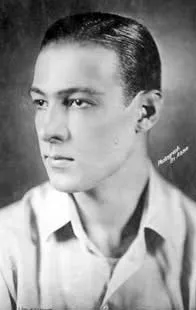
Rudolph Valentino
Human Design Chart
Biography
After a very brief marriage to actress Jean Acker (that was never consummated), the great film lover married Natacha Rambova on 15 March 1922 in Mexicali, Mexico. Rambova soon took charge of, and most say, misdirected Valentino's career. She antagonized studio execs to the point of having her barred from the sets. Valentino's divorce from Acker had not been finalized at the time of his marriage to Rambova and he was jailed on charges of bigamy. Valentino and Rambova divorced in 1925. The end of the marriage was bitter, with Valentino bequeathing Rambova one dollar in his will.
Valentino died of peritonitis due to a ruptured appendix on 23 August 1926 at age 31 in New York City. An estimated 100,000 people lined the streets of Manhattan to pay their respects at his funeral. After his death he was idolized as a cult figure.
The Human Design of Rudolph Valentino: Manifestor 3/5
Manifestor 3/5 — Design at a Glance
Rudolph Valentino was a Manifestor, a type designed to be a pioneer and visionary, leading the world into a new future. His design inclined him to act like an emperor in ancient Rome: He had the vision of a grand whole but did not lead the necessary wars and battles himself; instead, he sent others to conquer foreign lands for him. This role inevitably placed him in a position where he was misunderstood, as he often thought ahead of his surroundings. This led to strong polarization; some people loved and followed him for his big dreams, while others disliked or even hated him because of these visions. For the right followers to find him, it was essential for him to inform others timely and accurately about his visions. This formed his ideal strategy. If he lived by this strategy and his authority, he was rewarded with a sense of inner peace. If he did not rely on this design, he likely felt a persistent, deep anger within. His life task was to use this informing strategy to effectively fulfill his pioneering role and minimize the resistance that arose from his polarizing nature.
Emotional Authority
Rudolph Valentino showed himself to be someone whose inner decision-making was heavily influenced by a pronounced emotional wave. His design carried emotional authority, meaning his defined Emotional Center directed all important life decisions – regardless of which other centers were also defined. This configuration subjected him to a permanent up and down of emotions; the world appeared to him always colored by the current mood. What seemed totally inspiring in one moment could appear negative in the next.
His immediate feeling was merely a snapshot, a first impression that did not necessarily correspond to the deeper truth. Quick, spontaneous decisions made directly from this emotional heat often proved problematic. The mechanics of his design required patience: He had to take his time to let decisions mature. This meant hesitating, asking himself multiple times, and letting important steps happen overnight. Only when the intense feelings subsided and emotional distance was gained, the necessary clarity and calmness set in. This process of waiting was essential for long-term decisions that significantly influenced his life course to ensure that the chosen path aligned with his true inner truth.
The 3/5 Profile — Martyr / Heretic
Rudolph Valentino showed himself to be someone who learned through personal experimentation and then offered this knowledge to others as a solution. His Profile 3/5, that of the experimenter and hero, set this dynamic in motion. Line 3 of the Adventurer meant that he initially had few preconceived notions. Instead, he had to test everything himself. This process of trial and error required patience to analyze mistakes and adapt to mutations. Uranus stood for revolutionary changes that entered without long waiting periods.
Line 5, the Hero Line, transformed these practical experiences into a role for others. Society projected onto him the hope that he could listen and help as a savior. By sharing his self-acquired insights, he became attractive to those who wanted to learn from his experiences. Neptune represented here the charismatic genius and spiritual guidance. He found his role by listening and avoiding mistakes through mutual support. Jupiter in the case emphasized capable management with a focus on expansion. This combination created the impression of a cool storyteller and humorous rebel. The hero role flattered him, but could be painful when experiments failed in front of many eyes. His design presented a rich treasure trove of life experiences that he was happy to show others.
Single Definition — Defined & Open Centers
Rudolph Valentino revealed himself as someone whose expression and actions were deeply influenced by an emotional wave he had to wait out to gain clarity. His defined Solar Plexus Center acted as an inner authority: decisions were made only after the emotional wave had settled. This patience gave him a seductive aura, as others sought his warmth while he needed time to recognize what was truly right. Simultaneously, he had a defined Throat Center, which directed his communication and manifestation through interaction with the world. His voice and actions were not a random product of the mind but a reliable expression of his inner emotional and intuitive processes. A further defined Spleen Center provided spontaneous, intuitive impulses in the present, helping him stay healthy and protected.
In contrast, his G Center was open, meaning he did not have a fixed, unchanging identity. Instead, his identity was shaped by the environment and relationships. He tended to question who he really was or where he belonged, and sought directions that came from outside. This open center made him sensitive to places and people; at the right place, he flourished, at the wrong one, he felt lost. His Heart Center was also open, so he was not consistently willful and often felt pressured to prove his worth through promises or performance, which could plunge him into spirals of self-doubt. His open Sacral Center allowed him to absorb the vital energy of others, which could lead to overexertion if he did not set boundaries. Finally, his open Root Center absorbed the stress of the environment, making him vulnerable to external pressure and chaos. Valentino thus lived in a tension field between his clear, emotional, and intuitive inner self and the constant intake of external influences that affected his identity, will, and energy.
Channels for emotional depth and intuitive precision.
Rudolph Valentino revealed himself as someone whose social presence and artistic expression were strongly guided by an inner emotional wave. His design tended towards passionate but also capricious openness, which was evident in his interaction with others. This was marked by the Openness Channel 22-12, connecting the Solar Plexus Center with the Throat Center. Here, Gate 22 set the emotional tone, while Gate 12 brought a cautious restraint, limiting articulation to those offering the greatest transformative potential. Valentino used the quality of his voice to emotionally impact others, but only when his inner wave allowed it. Forced social interaction against this inner rhythm would have made him abrupt and isolated; in the right mood, however, barriers dissolved, and he could act as a catalyst for emotional experiences in his audience.
Parallel to this, his design sought the perfection of a specific skill. The Wavelength Channel 48-16 connected the intuitive depth of the Spleen Center (Gate 48) with the technical mastery of the Throat Center (Gate 16). This described a process where inner intelligence, through repeated practice, was transformed into recognized talent. It was not about spontaneous inspiration alone, but about the gradual refinement of a skill until it became mastery. This configuration required him to identify with something he truly loved to muster the necessary dedication for perfection. Recognition by others and the associated reward served as an energetic confirmation, enabling him to express this unique wavelength and further develop his talent. Both channels together showed a profile that combined emotional authenticity with technical precision, with success depending on following his inner timing and passion.
Individual Circuitry — Circuit Signature
Rudolph Valentino revealed himself as someone whose inner compass and external expression potential were connected in a single, continuous energetic flow. His design linked the Throat Center, Solar Plexus Center, and Spleen Center into a single defined unit. This meant that his emotional waves and intuitive perceptions were directly translated into his communication, without an internal separation between feeling and saying.
The Knowledge Circuit contributed by linking the Throat with the Solar Plexus Center. Through the Openness Channel (Gates 12 and 22), the emotional energy of the Solar Plexus flowed directly into expression. Rudolph Valentino responded to inner emotional impulses with immediate, authentic communication. His words were not thought-out strategies but the immediate echo of his feelings. This connection fostered a pulsating, acoustic presence that strengthened his individual identity through emotional honesty.
Parallel to this, the Understanding Circuit worked through the Wavelength Channel (Gates 16 and 48), connecting the Throat Center with the Spleen Center. Here, the intuitive, visual perception of the Spleen Center came into play. Rudolph Valentino shared logical or strategic insights stemming from his deep intuition. As both circuits ran through the shared Throat Center and all three centers were connected in a single group, emotional authenticity and intuitive clarity merged into a coherent expression. He did not just communicate what he felt but also what he intuitively recognized as true or useful, always free from conditioned filters.
Right Angle Cross of the Sphinx 2
Rudolph Valentino carried the right cross of the Sphinx 2. This configuration shaped his inner orientation through a profound connection with what was felt as sacred or holy. It was not a mere intellectual conviction but an existential commitment to a higher meaning or spiritual truth that he experienced as the central reference point of his being.
The right cross of the Sphinx 2 describes a specific energetic structure in Human Design that is characterized by an intense search for the Transcendent. People with this cross tended to organize their lives around a central, often spiritual or artistic vision that they saw as their true destiny. This attitude gave their actions a certain gravity and seriousness, as they were always in service to this higher order. For Rudolph Valentino, this meant that his identity and work were inseparably linked to this inner commitment. He did not seek superficial success but rather aimed to express and embody a deeper, often mystical core. This energy demanded a constant alignment with what lay beyond the everyday, creating a unique intensity in his way of experiencing and shaping the world. His design thus tended towards a near-cultic devotion to his role or fate, setting him apart from others.
Saturn Return — Life Cycles
Rudolph Valentino entered a phase around his 27th year of life, characterized by a deep, binding partnership. In 1922, he married Natacha Rambova in Mexicali, Mexico. For his design, this marked the first Saturn return. This astronomical cycle, which occurs approximately every 29.5 years, often acts as a catalyst in Human Design for the condensation of long-term inner developments into a tangible external result. During this phase, the previously accumulated experiences and impulses consolidated into a stable structure. The marriage was thus not a random event but aligned with the typical dynamics of this return: what had been laid out in life now took a firm form and a clearly defined direction. Rudolph Valentino used this energetic turning point to solidify his personal foundation and initiate a new phase of responsibility and connection. The Saturn return demanded that the previous life decisions be reviewed and brought into a sustainable order, which found its concrete expression in this relationship.
Manifestor · Emotional Authority — Synthesis
He was a Manifestor who navigated life always pursuing a vision of change and transformation (Throat Center, Knowledge Circuit). This drive to initiate new things was inseparable from an emotional depth (Emotional Authority) that kept him in constant motion between enthusiasm and melancholy. His profile as an experimenter and hero (3/5 Profile) suggests that he learned through his own experiences and presented this knowledge to others, always searching for new ways to influence the world. He thus lived a process of continuous self-discovery and the dissemination of these insights.
A central paradox lay in the tension between his need to act as a pioneer and realize his visions (Manifestor) and the emotional wave that shaped his decisions and compelled him to careful reflection (Emotional Center). This inner dynamic led to him being both bold and innovative, yet his actions were always colored by a deep, resonant emotional quality – a combination that could make him both attractive and misunderstood (Channel of Openness).
2 Defined Channels
Incarnation Cross - Right Angle Cross of the Sphinx 2
Solar Return
The Solar Return shows the moment when the sun returns to its exact birth position - your personal solar year.
Life Cycles
Discover the life cycles with a detailed triple view (birth chart, cycle chart, composite).
Human Design Profile
- Type
- Manifestor
- Strategy
- To inform others before acting
- Authority
- Emotional Authority
- Profile
- 3/5 - Martyr / Heretic
- Definition
- Single Definition
- Incarnation Cross
- Right Angle Cross of the Sphinx 2
- Date of Birth
- 06.05.1895 15:00
- Place of Birth
- Castellaneta, Italy
Frequently Asked Questions
What was Rudolph Valentino's Human Design type?
What profile did Rudolph Valentino have in Human Design?
What authority did Rudolph Valentino have?
What incarnation cross did Rudolph Valentino have?
When was Rudolph Valentino born?
Discover your own Human Design
Are you also a Manifestor? Find out in a personal reading how to use your initiation power peacefully and dissolve resistance.
More Personalities
Back to overviewSissy Spacek

Anémone

Ann-Margret

Arletty

Arno

Artus