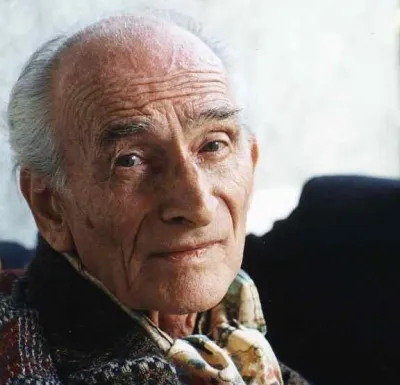
Sabine Appelmans
Human Design Chart
Biography
Sabine began playing tennis at the age of seven after she attended her first tennis clinic, which was split into groups of left and right handed players. Her best friend, with whom she attended the clinic, happened to be left handed. Although Sabine is naturally right handed, she decided to go with her friend at the clinic and has played tennis left handed ever since. She developed her skill over the next four years, and by the age of 11 was good enough to be sent to a special tennis school. Sabine has received many honors over the course of her career, some tennis related, some non-tennis related. In 1990 and 1991 she was selected the Belgian Sportswoman of the year. In 1994 and 1995, she was nominated, but did not win, the Karen Krantzcke Sportsmanship Award. In 1997, she was selected the most beautiful female player of the WTA, beating out Kandarr and Graff. In addition, readers of the Belgian magazine "Panorama" have named Sabine "the ideal woman" twice.
She currently resides in Aalst, Belgium where she enjoys water-skiing, basketball, swimming, reading, listening to music, and watching movies. A lover of Italian food and new places, the one thing that Sabine most loves about her life is the travel opportunities that her job affords her.
Sabine Appelmans as a Manifesting Generator 1/3 in Human Design
Manifesting Generator 1/3 — Design at a Glance
Sabine Appelmans revealed herself as someone who possessed a hybrid energy: the constant power of a Generator paired with the lightning-fast assertiveness of a Manifestor. This design tended to skip steps and pursue multiple projects simultaneously, highlighting her natural speed. The mechanics of her type, the manifesting generator, explain this through the connection of motor centers to the Throat Center; she could quickly draw things into her life but risked skipping important phases or becoming overwhelmed by too many simultaneous impulses. Without paying attention to her strategy—namely reacting to life rather than initiating herself—this creative drive quickly turned into frustration, in line with her Non-Self theme. The key for Sabine Appelmans lay in using her inner authority and sacral center as a compass. Only when this inner resonance space responded clearly with a "yes" to impulses did the potential chaos transform into a productive play mode. In this state, working on multiple projects at once was not an issue but rather a source of deep satisfaction. Her design challenged her to regularly check whether her current activities still aligned with her inner truth, thus avoiding energy depletion and fully tapping into her unique ability for quick yet authentic implementation.
Sacral Authority
Sabine Appelmans's Human Design profile indicated a tendency to make decisions not through cognitive analysis but by immediate physical signals. As a Generator, her strategy aligned perfectly with her Inner Authority: the Sacral Authority. This fundamentally simplified her decision-making process. She responded to external stimuli with an "inner voice," manifesting in sounds like grunts, hums or a clear “mm-hm.” These physical responses were her compass.
A crucial factor was her open Emotional Center. It required Sabine Appelmans to distinguish between the immediate factual reaction of the Sacral Center and the delayed emotional wave movement. Only the instant vitality response counted as valid decision support. When her sacral energy engaged with something, she felt vibrant and alive. She seemed to have inexhaustible energy and tackled tasks with great enthusiasm. This joy was no coincidence but a natural result of correctly activating her motor.
Additionally, her active Spleen Center served as a supportive force. It gave her quick, instinctive access to her physical well-being. This enabled spontaneous reactions and reliable intuitive judgments that seamlessly integrated into her sacral response. Sabine Appelmans was born to immerse herself fully in her activities without the need for external purpose. Her life energy ignited where it met her inner resonance body.
The 1/3 Profile — Investigator / Martyr
Sabine Appelmans's Design shows a tendency towards a dual approach: She combined the impulse to create a theoretical foundation with the practical need to advance through experimenting and learning from mistakes. This Profile 1/3, the Researcher and Experimenter, defines her as someone who not only collects knowledge but actively tests it.
Line 1 emphasized the necessity of a stable basis for self-sufficiency. Before taking action, Sabine Appelmans sought security in her own foundation; envy often served as an indicator for gaps in this provision that needed to be closed. At the same time, Line 3 propelled the process forward. Here it was about competence and efficiency gained through trial and error. This line demanded material discipline and saw learning within the collective as central.
The result of this synthesis were self-tested insights. When Sabine Appelmans believed something to be right or gave a recommendation, she had previously examined that matter both theoretically (Line 1) and practically (Line 3) thoroughly. Her authenticity was based on her courage to make mistakes in order to learn from them rather than just remaining in planning mode. She acted like a scientist who is also an adventurer: always ready to learn more and experiment, with her judgment always resting on this double validation.
Single Definition — Defined & Open Centers
Sabine Appelmans was characterized by a consistent, independent thought structure and a reliable energy source for her activities. Her defined Ajna Center ensured that she always formed concepts in the same way; her mind was hardly influenced from outside and ran continuously. This mental stability flowed into her defined Throat Center, allowing for a clear, authentic expression of what she thought or felt. Additionally, her defined Sacral Center provided constant vitality, which could only be correctly utilized through reactions to external requests – initiatives without prior invitation led to frustration. Her defined Spleen gave her spontaneous intuition for health and the right moment in the here and now.
At the same time, Sabine Appelmans was open to environmental influences in several areas. Her open Head Center meant that she did not carry mental pressure herself but took inspiration from the environment; if she tended to burden herself with foreign questions, she lost clarity. The open G Center made her identity and direction situation-dependent – at the right place she felt safe, at the wrong one lost. Her open Heart Center made her vulnerable to trying to prove her worth through promises or competition, which often ended in a spiral of disappointment. Moreover, her open Solar Plexus absorbed the emotions of others; she had to learn not to identify these waves as her own to remain emotionally stable. Finally, her open Root Center took stress and adrenaline from the environment, which could lead to overactivity if she did not know and release this pressure.
Channels for curiosity, charisma, intuition and power.
Sabine Appelmans was characterized by immense physical vitality based on an immediate reaction in the here and now. This results from Channel Charisma 34-20, which translates generative life force directly into expression – a motor that often feels rest as a burden and instead acts through doing. This power was supported by Channel Power 57-34: Here, the intuitive survival intelligence of the Spleen connects with sacral energy, creating a sharp instinct for danger and decisions made in split seconds without mental analysis.
At the same time, she was driven by Channel Curiosity 11-56. As a connection between idea-generating Ajna Center and expressive Throat Center, it turned her into a storyteller: She collected experiences not to find but to communicate them as instructive parables that influenced others through imagination. This narrative power merged with Channel Flash of Insight 57-20, which translates intuitive insights directly into spontaneous verbal outbursts in the moment. Sabine Appelmans thus spoke not from abstract logic but from a deep physical truth that encouraged others to activate their own inner intelligence.
Additionally, Gates like 27 (Care and Preservation) and 31 (Leadership through energetic transmission) influenced her actions with an instinctive urge for preservation and leading others. Gate 41 promoted evolutionary development through the experience of crises, while Gate 28 steered readiness to take risks in the here and now. Overall, Sabine Appelmans acted as someone who united intuition, physical energy, and narrative power to act clearly in the moment and inspire others with authentic stories and spontaneous truths – always driven by the need to respond to external stimuli rather than acting out of mental planning.
Individual Circuitry — Circuit Signature
Sabine Appelmans was characterized by a design that linked individual innovation with emotional reflection. Her structure formed an integrated unit from Ajna, Throat, Sacral, and Spleen Centers. In the Knowledge Circuit, Channel 20-57 (Flash of Insight) translated the intuitive knowledge of the Spleen directly into the expression of the Throat Center. This promoted spontaneous acoustic creativity and the ability to articulate new ideas in the 'now'. Parallel to this, the Meaning Circuit via Channel 11-56 (Curiosity) connected Ajna Center with Throat Center. Here it was about visual processing of past experiences and their shared meaning, translating emotional waves into understandable forms. The Integration Circuit reinforced this dynamic: Channels 20-34 (Charisma) and 34-57 (Power) linked Throat Center, Sacral, and Spleen. This gave her voice a powerful, self-determined presence based on intuitive truth. Sabine Appelmans used this connection to express her unique identity through the interplay of innovative flashes of insight and emotional resonance in the collective. The pulsating energy of 'now' met cyclical emotion here, transforming past learning into new expressive forms.
Right Angle Cross of the Unexpected 1
Sabine Appelmans' Human Design reveals a foundational disposition that understands the unpredictable not as an interference but as a central structural principle of her experience. Her chart points to the 'Right Cross of the Unexpected 1', meaning her consciousness was programmed to filter life events through the lens of surprise and sudden change. Instead of striving for static security or predictable patterns, there was a natural openness in her mechanics towards what lies beyond planning.
This configuration does not describe a passive victim role towards chance but an active archetypal dynamic: The unexpected serves here as a catalyst for inner development and external orientation. For Sabine Appelmans, the experience of sudden interruption or unexpected turns was thus no exception but a recurring theme that shaped her life. The mechanics of this cross imply that true clarity often only emerges in retrospect when the unforeseen has already occurred. Her design therefore promoted an attitude of vigilance towards new information and situation-based changes without falling into chaos. Instead, she honed the ability to remain present at moments of surprise and derive new directions from them. This characterized her approach to uncertainty: not by combating unpredictability but through integrating her energy-rich impulses into her life flow.
Saturn Return · Uranus Opposition · Chiron Return — Life Cycles
Sabine Appelmans established a solid relationship foundation in 1997 when, at age 25, she married Serge Haubourdin. This step marked for her design the transition to adult self-determination and the establishment of a stable, long-term life structure.
The first Saturn return is a central milestone in Human Design. It signals the end of the youthful orientation phase and the beginning of true personal responsibility. During this period, earlier experiences solidify into a sturdy foundation. The individual begins to seriously use their own authority and build structures meant to last for years. This is not about spontaneous impulses but conscious decisions for reliability and continuity.
For Sabine Appelmans, this process was concretely manifested in the establishment of her marriage. Marriage was no mere social act but an expression of an inner maturation process. She sought security and clarity in interpersonal bonds. Through this union, she created a framework within which further development could take place. Saturn energy here fostered the ability to commit and build lasting structures. It was the moment when she ceased searching for identity and took up a defined position in life. This structuring served as an anchor for future challenges and allowed her to act with greater calmness. The relationship became a mirror of her growing inner stability.
Manifesting Generator · Sacral Authority — Synthesis
Sabine Appelmans' design reveals a central continuity in the dynamic balance between internal perception and external expression. The defined sacral authority, coupled with the manifesting generator type, points towards a life lived through reacting to impulses – an energy source that must always spring authentically from the present moment (Gate 20). This reactivity is strengthened by the open spleen center, which allows for immediate perception of the environment and thus creates a deep connection to current reality. The numerous open centers – Head, G Center, Heart, and Root – show high sensitivity to other people's energies, which must always be filtered through internal authority to avoid conditioning. This combination of reactive energy and open perception shapes a life path characterized by constant adaptation and authentic expression.
A central paradox in Sabine Appelmans' design lies between the drive for rapid manifestation (manifesting generator) and the necessity to react to life rather than initiate it. The connection between sacral and throat center (Channel 34-57) gives her a strong expressive power, which only fully unfolds when it arises from an authentic reaction. At the same time, open centers require constant weighing of external influences and conscious filtering of information to not lose one's own inner truth. This tension field between action and reaction, expression and perception demands continuous self-adjustment and finding a harmonious balance.
4 Defined Channels
Incarnation Cross - Right Angle Cross of the Unexpected 1
Solar Return
The Solar Return shows the moment when the sun returns to its exact birth position - your personal solar year.
Life Cycles
Discover the life cycles with a detailed triple view (birth chart, cycle chart, composite).
Human Design Profile
- Strategy
- To respond - wait for something to respond to
- Authority
- Sacral Authority
- Profile
- 1/3 - Investigator / Martyr
- Definition
- Single Definition
- Incarnation Cross
- Right Angle Cross of the Unexpected 1
- Date of Birth
- 22.04.1972 04:30
- Place of Birth
- Aalst, Belgium
Frequently Asked Questions
What is Sabine Appelmans' Human Design type?
What Profile does Sabine Appelmans have in Human Design?
Which Authority guides Sabine Appelmans' decisions?
What incarnation cross determines Sabine Appelmann's life path?
When was Sabine Appelmann born?
Discover your own Human Design
Are you also a Manifesting Generator? Find out in a personal reading how to unfold your multi-talents and direct your energy wisely.
More Personalities
Back to overviewAldair

Alizée

Angeli

Arletty

Artus

Balthus