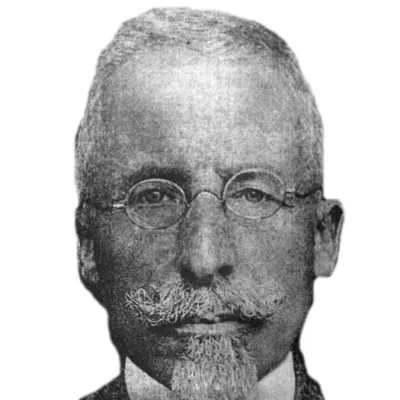
Salvatore Ottolenghi
Human Design Chart
Biography
The Human Design of Salvatore Ottolenghi: Projector 5/1
Projector 5/1 — Design at a Glance
Salvatore Ottolenghi's design inclined towards a focused and penetrating perception. He appeared to his surroundings as a bright light, highlighting areas that were in the dark or not functioning properly. His aura was dense and precise, allowing him to instantly identify flaws in other people's systems. However, this ability could be perceived as unpleasant when he directly addressed these shortcomings – akin to shining a flashlight directly into someone else’s face.
The mechanics of his Projector type explain this behavior: Projectors lack a defined Sacral Center and thus do not have constant intrinsic life energy. Instead, they go through phases of high activity followed by necessary rest periods for regeneration to prevent burnout. The conventional work environment with its steady energy consumption often did not align well with this rhythm.
Salvatore Ottolenghi's most effective approach was not to actively reach out to others but rather to wait for an honest, appreciative invitation. By living in harmony with his own systems, he became attractive to others; people came to him on their own seeking advice. When he lived by the strategy of patience and waiting for invitations, his environment rewarded him with success. Ignoring this principle and acting out of self-initiative or constantly seeking validation led sooner or later to his non-self theme: bitterness over lack of recognition and feeling unseen.
Emotional Authority
Salvatore Ottolenghi's inner compass was the defined Emotional Center, making him an Emotional Authority. This configuration fundamentally determined his decision-making process: he was subject to a constant emotional wave, a perpetual up-and-down of feelings. The world appeared colored by his current mood; something that excited him one moment could be seen completely negatively in the next. However, this immediate feeling was only a snapshot, a first impression that did not necessarily represent his truth. Quick, spontaneous decisions made from this emotional heat often had negative consequences.
The mechanics of his authority required patience and time. The longer he let a decision rest, the deeper and more comprehensive he could understand the situation. It was essential for him to hesitate, reconsider decisions multiple times, and let them sleep. Over time, intense feelings subsided, emotional distance gained strength, and clarity as well as calmness set in. This breathing process was particularly important for long-term decisions that significantly influenced his life path. Emotional authority always took precedence over other defined centers in his chart; it was the primary instance he had to follow to act authentically.
The 5/1 Profile — Heretic / Investigator
Salvatore Ottolenghi was marked by Profile 5/1: The Hero, who accumulates deep knowledge to offer solutions to others' problems. His design created a nearly magnetic attraction that prompted others to seek him out for answers. This dynamic aligned with Line 5, which projects a contribution that people only noticed when explicitly asked.
At the same time, he lived in Line 1, the Explorer line, valuing the process of learning and diving into new challenges. This connected with Gate 55, defining collaboration with stronger forces as essential for spiritual growth. Without this alliance, the spiritual process could not remain effective; instead, it risked sinking into the wave.
The mechanics of his design required clear boundaries. Like an expert who withdraws exhausted after intensive knowledge transfer, Salvatore Ottolenghi had to learn to say 'No' to avoid depletion. His contribution should be time-limited and performed according to his inner authority. The analogy of a taxi driver illustrated this: he brought others to their destination, then got out and sought a new direction. Temporary relationships and group contributions shaped his path, followed by necessary phases of withdrawal to regenerate his energy and maintain the balance between research for himself and service to others.
Split Definition — Defined & Open Centers
Salvatore Ottolenghi's design revealed a tendency towards constant mental pressure and deep emotional reflection. He was someone who asked questions and formed concepts without being able or needing to immediately put them into action. This structure arose from his defined Head and Ajna Centers: A firm way of thinking, inspired by specific themes but lacking the direct energy for implementation. Attempts to relieve this mental pressure through hasty actions typically led to frustration; instead, he relied on stimulating others with his ideas and waiting for the right moment.
Parallel to this, his defined Solar Plexus Center acted as an inner authority. It conveyed an emotional wave that required patience. Salvatore Ottolenghi had to learn to wait out the highs and lows of his emotions before making decisions. Immediate reactions to emotional impulses were often impulsive and led to later regret; true clarity emerged only at the end of the emotional cycle. His defined Root Center provided a constant, adrenalized pressure that propelled him forward and helped him deal with stress as long as he guided it from his strategy.
In contrast, his open G Center revealed a lack of firm identity or life direction. He tended to reflect in relationships and environments rather than following a fixed path of his own. This made him vulnerable to the question of who he was or where love could be found if he did not wait for external initiations. His open Heart Center lacked consistent willpower; he was not geared towards making promises or proving himself through competition, which left him vulnerable in a performance-oriented world. Finally, his open Sacral, Spleen, and Throat Centers: He had no constant energy flow for work (Sacral), tended to experience survival fears and impulsive decisions under uncertainty (Spleen), and often felt pressure to demand attention through speaking (Throat), though spontaneous, authentic communication from the right authority was more effective.
Channels for doubt, inner truth and emotional waves.
Salvatore Ottolenghi's design featured a mind that oscillated between rigorous scrutiny and spontaneous insight. The Logic Channel 63-4 connected Head Center with Ajna Center via Gate of Doubt (63) and Gate of Formulation (4). This created a skeptical mindset that constantly filtered patterns; only consistent, verifiable processes were deemed true. Here, doubt was not an obstacle but an essential prerequisite for logical certainty. Parallel to this, the Channel of Awareness 61-24, also between Head and Ajna, through Gate of Secrets (61) and Gate of Rationalizing (24), allowed sudden Satori moments where knowledge arrived without linear thinking. Ottolenghi had to accept that these inspirations came in their own time, unaffected by whims.
Emotionally, he was marked by moods and provocation. The Channel of Emotional Release 39-55 connected Root Center with Solar Plexus via Gate of Provocation (39) and Gate of Mind (55). This generated a pulsating wave of joy and melancholy that could not be rationalized. His mood determined whether he was open or withdrawn; authenticity in this emotional alchemy was crucial for his impact on others.
Additionally, he carried Gate 8 (Contribution), which urged him to individually promote group goals, as well as Gate 14 (Power), seeking skilled handling of resources and direction. Gate 59 (Pairing) reflected a genetic strategy of bonding beyond personal preferences. On the personality level, Gate 38 (Struggle) set boundaries and defended integrity when resistance was necessary. In his design, Gate 19 (Resources) supported his need for secure territory and community, while Gate 36 (Crisis) released emotional energy through cyclical downturns to make space for new experiences. This constellation formed a person who logically scrutinized, intuitively recognized, and emotionally provoked.
Individual Circuitry — Circuit Signature
Salvatore Ottolenghi's design established a tendency towards two separate, parallel functioning energetic fields. As a Split Definition, he had no continuous connection between these areas; they operated as independent power blocks. In the Knowledge Circuit, Channel 24-61 (Awareness) connected Head with Ajna Center, fostering innovative mental sparks and the search for new identity. Parallel to this, in the same circuit, Channel 55-39 (Emotional Release) linked Solar Plexus and Root Center, generating a pulsating emotional wave that was not directly connected to thought processes. A second, separate field formed in the Understanding Circuit: Here, Channel 63-4 (Logic) also connected Head and Ajna Centers. This area stood for focused, rational analysis and strategic thinking, free from emotional influence by Solar Plexus. Thus, Salvatore Ottolenghi was shown in a tension between impulsive, creative inspiration and sober logic. The emotional depth from the lower part of the Knowledge Circuit stood isolated beside the clear, visual future perspective of the mind. This separation meant that rational decisions were not automatically carried by emotional conviction but existed as independent, cool strategies. Energy flowed internally coherently within these two walled-off systems without forming an overarching unity between feeling and pure logic.
Left Angle Cross of Uncertainty 1
Salvatore Ottolenghi's Human Design profile established a foundational disposition marked by the left cross of uncertainty. This configuration did not describe passive insecurity but rather a specific way to engage with the unknown. It was not a lack of clarity, but a deeper connection to processes that evade immediate definition.
In Human Design, this cross represents an energy that only unfolds its full power through enduring questions and ambivalence. Salvatore Ottolenghi appeared as someone whose inner compass was not aligned towards quick answers or rigid certainties. Instead, his nature inclined him to dwell in the tension between the known and the unresolved. This required a special patience with himself and his surroundings, since direction often only became apparent in retrospect.
The mechanics of this design mean that security is achieved not through control or predictability but through trust in one's own process of discovery. Salvatore Ottolenghi lived this dynamic by freeing himself from the necessity to always know what would happen next. His strength lay in using uncertainty not as an obstacle, but as a necessary space for authentic development. This shaped his approach to decision-making and navigating a complex world by following the flow of his own experience rather than fighting against it.
Saturn Return · Uranus Opposition · Chiron Return · 2nd Saturn Return — Life Cycles
Salvatore Ottolenghi's Human Design profile inclined towards structuring impulses that often manifested as concrete suggestions for organizing or improving existing systems. In 1902, at age 41, he proposed to the General Director of Public Safety in the Ministry of Interior to provide criminal technical instruction to police officers in Rome. This event marked the beginning of the Uranus opposition cycle, which brings new perspectives and innovative approaches into life. For his design, this was a typical moment: The Uranus influences promoted the ability to critically examine established structures and offer practical solutions based on new knowledge. This impulse towards renewal and professionalization fit precisely with his life task of uncovering hidden connections and passing them on to others. Through this proposal, an important step was taken to anchor criminal technical methods in police work, which later served as a foundation for modern investigative techniques. His actions were always marked by clear vision and the will to make knowledge useful – a trait deeply rooted in his configuration.
Projector · Emotional Authority — Synthesis
Salvatore Ottolenghi primarily lived through observing and understanding the world around him. His Projector design led him to recognize patterns and expose flaws in systems (Channel 63/4), constantly seeking deeper understanding through his defined Head Center and Ajna Center. This ability, combined with the Profile of Hero/Researcher (5/1), drove him to accumulate knowledge and make it available to others – a process that gave him energy but could also lead to exhaustion. His emotional authority required time for decisions to mature while he simultaneously generated pulsating, creative power through the Knowledge Circuit and initiated changes.
A central paradox in his design lay in the interplay of recognition and acceptance. Ottolenghi quickly saw what was not working, yet how he shared this knowledge was shaped by his emotional wave and tendency towards doubt (Channel 63/4). He could inspire by shedding light on darkness but risked rejection if his direct pointing out of problems was perceived as unpleasant. This led to a tension between the drive to share his insights and the necessity to communicate them at the right moment and in the right way.
3 Defined Channels
Incarnation Cross - Left Angle Cross of Uncertainty 1
Solar Return
The Solar Return shows the moment when the sun returns to its exact birth position - your personal solar year.
Life Cycles
Discover the life cycles with a detailed triple view (birth chart, cycle chart, composite).
Human Design Profile
- Type
- Projector
- Strategy
- Wait for the respectful invitation
- Authority
- Emotional Authority
- Profile
- 5/1 - Heretic / Investigator
- Definition
- Split Definition
- Incarnation Cross
- Left Angle Cross of Uncertainty 1
- Date of Birth
- 20.05.1861 04:00
- Place of Birth
- Asti, Italy
Frequently Asked Questions
What was Salvatore Ottolenghi's Human Design type?
What Profiles did Salvatore Ottolenghi have?
What Authority did Salvatore Ottolenghi possess?
What incarnation cross did Salvatore Ottolenghi have?
When was Salvatore Ottolenghi born?
Discover your own Human Design
Are you also a Projector? Find out in a personal reading how to unfold your leadership qualities and recognize the right invitations.
More Personalities
Back to overviewSissy Spacek

Alain-Fournier

Anémone

Angeli
Ann-Margret

Bourvil