
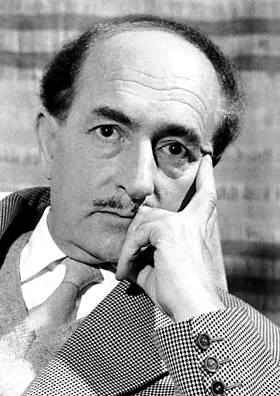
Salvatore Quasimodo
Human Design Chart
Biography
Salvatore Quasimodo as a Manifesting Generator 3/5 in Human Design
Manifesting Generator 3/5 — Design at a Glance
Salvatore Quasimodo revealed himself as someone who possessed a hybrid energy structure: He had the constant power of a Generator but was also capable of quick adaptation through additional connections to the Motor Centers. This design tended to pull things rapidly into his life, often skipping steps in the process. Often this speed led him to pursue multiple projects simultaneously, driven by various impulses.
As an Manifesting Generator, his strategy was not to take initiative but rather to wait for and respond to life impulses. Only when his sacral center gave a clear "yes" should he act. If this inner approval was missing or if he moved too quickly without considering important stages, frustration could arise – the specific non-self theme of his type.
Despite these challenges, his design allowed him deep satisfaction in creation as long as he sought variety and found himself in a playful mode. The recommendation to focus on one thing did not suit his nature; instead, he flourished when working on various tasks simultaneously, provided that his inner authority supported this approach. His creative power thus arose from the balance between rapid execution and constant checking whether the current activity still brought joy.
Emotional Authority
Salvatore Quasimodo's design indicated a tendency towards emotional fluctuation; his inner truth did not manifest as a static state but rather in waves. His defined Solar Plexus Center carried emotional authority. In Human Design mechanics, this center always takes precedence over all other defined centers regardless of further configurations in the chart. Salvatore Quasimodo was subject to an emotional wave with constant ups and downs. The world appeared colored by his current mood: a moment of enthusiasm could quickly turn into a negative outlook. This feeling, however, was only a snapshot, not a final judgment. Quick decisions made from this immediate emotion risked negative consequences as they did not yet reflect the deeper truth. His strategy involved taking time. Through patience and reconsidering questions multiple times, he gained emotional distance. The intense feelings subsided over time, leading to clarity and calmness. This process was particularly essential for long-term life decisions. Salvatore Quasimodo learned to take his time properly and ask himself repeatedly before acting. Only when the emotional wave had subsided did the necessary calmness set in to navigate through the decision-making process and make an informed choice.
The 3/5 Profile — Martyr / Heretic
Salvatore Quasimodo's design points towards the role of a heroic adventurer. He showed himself to be someone who learned through personal experimentation – thanks to Line 3 he initially believed nothing given knowledge and instead tested everything himself. This process of trial and error formed the basis for his later authority.
The mechanics of his Profile 3/5 describe exactly this path: First, one gathers practical experiences, often also through failures, to then solve other people's problems with this acquired knowledge (Line 5). This combination of a love for experimentation and later willingness to help was attractive in his environment. Others sought his advice because they wanted to partake in his treasure trove of practical life wisdom.
This heroic role naturally flattered him but could also be painful when he failed in public. His fifth line projected a contribution that was only noticed when asked for it. Important here was the adherence to boundaries: His influence should be time-limited and performed according to his strategy. After the engagement, he withdrew to explore new directions – a pattern of temporary contributions followed by withdrawal that shaped his development.
Split Definition — Defined & Open Centers
Salvatore Quasimodo's design inclined towards a consequent, conceptual clarity. His defined Ajna Center ensured constant mental function; he processed data and creativity in a trustworthy manner without being easily influenced by others. This internal structure culminated in his defined Throat Center: He spoke what his mind conceptualized. Thus, his communication was not impulsive outpouring but the reliable manifestation of his thought world.
Simultaneously, he possessed a firm self-identity through his defined G Center. This gave him a sense of direction and the ability to comfort others or present new perspectives without being dependent on them. His energy source lay in his defined Sacral Center; as a Generator, he had vital power that flowed correctly only through reaction – not initiation. He needed to wait until asked before his Sacral could respond, otherwise frustration and exhaustion threatened.
Despite this inner stability, he was exposed to certain vulnerabilities. His open Head Center made him susceptible to external mental pressure. He tended to be overwhelmed by doubts or questions from others that were not his own, sometimes seeking inspiration to relieve this pressure. Parallel to this, he lacked consistent willpower in his open Heart Center. Instead of acting from inner authority, there was a risk that he would make promises or prove himself to demonstrate value – a cycle of self-disapproval if he tried to meet expectations for which he wasn't designed. His open heart also reflected the egos and obligations of his environment, making him sensitive to others' integrity but also vulnerable to their pressure.
Channels for inspired structure, deep connection and meaningful struggle.
Salvatore Quasimodo's design was characterized by a deep, rhythmic connection with the flow of life. The Rhythm Channel 5-15 linked the Sacral Center with the G Center and gave him an internal metronome for timing and habits. This mechanism magnetically drew others into his energy flow by integrating societal diversity into natural rhythms. Simultaneously, the Beat Channel 14-2 acted as a driving force for mutation and innovation. It connected sacral generative energy with higher knowledge in the G Center, enabling Quasimodo to initiate new directions simply by trusting his inner reaction without needing to predict outcomes.
This energetic foundation found expression through inspiration. The Inspiration Channel 1-8 linked the G Center with the Throat Center and allowed him to gain public attention through his exemplary life. He inspired others not just through explanation but by living his unique identity, thus changing their perspective. For this kind of individual leadership, authentic authority was essential as it lacked built-in social adaptability; instead, he had to cultivate patience to wait for the right timing and bring his creative impact into effect.
Additionally, the Awakening Channel 10-20 shaped his stance as a voice of individual guidance. It expressed wisdom in accepting and loving oneself at every moment, helping him resist opposition. His struggles for meaning were driven by the Life Struggle Channel 38-28, which relentlessly pushed him onto his own path to defend individuation and life purpose against external forces. Finally, the Structuring Channel 43-23 ensured that spontaneous insights from the Ajna Center were clearly articulated in the Throat Center, allowing his innovative thinking to penetrate the collective as soon as the timing was right.
Individual Circuitry — Circuit Signature
Salvatore Quasimodo's design inclined towards a pulsating, acoustic expression style derived from the Knowledge Circuit. Here, this circuit linked his Ajna, Throat, and Identity Centers with the Sacral Center – a continuous flow of creative flashes (Channel 20-57) over emotional waves to linguistic structuring. Parallel to this existed a separate group: Spleen and Root Centers were connected by the Life Struggle Channel but did not provide direct energetic connection to the creative expression group.
In the Understanding Circuit, he linked Identity and Sacral Centers via the Rhythm Channel, promoting focused, rational strategy without emotional influence. His Ego Circuit showed no connection to the Sacral Center; instead, the Transformation Channel connected Spleen and Root Centers again – this time as part of another group, separate from the creative axis. This underscored the necessity of rest pauses for resource generation.
The Archer Circuit linked Sacral and Solar Plexus Centers via the Pairing Channel, merging instinctive care and survival needs with emotional intensity. Finally, the Integration Circuit connected Throat and Identity Centers through the Awakening Channel, realizing power from reacting to life in the present moment. This divided definition created two parallel forces: an expressive, creative line and a reactive, survival-oriented base that did not directly flow into each other.
Right Angle Cross of Contagion 3
Salvatore Quasimodo's Human Design configuration carried the specific signature of the right cross of infection. This setup shaped a profound, often unconscious vulnerability to emotional currents and psychological states in his environment. He was not immune to foreign energies; rather, he absorbed them like a sponge, leading to intense internal processing.
In Human Design terms, this corresponds to the right cross of infection. It describes a mechanism where the boundaries between personal and external feelings are permeable. Salvatore Quasimodo felt the moods of other people directly in his own system. This did not happen as a conscious decision or analytical observation but as an immediate physical resonance. What he 'infected' with was not a negative virus in medical terms, but deep empathy for the pain and emotional vibrations around him.
This absorption of foreign energies served a higher purpose: transformation. Through his own digestion of these intense impulses, he could purify them and transform them into new forms. His design allowed him to feel collective pain structures, process them internally, and eventually carry them outwards as cleansed insights or artistic statements. He acted as a filter for the human experience world, transforming raw and unresolved elements into digestible and meaningful ones. This ability for emotional alchemy was not coincidental but a direct result of his energetic configuration.
Saturn Return · Uranus Opposition · Chiron Return · 2nd Saturn Return — Life Cycles
Salvatore Quasimodo's Human Design indicated a tendency towards late but lasting confirmation. This manifested concretely in 1959 when he received the Nobel Prize for Literature at age 58. For his Human Design, this was no coincidence but rather his second Saturn return. This cycle marks a phase of maturation and consolidation where earlier efforts achieve their full potential. While the first return often lays the groundwork, the second return condenses the essential elements into a stable result. Salvatore Quasimodo had lived for many years beyond his incarnation; his design demanded patience and endurance to bring his inner structure outward. The Nobel Prize was visible proof that his life's work had now found its final form. It confirmed what he had built over decades. The mechanics of the second Saturn return describe precisely this moment: the foundation is laid, the structure stands firm, and the world recognizes the value of the work done. Salvatore Quasimodo did not use this energy for new untested paths but to solidify his already recognized path. Success came as a logical consequence of long-term development, not as a sudden shift. His design allowed him to benefit from recognition by others during this phase without losing his own integrity. The award was thus a mirror of his inner stability and the clarity he had developed over the course of his life.
Manifesting Generator · Emotional Authority — Synthesis
He lived a life marked by a constant interplay between internal experience and external expression. As an Manifesting Generator (with defined sacral center), he possessed a constant energy source that drove him to tackle things quickly and initiate actions – yet always with the necessity to skip steps and return when important foundations were missing. This dynamic was reflected in his profile as Explorer/Hero: he tried many things himself (Line 3) to then make his knowledge accessible to others (Line 5). His defined Knowledge Circuit and Channel of Inspiration (1-8) pointed towards a gift for initiating change through creative expression and inspiring others.
A central paradox lay in his emotional authority, which compelled him to let decisions mature over time while his manifesting component tended towards quick action. This tension between the need for inner clarification and the ability to act swiftly defined his path. The right cross of infection 3 underscored the impact of his experiences on others, while a documented event during the Saturn return cycle showed success through recognition – confirming his unique expression and contribution.
8 Defined Channels
Incarnation Cross - Right Angle Cross of Contagion 3
Solar Return
The Solar Return shows the moment when the sun returns to its exact birth position - your personal solar year.
Life Cycles
Discover the life cycles with a detailed triple view (birth chart, cycle chart, composite).
Human Design Profile
- Strategy
- To respond - wait for something to respond to
- Authority
- Emotional Authority
- Profile
- 3/5 - Martyr / Heretic
- Definition
- Split Definition
- Incarnation Cross
- Right Angle Cross of Contagion 3
- Date of Birth
- 20.08.1901 04:10
- Place of Birth
- Modica, Italy
Frequently Asked Questions
What was Salvatore Quasimodo's Human Design type?
Which profile did Salvatore Quasimodo have?
Which authority guided Salvatore Quasimodo?
What incarnation cross did Salvatore Quasimodo have?
When was Salvatore Quasimodo born?
Discover your own Human Design
Are you also a Manifesting Generator? Find out in a personal reading how to unfold your multi-talents and direct your energy wisely.
More Personalities
Back to overviewAlain-Fournier

Aldair

Alizée

Angeli

Arletty

Artus
