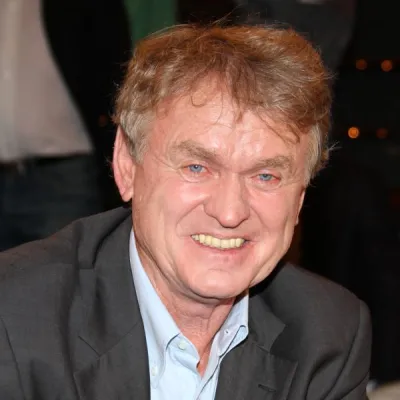
Sepp Maier
Human Design Chart
Biography
Sepp Maier as a Generator 4/6 in Human Design
Generator 4/6 — Design at a Glance
Sepp Maier's design exhibited an inclination towards immense endurance and almost inexhaustible energy reserves. As a Generator, he possessed abundant sacral energy that drove him like a strong workhorse – provided this power was used correctly. His success depended less on sheer willpower than on the ability to respond to impulses from his environment. The strategy of 'not initiating but responding' was crucial: when life posed a question and his inner self answered with a clear 'Yes!', he could immediately act in response.
This mechanism protected him from two typical pitfalls. On one hand, it prevented him from wasting energy on things that went against his inner nature, which would otherwise quickly lead to exhaustion. On the other hand, it did not stop him from continuing to work on his heart projects if there was still power available. If Sepp Maier lived in harmony with this response to internal signals, his design rewarded him with deep satisfaction and a sense of fulfillment. However, initiating independently without waiting for confirmation led to frustration or a lack of energy. His strength lay in acting from the gut and applying the energy at his disposal precisely where it was internally demanded.
Emotional Authority
Sepp Maier exhibited a fundamental attitude shaped by a strong inner emotional wave. His design suggested that he always perceived the world through the filter of his current mood – sometimes enthusiastically, other times negatively colored. These fluctuations were not mere whims in the conventional sense but expressions of his Emotional Authority. Since his Solar Plexus Center is defined, this center carries his inner authority; this holds true regardless of which other centers are also defined in his chart. The Emotional Authority always takes precedence over all other defined areas.
For Sepp Maier, this meant mechanically: an initial emotional impression was only a snapshot and not necessarily his truth. Quick, spontaneous decisions based on strong feelings could therefore have negative consequences. His strategy consisted of taking time. By letting decisions mature and reviewing them multiple times – ideally after a sleep cycle – intense emotions subsided. Only then did he gain emotional distance, clarity, and calmness set in. This process of 'polishing' and waiting was essential for him to make long-term life decisions that significantly influenced his life course. Only through this patience could he utilize his profound, all-encompassing insight rather than being guided by transient mood swings.
The 4/6 Profile — Opportunist / Role Model
Sepp Maier's design inclined towards distinguishing himself in the first three decades of life through experimental behavior in relationships and friendships. The Profile 4/6 acts similarly to a 3er-Profile before Saturn returns; here, experimentation is central. With the onset of Line-6 energy, he often exhibited an internal conflict between the need to belong to a community (Line 4) and the urge to withdraw to contemplate life's meaning (Line 6). This tension between heart and head shaped his development. In later years, it was expected that he would assume the role of a wise role model through cooperation. His large heart remained cautious, so as not to open up to the wrong people and get hurt. Line 4 emphasizes leadership through exemplary behavior and providing resources for the family. It demands respect for traditional hierarchies and principles in daily life. Simultaneously, Line 6 fosters trust in details and processes. It brings joy from small successes and underscores that the process itself is the goal and never completed. This combination formed a person who was equally dependent on interpersonal connection as well as inner wisdom and persistent adherence to processes.
Split Definition — Defined & Open Centers
Sepp Maier's design points towards a tendency for a stable, self-determined identity paired with a clear inner direction. His defined G Center gives him a firm sense of self-worth and the ability to lead others without being dependent on their approval. He has a natural compass for his own mission and can help other people find their paths as long as he does not try to direct them against their will.
This internal stability is strengthened by his defined Heart Center, which gives him access to constant willpower. Sepp Maier shows himself as someone who likes to act self-determined and control his resources. It was essential for him to keep promises and prove his own worth, which strengthened his confidence sustainably. He preferred to follow his inner rhythm when he worked or took a break and preferred not to be steered by others.
His energy source came from the defined Sacral Center, which provided constant vital power. However, this energy was only effectively available when he reacted to external stimuli rather than initiating himself. By listening to his immediate yes-or-no response, he could ensure that he was not overburdened and avoided frustration. His persistence showed particularly when he faced tasks with this correct energetic support.
At the same time, Sepp Maier was emotionally defined (Solar Plexus Center), which means that his feelings formed a wave that he had to follow. Truth did not reveal itself for him in the moment but only after going through the emotional cycle. He tended to postpone decisions until emotional clarity emerged rather than impulsively reacting to highs or lows of his mood.
In contrast, his Head, Ajna, and Spleen Centers were open. This made him vulnerable to mental confusion and the pressure to find answers that were not actually his own. Without inner authority, he could get caught in a whirlwind of doubts or try to force a feeling of security through spontaneous decisions, which often led to unhealthy dependencies. His open Throat Center also caused uncertainty about attention; he tended to feel the pressure to speak when he was not noticed rather than waiting for an invitation to speak.
Channels for synthesis, discovery and community.
Sepp Maier's design points towards deep tribal awareness and persistent discovery. He showed himself as someone who valued loyalty and emotional bonds but was also willing to get lost in long-term processes to find new ways.
This attitude rooted in the Channel of Synthesis 19-49, which connects the Root Center with the Solar Plexus. Through the Gates of Claims (19) and Principles (49), a strong drive for belonging and a clear belief system emerged. This channel functioned as an emotional glue for the 'tribe', where loyalty and resource protection were central. Sepp Maier sought balance between feasibility and fairness to solidify his position in the whole.
Parallel to this, the Channel of Discovery 29-46 worked, which links the Sacral Center with the G Center. The combination of the Gate of Saying Yes (29) and the Gate of Self-Determined Resolve (46) promoted deep persistence. Here it was not about control but letting go of expectations and fully immersing in experiences until their meaning became clear at the end. This energy allowed him to be at the right place at the right time by trusting inner reactions rather than mental planning.
The Channel of Community 37-40 rounded off this profile by connecting the Solar Plexus Center with the Heart Center. Through the Gates of Friendship (37) and Solitude (40), Sepp Maier sought his place in a group based on mutual support and clear agreements. He understood the value of trust and direct contact to build bridges between individuals and create a harmonious community where everyone contributes respected.
Tribal Circuitry — Circuit Signature
Sepp Maier's design points towards emotional processing and communal exchange. In him, two separate parallel force fields worked that did not flow directly into each other but existed side by side.
One area concerned finding meaning: Here the Discovery Channel (46-29) connected the Identity with the Sacral Center. This connection allowed reflecting on emotional waves from the past and sharing derived insights as well as experiences with others. It was about learning together from what had already happened, guided by a cyclical energy that runs in phases of beginning, middle, and end.
The second area concerned cooperation and resources: Here the Community Channel (37-40) and the Synthesis Channel (49-19) worked. They connected Heart, Solar Plexus, and Root Center into a closed circle. This promoted a balance between giving and taking as well as mutual support within a group. Since this stream did not have a direct connection to the Sacral Center, there was no constant life force; instead, rest pauses were necessary to regenerate energy for the collective. The emotional wave worked here more like a ratchet – jerky and traditionally anchored. Both areas formed separate pillars in Sepp Maier's energetic structure: one for emotional meaning-making through sharing, the other for stable, pause-needed cooperation within the tribe.
Right Angle Cross of Planning 1
Sepp Maier's design indicates a tendency towards strategic and long-term thinking. The right cross of Planning 1 describes an internal architecture that does not react to spontaneous impulses but rather observes situations from a distance and structures them. It is a configuration that requires patience: decisions are not made in the heat of the moment, but after careful consideration of the consequences. This mechanism promotes a calm, observing approach to challenges, with a focus on placing resources correctly – whether it be temporally, energetically or materially.
In everyday life, this was evident as an ability to see through complex connections and derive clear paths of action from them. Rather than being driven by external expectations, Sepp Maier oriented himself towards an inner compass of efficiency and sustainability. The right cross of Planning 1 supports not only the 'how' but especially the 'when' of an action. It is about the art of waiting for the right moment when all factors are favorable. This approach prevents hasty steps and ensures that once made decisions remain stable and viable. The energy of this cross acts like a filter, blinding out disturbances and focusing attention on what is essential: creating a solid foundation for future actions without being influenced by short-term pressures.
Saturn Return · Uranus Opposition · Chiron Return · 2nd Saturn Return — Life Cycles
Sepp Maier's design indicates a tendency towards strategic patience, paired with the potential for late but massive confirmation. His structure does not show an impulsive sprint but rather the ability to collect energy over years and focus it on a decisive point. This is evident in his first Saturn return at age 28: a cycle often seen in Human Design mechanics as a moment of condensing long-term groundwork, where inner discipline translates into tangible external results.
In 1972, Sepp Maier won the European Championship with the German national team. This success at the age of 28 is no coincidence but rather a typical expression of this Saturn cycle. It marks the transition from the phase of learning and experimenting to established authority in his field. The design here does not support quick fleeting recognition but deep anchoring that arises through time and repetition. His triumph on the pitch was thus the logical consequence of long-term development, where internal structures stabilized outwardly and proved their full viability. It was a moment when years of work condensed into a stable public result – exactly what this specific planetary passage in his design favors.
Generator · Emotional Authority — Synthesis
Sepp Maier's life seems marked by a deep inner tension between the need for belonging and the desire for independent direction. The sacral energy (Generator type) drives him to create and materialize things, yet this force is inseparable from the emotional wave (emotional authority). He navigates between the impulse to dive fully into activities and the necessity of letting decisions ripen to find true alignment with his inner compass. The channel of synthesis points to a strong sensitivity for others' needs coupled with a pronounced demand for integrity and principle adherence – a combination that moves him to seek connections while upholding personal values.
This design reveals a central paradox: the connection between deep heart (Line 4 in Profile) and the need for detached reflection (Line 6). He will strive for harmony both in relationships and goals, yet also seek space to think about larger contexts. Success at a specific event shows that the ability to generate energy and defend principles can lead to tangible results – an expression of the Meaning-Finding Circuit, which brings past into a form that can be shared.
3 Defined Channels
Incarnation Cross - Right Angle Cross of Planning 1
Solar Return
The Solar Return shows the moment when the sun returns to its exact birth position - your personal solar year.
Life Cycles
Discover the life cycles with a detailed triple view (birth chart, cycle chart, composite).
Human Design Profile
- Type
- Generator
- Strategy
- To respond - wait for something to respond to
- Authority
- Emotional Authority
- Profile
- 4/6 - Opportunist / Role Model
- Definition
- Split Definition
- Incarnation Cross
- Right Angle Cross of Planning 1
- Date of Birth
- 28.02.1944 19:37
- Place of Birth
- Metten, Germany
Frequently Asked Questions
What is Sepp Maier's Human Design type?
What Profile does Sepp Maier have?
What authority does Sepp Maier possess?
What is Sepp Maier's incarnation cross?
When was Sepp Maier born?
Discover your own Human Design
Are you also a Generator? Find out in a personal reading how to use your sacral energy correctly and discover deep satisfaction.
More Personalities
Back to overviewAaliyah

Aldair

Alexia

Angèle

Anne-Marie

Arcángel