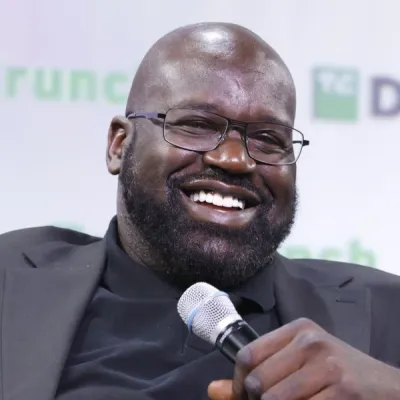
Shaquille O'Neal
Human Design Chart
Biography
After playing college basketball for the LSU Tigers, O'Neal was selected by the Orlando Magic with the first overall pick in the 1992 NBA draft. He quickly became one of the best centers in the league, winning NBA Rookie of the Year in 1992–93 and leading his team to the 1995 NBA Finals. After four years with the Magic, O'Neal signed as a free agent with the Los Angeles Lakers. They won three consecutive championships in 2000, 2001, and 2002. Amid a feud between O'Neal and his teammate Kobe Bryant, O'Neal was traded to the Miami Heat in 2004, and his fourth NBA championship followed in 2006. Midway through the 2007–2008 season he was traded to the Phoenix Suns. After a season-and-a-half with the Suns, O'Neal was traded to the Cleveland Cavaliers in the 2009–10 season. O'Neal played for the Boston Celtics in the 2010–11 season before retiring.
Human Design Analysis: Shaquille O'Neal as Manifesting Generator 6/2
Manifesting Generator 6/2 — Design at a Glance
Shaquille O’Neal's design showed a tendency for lightning-fast implementation. As an Manifesting Generator, he had constant sacral energy that allowed him to skip steps and quickly draw things into his life. This hybrid nature of Generator and Manifestor traits shaped his work style: He could push multiple projects forward simultaneously without losing momentum.
However, the challenge lay in the speed itself. Without waiting for the inner 'yes' from the sacral center – the signal that an activity is truly satisfying – there was a risk of overlooking important steps. This often led to having to backtrack to complete missing steps, which quickly caused frustration as this type's non-self theme precisely lies therein.
When strategy and authority were in alignment, however, this speed transformed into deep satisfaction. Shaquille O’Neal was then most effective when he operated in 'play mode': Variety was not a hindrance but fuel. As long as the sacral center agreed, he could take on different impulses simultaneously without his creative drive turning to exhaustion. His success thus depended less on ticking off one thing after another than on authentically responding to life's impulses and not losing sight of the joy in the process.
Sacral Authority
Shaquille O’Neal’s design showed a tendency to make decisions based on direct physical resonance with external stimuli rather than in his head. As a Generator, his strategy was also his inner authority: sacral authority. This mechanism greatly simplified the decision-making process as it did not require long analysis but an immediate response from the gut.
A prerequisite for this was an open emotional center, meaning he could not act impulsively but had to wait for clarity in his feelings. His sacral authority manifested as physical reactions – a surge of energy, an inner voice or loud sounds like grunts or hums. When his sacral motor kicked in, he felt vital and energized with an inexhaustible enthusiasm for the activity itself, regardless of its purpose.
Additionally, an activated spleen center acted as supporting authority. This gave him quick, spontaneous reaction capability and immediate access to instinctive perception as well as physical wellbeing. He could reliably orient himself by these inner signals. The combination of sacral and spleen centers allowed Shaquille O’Neal to go through life with great joy and satisfaction, fully immersed in his activities while always staying in tune with his bodily sensations.
The 6/2 Profile — Role Model / Hermit
Shaquille O’Neal's design is characterized by a clear shift from experimental trial-and-error to reflective wisdom. In the early years, before age 30, the dynamics of Line 6 as a 3-line dominated: Experiment and error shaped his path. He gathered numerous experiences, withdrew after setbacks, and perfected his approaches through constant testing. This phase served to overcome doubts and find the right path in his circuit.
Around age 30, the full energy of the sixth line activated. Shaquille O’Neal then showed a tendency to withdraw into a metaphorical 'cave' to reflect on his past from a distance. This period of intense introspection was also a process of healing and deep self-awareness. The connection to Line Two, often perceived as an Eremit, fostered this reflective ability. He learned from painful experiences and used his strong memory to draw lessons.
From this inner work emerged Shaquille O’Neal as a leadership figure who acts as a role model. Other people sought his advice to partake in his life wisdom and learn the art of deep self-reflection. His development shows how nostalgia is not just a look back but a force to break old patterns and pose new questions for the future.
Single Definition — Defined & Open Centers
Shaquille O'Neal's design points towards a powerful, intuitive presence. His defined Sacral Center generated constant vital energy that manifested as restlessness or the need for active expression. This power was only available with an affirmative response to external stimuli; initiatives without such a reaction led to resistance and exhaustion. Simultaneously, he had a defined G Center, which provided a firm self-identity and clear sense of direction. He could love himself without being dependent on others and showed natural ways for others as long as he did not try to direct them against their will.
Additionally, his defined Throat Center and Spleen Center were active. The Throat allowed for consistent, reliable communication and action, while the Spleen permitted spontaneous, intuitive judgments in the moment – knowledge that he had to trust without rationalizing it.
In contrast, Head, Ajna, and Heart Centers remained open. His open Head Center made him vulnerable to mental pressure and foreign questions that he could not identify as his own. The undefined Ajna Center meant that his mind was flexible but did not provide a constant source of personal concepts or opinions; he absorbed ideas rather than producing them. Especially the open Heart Center lacked consistent willpower in terms of ego competition. He tended to want to prove his worth through performance, which could lead into a cycle of promises and disappointment if he did not listen to his inner authority instead. Instead, it was a gift for him to have no need to prove anything but rather be guided by the correct energy of the Sacral.
Channels for rhythmic power, charisma and intuitive action.
Shaquille O'Neal's design points towards powerful, intuitive spontaneity. He acted through direct reaction to his environment, driven by deep inner security and the urge to be effective in the moment. This attitude was shaped by the Charisma Channel 34-20: Here, raw physiological energy from the Sacral Center (Gate 34) meets the Throat Center (Gate 20). This creates immediate expressiveness, where the drive to act is guided by sacral reaction. Without this inner guidance, however, the energy can break out chaotically; correctly used, it enables impressive performance and natural inspiration for others as he lost himself in satisfying activity.
Parallel to this, the Power Channel 34-57 connected the Sacral Center with the Spleen Center. This archetype of individual survival strengthened his intuitive capacity through sacral reaction. Gate 57 in the Spleen constantly checked the environment for vibrations and dangers while Gate 34 provided the energy to act immediately – whether it be fight or flight. It kept him physically fit and acoustically attentive, relying solely on his own survival, not mental planning.
The Flash of Insight Channel 57-20 directly linked this intuitive insight with communication in the present moment. Intuition from the Spleen (Gate 57) flowed as a wave of knowledge to the Throat Center (Gate 20), allowing him to spontaneously express the truth of his existence: “I know that I am living now.” This strengthened his ability to think in the moment and touch others through this immediate clarity.
Additionally, the Beat Channel 14-2 shaped his direction. It connected the Sacral Center with the G Center (Identity and Love). Gate 14 focused on the availability of material resources to drive mutation while Gate 2 as driver directed movement through space and time. As a key holder, he had access to essential resources to bring innovative new directions. Through trust in his sacral reaction, he could encourage others to find their own direction without needing to know where it leads himself. His task was to be honest about his own fate and react openly to life, thereby setting an example.
The prioritized gates complemented this picture: Gate 63 (Doubt) advanced the mental process towards gaining security; Gate 64 helped transform past experiences into clarity. In the Heart Center, Gates 26 (Innovation through weak ego) and 45 (Tribe level, Hierarchy) combined energy and expressed willpower. Gate 25 promoted spiritual innocence and centering while Gate 3 in the Sacral Center created mutation and order from confusion. Gate 31 enabled power transfer, and Gate 46 emphasized dedication to the process and love for the body as a temple.
Individual Circuitry — Circuit Signature
Shaquille O'Neal's design points towards impulsive creative expression strength. As someone with simple definition, he showed himself as a unit whose energy flowed directly between identity, sacrum, spleen, and throat – without internal breaks or separate streams. This created a coherent flow from inner truth through intuitive reaction to verbal articulation.
The Knowledge Circuit worked in him in two distinct areas: On one hand, the channel 'Flash of Insight' (Gates 20-57) connected the Throat Center with the Spleen. This allowed spontaneous, innovative ideas that immediately came out acoustically or through action in the moment – a pulsating creativity based on intuition. On the other hand, 'The Beat' (Gates 2-14) linked the Identity Center with the Sacral Center. Here lay the driving force for his unique individuality, supported by rhythmic, constant energy from the life force source. This connection strengthened his self-image through continuous action.
Parallel to this, the Integration Circuit worked as a whole: The channels 'Charisma' (20-34) and 'Power' (34-57) connected Throat Center, Sacral Center, and Spleen directly with each other. This generated a powerful reaction to life: Intuitive perception (Spleen) was redirected into sacral power through correct behavior and expressed charismatically in the moment. Shaquille O'Neal could thus secure his highest individuality through immediate, acoustic presence – not by thinking but through the interplay of instinct, endurance, and voice.
Left Angle Cross of Dominion 1
Shaquille O’Neal’s design pointed towards a clear and direct presence. He was someone who took up space simply by being there and unconsciously drew others into his influence. This configuration is known in Human Design as "The Left Authority Cross 1."
This expression does not describe political power in the traditional sense, but rather a fundamental ability to initiate and set impulses. The first center is defined here, meaning that Shaquille O’Neal had a stable, consistent energy that did not fluctuate from moment to moment. This gave him a natural authority that he didn’t need to force; it was simply there.
The mechanics behind this cross emphasize the power of beginnings. It’s about the ability to set things in motion and communicate clearly what one wants or does. For Shaquille O’Neal, this meant his strategy involved consistently using this initial energy without being distracted by others' reactions. The stability of the first center ensured that this impulse was not just fleeting but had a lasting effect. He acted as a catalyst, structuring situations and driving them forward through his presence and clear will. This quality is not a choice but an inherent feature of his energetic profile, predisposing him to take on leading, initiating roles in any group or environment.
Saturn Return · Uranus Opposition · Chiron Return — Life Cycles
Shaquille O’Neal’s design indicated a tendency towards large structural turning points marked by planetary cycles. In 2000, at the age of 28, he won the NBA-MVP title and his first championship with the Lakers. This fell exactly during his first Saturn return. According to Human-Design mechanics, years of groundwork condenses into a solid result at this point; internal structure often stabilizes through external success or clear positioning, which was visible here in his athletic triumph.
Another significant mechanism emerged in 2011 when he announced his retirement from the NBA at the age of 39. This timing corresponds with the Uranus opposition. This configuration often brings unexpected changes or a need to break free from established structures. Rather than staying in old patterns, Uranian energy breaks bonds to make way for new developments. Shaquille O’Neal’s step back was not an abrupt break without context but followed the logical sequence of these cyclical mechanics: first consolidation and confirmation through Saturn, later necessary transformation and release through Uranus. His journey illustrates how astrologically-based Human-Design phases can shape concrete life decisions—from establishing a dominant role to strategically stepping back when the cycle demands it.
Manifesting Generator · Sacral Authority — Synthesis
A central red thread runs through the design: the dynamic connection between initiation and reaction. As a Manifesting Generator (MG), this chart combines both the ability to seize opportunities quickly and set things in motion—fuelled by the defined Sacral Center and its connection to the Throat Center—as well as the necessity to wait for sacral impulses (Sacral Authority). The Profile of Role Model/Natural Talent reinforces this aspect: intense personal experience is followed by a phase of reflection and sharing wisdom, a cycle of active engagement and withdrawn observation. The Channel of Beats (14-2) underscores the power of this energy, ready to steer things in new directions and drive innovation.
The design harbours a central paradox between speed and the need for retreat. The MG configuration allows skipping steps and acting quickly, yet the chart also points to the necessity of occasionally "retreating" and not neglecting important foundations. Additionally, the left cross of Authority 1 indicates an internal tension between the desire for control and acceptance of change. This shift between rapid forward movement (as evidenced by success in the year 2000) and phases of retreat or realignment (as seen in the year 2011) characterises the chart pattern.
4 Defined Channels
Incarnation Cross - Left Angle Cross of Dominion 1
Solar Return
The Solar Return shows the moment when the sun returns to its exact birth position - your personal solar year.
Life Cycles
Discover the life cycles with a detailed triple view (birth chart, cycle chart, composite).
Human Design Profile
- Strategy
- To respond - wait for something to respond to
- Authority
- Sacral Authority
- Profile
- 6/2 - Role Model / Hermit
- Definition
- Single Definition
- Incarnation Cross
- Left Angle Cross of Dominion 1
- Date of Birth
- 06.03.1972 08:00
- Place of Birth
- Newark, United States
Frequently Asked Questions
What is Shaquille O'Neal's Human Design type?
What Profile does Shaquille O'Neal have in Human Design?
Which Authority determines Shaquille O'Neal's decision-making process?
Which incarnation cross is assigned to Shaquille O'Neal?
When was Shaquille O'Neal born?
Discover your own Human Design
Are you also a Manifesting Generator? Find out in a personal reading how to unfold your multi-talents and direct your energy wisely.
More Personalities
Back to overviewAldair

Alizée

Angeli
Arletty
Artus
Balthus