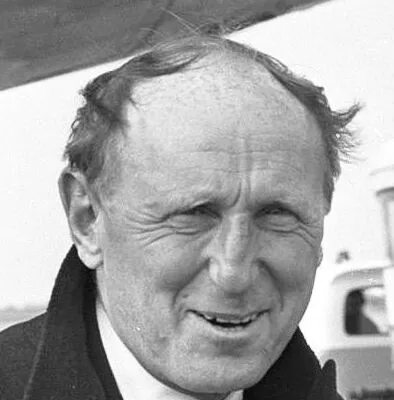
Stéphane Bern
Human Design Chart
Biography
He has been awarded honours by several nations, including the Ordre des Arts et des Lettres (France), the Order of Grimaldi (Monaco), and the Order of the British Empire (United Kingdom).
His parents, Melita Schlanger and Louis Bern, were born to Polish parents of Jewish families who had emigrated to Switzerland and France, before WWII. He came out as gay in the magazine Têtu in October 2009 and in the documentary Vie privée, vie publique (by Mireille Dumas), which aired on France 3 on 6 November 2009.
(Note: His books have not been translated into English.)
Stéphane Bern as a Projector 3/5 in Human Design
Projector 3/5 — Design at a Glance
Stéphane Bern's Human Design configuration shows a tendency towards a focusing aura that immediately recognizes systemic errors. His energy acts like a bright flashlight illuminating the dark and guiding the way. This setup allows him to instantly see what is wrong in a system.
The challenge lies in not directly criticizing these insights, which would provoke resistance from others. Instead, his strategy was to wait for an honest invitation. By shining harmoniously himself, he became attractive; others came on their own and asked for his solutions. This avoids bitterness, the typical non-self theme of a Projector when swimming against the current or intervening without being invited.
Additionally crucial for Stéphane Bern is the need for pauses. His undefined Sacral Center means a lack of constant life energy. He had phases of high productivity followed by necessary rest periods to avoid burnout. The traditional work model, which constantly demands performance, ignores this need for regeneration.
By waiting for invitations and conserving his energy, he was rewarded with success. If he did not live according to this design, bitterness would set in. His path therefore consisted of attracting through role modeling and consciously resting rather than constantly pushing or criticizing.
No Inner Authority
Stéphane Bern's Human Design shows a tendency towards external orientation: decisions were not based on inner bodily authority but through exchange and resonance with others. As a mental Projector, he did not have defined centers below the throat. This openness activated dormant potentials only in dialogue; energetic interactions provided him information from diverse perspectives. His high resonant capacity helped find the right environment and people for this exchange.
Evaluating these impulses required time and solitude. Only in silence could Stéphane Bern discern the red thread, filter out what was essential, and structure it meaningfully. This process – from external gathering to internal ordering – formed his capital of success. He developed a specific intelligence that created clear connections from a mass of data. The necessity to collect information through exchange and then condense it alone significantly shaped his decision-making.
The 3/5 Profile — Martyr / Heretic
Stéphane Bern's Human Design is characterized by an archetypal role as a charismatic storyteller and heroic adventurer. His Profile 3/5, the Explorer/Hero, suggests that he does not accept knowledge theoretically but gains it through personal experimentation and experience. Line 3 of the Adventurer requires this process of trial and error; Stéphane Bern primarily learns from his own experiences and possible failures, making him adaptable and tolerant towards criticism.
This rich treasure trove of practical life experience is then presented to others by Line 5, the Hero's line. Here he shows a need to solve other people's problems with self-acquired knowledge or simply entertain them. This authenticity of lived experience creates a strong attraction for the audience who enjoys learning from his stories. The tension in this design lies between the great desire for recognition as a competent hero and the painful public visibility during the experimental learning process. If he tries something new before others and fails, it can be very hurtful since his attractiveness is directly tied to their perception of his competence. Nevertheless, the drive towards renewal and the desire to seduce others through his storytelling and support them in logical processes propels him continuously.
Single Definition — Defined & Open Centers
Stéphane Bern's Human Design shows a tendency towards constant, unshakable mental architecture. His defined Head, Ajna, and Throat Centers created a steady internal pressure to question and formulate concepts. This mental triad served as a source of inspiring clarity; his voice acted as a reliable channel for these processes. However, since the Head and Ajna do not have their own energy engines, this pressure was not intended for direct implementation but rather to inspire others to think. Attempting to enforce these ideas against a lack of consistent vitality would only lead to frustration. Instead, his strength lay in maintaining mental states and strategically using communication.
In contrast, there was no fixed internal identity or direction as his G Center was open. Stéphane Bern tended to mirror his environment; his well-being depended heavily on being at the right place. Without the appropriate setting, he could feel lost and seek external confirmation of his identity. Similarly, he lacked consistent willpower due to his open Heart Center. He often tried to prove himself or make promises to demonstrate value, which frequently ended in a cycle of overextension and disappointment because the energy for this was not sustainable.
His Sacral Center was also open, meaning he did not have constant vital energy. He could easily be overwhelmed by others' work efforts, tended towards exhaustion, and had difficulty setting boundaries or recognizing when enough was enough. Emotional stability was lacking due to his open Solar Plexus Center; he absorbed the emotions of his surroundings, leading him to feel foreign moods as his own and avoiding confrontation out of fear of emotional overload. Finally, spontaneous intuition and a secure survival sense were missing because of his open Spleen and Root Centers. He tended towards fears about health or safety and often sought external sources for well-being while simultaneously intensifying the stress of his environment without generating it himself.
Channels for clear insight and abstract patterns.
Stéphane Bern's thinking style often feels far-reaching and generates a mutative, metaphorical perspective. His design tends to process and express spontaneous insights through assimilation. This occurs via Channel Conditioning 23-43. Here, Gate Insight (43) in the Ajna Center connects with Gate Assimilation (23) in the Throat Center. Inspired knowledge is received as a sudden breakthrough before being digested and articulated. This connection forms an original viewpoint that can change collective thinking through efficient use of key words or new concepts.
The challenge in this mechanism lay in letting go of control and waiting for the right timing according to inner authority. Without this patience, Stéphane Bern risked having his innovative ideas rejected or feeling alienated as his mind felt like an outsider awaiting invitation. Recognition and integration of his genius into the collective was only possible when he explained his insights simply and clearly while respecting the natural flow of his energy.
Additionally, further energetic currents worked in the background: Gate 4 brought logical formulas for future security, while Gate 49 steered emotional principles and sacrifice at tribal levels. In his design, Gate 62 also promoted precise pattern recognition and logical organization of details, serving as a constant basis for his analytical abilities. This combination allowed him to penetrate complex connections and communicate efficiently once the internal timing was right.
Individual Circuitry — Circuit Signature
Stéphane Bern's design shows tension between individual knowledge transformation and collective meaning-making. The Knowledge Circuit drives the creation of new identity through pulsing acoustic energy. In him, this circuit specifically connects the Ajna Center with the Throat Center (Channel Conditioning). This allows for the direct expression of transformed knowledge and personal individuality. The energy acts in the present moment and confirms unique personality through structured communication.
Parallel to this, the Meaning Circuit challenges sharing emotional experiences from the past with the collective. Here, Stéphane Bern connects the Head Center with the Ajna Center (Channel Abstraction). This connection uses cyclical visual energy to reflect on past events and grasp their meaning. The resulting insights are not primarily logical but emotionally wave-like, serving to learn collectively from history.
Although both circuits touch upon the Ajna Center, they form separate segments in his simple definition. The Ajna Center acts as an interface: it processes abstract impulses from the Head Center for past meaning-making and structured expression forms for individual transformation in the Knowledge Circuit. This configuration shapes a stance that dives deeply into emotional reflection of the past while bringing clear, identity-forming statements to the world. Energy does not flow between the circuits but exists as two parallel forces of reflection and expression.
Right Angle Cross of Explanation 4
Stéphane Bern's Design emphasizes a tendency towards clear and understandable communication. His inner drive was to present complex issues in such a simple and clear manner that they become accessible to others. This attitude is an expression of the Right Authority Cross (Cross 4), which in Human-Design underscores the necessity of explaining things precisely. It’s not about keeping secrets or hiding knowledge behind closed doors, but rather actively uncovering truth through comprehensible language.
For Stéphane Bern, life was a process of learning and conveying information. The challenge lay in helping himself by structuring his own insights and presenting them to others in a way that is immediately understandable. This mechanism promotes clarity over ambiguity. Those who follow this pattern find their confirmation not in the mysterious but in the momentary enlightenment of the listener when a complex topic suddenly makes sense. It’s an energy of didactic precision aimed at avoiding misunderstandings and effectively conveying knowledge. Thus, Stéphane Bern acted as someone who bore the burden of complexity to transform it into manageable, clear information for his counterpart.
Saturn Return · Uranus Opposition · Chiron Return · 2nd Saturn Return — Life Cycles
Stéphane Bern's Design marks two structural turning points where inner maturation translated into concrete biographical steps. The first Saturn Return, the cycle of growing up and taking responsibility, occurred in 1990 when he was 27 years old. At this age, he joined „Figaro Magazine“. This career move condensed years of groundwork into a solid professional foundation, typical for the Saturn phase where one's life structure stabilizes and external recognition is achieved through concrete positioning.
The Chiron Return, a fulfillment cycle in which the incarnation cross unfolds and meaning becomes tangible, was evident in 2009. At age 46, he came out as gay in October of that year in the magazine „Têtu“ and in the documentary „Vie privée, vie publique“. This wasn’t an act of healing wounds but a conscious opening that made his life mission visible. Through this transparency, his inner purpose became effective externally; from then on, he no longer lived in secrecy but fully integrated his identity into his public work. Both cycles underscore how Stéphane Bern's Design uses temporal anchors to translate internal processes into external reality – first through professional anchoring and then through authentic self-disclosure.
Projector · No Inner Authority — Synthesis
Stéphane Bern's chart reveals a central continuity of recognition and structuring. The combination of defined mental center and the channel of structuring (43/23) points to a mind that constantly seeks patterns, identifies errors, and pours knowledge into clear forms. This quest for understanding is reinforced by the open connection to the solar plexus, creating deep empathy – an ability to perceive subtle emotional currents and incorporate them into his analysis. He is designed to shed light on darkness not through direct address (Projector), but through the clear articulation of insights that others must first recognize.
At the same time, a central paradox lies in the tension between the mental pressure of his defined Head and Ajna centers and the open centers of G Center, Heart, and Sacral. While he possesses strong inner logic and a drive for knowledge, his identity is not fixed and he strongly absorbs energies from his environment. This leads to internal conflict: the need for clarity and structure versus constant adaptation to external influences. He seems destined both to be a beacon for others and to constantly seek orientation himself.
2 Defined Channels
Incarnation Cross - Right Angle Cross of Explanation 4
Solar Return
The Solar Return shows the moment when the sun returns to its exact birth position - your personal solar year.
Life Cycles
Discover the life cycles with a detailed triple view (birth chart, cycle chart, composite).
Human Design Profile
- Type
- Projector
- Strategy
- Wait for the respectful invitation
- Authority
- No inner authority - learn more
- Profile
- 3/5 - Martyr / Heretic
- Definition
- Single Definition
- Incarnation Cross
- Right Angle Cross of Explanation 4
- Date of Birth
- 14.11.1963 09:30
- Place of Birth
- Lyon, France
Frequently Asked Questions
What is Stéphane Bern's Human Design type?
What Profiles does Stéphane Bern have in Human Design?
What inner authority does Stéphane Bern possess?
Which incarnation cross is active for Stéphane Bern?
When was Stéphane Bern born?
Discover your own Human Design
Are you also a Projector? Find out in a personal reading how to unfold your leadership qualities and recognize the right invitations.
More Personalities
Back to overviewSissy Spacek

Alain-Fournier

Anémone

Angeli

Ann-Margret

Bourvil