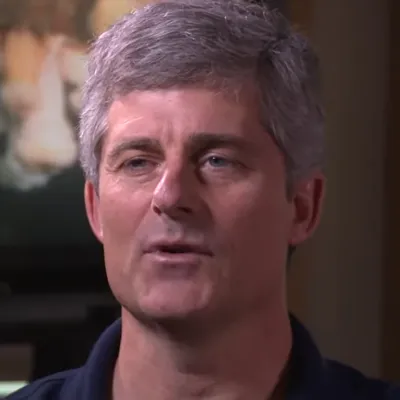
Stockton Rush
Human Design Chart
Biography
Rush was also a lifelong scuba diving enthusiast, having begun diving at age 12. He became a commercial pilot at age 18 and claimed to have become the youngest jet transport-rated pilot in the world at age 19 in 1981. Rush married pilot and teacher Wendy Weil in 1986, and they had two children. In 1989, he built a Glasair III experimental aircraft, which he continued to own and fly throughout his life.
After graduation from Princeton University, Rush worked for McDonnell Douglas as a flight test engineer on their F-15 program. He later was a board member for BlueView Technologies and the Museum of Flight. In 2009, he created the company OceanGate with Guillermo Söhnlein, who departed the company in 2013.
On 18 June 2023, Rush died at age 61, along with four others when OceanGate's submersible Titan imploded during an attempt to visit the wreck of the Titanic. A report by the US Coast Guard dated 4 August 2025, found that Rush "exhibited negligence" contributing to the deaths and could have been found criminally liable.
The Human Design of Stockton Rush: Generator 2/4
Generator 2/4 — Design at a Glance
Stockton Rush was a Generator. His design endowed him with immense endurance and the ability to generate energy, comparable to a workhorse that is strong as long as it burns for its task. This configuration suggested that he acted most effectively when responding to impulses from his environment rather than initiating himself. The motto of his design was: don't start, but answer once his sacral center signaled a clear 'yes'.
This mechanism, however, harbored two specific pitfalls. One danger lay in investing energy into tasks that did not bring him inner joy, which could lead to long-term exhaustion. Another trap arose when he was prevented from working on his heart project despite still being full of power and wanting to continue. If Stockton Rush lived in harmony with this strategy – that is, through reactive action from the gut – his design rewarded him with a sense of deep fulfillment and satisfaction. Acting against this rhythm, for example by constantly initiating or forcing himself, likely resulted in frustration and energy deficiency. His strength thus lay in listening to signals and responding with actions, which no one could stop as long as he followed this inner logistics.
Emotional Authority
Stockton Rush lived with an emotional authority, meaning his defined Emotional Center carried his internal decision-making process. This configuration subjected him to a wave-like mood state that showed constant ups and downs. His perception of the world was always colored by his current mood; he could feel a project as absolutely brilliant in one moment only to reject it completely in the next.
For his design, it was crucial that this immediate emotional reaction was merely a snapshot and not necessarily the deeper truth. Quick, spontaneous decisions stemming directly from this first emotional wave carried a high risk of negative consequences. His authority mechanism therefore required time and detachment.
To gain clarity, he had to let decisions rest ideally overnight or even over several nights. Only when the initial emotional intensity subsided and some distance was established did calmness arise. This process of emotional condensation was essential for long-term course setting in his life. Only through this conscious waiting and allowing natural feelings to fade could he recognize his true inner truth and take grounded steps instead of merely reacting to fleeting moods.
The 2/4 Profile — Hermit / Opportunist
Stockton Rush's design set a tendency towards constant oscillation between deep withdrawal and the need for specific community. As a person with Profile 2/4, often referred to as 'Natural Talent / Networker', he swung between Line 2 – the Hermit who needed space for internal processes – and Line 4, which valued familiar networks. This configuration required clear communication of his needs: He had to make it clear when he sought company and when he wanted to be left alone. During his withdrawal phases, Rush could reflect on knowledge from his environment and evaluate it to develop precise insights.
Line 2 in his design brought an extremely reactive mechanism with it. Persistent interference in his privacy or processes often led him to react surprisingly strongly and intimidatingly. This harshness served the protection of his inner boundaries but frequently resulted in regret over the intensity of the measure, as it was justified yet emotionally taxing. At the same time, Line 4 emphasized analysis and a focus on contrasts rather than direct confrontation. Rush patiently waited for the right alliance partners and opportunities. For him, trust and respect for individual processes were crucial; aggressive resistance often hindered the necessary credibility and clear determination of connections in his social environment.
Single Definition — Defined & Open Centers
Stockton Rush's design set a tendency towards vital endurance and emotional depth. His defined Sacral Center generated constant life energy that he utilized by reacting to external impulses rather than initiating himself. This sacral power combined with his defined Solar Plexus Center, meaning decisions were not made immediately but only after waiting for the emotional wave to pass. His inner authority lay in this patient observation of his own feelings until clarity emerged. Additionally, he had a defined Root Center that gave him a persistent internal pressure to handle stress and move forward.
At the same time, Stockton Rush was exposed to several open centers making him vulnerable to conditioning. His open Head Center tended to engage with doubts or questions from others rather than possessing his own inspiration. The open Ajna Center meant that his conceptual thinking was flexible but he risked adopting foreign opinions as his truth. Through his open Throat Center, he did not actively seek attention but waited for invitations to speak. His open G Center indicated that identity and direction were often shaped by the environment; he adapted rather than having a firm inner orientation. The open Heart Center made him susceptible to the pressure of proving his worth by making promises he could not keep. Finally, his open Spleen Center reflected fears and well-being from the environment, making spontaneous decisions risky. This configuration described a person who was dependent on reacting and emotional clarity while mental and identity-related themes were strongly influenced from outside.
Channels for evolutionary change and emotional waves.
Stockton Rush's design was characterized by a strong impulse towards evolutionary renewal often accompanied by inner tension. This dynamic primarily stemmed from Channel 60-3, connecting the Root Center with the Sacral Center. This channel brought pulsating energy of change but required acceptance of limitation (Gate 60) and passage through initial confusion at the new beginning (Gate 3). The associated melancholy was not a deficit but rather a mechanical indicator for the pressure building up until a visible mutation became apparent.
Additionally, Channel Feelings Release 39-55 worked, connecting the Root Center with the Solar Plexus. Through Gate 39 (Provocation) and Gate 55 (Mind), an emotional wave between joy and sadness emerged. This configuration promoted the ability to provoke others' minds and thus reveal their true nature or own spirit, but was also vulnerable to moodiness when one's own mood was not lived authentically.
In the background, further gates supported this structure: Gate 21 steered material life and required respect in the community while Gate 48 enabled deep pattern recognition yet without direct implementation power. Gate 38 created resistance for preserving individual integrity under pressure. On the personality side, Gate 36 with its cyclical crisis experience and Gate 29, which persistently affirmed saying yes to life, were at work. In the design, Gates 9 (Detail Work), 58 (Experimentation in Root Center) as well as 59 (genetic binding strategy) and 19 (resources and territory) complemented this complex image of an individual designed to initiate change through pressure and emotional alchemy.
Individual Circuitry — Circuit Signature
Stockton Rush's design set a tendency towards pulsating, individual identity driven by the Knowledge Circuit. This circuit connected his Sacral, Root, and Solar Plexus Centers directly with each other – a continuous energetic flow. The energy flowed from the sacral source over rooting intensity to the emotional waves in the Solar Plexus. This created an internal dynamic aimed at transformation and gaining new knowledge without breaking out into external expression centers like the Throat Center, as this was not part of his defined group.
Within this closed circuit, two specific channels were active. The channel 'Mutation' (Gates 3-60) promoted deviations from the known and strengthened unique individuality through innovative impulses. Parallel to that, the channel 'Emotion Release' (Gates 55-39) resolved emotional tensions and circulated them within the system. Both channels contributed to creating entirely new knowledge and processing it through the right emotional resonance in the Solar Plexus. The energy remained bound within the lower centers: Sacral as motor, Root as intensity carrier, and Solar Plexus as emotional filter. This configuration shaped a lifestyle based on inner transformation – knowledge was not primarily communicated outward but served for identity formation and change from within. The pulsating format-energy of these centers provided an acoustic, present-time perception of self that always existed in one's own, unmistakable way.
Right Angle Cross of Tension 1
Stockton Rush's design was marked by the right cross of tension. This configuration described an intense, often unconscious tension in the emotional center. It did not manifest as a calm detachment but rather as a constant internal pressure seeking release or resolution.
In Human Design, this cross describes a specific energetic structure that connects the realms of emotion and intuition in a way that can lead to strong fluctuations between hope and despair. Stockton Rush lived with this inner dynamic, which strongly influenced his perception of the world. The tension was not a flaw but an integral part of his nature. It drove him forward but also exhausted him.
This mechanism means that decisions were often dependent on the current emotional wave. In moments of clarity, he could gain deep insights; during phases of uncertainty, however, the situation quickly felt threatening. The right cross of tension ensured that calm was rare. There was always an underlying restlessness demanding movement or change. Stockton Rush had to learn to deal with this energy without being overwhelmed by it. The challenge lay in understanding the tension not as an enemy but as a source of strength, even though it was often felt as painful.
Saturn Return · Uranus Opposition · Chiron Return · 2nd Saturn Return — Life Cycles
Stockton Rush's design inclined towards strategic structuring and long-term goal orientation. This attitude crystallized in 1989 when he turned 27 and received his MBA from UC Berkeley Haas School of Business. For his Human Design, this marked a typical moment of the first Saturn return: A cycle where years of groundwork and discipline often culminate in a solid institutional result. The graduation not only represented an academic milestone but also the consolidation of a clear professional identity and infrastructure based on stability and thorough planning.
Later, in 2012 at age 50, Rush founded the non-profit organization OceanGate Foundation. This fell within his Chiron return period, spanning from ages 49 to 51. In Human Design mechanics, this return signifies the blossoming of one's incarnation cross: If a person has lived according to their strategy and authority, their deeper purpose unfolds increasingly in life. The foundation of the organization was an expression of this unfolding – not as healing old wounds but as concrete realization of a long-held vision. Rush’s design thus supported the transition from individual career planning to institutional implementation of a specific life purpose, where earlier structural foundations (Saturn) enabled later meaningful orientation (Chiron).
Generator · Emotional Authority — Synthesis
Stockton Rush primarily lived out of his sacral energy (Sacral Center), driving him towards sustained activity and the desire to invest this energy in fulfilling activities. This corresponded with an emotional authority that allowed decisions only after careful consideration, triggered by waves of feelings. The profile as a natural talent and networker reinforced this inner rhythm by setting the pendulum between the need for withdrawal (Line 2) and social interaction (Line 4) – a give-and-take dynamic giving him clarity in isolation to share with others.
A central paradox lay in Rush’s design pointing both towards evolutionary change (Channel Mutation) and the necessity of emotional maturation. The channel suggested an ongoing search for new possibilities and a pulsating format of energy, while emotional authority required patience and reflection on decisions. This tension between the drive for innovation and the inner need to process emotions created a dynamic but potentially conflict-ridden internal compass.
2 Defined Channels
Incarnation Cross - Right Angle Cross of Tension 1
Solar Return
The Solar Return shows the moment when the sun returns to its exact birth position - your personal solar year.
Life Cycles
Discover the life cycles with a detailed triple view (birth chart, cycle chart, composite).
Human Design Profile
- Type
- Generator
- Strategy
- To respond - wait for something to respond to
- Authority
- Emotional Authority
- Profile
- 2/4 - Hermit / Opportunist
- Definition
- Single Definition
- Incarnation Cross
- Right Angle Cross of Tension 1
- Date of Birth
- 31.03.1962 17:16
- Place of Birth
- San Francisco, CA, United States
Frequently Asked Questions
What was Stockton Rush's Human Design type?
Which Profile did Stockton Rush have?
What Authority did Stockton Rush have?
What incarnation cross did Stockton Rush have?
When was Stockton Rush born?
Discover your own Human Design
Are you also a Generator? Find out in a personal reading how to use your sacral energy correctly and discover deep satisfaction.
More Personalities
Back to overviewAaliyah

Alexia

Angèle

Anne-Marie

Arcángel

Arno