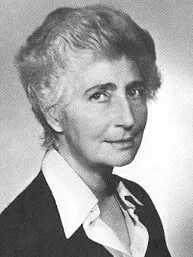
Susanna Agnelli
Human Design Chart
Biography
She married Urbano Rattazzi; daughters Priscilla born on 20 July 1956 and Ilaria on 2 July 1966 out of a total of six kids.
Human Design Analysis: Susanna Agnelli as Projector 2/5
Projector 2/5 — Design at a Glance
Susanna Agnelli appeared as a Projector type with an aura that behaved like a focused flashlight. Her design predisposed her to immediately identify system errors and bring 'light into the darkness' for others. This ability to recognize weaknesses in others or structures instantly was characteristic of her energetic presence.
However, the mechanics of her design required a specific approach: Directly addressing the errors would have generated resistance and bitterness, comparable to shining a bright light directly into someone's face. Instead, her strength lay in passively attracting others through her own harmonious glow. By radiating harmony herself, she automatically drew people who then sought her insights. Her strategy involved waiting for an honest and appreciative invitation to lead rather than going straight into confrontation.
Since Projectors do not have a defined Sacral Center, Susanna Agnelli lacked a constant intrinsic energy source. Her rhythm followed a cycle of energy-rich phases where she could work quickly, interspersed with necessary rest periods to avoid burnout. Living according to this design rewarded her with success; ignoring it led to bitterness as an aftermath state. Therefore, her path was not defined by continuous action but rather by targeted shining and waiting for the right invitation.
Self-Projected Authority
Susanna Agnelli revealed herself as someone particularly vulnerable to distraction through external motoric energies due to her openness. As a Projector with rare authority in Self, her greatest danger lay in losing herself in this receptivity and constantly chasing after external energy instead of trusting her inner identity.
Her decision-making did not rely on rational analysis but rather on two specific mechanisms. First, by listening into spontaneous self-conversations or stimulated dialogues. Crucial was the ability to distinguish the voice of reason from that of her true essence. What she spontaneously and without thinking expressed revealed her uniqueness and made it recognizable for others. Second, she followed a physical pull, an inner compass guiding her geographically or thematically towards or away from certain things.
By remaining faithful to this physical direction, Susanna Agnelli could recognize her own life path and thus also act as a guide for others. This focus on inner identity was necessary to avoid being led by the environment in pursuit of external validation. Her specific potential for success lay precisely in utilizing this spontaneous authenticity and bodily orientation rather than letting herself be guided by circumstances. Distinguishing between the spontaneous expression of self and the rational voice of reason was key to her clarity.
The 2/5 Profile — Hermit / Heretic
Susanna Agnelli emerged as a person standing between a deep need for withdrawal and strong projection through her environment. Her design tended towards being perceived from outside as a problem solver or hero, while internally she needed much time for herself. This tension arose from her Profile configuration 2/5: Line 2 conveyed an outwardly caring presence, although Susanna Agnelli often did not fully recognize her own strength. Simultaneously, others instinctively sought solutions and expected help from her. This created the risk of 'vampirism,' or energy depletion through other expectations.
Line 5 amplified this dynamic by projecting strong authorizations and fantasies onto her. To avoid being drained, it was essential for Susanna Agnelli to set clear boundaries during her necessary alone time. Only then could she decide what she truly wanted to engage with without forgetting herself. The limitation imposed by Line 5 forced a choice of one direction, which could cause persistent frustration over restrictions if not respected. Her strength lay in self-sufficiency, which she used to look inward and determine when and for whom she wanted to solve problems. Managing the illusions projected from outside was central to protecting her energy and acting authentically.
Single Definition — Defined & Open Centers
Susanna Agnellis Human Design shows a tendency towards a fixed, authentic identity and a reliable voice. She was someone who acted from a deep sense of self-love and clear inner direction without being dependent on external validation. This configuration came from her defined G Center, which offered a constant magnetic presence and the ability to show others new paths, as well as her defined Throat Center. The throat served as a pivot point that transmuted messages from all body areas into clear communication and action; thus, her voice was a consistent expression of her true nature.
At the same time, Susanna Agnelli was situatively receptive to influences from her environment through seven open centers. Her open Head Center made her susceptible to mental pressure and the temptation to answer questions that were not hers. The open Ajna Center allowed for a flexible mind but risked interpreting concepts of others as personal truth or pretending uncertainty. Her open Heart Center lacked consistent willpower; she tended to want to prove her worth through promises, often ending in cycles of overextension and self-doubt because she was not designed to approach situations competitively.
Her open Sacral Center allowed her to absorb and amplify the vital energy of others, leading to exhaustion if she ignored boundaries or worked on borrowed energy. Her open Solar Plexus absorbed emotional waves from the environment; Susanna Agnelli risked personalizing foreign moods as her own feelings and avoiding confrontations out of fear of rejection. The open Spleen Center carried a fundamental survival anxiety that could make her cling to unhealthy situations just to gain a sense of security through others. Finally, her open Root Center took adrenalized stress from the environment, which could lead to an endless cycle of chaos and burnout if she tried to actively combat this external pressure.
Channels for logical, secure and future-oriented leadership.
Susanna Agnelli was marked by a design that understood leadership not as dictation but as logical integration into collective patterns. Her leadership style was situational and required confirmation from her surroundings; success for her arose through representation and shared responsibility. This was effectively achieved through the Alpha Animal Channel 7-31, which connects the G Center with the Throat Center. Gate 7 provided the logical role to lead society – often described as power behind the throne – while Gate 31 represented the collective leader whose voice exerts influence. This configuration required her first to gain trust and be invited by the majority to demonstrate competence in tested patterns. She could show the way but not take it; absolute authority was less available to her than the ability to guide from an influential position.
Additionally, further energetic streams influenced her. Gate 27 brought a genetic role of care and self-preservation, while Gate 28 emphasized hearing now and taking risks according to her strategy. Gate 41 propelled evolutionary development through emotional experiences. On the personality side, Gate 23 promoted understanding and assimilation by translating inner sound into language. Gate 46 stood for determination and dedication in the collective as well as nurturing the body as a temple. Gate 33 enabled reflection and active withdrawal to strengthen her position before new cycles. Finally, Gate 1 brought uniqueness and creative creation without limitations, with expression happening at the right time. This combination shaped her way of moving through social structures: logically leading, empathically caring, and reflecting, always dependent on the resonance of the environment.
Collective Circuitry — Circuit Signature
Susanna Agnelli was marked by a clear, strategic mindset aimed at making complex information useful for the future. Her design connected the Throat Center with the Identity Center via the Understanding Circuit. This configuration promoted sharing rational insights free from emotional coloring or external conditioning. It was an 'emotionless ratio' where logic and structure were in focus.
The active channel 31-7, known as 'The Alpha Animal', directly linked these two centers. This allowed her to use visual formats to clearly structure ideas and make them accessible to others. The energy flowed from her identity into the capacity for expression, enabling her to articulate strategic visions. Since Susanna Agnelli had a simple definition and only these two centers were connected by a channel, there was no direct energetic flow to other areas of her design. This connection stood isolated as an independent force focused on formatting information. She used this mechanism to explain logical connections and contribute to future developments through improved clarity. The focus always lay on the clear visual representation of ideas without involving other emotional or intuitive centers directly in this process.
Right Angle Cross of the Unexpected 1
Susanna Agnelli was marked by a fundamental attitude that saw the unforeseen not as a disturbance but as a central impulse of her existence. Her design suggested that spontaneous turns and unplannable events made up the bulk of her life experience. This configuration, known as the right cross of the unexpected, described a dynamic in which adaptive responses to sudden changes were at the forefront. Instead of striving for rigid structures or long-term, unchanging plans, her inner mechanics were designed to react flexibly to what arose moment by moment. Life appeared less like a linear path with a fixed goal and more as a sequence of moments each requiring an immediate situational adjustment. This trait did not mean chaos or disorientation but rather a specific kind of presence: the ability to act in the present and embrace the new as it emerged. For Susanna Agnelli, this openness to the unexpected was not a lack of control but her natural strategy for navigating reality. She lived in a world that constantly changed, and her design supported her in using this mutability as a driving force rather than fighting against it. Her strength lay in the agility of mind and the readiness to take the next step only when circumstances made it clear.
Saturn Return · Uranus Opposition · Chiron Return · 2nd Saturn Return — Life Cycles
Susanna Agnelli was seen during her middle years as someone who increasingly took on structural responsibility. Her design marked this phase through the Chiron Return, a cycle of fulfillment and bloom where the inner sense of one's own design concretized in outer life. This did not happen as healing from injuries but rather as an unfolding of her essential purpose. In 1974 at age 52, this process became visible: she became mayor of Monte Argentario. This role reflected the maturation that the Chiron cycle fosters with a consequent approach to life – a time when inner clarity becomes outer authority.
Following this was the second Saturn Return, a mechanism that solidifies life structures and cements long-term commitments. While the first return often concerns foundational establishment, the second anchors one's position in society sustainably. In 1979 at age 57, Agnelli was elected to the European Parliament and took on tasks in the Committee for External Economic Relations. This event underscored the saturnian quality of her configuration: taking up public responsibility on an international level embedded within firm institutional frameworks. Both cycles work together as markers for professional maturation where personal orientation and societal function intertwine.
Projector · Self-Projected Authority — Synthesis
Susanna Agnelli lived a life characterized by the ability to recognize patterns and communicate them in a way that attracted others (Channel 7/31). However, her design as a projector required an invitation to effectively exert this influence. This combination of sharp perception and the need for recognition formed a thread of observational skill paired with subtle leadership – always mindful of understanding the needs of others while trusting her own inner authority (Authority in Self). The openness of many of her centers, particularly Head, Ajna, and Solar Plexus, further strengthened this dynamic by developing a deep sensitivity to the energies around her.
A central paradox in her design lay in the tension between the need for recognition and the inherent openness of many centers. On one hand, she longed to share her insights and lead others (Gate 31), on the other hand, she was vulnerable to external influences and conditioning. This discrepancy likely led her to constantly balance between a desire for autonomy and the necessity of a validating response from outside – a dance between self-expression and adapting to the expectations of her environment.
1 Defined Channel
Incarnation Cross - Right Angle Cross of the Unexpected 1
Solar Return
The Solar Return shows the moment when the sun returns to its exact birth position - your personal solar year.
Life Cycles
Discover the life cycles with a detailed triple view (birth chart, cycle chart, composite).
Human Design Profile
- Type
- Projector
- Strategy
- Wait for the respectful invitation
- Authority
- Self-Projected Authority
- Profile
- 2/5 - Hermit / Heretic
- Definition
- Single Definition
- Incarnation Cross
- Right Angle Cross of the Unexpected 1
- Date of Birth
- 24.04.1922 21:00
- Place of Birth
- Torino, Italy
Frequently Asked Questions
What was Susanna Agnelli's Human Design type?
What Profiles did Susanna Agnelli have?
What Authority did Susanna Agnelli possess?
What incarnation cross did Susanna Agnelli have?
When was Susanna Agnelli born?
Discover your own Human Design
Are you also a Projector? Find out in a personal reading how to unfold your leadership qualities and recognize the right invitations.
More Personalities
Back to overviewSissy Spacek

Alain-Fournier

Anémone

Ann-Margret

Bourvil
Hergé