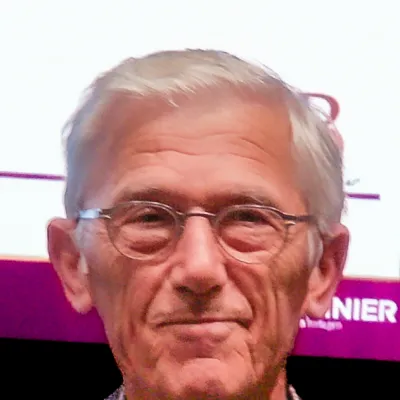
Theodor Kallifatides
Human Design Chart
Biography
His father was Dimitrios Kallifatides, a teacher originating from the Pontus, and his mother was Antonia Kyriazakou, from Molaoi. In 1946, he and his family moved to Athens, where he finished high school and studied in Karolos Koun's theatrical school.
He emigrated to Sweden in 1964 and has lived in the country ever since. He studied philosophy, and lectured at Stockholm University between 1969 and 1972; later he was chief of Bonniers literary magazine between 1972 and 1976.
Kallifatides made his literary debut in 1969 with a poetry book, but gained recognition mainly through his subsequently published novels.
Kallifatides has received numerous awards for his works, which usually revolve around his experience of Greece and of being Greek in a foreign country, and almost all his works have been translated; some have been published in more than twenty languages.
What does Manifesting Generator 5/2 mean for Theodor Kallifatides?
Manifesting Generator 5/2 — Design at a Glance
Theodor Kallifatides revealed himself as someone who possessed hybrid energy: the constant power of a Generator, paired with the lightning-fast execution power of a Manifestor. His design inclined towards great speed, allowing him to skip steps and quickly pull things into his life. However, this ability was a double-edged sword. Often, Theodor Kallifatides was too fast, overlooking important intermediate steps and had to return later to fill in the gaps. This led to frustration, his specific feeling of not being himself. Additionally, he tended to pursue multiple projects simultaneously, driven by various impulses. Without inner alignment, this creative drive quickly turned into overextension.
The mechanics of his type, the Manifesting Generator, require a clear strategy: not initiating but reacting to life. Only when his Sacral Center – his energy source – gave a clear “yes” was action fruitful. Regularly checking his own motivation was essential to ensure that authority aligned with action. When Theodor Kallifatides followed this strategy and found himself in a playful mode where variety was welcome, he drew deep satisfaction from his work. Then, the simultaneous handling of various tasks was no obstacle but the source of his vital creative power.
Emotional Authority
Theodor Kallifatides revealed himself as someone who never made decisions based on the first emotional wave. His design inclined towards distancing himself from the immediate mood of the moment before acting. This resulted from his emotional authority, carried by the defined Solar Plexus Center. In Human Design mechanics, this authority always takes precedence over all other defined centers, regardless of further configurations. Theodor Kallifatides was under a constant emotional wave that colored his perception: What appeared inspiring in one moment could be perceived as negative in the next. However, these fluctuations did not mean that the first impression was the truth. Quick, spontaneous reactions to these precursor feelings often had negative consequences for him. Instead, his system required patience and conscious hesitation. By reviewing decisions multiple times and letting them rest, he gained emotional distance. Over time, intense feelings subsided, and a deeper clarity and calmness emerged. This process of waiting was the crucial mechanism for him to set long-term, life-defining steps correctly. Only through this process of going through the emotional process could he recognize his true inner truth beyond the transient waves of inspiration or rejection.
The 5/2 Profile — Heretic / Hermit
Theodor Kallifatides revealed himself as someone who initially protected his gifts in the “cave” of isolation to prepare for a later public role. This Profile 5/2 carries an inner contradiction: the desire for admiration (Line 5) collides with the need to be left alone (Line 2). Unlike obvious heroes, Theodor Kallifatides hid his potential until the world discovered it. If he passively waits for this discovery, bitterness and frustration threaten, as heroism does not thrive in the mode of solitude. Instead, it requires questioning one's own expectations and actively stepping onto the “podium.”
Gate 22 on Line 5 promoted directness and practical solutions in crisis times. This energy allowed breaking behavioral rules when the mood required it, which was often perceived as unconventional and projected negatively. At the same time, Gate 11 on Line 2 worked with strictness and inflexibility. Here, the knowledge of one's own process was crucial. Boredom set in when ideas were not carried outward or did not resonate. Theodor Kallifatides had to learn to let these ideas mature rather than projecting them onto others. Only through this inner work and the conscious setting of boundaries could he share his clearly formulated insights, which were then appreciated by others without sacrificing his necessary alone time.
Split Definition — Defined & Open Centers
Theodor Kallifatides revealed himself through a persistent, active mental field and a reliable expression capability. His defined Ajna Center ensured that he was always in a process of conceptualizing; he processed data and creativity in a specific, trustworthy way that protected him from easy influence by others. This mental structure flowed directly into his defined Throat Center, allowing him to consistently express what he thought. His voice served as a pivot point to transform inner information into communication and action.
This cognitive clarity rested on immense physical vitality. His defined Sacral Center generated a constant energy source daily, experienced as restlessness or a need for activity. For Theodor Kallifatides, it was essential to utilize this energy by reacting to external impulses rather than initiating; only through a consenting sacral response did he have the strength to fulfill commitments sustainably and avoid frustration.
Simultaneously, his defined Solar Plexus Center shaped an emotional depth and authority. He was designed to wait out the waves of his feelings before making decisions. This emotional intelligence required patience, as the truth only revealed itself over time. His defined Root Center provided the necessary pressure to move forward in the world and master existential challenges.
In contrast, his open Head Center revealed a vulnerability to mental pressure and confusion when he did not trust his inner authority. He tended to engage with questions that were not his own or sought inspiration to quiet the inner monologue. His open G Center meant he did not have a fixed identity or direction but received it through the environment and relationships; he was dependent on being in the right place to receive the correct guidance. The open Heart Center made him vulnerable to the pressure of proving his worth, while the open Spleen Center made him sensitive to health and well-being in his environment, making spontaneous decisions seem risky.
Channels for change, curious search and emotional openness.
Theodor Kallifatides allowed evolutionary change through accepted limitations and patient waiting for inner impulses. This attitude was rooted in the Channel of Mutation 60-3, connecting the Root Center with the Sacral Center. Here, a pulsating energy arises, bringing melancholy when the inner rhythm stops. The key lies in not arguing but enduring the confusion of a new beginning until a new mutation unfolds from the sacral reaction.
Simultaneously, he was marked by the ability to weave ideas into compelling stories. The Channel of Curiosity 11-56 connects the Ajna Center with the Throat Center and drives the search for new perspectives. It is less about finding final truths than sharing discoveries that stimulate others and provoke thought. These narrative gifts serve to transform abstract information into vivid parables that appeal to the imagination.
Social interactions were guided by the emotional wave. The Channel of Openness 22-12 links the Solar Plexus Center with the Throat Center and brings passion as well as restraint into play. Openness was only shown when the mood was right; otherwise, a cautious distance prevailed. This created an environment where words could only unfold their mutative effect when the timing of the emotional ebb and flow allowed it.
Additionally, Gates like 47 (Purpose from Confusion), 14 (Skillful Power Handling), and 33 (Reflection) worked in the background. They supported the ability to gain clarity from past experiences and build inner strength through withdrawal before new impulses emerged from the background.
Individual Circuitry — Circuit Signature
Theodor Kallifatides' design showed a split structure: two parallel, not directly connected energetic systems shaped his experiential world. The first system connected the Sacral with the Root Center and the Throat with the Solar Plexus Center. Here, the Knowledge Circuit was at work. The connection between Throat and Solar Plexus Centers (Channel 12-22, Openness) allowed emotional waves to be directly expressed in words. Parallel to this, the Channel 3-60 (Mutation) connected the Sacral with the Root Center, providing a driving force for deviation from the known and creation of new identities. These energies, however, were isolated from the second system.
The second system consisted of the connection between Ajna and Throat Centers (Channel 11-56, Curiosity) in the Meaning Circuit. This channel linked the center of thought with the center of expression, driven by a fundamental curiosity. The energy here was cyclical and referred to reflecting on past experiences to understand their meaning and share them.
Although both systems involved the Throat Center, they were energetically isolated in Theodor Kallifatides. There was no direct flow between the impulsive, mutating power of the first system and the reflective, curious dynamics of the second. Theodor Kallifatides had to experience and integrate these two different impulses – creating new things through emotional authenticity and understanding the past through intellectual curiosity – as separate, coexisting forces without them automatically transitioning into each other.
Left Angle Cross of Informing 1
Theodor Kallifatides revealed himself as someone whose inner drive was strongly connected to the desire to share information and insights. His design suggests a tendency not only to understand things himself but also to actively share this understanding with others. This attitude aligns with the mechanics of the left cross of Communication. Here, communication is at the center of life energy. It is less about the mere accumulation of knowledge for oneself and more about building bridges and bringing ideas into exchange. Theodor Kallifatides often acted as a mediator, preparing complex issues in such a way that they became accessible to others. This configuration describes a natural ability to establish connections through words and dialogue. The focus is on clarity and the effectiveness of transmission. It is a design that thrives on the idea that thoughts do not remain within but step outwards. Theodor Kallifatides used this energy to inform and inspire his surroundings. The strength of this pattern lies in the direct, often intuitive way in which insights are conveyed. A space is created in which exchange flows and understanding is promoted. This characteristic shaped his interactions and made him a central figure in communicative processes.
Saturn Return · Uranus Opposition · Chiron Return · 2nd Saturn Return — Life Cycles
Theodor Kallifatides revealed himself as someone who sought inner clarity and structural stability before presenting his work to the public. His design suggests a tendency to undergo deep inner processes before they become outwardly effective. This became visible in 1969, at the age of 31, when he debuted with a poetry collection. For his Human Design, this marked the first Saturn Return. This cycle represents the condensation of long-term inner work into a tangible, external result. The publication was not a sudden impulse but the logical conclusion of a phase of consolidation. The Saturn Return demands that one solidify one's values and boundaries to create a solid foundation for future steps. Kallifatides' step into the literary world corresponded to this mechanism: years of groundwork condensed into a concrete, public milestone. His design supported the transformation of inner insights into a stable form that would endure. The poetry served as a medium to express this condensed experience. The focus was on authenticity and the ability to structure the experienced in a way that others could receive. This moment confirmed the necessity of allowing time for inner maturation before expressing oneself.
Manifesting Generator · Emotional Authority — Synthesis
A central red thread in this design is the dynamics between inner perception and outer expression. The combination of sacral energy (generator-induced) and manifesting impulses points to a person who fundamentally reacts to life but also possesses the ability to quickly initiate things. This is reinforced by the defined Mental Center (Ajna), which provides a consistent way of thinking and the ability to form concepts – an inner drive that interacts with external energy. The Knowledge Circuit, marked by Mutation and Creativity, underscores the ongoing search for new paths and the transformation of existing patterns, with the emotional wave (emotional authority) enabling a deeper processing and maturation of insights.
The central paradox lies in the tension between the desire for alone time and the calling to be perceived as a hero (Profile 5/2). The tendency to develop gifts in secrecy collides with the need for recognition. This creates an inner conflict, which is intensified by the quick, impulsive energy (Manifesting Generator) – a constant tug-of-war between the urge to act and the need to digest and shape things before carrying them outwards.
3 Defined Channels
Incarnation Cross - Left Angle Cross of Informing 1
Solar Return
The Solar Return shows the moment when the sun returns to its exact birth position - your personal solar year.
Life Cycles
Discover the life cycles with a detailed triple view (birth chart, cycle chart, composite).
Human Design Profile
- Strategy
- To respond - wait for something to respond to
- Authority
- Emotional Authority
- Profile
- 5/2 - Heretic / Hermit
- Definition
- Split Definition
- Incarnation Cross
- Left Angle Cross of Informing 1
- Date of Birth
- 12.03.1938 23:59
- Place of Birth
- Moláoi, Greece
Frequently Asked Questions
What is Theodor Kallifatides' Human Design type?
What Profiles does Theodor Kallifatides have?
What authority does Theodor Kallifatides have?
What incarnation cross does Theodor Kallifatides have?
When was Theodor Kallifatides born?
Discover your own Human Design
Are you also a Manifesting Generator? Find out in a personal reading how to unfold your multi-talents and direct your energy wisely.
More Personalities
Back to overviewAlain-Fournier
Aldair

Alizée

Angeli

Arletty

Artus