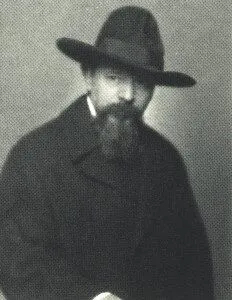
Theodor Lessing
Human Design Chart
Biography
He is known for opposing the rise of Hindenburg as president of the Weimar Republic and for his classic on Jewish self-hatred (Der jüdische Selbsthaß), a book which he published in 1930, three years before Adolf Hitler came to power, in which he tried to explain the phenomenon of Jewish intellectuals who incited antisemitism against the Jewish people and who regarded Judaism as the source of evil in the world.
Lessing's political ideals, as well as his Zionism made him a very controversial person during the rise of Nazi Germany. He fled to Czechoslovakia where he lived in Marienbad in the villa of a local social democratic politician. On the night of 30 August 1933, he was assassinated by Sudeten German Nazi sympathizers. Lessing was shot through a window of the villa where he lived. His assassins were German Nazis from Sudetenland, Rudolf Max Eckert, Rudolf Zischka and Karl Hönl. They fled to Nazi Germany after the assassination.
Lessing's philosophical views were influenced by Nietzsche and Afrikan Spir. According to Theodore Ziolkowski in Lessing's Geschichte als Sinngebung des Sinnlosen (History as Giving Meaning to the Meaningless), "writing in the tradition of Nietzsche, argued that history, having no objective validity, amounts to a mythic construct imposed on an unknowable reality, in order to give it some semblance of meaning."
Theodor Lessing as a Generator 1/3 in Human Design
Generator 1/3 — Design at a Glance
Theodor Lessing revealed himself as someone with considerable inner endurance who could not unleash his strength through arbitrary initiative. His design was that of a Generator, a configuration endowed with much sacral energy and thus possessing high potential for sustainable work. This energy only became effective when he responded to external impulses. The motto of his system was not 'initiate' but 'react'. When Theodor Lessing answered signals from his environment and his sacral center – the area of gut feeling – gave a clear yes, he could act with full power. In these moments of resonance, his energy was released and he acted efficiently.
It was dangerous for him to do things that he actually had no desire to do. Such actions led to wasting his valuable energy, which in the long term resulted in exhaustion. Equally frustrating was it when he was prevented from working on his genuine interests even though he still felt full of drive. If Theodor Lessing lived in harmony with this strategy of reacting to inner confirmation, his system rewarded him with a deep feeling of fulfillment. If he initiated things independently without waiting for this inner resonance, sooner or later he encountered persistent frustration and a noticeable lack of energy. His strength lay therefore in responding from the gut to what truly spoke to him.
Emotional Authority
Theodor Lessing showed an internal decision-making structure that did not rely on immediate clarity but rather on going through emotional waves. His inner authority was Emotional Authority carried by the defined Emotional Center. This mechanism meant that his feelings were subject to constant ups and downs; what seemed as deep truth in one moment could appear completely different under a different mood coloration in the next. For Lessing, the first emotional impression was thus always only a snapshot, not the final truth. Quick, spontaneous decisions based on this fleeting emotional state often proved problematic because they were based on incomplete inner information.
His design's strategy required patience and time. Long-term decisions had to mature, which frequently meant sleeping over things multiple times. Only when intense feelings subsided and an emotional distance was gained did the necessary clarity and calmness set in. This process of weaving and inner condensation was essential to arrive at a stable insight. Since the Emotional Center acted as authority, this emotional maturation always took precedence over other defined areas of his chart. Lessing lived in a system that forced him to trust the temporal dimension of emotion rather than being led by its immediate intensity.
The 1/3 Profile — Investigator / Martyr
Theodor Lessing was someone who combined theoretical foundation with practical experimentation. His design as a Researcher and Experimenter (Profile 1/3) shaped an attitude based on learning through trial and error. Line 1 drove him to accumulate knowledge, while Line 3 promoted the urge to test this knowledge in reality. This configuration meant that his judgments were based on double verification: theoretical and practical. When he took a position, it had been tested both intellectually and existentially.
This process was not always linear. The energy of Line 1 could lead him to hesitate before implementation out of fear of still not knowing enough. Yet Line 3 demanded adaptability and the readiness to engage in connections from which to learn. Tolerance towards criticism played a role; often, the path to renewal led through critique that he had to endure to validate his insights. His design suggested that true wisdom for him could only arise through this rigorous testing in everyday life. He did not seek abstract truth but rather principles of living that proved themselves in concrete action. This cycle of study and experiment was the foundation of his intellectual work.
Triple Split Definition — Defined & Open Centers
Theodor Lessing's design showed a tendency towards constant mental pressure and profound concept formation. The definition between Head Center and Ajna Center created a permanent impulse to ask questions and understand connections, without possessing the direct energy to implement these thoughts. This led him to often experience inspirations as unsolved mental tasks that required patience to avoid slipping into frustration or hasty actions.
At the same time, Theodor Lessing had a reliable self-identity and clear sense of direction, shaped by his defined G Center. This gave him the ability to provide orientation for others without needing to control their paths. His communication was structured through a defined Throat Center, serving as a pivot point to translate inner processes into words and actions. The connection to the emotional wave of the Solar Plexus Center meant that his decisions were influenced by a shifting emotional state; clarity only emerged for him through patient waiting for these wave movements, not through spontaneous reactions to emotional peaks.
As a Generator with a defined Sacral Center, he possessed an enormous source of vitality and energy, which was usable correctly only in response to external impulses. Initiatives from the mind typically led to resistance and exhaustion because his sacral power was available only for affirming responses. His open Heart Center made him vulnerable to the pressure of proving his worth through promises or competitive thinking. This lack of consistent willpower-energy could place him in situations he couldn't sustain if he tried to fulfill others' expectations rather than trusting his inner authority and sacral response.
Channels for logic, synthesis, rhythm, judgment and structure.
Theodor Lessing's design showed a tendency towards mutative innovation, coupled with a sharp, probing mind. Channel Beat 14-2 connected his generative energy with higher knowledge, enabling him to chart new directions and use material resources for mutation. This created a powerful foundation for creative life force, often accompanied by inner melancholy.
At the same time, Channel Logic 63-4 acted as a doubting mind: it constantly filtered patterns for consistency and sought verifiable answers rather than blind faith. This skeptical approach served the collective by asking questions that enabled logically grounded predictions. Additionally, Channel Judgment 18-58 fostered an insatiable drive to correct and perfect patterns. Here, a sentry was shown who assessed what disturbed life in the collective to regain joy and love – often through critical questioning when something felt defective.
Channel Synthesis 19-49 anchored him emotionally within tribal bonds, reacting sensitively to belonging and principles. He sought balance between feasibility and fairness within his community, driven by a need to be needed and ensure protection for resources as well as territory.
His expression was marked by Channel Structuring 23-43: spontaneous insights were assimilated and clearly communicated to promote efficiency. His thinking often felt ahead of others but required patience until they accepted these innovative perspectives. Individual gates like Gate 60 (acceptance of limitations), Gate 38 (defense of individual integrity), and Gate 54 (connection of worldly success with spirituality) underscored his ability to transform pressure into transformation and set boundaries. Gate 34 endowed him with great sacral power, which required leadership to serve the common good.
Collective Circuitry — Circuit Signature
Theodor Lessing's design was shown as a triple definition, meaning three separate, parallel operating energetic blocks. These groups were not connected but existed as independent energy fields alongside each other.
In the Knowledge Circuit, he linked Ajna Center with Throat Center and Identity Center with Sacral Center. This marked a pulsating energy: He structured thoughts linguistically and found his rhythm through inner confirmation, where creativity and emotional waves shaped his expression style.
The Understanding Circuit connected Head Center with Ajna Center as well as Spleen Center with Root Center. Here, focused visual logic was at work. Theodor Lessing used strategic judgment to share rational insights free of emotion and lead society towards a better future through clear structures.
In the Ego Circuit, he linked Solar Plexus Center with Root Center. This channel of synthesis promoted cooperation and resource exchange within a community. Since there was no direct connection to Sacral Center, here pauses for regeneration were necessary to maintain energy for mutual support.
These three separate systems – expression and rhythm, rational strategy as well as social synthesis – operated independently from each other. Theodor Lessing did not experience these different impulses as one flow but rather as distinct areas of his being that each made their own demands on his attention.
Right Angle Cross of Explanation 1
Theodor Lessing's Human Design profile showed a clear tendency towards direct and clarifying communication. He sought ways to distill complex or hidden connections into concise points that others could understand easily. This approach stemmed from the configuration 'Right Cross of Explanation 1'.
In Human Design mechanics, this element represents the ability to structure and convey information in such a way as to eliminate misunderstandings. It's not just about talking but precisely explaining facts so that others can truly grasp them. Theodor Lessing used this energy to bring clarity into confusing situations. His way of speaking or writing aimed at distilling the essence of an issue and making it accessible.
This mechanism served as a tool for enlightenment. Where there was confusion, Theodor Lessing stepped in with the intention of illuminating darkness through precise words. It was a process of unraveling: information was gathered, organized, and then passed on in a form that sparked understanding in others. This happened not as an abstract theory but as a practical necessity of his nature. The energy of this cross compelled him to make the hidden visible and articulate it in terms everyone could understand. Thus, his communication became an instrument for self-awareness and awareness in his surroundings.
Saturn Return · Uranus Opposition · Chiron Return · 2nd Saturn Return — Life Cycles
Theodor Lessing was someone whose intellectual productivity was closely tied to planetary cycles. His design suggested a structure where external milestones marked internal developmental phases. In 1900, at the age of 28, he published his dissertation 'African Spir Erkenntnislehre'. This coincided with his first Saturn Return, a time when years of groundwork often condenses into a solid result and strengthens one's position. Ten years later in 1910, 'Samuel zieht die Bilanz und Tomi melkt die Moralkuh oder Zweier Könige Sturz' was published. At the age of 38, he found himself in the Uranus Opposition, a phase often associated with a need for change and breaking out of old structures. The publication signaled here a critical distancing from established norms. His Chiron Return around 1921 marked a point of fulfillment and bloom. At 49 years old, he released 'Die verfluchte Kultur', a work that represented the peak of his unfolding life mission if he had lived according to his strategy up until then. Finally in 1928 with 'Blumen' came the publication during his second Saturn Return at age 56. This cycle stands for wisdom and integrating past experiences into a mature, enduring form. Lessing's career milestones thus illustrate not only biographical data but also reflect rhythmic impulses of his Human Design chart that fostered specific creative expressions at certain times.
Generator · Emotional Authority — Synthesis
Theodor Lessing lived as a Generator whose energy was consistently available through the defined Sacral Center – yet contingent upon engaging in tasks that truly fulfilled him. This fundamental need to be guided by inner resonance was reinforced by his emotional authority; decisions matured within waves of feelings requiring time and patience. His profile as Researcher/Experimenter (Line 1/3) supported this process: he sought not only knowledge but validated it through personal experimentation and learning from experiences. The defined Mental Pressure drove him to constantly question and recognize new connections, while the Channel of Beats (Gate 14/2) unleashed an innovative force aimed at recognizing potentials and transforming existing structures.
This design harbored a central paradox: Lessing was deeply rooted in his emotions yet relentlessly driven to explore new paths and expand his knowledge. The emotional wave required time for decision-making, while the energy of the Sacral and the investigative Line 3 demanded immediate implementation. This tension manifested in recurring career moments where he formulated new insights through personal research and publications (marked by Saturn Returns and Uranus Oppositions) – a process shaped both by inner maturity and experimental curiosity.
5 Defined Channels
Incarnation Cross - Right Angle Cross of Explanation 1
Solar Return
The Solar Return shows the moment when the sun returns to its exact birth position - your personal solar year.
Life Cycles
Discover the life cycles with a detailed triple view (birth chart, cycle chart, composite).
Human Design Profile
- Type
- Generator
- Strategy
- To respond - wait for something to respond to
- Authority
- Emotional Authority
- Profile
- 1/3 - Investigator / Martyr
- Definition
- Triple Split
- Incarnation Cross
- Right Angle Cross of Explanation 1
- Date of Birth
- 08.02.1872 09:42
- Place of Birth
- Hanover, Germany
Frequently Asked Questions
What was Theodor Lessing's Human Design type?
Which Profile did Theodor Lessing have?
What Authority did Theodor Lessing have?
Which incarnation cross was active for Theodor Lessing?
When was Theodor Lessing born?
Discover your own Human Design
Are you also a Generator? Find out in a personal reading how to use your sacral energy correctly and discover deep satisfaction.
More Personalities
Back to overviewAaliyah

Alexia

Angèle

Anne-Marie

Arcángel

Arno