Photo: Wikimedia Commons
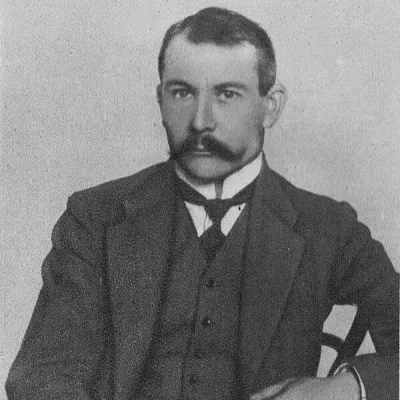
Tomasz Arcisewski
Human Design Chart
Biography
He died 20 November 1955.
Tomasz Arcisewski — Generator with Profile 4/6
Generator 4/6 — Design at a Glance
Tomasz Arcisewski possessed fundamental endurance and the capacity to materialize life, but this was strictly bound to the principle of reacting rather than initiating. His Generator design indicated that his energy – comparable to a strong workhorse – flowed efficiently only when it responded to internal impulses from the sacral center.
The mechanics of his type defined a clear dynamic: Successful action required waiting for a signal from the environment and then responding once an inner “yes” was given. This approach led to deep satisfaction and fulfillment. In contrast, ignoring this inner desire or forcing initiation of actions resulted in frustration and energy loss up to burnout.
A central tension existed between his natural drive towards productivity and the necessity of passively waiting for the right impulse. Tomasz Arcisewskis energy unfolded only in harmony with this strategy of reacting. When he was held back from his heart project, even though inner power remained present, or when he pushed forward on things lacking desire, resources were wasted. His design therefore demanded constant alignment with what truly brought joy to avoid energy depletion and utilize the full force of the sacral response.
Sacral Authority
Tomasz Arcisewski demonstrated a decision-making stance deeply rooted in his body: He did not rely on intellectual deliberation but rather on immediate physical signals. His design indicated that he could only unfold vitality and enthusiasm when responding to external stimuli, rather than self-initiating action. This mechanism is determined by his Sacral Authority, which functions as the primary decision-making instance. It manifests as a gut feeling or a felt surge of power – often audibly expressed as grunting, humming, or an affirming “Mhm”.
This reaction is not random but rather an expression of his strategy of responsiveness. When Tomasz Arcisewski responded in this way, his sacral motor engaged. The result was an almost inexhaustible energy source and the ability to immerse himself in activities without being bound by external purpose. He acted with joy and satisfaction because he followed his inner compass. Crucial here is that the Emotional Center must be open for this Sacral Authority to clearly function; it simplifies the decision-making process significantly as head and gut align. Instead of planning or analyzing, he was guided by this direct physical resonance, allowing him to live authentically and powerfully.
The 4/6 Profile — Opportunist / Role Model
Tomasz Arcisewski exhibited a life structure influenced by the Profile 4/6: a tension field between the emotional need for belonging on Line 4 and the reflective distance of Line 6. In his first three decades, he was experimental, especially in relationships, as Line 6 still acted like a Line 3 here. With the activation of Line 6, an internal conflict emerged: The Heart (Line 4) sought connection while the Head (Line 6) yearned for wisdom and distance. This often led to confusion as he learned to integrate these poles.
Central was Gate 43 on Line 4, describing a transpersonal fixation on deep knowledge. The challenge lay in effectively conveying this knowledge to the community. Often, rigidity or inadequate linguistic skills hindered this transfer, making understanding by others difficult. Success depended on targeted development of communication abilities without emotional injury.
Line 6 functioned as his line of self-control development. It required patience and learning through experience, often involving conscious overstepping of rules for correction. Tomasz Arcisewskis had to learn that these excesses were part of the process to find the right answers. In his later years, he was expected to be a wise role model who stood out through cooperation, where his large heart always needed to remain cautious about opening up to the wrong people.
Split Definition — Defined & Open Centers
Tomasz Arcisewski revealed himself through a closed system of Thinking, Speaking, Being and Doing: defined Head and Ajna centers generated constant mental pressure as the source of inspiration, while the G Center provided clear identity and direction. The defined throat enabled reliable communication structures, and the Sacral Center functioned as a powerful, reactive energy motor. This configuration marked him as someone whose inspiration could not be directly implemented from the mind – Head and Ajna are not engines – but had to wait for the correct sacral response.
The challenge lay in accepting permanent mental pressure without letting it out through hasty actions or inner worry. Instead, he needed to use energy efficiently by reacting rather than initiating. At the same time, Tomasz Arcisewski was exposed to specific conditioning from open centers. The open Heart Center tended to get lost in a cycle of proving oneself, driven by the question “Why can’t I keep up?”, leading to overpromising that he could not deliver.
The open Solar Plexus Center absorbed and amplified foreign emotions, putting him at risk of identifying with others’ moods or avoiding confrontations out of fear of rejection. The open Spleen Center made him vulnerable to fundamental survival fears and the temptation to make spontaneous decisions to generate a false sense of security, often by clinging to people with defined spleens. Finally, the open Root Center absorbed external stress, leading to an endless cycle of fleeing from pressure or hyperactivity if he did not recognize this adrenalized state as foreign and let it go.
Channel 43-23: Structuring — Channels & Gates
Tomasz Arcisewski revealed himself through a mind that tested patterns on their constancy. The Logic Channel 63-4 connected Head to Ajna Center: doubt (Gate 63) filtered until logical proof (Gate 4) emerged. Skepticism served here as a tool for truth-seeking; pressure arose from unresolved questions and was relieved by sharing question and answer with the collective, not for personal life guidance.
Simultaneously, Tomasz Arcisewski had spontaneous insights that needed to be expressed metaphorically. The Channel of Structuring 23-43 connected Ajna to Throat Center: Gate 43 received inspired knowledge as “light years ahead,” while Gate 23 assimilated and efficiently formulated it. The challenge was to let go of control and wait for the right timing, so he would not be perceived as an outsider; with proper expression, this had a mutative effect on the collective.
Additionally, the Channel of Exploration 34-10 shaped his attitude: Sacral (Gate 34) provided inner strength, G Center (Gate 10) initiated behavior from deepest self-acceptance. This promoted perfecting personal behavior for self-preservation and love, independent of collective expectations.
Individual Gates complemented this picture: Gate 49 (Synthesis/Principles), Gate 59 (genetic pairing strategy), Gate 47 (meaning-making from the past), Gate 11 (visual assessment), Gate 29 (perseverance/saying yes), Gate 27 (caring for artery maintenance) and Gate 8 (individual contribution to leadership). These configurations underscored an orientation towards logical testing, structured innovation, and authentic self-assertion.
Individual Circuitry — Circuit Signature
Tomasz Arcisewski’s design tended toward structured, emotionally colored communication linked with strong inner firmness. The Knowledge Circuit connected his Ajna and Throat Centers (Channel Structuring). This allowed him to organize new insights through the mind and then express them acoustically or verbally. Energy was pulsing and focused on individual identity, while emotions from the Solar Plexus – though not directly in the circuit – colored expression.
Parallel to this, the Centering Circuit connected Identity with Sacral Center (Channel Exploration). This connection created deep inner stability and self-worth, supported by the constant life energy of the Sacral. However, without a direct connection to Throat Center, these firm convictions often remained internally anchored; the direct external expression of this centering was not mechanically intended. Instead, the Knowledge Circuit served as the primary channel for expression.
The Understanding Circuit connected Head and Ajna Centers (Channel Logic). Here rational, emotionless strategy dominated, sharing logical insights to improve the future. This connection promoted focused thinking and visual clarity.
Overall, a tension emerged: The inner firmness from the Centering Circuit contrasted with the emotional expression of the Knowledge Circuit, while the Mind Circuit added a cool, strategic layer. Shared definition meant these energies worked in two separate groups – on one hand Head/Ajna/Throat for thinking and expressive style, on the other Heart/Sacral for inner strength and value feeling – without directly flowing into each other.
Right Angle Cross of Explanation 4
Tomasz Arcisewski demonstrated a fundamental approach that involved penetrating complex issues and then logically structuring them. His design suggested that his identity was closely linked to the ability to understand connections not just for himself but also to make these insights understandable to others. He cared less about mere knowledge than about the integrity of understanding: once a topic was fully grasped, there arose an inner drive to explain it clearly and precisely.
This orientation stems from the influence of the right cross of Statement 4. This configuration describes a process where the individual first delves deeply into matter to recognize underlying structures. The motivation lies in the need for clarity and order. Tomasz Arcisewski tended to transform chaos into meaning by isolating essential elements of a problem and then arranging them coherently. For his design, explanation was not an end in itself but rather the natural result of genuine understanding: if something is understood, it can be explained – this principle shaped how he handled and passed on information.
Saturn Return · Uranus Opposition · Chiron Return · 2nd Saturn Return — Life Cycles
Tomasz Arcisewski moves through life phases marked by cyclical recurrence and structural testing. His design shows a focus on long-term developmental steps where inner maturation and outer transitions intertwine. The first Saturn return marks the transition from an experimental phase to a stable life structure; it condenses years of experience into solid foundations. This phase lays the groundwork for a conscious engagement with responsibility and identity.
Following this, the Uranus opposition occurs, often characterized by a need for change and breaking free from old patterns. Here Tomasz Arcisewski is confronted with the tension between security and freedom, leading to necessary adjustments in his personal environment. This process breaks rigid structures to make way for new perspectives.
The Chiron return rounds out this development as a phase of fulfillment and meaning-making. It is not a healing process in a medical sense but rather a moment when one's life purpose increasingly unfolds and becomes experiential. If Tomasz Arcisewski has followed his inner authority up to this point, it shows a blooming period where intention and action align. The second Saturn return then cements these achievements and anchors the gained wisdom into a new, more mature life order. This sequence underscores a continuous deepening of self-understanding through recurring cyclical tests and affirmations.
Generator · Sacral Authority — Synthesis
Tomasz Arcisewski appears to lead a life deeply rooted in reaction. His Generator type and sacral authority shape an existence where energy is released through immediate resonance with external stimuli – not through initiation but through response. This responsiveness is amplified by the definitions in the Head Center and Throat Center, leading to a constant mental pressure to express this understanding and share it with others. The profile as Networker/Role Model points towards a development where early experimental freedom evolves into a role of wisdom defined by cooperation and sharing knowledge.
A central paradox lies in the combination of this reactive energy and the need for self-definition. While waiting to react to life, Tomasz also seems to have a deep inner conviction to walk his own path – a conflict between the desire for belonging (Line 4) and the search for individual truth (Line 6). The open definition in Heart Center, Spleen Center, and Root Center intensifies this tension: he absorbs others' energies but is not equipped to integrate them permanently or let himself be defined by them.
3 Defined Channels
Incarnation Cross - Right Angle Cross of Explanation 4
Solar Return
The Solar Return shows the moment when the sun returns to its exact birth position - your personal solar year.
Life Cycles
Discover the life cycles with a detailed triple view (birth chart, cycle chart, composite).
Human Design Profile
- Type
- Generator
- Strategy
- To respond - wait for something to respond to
- Authority
- Sacral Authority
- Profile
- 4/6 - Opportunist / Role Model
- Definition
- Split Definition
- Incarnation Cross
- Right Angle Cross of Explanation 4
- Date of Birth
- 14.11.1877 06:00
- Place of Birth
- Rawa Mazowiecka, Poland
Frequently Asked Questions
What is Tomasz Arcisewski's Human Design type?
What Profile does Tomasz Arcisewski have in Human Design?
What Authority guides Tomasz Arcisewski?
What is Tomasz Arcisewski's incarnation cross?
When was Tomasz Arcisewski born?
Discover your own Human Design
Are you also a Generator? Find out in a personal reading how to use your sacral energy correctly and discover deep satisfaction.
More Personalities
Back to overviewAaliyah

Alexia

Angèle

Anne-Marie

Arcángel

Arno