
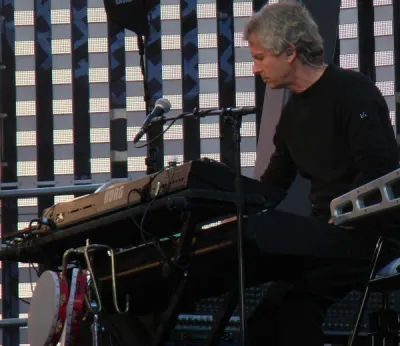
Tony (1950) Banks
Human Design Chart
Biography
Tony (1950) Banks as a Projector 3/5 in Human Design
Projector 3/5 — Design at a Glance
Tony (1950) Banks worked through his projective nature like a focused flashlight that immediately recognized systemic errors in his environment. This dense aura illuminated weaknesses, but direct intervention risked defensive reactions. Instead, Tony (1950) Banks was most effective by setting a harmonious example; his inner glow attracted others who then sought advice. The central strategy involved waiting for an honest invitation to avoid bitterness and generate resonance rather than conflict.
This approach stems from the undefined Sacral Center: Tony (1950) Banks did not have a constant source of life energy but worked in phases of high activity followed by mandatory rest periods for regeneration. Ignoring this rhythm led to exhaustion; following it ensured sustained effectiveness. Success was the natural reward for aligning with his design. Deviations, such as continuous correction without invitation or overworking without pause, activated the non-self theme of bitterness. Thus, Tony (1950) Banks’ design demanded patience and self-preservation as a foundation for his leadership role in the system.
Emotional Authority
Tony (1950) Banks showed himself to be someone who did not orientate based on current emotional impulses but consciously observed the rhythm of the emotional wave. His design laid out a tendency towards strategic hesitation at critical junctures; spontaneous reactions were often seen as misleading, reflecting only the current mood rather than the deeper truth of a situation.
This stance results from the emotional authority carried by the defined Solar Plexus Center. In Human Design mechanics, this authority always takes precedence over all other defined centers regardless of further configurations in the chart. This means for Tony (1950) Banks that his emotional wave – an ongoing up and down of feelings – serves as the primary filter for all decisions. Since perception is colored by this current mood, the same thing can appear inspiring at one moment and negative the next. Immediate feeling thus only represents a snapshot.
To gain clarity, patience was the decisive mechanism. Tony (1950) Banks used time to let decisions mature, ideally through multiple sleepovers. Only when intense feelings had subsided and emotional distance had been gained did calmness set in. This process was especially critical for long-term life decisions as it ensured that the chosen path was based on comprehensive insight rather than a fleeting impulse.
The 3/5 Profile — Martyr / Heretic
Tony Banks revealed himself through his design as someone who primarily gained knowledge by direct experimentation and learning from mistakes. His Profile 3/5, the experimenter and hero, set the stage for him to not accept anything at face value but to personally verify everything to develop practical understanding. This process of 'trial and error' was his driving force; he learned through detailed work and avoided shortcuts that would have diminished the value of his insights.
The mechanics of this profile describe a tension: While Line 3 accepts failure as a necessary part of learning, Line 5 acts publicly as a hero or rescuer. This public image created a strong attraction in his environment where others wanted to learn from his experiences. At the same time, this role made him vulnerable; public failure could be painful for him as it threatened his credibility as a problem solver.
Additionally, the energy of Gate 58 in his configuration shaped an attitude of defense and weighing options. Tony Banks had to carefully examine his experiments and maintain his protective instinct to avoid being swayed by external influences. He only made himself available for practical solutions that he had personally tested. Thus, a pattern emerged where authentic experience formed the basis for a trustworthy role in the collective – always assuming he stayed true to what was right for him and defended this integrity against false expectations.
Split Definition — Defined & Open Centers
Tony (1950) Banks revealed himself as someone who was constantly under a specific mental pressure to ask questions and conceptualize. His design indicated a tendency not to directly implement inspiration into action but rather to keep it as a thought process. This resulted from the defined Head Center and Ajna Center: A fixed way of conceptual thinking that continuously generates questions but lacks energy for direct implementation.
As an inner authority, the defined Solar Plexus Center functioned. Tony (1950) Banks made decisions not in emotional peaks but waited patiently through cycles of feelings until clarity emerged. This emotional depth was complemented by the defined Spleen Center, which gave him an intuitive and spontaneous sense of security in the present moment. Additionally, the defined Root Center provided a fixed way to handle stress and life pressure, propelling him physically forward without projecting this pressure outward.
At the same time, Tony (1950) Banks was vulnerable to conditioning through several open centers. The open Throat Center led him to feel pressured to demand attention or speak, even though his communication was spontaneous and dependent on the environment. He tended to question whether he was heard instead of waiting for a natural invitation to speak.
The open G Center meant a lack of fixed identity and direction; he adapted himself to those around him and often sought a firm place or role rather than accepting that these would be shown from outside. The open Heart/Ego Center shaped a tendency to prove his worth through promises or competition, despite lacking consistent willpower for this. Finally, the open Sacral Center led him to easily overextend by taking in others' generative energy and trying to mimic their work rhythms instead of respecting his own fluctuating energy flow with pauses.
Channels for logic, emotional intuition and mental abstraction.
Tony (1950) Banks revealed himself as someone whose mind operated in a constant tension field between logical correction, emotional drive, and abstract meaning-making. His design indicated a tendency to relentlessly examine patterns while simultaneously craving new experiences and trying to give the chaos of life an narrative structure.
This dynamic was significantly influenced by Channel Judgment 58-18. Through Gate Vitality (58) and Gate Correcting (18), there was an insatiable impulse to recognize and rectify any inadequacies. This energy from the Root Center propelled him to find the best logical answers to make life in the collective more cheerful and efficient. The challenge lay in exercising this critical judgment only upon invitation, rather than using it as an endless data stream of errors that no one wanted to hear.
Parallel to this, Channel Perception 30-41 was at work. It connected Root with Solar Plexus through Gate Limitation (41) and Gate Feeling Recognition (30), creating a deep restlessness. Tony (1950) Banks felt an intense, emotionally driven urge for new experiences and desires. This channel challenged him to trust his emotional wave and practice patience rather than blindly giving in to impulsive expectations that often only temporarily satisfied.
The mental framework was provided by Channel Abstraction 64-47. It connected Head Center with Ajna Center through Gate Confusion (64) and Gate Understanding (47). Tony (1950) Banks possessed an active, experience-based mind constantly seeking meaning. This process was often accompanied by temporary mental confusion until patience yielded a clear picture he could share as an inspiring story or perspective.
Additionally, Gates like 17 (Following), 52 (Concentration), and 39 (Provocation) supported his ability to logically organize and analytically re-evaluate, while Gates like 48 (Depth) and 24 (Renewal) deepened his internal processing of patterns and knowledge. His design described a personality that united logic, emotion, and mental analysis, with the key lying in choosing battles and waiting for clarity.
Collective Circuitry — Circuit Signature
Tony Banks was marked by a tension field between cool future optimization and emotional past reflection. His design contained two separate energetic streams that did not directly flow into each other. On one hand, his Understanding Circuit connected Spleen Center to Root Center via Channel Judgment, creating a focused logical intuition for strategic improvement of the future free from emotional influence. The energy was visually directed towards structuring and sharing rational insights.
Completely independently on the right side, the Meaning Finding Circuit operated. Here, there was a connection between Head and Ajna Centers (Abstraction) enabling mental formulation of ideas. Parallel to this, another disconnected section of this circuit linked Solar Plexus with Root Center (Perception). This part generated cyclical emotional waves from past experiences. Tony Banks had to go through these feelings to grasp their meaning and pass them on as collective learning experience.
While the left strand aimed at cool ratio and future structuring, the right strand processed chaotic emotions of the past. Both aspects shared a need for transmission – once strategically logically, once emotionally reflective – but remained energetically separate. This configuration demanded a balance between rational planning and accepting emotional cycle experiences.
Right Angle Cross of Service 1
Tony (1950) Banks displayed a fundamental disposition marked by the 'Right Cross of Service'. This configuration anchors his deepest motivation and existential drive beyond conscious strategies or social roles. It defines the most basic layer of his personality: serving others is not just an action but his essence and ultimate life task.
For Tony (1950) Banks, this means that inner fulfillment arises exclusively through working for others. This drive lies beneath the level of rational decision-making; it is a structural given of his design. The 'Right Cross' here does not describe a specific activity but rather the quality of being itself – an ongoing experience of dedication serving as the source of identity.
The mechanics of this cross show that Tony (1950) Banks finds his deepest satisfaction when he engages in service. This is not a choice, but an inner necessity of his energy field. The design suggests that his happiness and stability correlate directly with his ability to help or support others. It's not about recognition, but the simple fact of giving as an expression of his own nature. This structure shapes his entire life perspective and determines what he experiences as meaningful and enriching.
Projector · Emotional Authority — Synthesis
A central red thread through Tony (1950) Banks’ design is the ability to recognize patterns and make corrections – a gift that arises from the connection between Root and Spleen Center (Channel 58-18) along with Head and Ajna Centers. This combination allows him to identify errors in the system and offer logical solutions, ensuring through his emotional authority that these corrections are not impulsive but arise from a deep understanding of the situation (emotional center defined). He is destined to analyze, improve, and disseminate knowledge around him – a process driven by an ongoing search for clarity and the need to process experiences (Channel 64-47).
The central paradox in Tony Banks’ chart lies in the tension between his need for abstraction and his ability for concrete correction. His defined Head and Ajna Centers drive him constantly to think, analyze, and recognize patterns while his defined Root Center generates a desire to change and improve things. At the same time, however, he relies on his open centers (Sacral, G, Heart) to absorb others' energy and adapt to them. This leads to an inner dynamic where he is both an independent thinker and a receptive reflector, constantly navigating between the desire for autonomy and the necessity of connection.
3 Defined Channels
Incarnation Cross - Right Angle Cross of Service 1
Solar Return
The Solar Return shows the moment when the sun returns to its exact birth position - your personal solar year.
Life Cycles
Discover the life cycles with a detailed triple view (birth chart, cycle chart, composite).
Human Design Profile
- Type
- Projector
- Strategy
- Wait for the respectful invitation
- Authority
- Emotional Authority
- Profile
- 3/5 - Martyr / Heretic
- Definition
- Split Definition
- Incarnation Cross
- Right Angle Cross of Service 1
- Date of Birth
- 27.03.1950 07:30
- Place of Birth
- East Hoathly, United Kingdom
Frequently Asked Questions
Which Human Design Type is Tony Banks?
Which profile does Tony Banks have?
What authority does Tony Banks possess?
Which incarnation cross is assigned to Tony Banks?
When was Tony (1950) Banks born?
Discover your own Human Design
Are you also a Projector? Find out in a personal reading how to unfold your leadership qualities and recognize the right invitations.
More Personalities
Back to overviewSissy Spacek

Aaliyah

Alain-Fournier

Alexia

Alizée

Anémone
