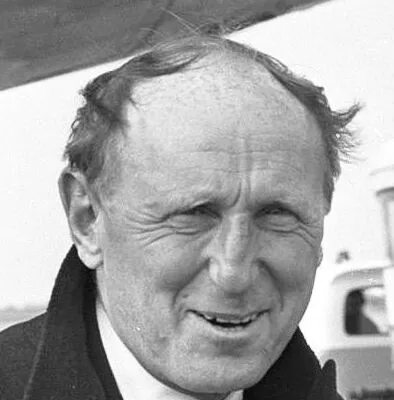
Valentino Rossi
Human Design Chart
Biography
By 1994, he had won the world championship six times. Rossi first caught public attention in 1996. The son of a racer, Valentino began racing small bikes at age 12 and, as he grew, took on bigger and bigger challenges riding bigger and bigger bikes. He began winning races in Italy.
In 1995, he won the 125cc Italian championship and placed third in the 125cc European championship. The year 1996 marked his first international debut when, at the Malaysian Grand Prix, he finished in ninth place. The following year, 1997, he became the youngest world champion.
Valentino often acts like a clown at practice and before races but is serious and passionate about his work.
Valentino Rossi — Projector with Profile 4/6
Projector 4/6 — Design at a Glance
Valentino Rossi appeared as someone who could analyze complex systems with almost unerring precision to identify their weak points. His Human-Design profile as a Projector established a specific energetic structure: A dense, focused aura that directed like a bright light beam directly onto areas where others were in the dark. This configuration gave him the ability to instantly recognize errors in any system.
However, this direct perception also carried the risk of rejection. If he expressed his observations uninvited and head-on – comparable to shining a light directly into someone's face – it would meet resistance or resentment from those around him. The mechanics of his design showed that the more elegant and effective strategy was not to instruct but to set an example of harmonious functioning himself. By radiating his own competence and stability, he became attractive to others. People then actively sought out his advice because they recognized a solution in him.
Central to this dynamic was the necessity to wait for an honest invitation. Without confirmation from his environment, his energy would quickly dissipate or lead to frustration. Additionally, he lacked a constant intrinsic energy source; instead, he worked in phases of high intensity followed by necessary rest periods for regeneration. If he lived according to the strategy of waiting and recognition, he was rewarded with success. Ignoring this and trying to push through led inevitably to his non-self theme: bitterness over feeling undervalued or unheard.
Splenic Authority
Valentino Rossi displayed a fundamental attitude of radical spontaneity: decisions were not made through long-term planning but as an immediate reaction to the present moment. His design placed authority in the Spleen, a center that functions as a health and alarm system. For this inner guidance to be effective, both his Emotional Center and his Sacral Center had to be open – a configuration only Projectors or Manifestors can have.
This structure endowed him with an acute survival intelligence. His instinct and physical well-being served as reliable indicators of whether a situation, environment, or society was right for him. The first spontaneous impulse always counted as the correct path since it directly protected his health. This allowed him to rigorously distance himself from harmful influences and act independently.
However, this Spleen voice was a very subtle impulse that only appeared once in each moment. It could easily be drowned out or ignored by external influences, requiring high inner vigilance. Since knowledge of the right course always became available only in the present, plans were subject to short-term changes. Longer-term commitments hindered this natural flow; instead, his design required much freedom and flexibility to accommodate spontaneous decision-making. A temporary withdrawal to focus on this inner impulse supported this mechanism.
The 4/6 Profile — Opportunist / Role Model
Valentino Rossi's development was strongly influenced by Profile 4/6: In the first three decades of his life, he intensely experimented with relationships and friendships. This phase of Line-3 energy in Profile 4/6 promoted curiosity and trying out various social roles before a deeper structure emerged.
With the activation of Line 6, an internal conflict came to light: The desire for belonging (Line 4) clashed with the need to withdraw and reflect on life's meaning (Line 6). This tension between Heart and Head shaped his later attitude. As a role model, he was expected to appear wise and stand out through cooperation – always with caution not to open his big heart to false people.
The energy of Gate 30 (Line 4) drove him as an 'experience junkie' to be influential in the network. For Projectors, this fixation on opportunities carries the risk of burnout or emotional breakdown if analytical thinking is lacking and emotions overwhelm. Simultaneously, Gate 14 (Line 6) brought themes of wealth, power, and humility into play. Here it was about spiritual realization that material success is divine will. Valentino Rossi only engaged in real mutations or things of great significance, explaining his selective approach to existential questions and dealing with success.
Triple Split Definition — Defined & Open Centers
Valentino Rossi's Design established a tendency towards relentless mental pressure and consequent willpower. The definition between Head Center and Ajna Center created a constant inner drive to question and understand connections – a process that did not lead directly to action but served as a source of inspiration. This mental flow culminated in the defined Throat Center, thereby translating his thoughts reliably into communication and action.
Simultaneously, the defined Heart Center shaped his actions through clear willpower and a desire for control over resources and recognition. He was shown to be someone who kept promises and knew his own direction from the defined G Center without being dependent on others. The also defined Spleen Center provided spontaneous intuition in the present moment, helping him make health-promoting decisions intuitively rather than having to rationalize them.
In contrast, his vulnerability was revealed in the undefined centers. His open Sacral Center made him sensitive to foreign vital energies; he tended to overexert himself on "borrowed" energy and found it difficult to set limits since he did not have a steady flow of his own energy available. The open Solar Plexus Center absorbed the emotions of the environment, making him vulnerable to emotional conditioning – he could amplify foreign moods and interpret them as his own rather than observing them objectively. Additionally, the open Root Center took on external stress, putting him under pressure to reduce it through hyperactivity instead of avoiding it. This configuration described a person who possessed mental clarity and willpower but needed to learn how to protect himself from being overwhelmed by foreign energy, emotions, and stress in order not to lose his own authority.
Channels for inspiration, devotion and abstract comprehension.
Valentino Rossi revealed himself as someone who inspired others through his mere presence and authentic life. This effect stems from the Channel of Inspiration 1-8, which connects the G Center with the Throat Center. He was designed to capture public attention by living out his unique identity – not through words, but as a role model. His design also carried an entrepreneurial sharpness: The Channel of Devotion 26-44 linked the Heart Center with the Spleen Center. This gave him an instinctive sense for what the "tribe" needed before he knew it himself and the ability to sell products or ideologies persuasively. He acted as a promoter at the forefront, driven by a combination of willpower and historical memory. Parallel to this, his mind worked with the Channel of Abstraction 47-64, which connects the Head Center with the Ajna Center. This channel filtered every experience through a kaleidoscope of mental images to recognize patterns and tell stories that made sense. His inner motivation was further shaped by Gate 29 (Persistence in the Sacral Center) and Gate 30 (Recognition of Feelings and Longing), which required a deep commitment to the process. Gate 14 contributed to the graceful handling of power and direction. In the mental realm, Gates 56 (Imaginative Storytelling) and 43 (Spontaneous Insight) enhanced his ability to explain complex processes clearly, while Gate 4 provided logical formulas for future security. Gate 33 allowed necessary withdrawal for reflection, and Gate 57 ensured intuitive clarity in the here and now. Together, these elements formed a design that inspired through exemplary living, instinctively communicated, and mentally uncovered patterns.
Individual Circuitry — Circuit Signature
Valentino Rossi is characterized by three separate but parallel energetic streams. The Knowledge Circuit connects his Throat Center with the Identity Center through the Channel of Inspiration (Gates 8 and 1), fostering spontaneous, acoustic impulses as the expressive form of his unique individuality.
Parallel to this, the Meaning-Making Circuit operates: Head and Ajna Centers are linked by Abstraction (Gates 64 and 47). This involves visually processing past experiences to reflect on their deeper meaning and cyclically sharing these insights with the collective – a wave-like emotional processing rather than cold logic.
Thirdly, there exists an isolated Ego Circuit separate from the other two groups. Heart and Spleen Centers are connected by Devotion (Gates 26 and 44). This serves cooperation and the communal building of material resources within the tribe. Since there is no connection to the Sacral Center, this stream requires necessary rest periods for regenerating strength for mutual support.
This triple definition means that these three areas – individual expression, emotional meaning-making, and tribal cooperation – do not flow directly into one another but rather exist as independent yet coexisting forces. Rossi had to learn to integrate these different demands without energetically mixing them.
Right Angle Cross of Contagion 1
Valentino Rossi demonstrated a profound, almost physical devotion to his environment and the people within it. His design indicated that he did not act from a distance but rather connected intensely with what was happening around him, often merging completely. This attitude stemmed from the mechanics of the right cross of infection 1: It describes an energy ready to fully integrate into other states or systems and adopt their vibrations. For Rossi, this meant that he frequently kept boundaries between self and external world permeable. He unconsciously absorbed impulses, moods, or even physical stress from his surroundings as if they were his own inheritance. This ability for total fusion was not a weakness but a powerful mechanism of connection. It allowed him to seamlessly integrate into complex dynamics and make their energy useful to himself. However, this also carried the burden of others; he could hardly remain unaffected when his environment changed or came under pressure. His presence was thus always one of close affinity, enabling him to penetrate deeply into the core of situations simply by becoming part of them. This intuitive adaptability shaped his way of interacting and responded less to logical analysis than to direct emotional and energetic resonance with his world.
Saturn Return · Uranus Opposition — Life Cycles
In this phase, Valentino Rossi engaged in a deep confrontation with boundaries that were not seen as defeat but rather as structural tests. In 2007, at the age of 28, he experienced his first Saturn Return – an astrological milestone often corresponding to a major life crisis or turning point. That year, he had to yield to the superior world champion Casey Stoner and lost second place in the World Championship by just one point to Dani Pedrosa.
For his design, this moment was not merely a sporting disappointment but a confrontation with the reality of responsibility and structure. The Saturn Return demands that past achievements be questioned and built on firmer foundations. Rossi's narrow loss by a single point against Pedrosa was no coincidence but an expression of a necessary humiliation before the laws of meritocracy. It was about renegotiating his position in the system and accepting that success is no longer guaranteed solely through raw power or early talent, but through strategic adaptation to external conditions. This experience shaped his further development towards a more mature and resilient approach to competitions and challenges.
Projector · Splenic Authority — Synthesis
A central red thread runs through the design: the ability to recognize patterns and bring light into darkness (Projector Type, defined Head Center with constant mental pressure). This gift comes with profound inner wisdom (Spleen Authority), enabling spontaneous reactions to environments and situations. The profile as a Networker/Role Model reinforces this aspect by hinting at a natural tendency towards connection and sharing of insights – an ongoing balance between belonging and the search for deeper meaning (Line 4/6). The Knowledge Circuit underscores the ability to initiate new paths through inspiration and transformation.
The central paradox lies in the tension between the need to be unique as an individual and express oneself (Channel 1-8) and simultaneous sensitivity to others' energies (Projector Aura). While the ability to recognize errors in a system can provide valuable insights, it also carries the risk of encountering rejection if these insights are communicated unfiltered. A documented event shows a crisis where his own performance fell short and narrowly failed – a moment that underscores the necessity of proper timing and setting boundaries.
3 Defined Channels
Incarnation Cross - Right Angle Cross of Contagion 1
Solar Return
The Solar Return shows the moment when the sun returns to its exact birth position - your personal solar year.
Life Cycles
Discover the life cycles with a detailed triple view (birth chart, cycle chart, composite).
Human Design Profile
- Type
- Projector
- Strategy
- Wait for the respectful invitation
- Authority
- Splenic Authority
- Profile
- 4/6 - Opportunist / Role Model
- Definition
- Triple Split
- Incarnation Cross
- Right Angle Cross of Contagion 1
- Date of Birth
- 16.02.1979 18:20
- Place of Birth
- Urbino, Italy
Frequently Asked Questions
What is Valentino Rossi's Human Design type?
What Profile does Valentino Rossi have in Human Design?
Which Authority guides Valentino Rossi?
What incarnation cross does Valentino Rossi have?
When was Valentino Rossi born?
Discover your own Human Design
Are you also a Projector? Find out in a personal reading how to unfold your leadership qualities and recognize the right invitations.
More Personalities
Back to overviewSissy Spacek
Alain-Fournier
Aldair

Anémone
Ann-Margret
Bourvil