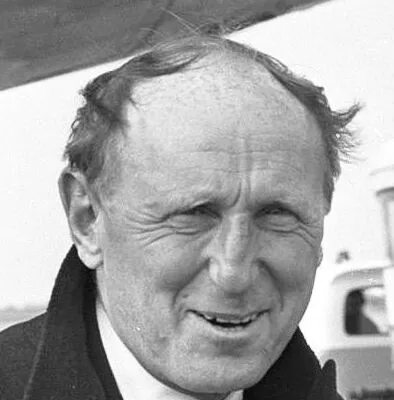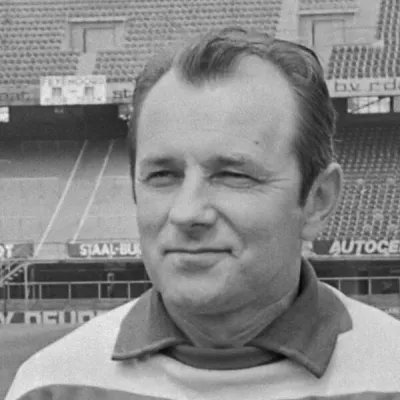
Vujadin Boskov
Human Design Chart
Biography
He died after a long illness in Novi Sad on 27 April 2014, aged 82.
Vujadin Boskov as a Projector 5/1 in Human Design
Projector 5/1 — Design at a Glance
Vujadin Boskov's design was characterized by a focusing aura that immediately identified systemic weaknesses. This perception worked like a bright flashlight, illuminating areas where others were still in the dark. His ability to recognize errors in the system instantly was precise, yet direct confrontation often provoked resistance. The immediate addressing of deficiencies was felt as unpleasant, comparable to a harsh light beam in one's face.
The more effective way of expression was to shine pleasantly by example. By living harmony and competence, Vujadin Boskov attracted others who sought his advice. The strategy of invitation was crucial: waiting for respectful, honest invitations from others rather than actively intervening allowed for respectful influence.
Furthermore, he lacked a constant intrinsic energy source due to the undefined Sacral Center. This led to phases of high productivity and speed followed by necessary rest periods to avoid burnout. Ignoring this rhythm risked burning out, while adhering to his design – through waiting for invitations and appropriate recovery – ensured success. Deviations tended towards bitterness as an expression of not being oneself. His path therefore lay in patient observation, shining as a radiant example, and respectful distance until the invitation time.
Emotional Authority
Vujadin Boskov's decision-making followed a rhythmic pattern: immediate reactions often proved misleading; true clarity only emerged after emotional waves subsided. His design carried Emotional Authority, meaning his defined Emotional Center served as the compass for all significant life decisions – regardless of other defined centers. This authority fluctuates perpetually between highs and lows. In moments of great enthusiasm or deep disappointment, the world appears colored by this current mood; however, the first impression is not a final truth but merely a snapshot.
Quick, spontaneous decisions made in emotional heat risked negative consequences as they were based on transient feelings. Instead, Boskov's mechanism required patience and conscious distance from events. By allowing himself time and letting decisions 'sleep,' he could let intense emotions subside. This process of waiting was not a sign of hesitation but a necessary strategy to gain emotional distance. Only when the waves had ebbed did calmness set in and it became clear what truly mattered. This ability to ride his own emotional cycle allowed him to take long-term, life-defining steps based on deeper insight rather than superficial impulses.
The 5/1 Profile — Heretic / Investigator
Vujadin Boskov's design inclined towards a magnetic presence that irresistibly drew others in and made him the natural go-to person for problem-solving. This dynamic stems from his Profile 5/1 (Hero/Explorer): Line 1 imbues him with a deep desire for private research and knowledge accumulation, while Line 5 offers these insights publicly as solutions. Others project unconsciously onto his ability to guide, which appeals to his ego but can also be dangerous.
The central challenge lay in protecting against burnout due to lack of boundaries. Without clear demarcation, overload loomed like an expert who answers questions for hours and ends up exhausted. His design also shows the Law of Necessity (Gate 49): Revolutionary principles require support within the tribe and must be emotionally waited out to become life-sustaining. When Vujadin Boskov learned to say no sometimes, he could maintain balance between private research and public help. This prevented abuse of his emotional power and ensured that his strategic intelligence (Line 5) was not undermined by unconscious projection or lack of accountability. Thus, he optimally utilized his gifts without being drained by the expectations of others.
Split Definition — Defined & Open Centers
Vujadin Boskov's design points towards a tendency for consistent expressive strength and clear identity. His defined G Center provides him with a reliable self-image and a sense of direction, while the also defined Throat Center serves as a pivot point to communicate his inner truth along with information from other centers into the world. This structure allows him to express himself authentically and directly without constantly seeking external validation for his identity.
Parallel to this, his defined Solar Plexus acts as an emotional authority. Vujadin Boskov is characterized by an internal wave of feelings that he must wait out in order to gain clarity. His decisions are not made in the 'now', but emerge from the penetration of emotional processes over time. This is complemented by his defined Spleen Center, which gives him spontaneous intuition and a strong survival instinct – the ability to recognize what is healthy or correct in the moment without rational analysis. Additionally, his defined Root Pressure ensures constant inner tension and the energy to move forward in the world.
In contrast, his open centers are Head, Ajna, Heart, and Sacral. The open Head Center means that he is not driven by consistent inspiration but can be vulnerable to picking up mental questions or doubts from others as his own problems. His open Ajna Center makes his mind flexible; he can take on many perspectives but tends to hold concepts or opinions as his own truth rather than using them temporarily.
The open Heart Center shows a vulnerability for needing to prove one's worth through performance or promises, even though he does not have the consistent energy to carry such commitments long-term alone. Finally, his open Sacral Center leads to fluctuating energy availability; he is vulnerable to being inspired by generative energy from his environment and doing more than what is typical for him, which can lead to exhaustion if he does not pause.
Channels for leadership, intuitive integration and mystical synthesis.
Vujadin Boskov's design points towards a tendency for collective leadership based on logical pattern recognition. He acts as someone who establishes authority not through coercion but by gaining trust and inviting cooperation. This attitude is grounded in the Alpha Animal Channel 7-31: Gate 7 provides the logical role for societal leadership, while Gate 31 represents the voice of the collective leader. Success occurs when he is recognized as a representative and understands trends accepted by the majority; absolute sole rule stands against this mechanism.
Parallel to this, Vujadin Boskov shows a strong orientation towards his own survival through intuitive adaptation. The channel of Perfect Form 57-10 connects intuitive insight (Gate 57) with self-behavior (Gate 10). This allowed him to act spontaneously and aesthetically appropriately, guided by a deep acoustic sensitivity for his environment. Instead of worrying about future fears, he perfected his existence in the here and now through self-referential love and spontaneous creativity, which made him appear impetuous and authentic.
Additionally, an emotional bond to tribal principles shaped his cohesion with others. The channel of Synthesis 19-49 connects the pressure for closeness (Gate 19) with the principle of loyalty and rejection of the incompatible (Gate 49). For Vujadin Boskov, this was the emotional glue that defined who belonged to the 'tribe'. His satisfaction depended on being needed and protecting his group's resources and territory. Loyalty here was regulated by an emotional wave swinging between acceptance and strict demarcation to secure group cohesion.
Individual Gates like Gate 2 (Receptivity), Gate 4 (Formulation) or Gate 1 (Uniqueness) complement this picture with openness for new directions and the ability to develop logical formulas for future security, without diverting focus from the three dominant channels.
Individual Circuitry — Circuit Signature
Vujadin Boskov is characterized by a cognitive architecture based on logical structure and strategic focus. His design connects the Throat Center with the Identity Center via the Alpha Animal Channel (31-7) in the Understanding Circuit. This promotes sharing rational insights to improve societal systems – an 'emotionless ratio' as the Solar Plexus Center is not involved here. The energy is future-oriented and visually driven, motivated by the desire to order complex information and share it with others to enable collective progress.
Parallel to this, two additional, energetically separate parts were active in Vujadin Boskov. The Ego Circuit connects the Solar Plexus Center with the Root Center via the Synthesis Channel (49-19). This concerns cooperation and resource management within a group, where pauses are necessary as there is no direct connection to the Sacral Center. Additionally, the Integration Circuit links the Identity Center with the Spleen Center via the Perfect Form Channel (10-57). Here it's about intuitive self-preservation and leading energy through correct behavior in the present.
Due to his Shared Definition, these forces existed alongside each other: one group connected Throat, Identity, and Spleen Centers, while another included Solar Plexus and Root. There was no single, continuous flow between all defined centers but parallel, specific functional ways – strategic thinking on one hand, group-oriented resource utilization and intuitive self-preservation on the other.
Left Angle Cross of Defiance 1
Vujadin Boskov's Human Design profile established an existential imprint through the 'Challenge Cross of the Left Side'. This defined his deepest, often unconscious motivation and life path as a process of proving oneself, survival struggle, and identity formation through resistance. He was not someone who simply accepted life but whose existence was marked by the necessity to assert himself against obstacles.
The 'Challenge Cross of the Left Side' (Cross 1) describes a configuration in which constant confrontation with challenges and crises forms the central driving force for growth and self-definition. Life is not taken as given or passively experienced in this structure, but rather must be fought for and proven. Each resistance served less as mere hindrance than as an essential instrument to clarify one's identity. This mechanism meant that security or success could only be experienced through active struggle against external and internal threats. Continuous proving oneself was thus no coincidence, but the structural foundation of his development. Without these challenges, self-understanding would have remained incomplete. The focus lay on growing through resistance and defining oneself in crisis situations rather than seeking a conflict-free path.
Saturn Return · Uranus Opposition · Chiron Return · 2nd Saturn Return — Life Cycles
Vujadin Boskov's Human Design profile showed a clear structuring of life's course, with four planetary major cycles acting as decisive turning points. This configuration indicated that development did not proceed randomly but was tied to specific temporal milestones.
The first Saturn Return marked the transition into adult responsibility, a moment when earlier foundations condensed into stable structures. Following this came the Uranus Opposition, a phase of detachment and reorientation often accompanied by questioning previous identities. Here, the design showed a tendency towards necessary change to relieve internal pressure.
The Chiron Return period, typically between the ages of 49 and 51, functioned as an achievement cycle. If Vujadin Boskov had lived according to his strategy and authority up until this point, a flourishing occurred during this time: His incarnation cross unfolded increasingly, making sense and purpose in everyday life tangible. This was not about healing old wounds but the concrete realization of one's life purpose.
Finally, the second Saturn Return acted as a phase of maturation and integration. It closed the arc of the first half of his life and solidified acquired wisdom into a new, stable form. These four cycles shaped Vujadin Boskov's development as a structured sequence of building up, breaking down, fulfilling, and confirming.
Projector · Emotional Authority — Synthesis
Vujadin Boskov's Human Design profile reveals a central thread of intuitive perception and adaptability. As a Projector with emotional authority, defined G Center, and open Sacral Center, he picks up subtle energies and moods (open Sacral), processes these deeply in the Solar Plexus, and then projects — through the defined Throat and G Centers — a clear direction or 'light into darkness' for others. This pattern repeats itself across various design aspects: the ability to recognize errors (Projector), formulate principles (Channel 48), and adapt to changing circumstances (open Sacral). He is geared towards assessing the quality of others and effectively deploying his energy only upon invitation.
A central paradox in Boskov's chart lies in the tension between his intuitive perception and need for recognition. The open Heart Center points to an inner insecurity motivated by a drive to prove oneself (Gate 19), while the defined G Center signals a clear self-identity. This discrepancy leads to an internal dynamic where he intuitively understands what is right but simultaneously seeks external validation to pursue his direction with confidence.
3 Defined Channels
Incarnation Cross - Left Angle Cross of Defiance 1
Solar Return
The Solar Return shows the moment when the sun returns to its exact birth position - your personal solar year.
Life Cycles
Discover the life cycles with a detailed triple view (birth chart, cycle chart, composite).
Human Design Profile
- Type
- Projector
- Strategy
- Wait for the respectful invitation
- Authority
- Emotional Authority
- Profile
- 5/1 - Heretic / Investigator
- Definition
- Split Definition
- Incarnation Cross
- Left Angle Cross of Defiance 1
- Date of Birth
- 09.05.1931 04:00
- Place of Birth
- Novi Sad, Serbia
Frequently Asked Questions
What is Vujadin Boskov's Human Design type?
Which Profile does Vujadin Boskov have?
Which Authority determines Vujadin Boskov's decisions?
What incarnation cross is assigned to Vujadin Boskov?
When was Vujadin Boskov born?
Discover your own Human Design
Are you also a Projector? Find out in a personal reading how to unfold your leadership qualities and recognize the right invitations.
More Personalities
Back to overviewSissy Spacek

Alain-Fournier

Aldair

Anémone

Ann-Margret

Bourvil